
Last Saturday, the haunted halls of Balboa Theater in Outer Richmond reveled in tales of bloodsuckers from ghastly to heartwarming, as the 100-year-old theater played host to the International Vampire Film Festival.
Organized by Kai Wada Roath as part of his Super Shangri-La Show film series, the all-day celebration featured films centered around one of horror cinema’s most beloved archetypes, each selection from a different country. This was the latest in a decade-long line of Roath’s annual film festivals dedicated to various monsters and cryptids: Previous editions featuring lineups for witches, ghosts, and Bigfoot. This fang-fest was co-presented by city favorites Amoeba Records, Green Apple Books, and Rainbow Grocery Co-Op, with vintage oddities and crafts by Sacramento’s Nanometer Vintage Shop.
Super Shangri-La Show is a monthly screening series at the Balboa Theatre that Roath characterizes as “supernatural, not horror.” It has been a Balboa mainstay for 11 years, continuing to garner a base dedicated to eerie and esoteric gems of occult cinema. Roath has always had an attraction to films that play with the unsettling rather than the terrifying, having grown up watching shows like “Elvira” and 7 Faces of Dr. Lao that had a penchant for obscurities, curios, strange creatures, and weird encounters.
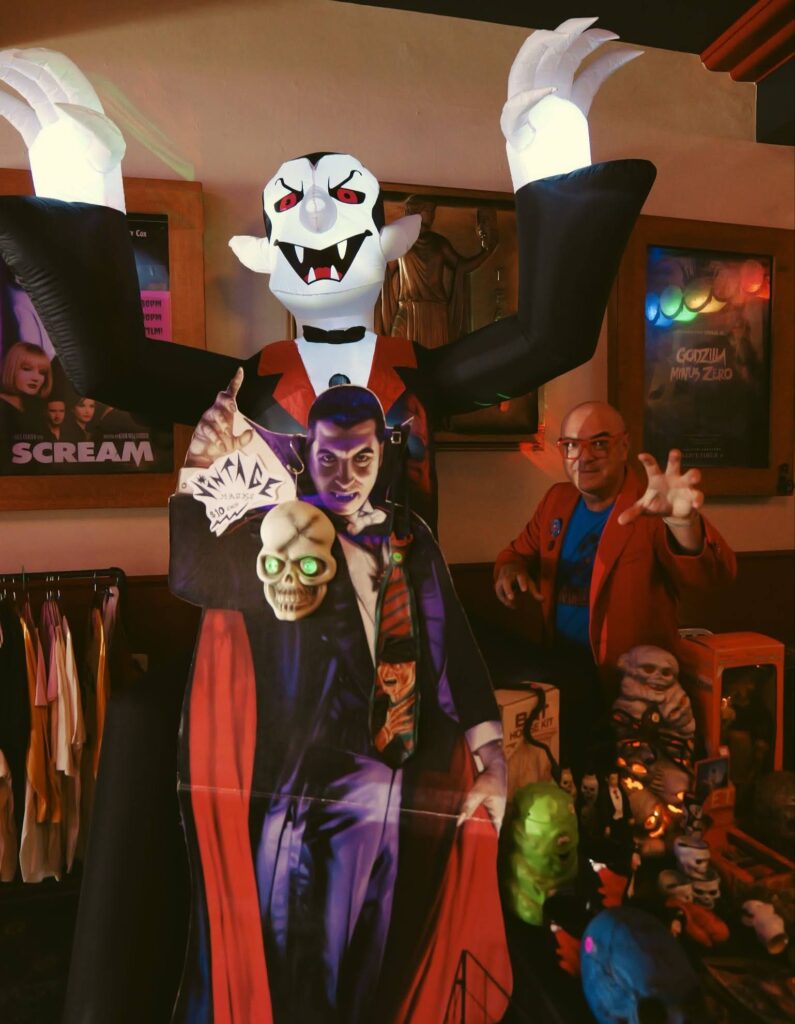
The abundance of allegory and lore around vampires in film was always going to be of interest to such sensibilities, which is why Roath chose this theme for this year’s festival.
“I like the unique weaknesses of vampires like sunlight, holy water, garlic, mirrors, silver, having to be invited in a house,” said Roath when asked about his love for the fanged foes. “There are not many other ‘creatures of the night’ that have so many hang-ups and perhaps I can relate to those challenges they have.”
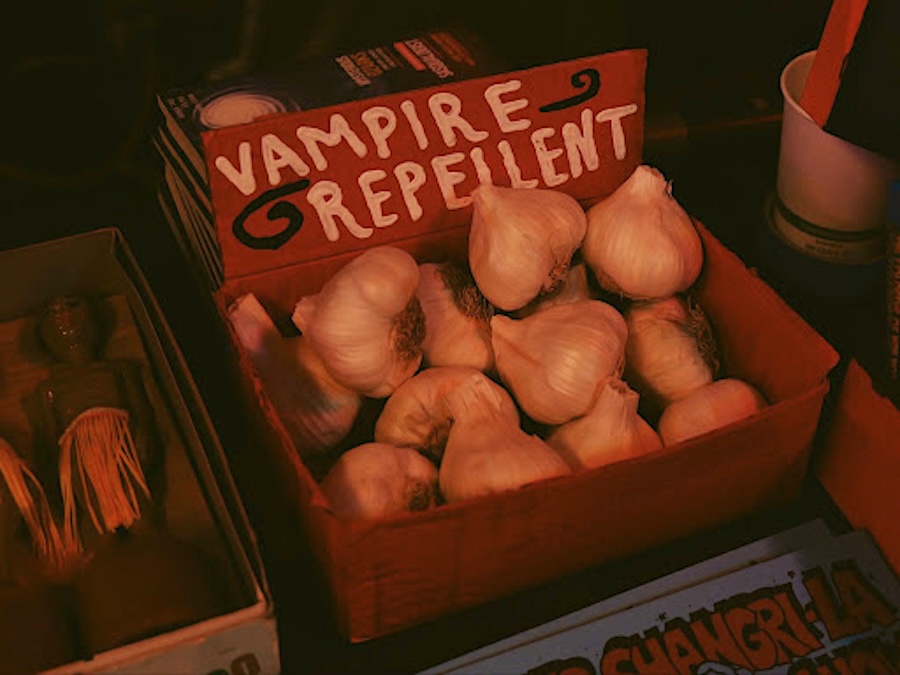
The day commenced with Roath distributing comically bulbous “vampire repellents” from Garlic World in Gilroy to a rather eclectic audience composed of everyone from goths with plastic fangs to cryptozoologists, followed by seven rings of the ceremonial gong. The opener was Fernando Méndez’ 1957 classic El Vampiro, often cited as the film that kicked off the Golden Age of Mexican horror. The crowd was amped from the get-go. The film’s campiness and lead actor Abel Salazar’s nonchalant deliveries in the face of danger were met with raucous laughter.
Vampires have been a longstanding figurehead of gothic literature and later cinema; each iteration has been a hotbed of intellectual polysemy dating back to FW Murnau’s 1922 classic Nosferatu, with its plethora of readings of “the Other.” However, Roath yearns for something more heartwarming than critical theory from these classic flicks.
“There is a very ‘lonely romantic’ feel in vampire films—I must imagine it is difficult to find true love for a vampire,” he said. “I think it’s time for a movie about Roy Orbison being a vampire. Despite the rumor about his eyes, I think the real reason he wore sunglasses all the time is because he was a vampire.”

His romantic interpretation was reflected in the next film, Swedish director Thomas Alfredson’s Let the Right One In. The 2008 film tells a hauntingly beautiful story of enduring connection and love under the most traumatic of circumstances.
While films on the bill spanned the globe and decades from 1950s onward, curatorial consideration included more than just the presence of vampires. “I did try to pick films where the vampires were defeated in different ways, or not defeated at all,” he explained. “It’s unfortunately truer to reality that the bad guys who suck get what they want, and it does make for a more interesting story.”
The next two films were a perfect one-two punch of critically acclaimed features that highlight this very breadth. A Girl Walks Home Alone at Night is a 2014 Iranian film directed by Ana Lily Amirpour that subverts the vampire allegory entirely by highlighting the fact that these monsters were, or still are, human—and thus contain human complexities and contradictions, rather than being a monolithic simulacra of the “other” for us to view in relation to societal norms and groups.
While that film explored the positive side of this through a vigilante vampire that doles out justice, French director Adrien Beau’s 2023 The Vourdalak, based on Aleksey Tolstoy’s 1839 novella The Family of the Vourdalak, is instead an atmospheric, eerily gorgeous tale of aristocrats hunted by one of their own. Told through the lens of incestual bloodlust and untilizing incredible puppetry, the film is endlessly captivating in its dissection of the ways we hurt each other.
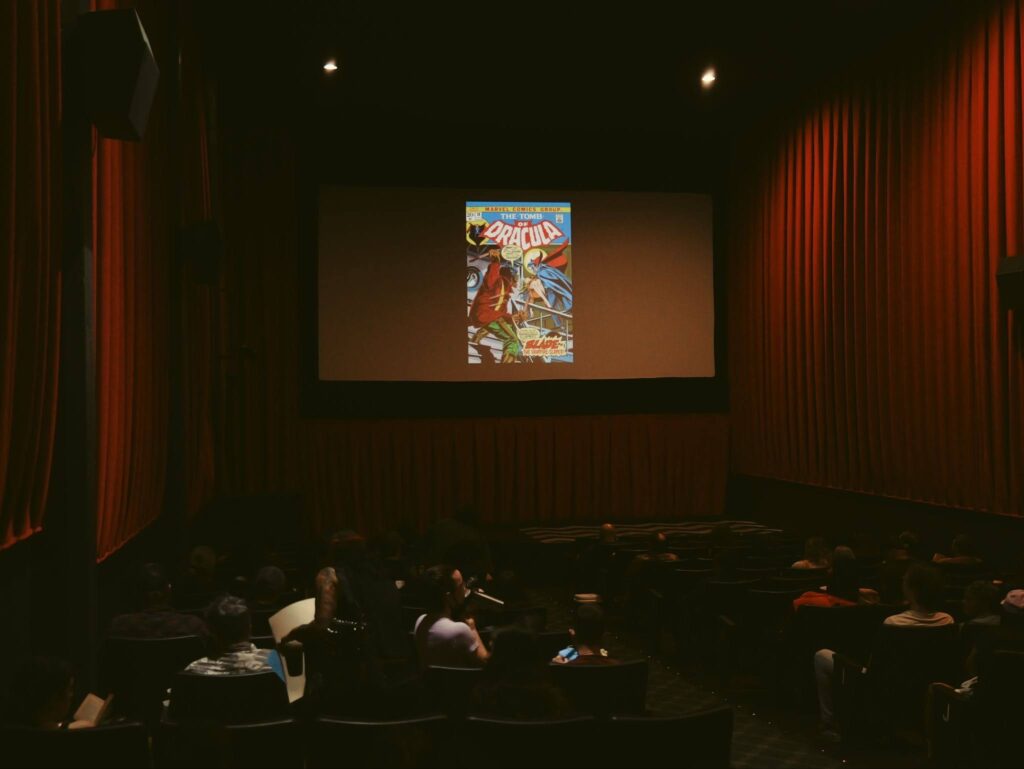
The next film was more established Stoker-fare in Terence Fisher’s Horror of Dracula from 1958. Gorgeous Technicolor production and great performances elevate a relatively faithful if uninteresting adaptation of the original novel. Before the screening started, Roath distributed bottles of Holy Water he had gotten blessed from a priest in Fruitvale for 20 dollars. Next up were two off-beats genre entries: 1965 Italian sci-fi flick Planet of the Vampires that was more of an alien invasion film than a vampire one and Lake of Dracula, a dreamy Japanese horror-noir film drenched in a bloody haze from Michio Yamamoto, released in 1971.
Given the figure’s popularity, there is no shortage of vampiric films across the world and Roath is raring to showcase more. “I had an entire second day planned with seven other films from six countries,” he said. “However, I amazingly got asked to ordain two good friends’ weddings that Sunday, so my two-day fest became one. I will keep the flicks in a dark vault for next year!”
If a day-long packed out theater is anything to go by, vampires may be immortal but so is our fascination with their transgressive nature. Come back next year to experience more revelations about revenants and their binge on their bloodsucking.