San Francisco is still a place with a whole lotta annual film festivals, though they’ve been weathering some tough economic times of late. We are home to many of the world’s oldest, largest, and first festivals in many particular categories. But one thing we haven’t had is any such event showcasing newly restored or rediscovered films.
Of course, there’s the Silent Film Festival, justly beloved by cineastes…but its programming doesn’t extend past around 1930, the point at which those damn talkies usurped the motion-picture industry. That leaves many subsequent decades of films that might be “lost” in one way or another, but have no dedicated local forum for exhibition once “found”—apart from the odd individual revival at an arthouse or established festival, plus themed retrospective series at places like BAMPFA.
That lack is no more, however, with the arrival this week of the inaugural Re:Vision, a “Festival of Restoration and Rediscovery” taking place Thu/24-Sun/27 at SF’s Roxie Theater. Presented by the San Francisco Film Preserve (whose own restoration efforts have previously been showcased by the Silent Fest), it celebrates the work of archives and archivists around the globe.
The four-day schedule offers a very diverse selection of features and shorts drawn from eighteen countries, spanning over a century. What unites the selections is that most of them have been long unavailable, at least to US audiences, or seen in cut, poorly maintained prints if seen at all. The restorations here represent the best versions ever likely to be achieved.
It starts this Thursday evening with 1985’s My Name Ain’t Suzie, one of a handful of films directed by Angela Chan. (She apparently had conflicts with famous producers the Shaw Bros. that hobbled this film’s exposure, and perhaps her own career.) As the title suggests, it’s a riposte to Western “China doll” images of Asian women, particularly the Madame Butterfly and World of Suzie Wong fantasy archetype who’s beautiful, tragic, and submissively adoring towards the white men who reluctantly claim her.
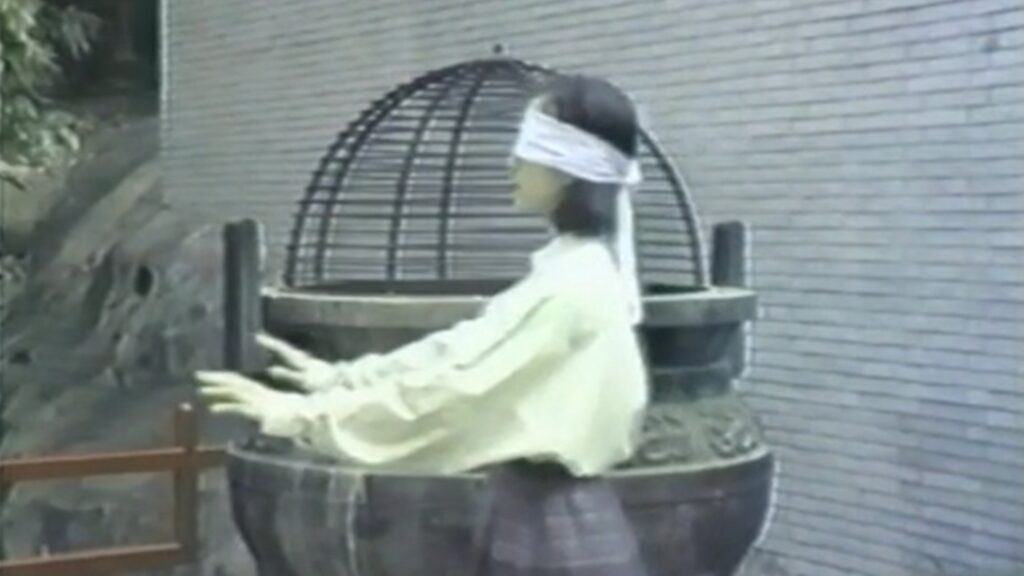
Shui-mei (Patricia Ha) refuses to accept the role of passive victim, though she does suffer disillusioning experiences in her decades-long journey from a poor fishing village to relative prosperity in a Hong Kong red-light district. Elements of criminal and romantic melodrama provide obstacles en route, but she’s a survivor, and her life story is one of resourceful tenacity rather than exploitation. Like every program in the festival, this one will be accompanied by shorts: May Fung’s She Said Why Me, from the same era of HK filmmaking, and New Zealander Len Lye’s 1936 avant-garde animation Rainbow Dance.
On Sunday night, the official closer is another effort by a then-rare female director: The 1944 Danish Melody of Murder from Bodil Ipsen, who as a major Danish screen star had appeared mostly in comedies. But for her decade behind the camera, she preferred moody thrillers. This noirish murder mystery shot during the German occupation finds a Copenhagen cabaret performer (Gull-Maj Norin) implicated in a string of homicides. Is she the killer, or is the killer trying to drive her mad? The resolution arrived at might be ludicrous, if Ipsen weren’t able to summon enough sinister atmospherics to render it truly macabre.
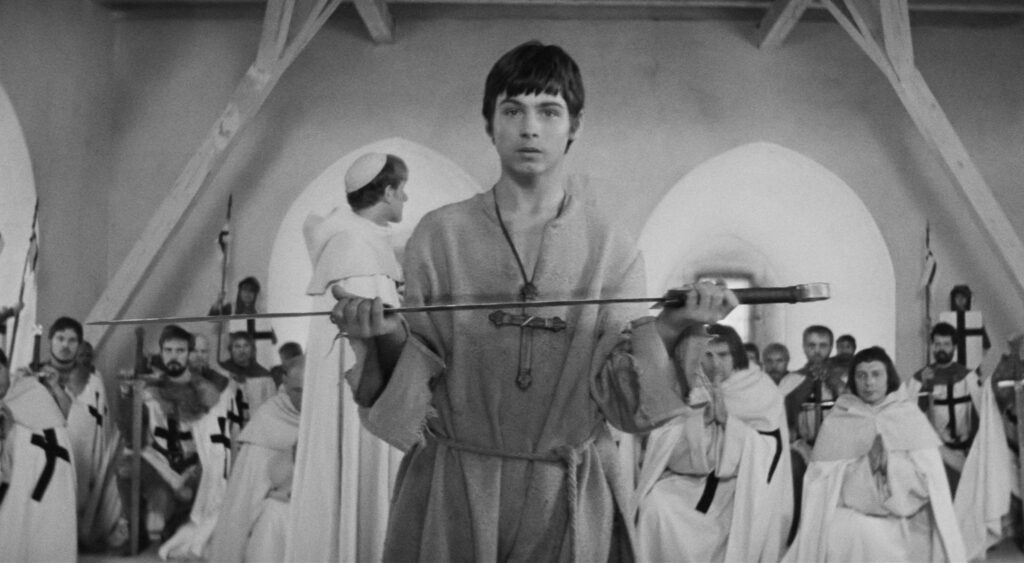
In between, there’s something for nearly every taste—so long as you’re not looking for up-to-the-moment mall fodder. Two very striking mementos from Eastern Europe’s glorious cinematic New Wave of the Sixties are Frantisek Vlacil’s 1968 Czech The Valley of the Bees, another harsh medieval tale from the maker of the prior year’s epic Marketa Lazarova, and Alexksandar Petrovic’s Oscar-nominated 1965 Yugoslavian Tri aka Three, a potent dramatic triptych taking its protagonist through episodes from WW2’s beginning, middle and end. The only feature directed by Venezuelan Margot Benacerraf, Araya—which split the 1959 Cannes Critics Prize with no less than Resnais’ Hiroshima mon amour—is a visually poetic docu-drama about workers in the blindly white landscape of a peninsular salt mine.

The festival’s implicit labor advocacy is echoed by the more overt case-pleading in Mohamed Camara’s Guinean 1997 Dakan, in which two young upper-class men form a couple that’s accepted well enough by peers, but rejected as a scandalous affront by their families. Reputedly the first gay film from West Africa, its occasional stilted qualities don’t dim the boldness of a pro-tolerance message that caused the film to lose its governmental backing. Also urging on more progressive social attitudes is 1978’s Gehenu Lamai aka The Girls, the debut feature for Sri Lanka’s first woman director Sumitra Peries. It’s about another star-crossed romance between students—though the issue here isn’t sexuality but class division, as love isn’t enough to bridge the acceptability gap between a wealthy boy and a “scholarship” girl.
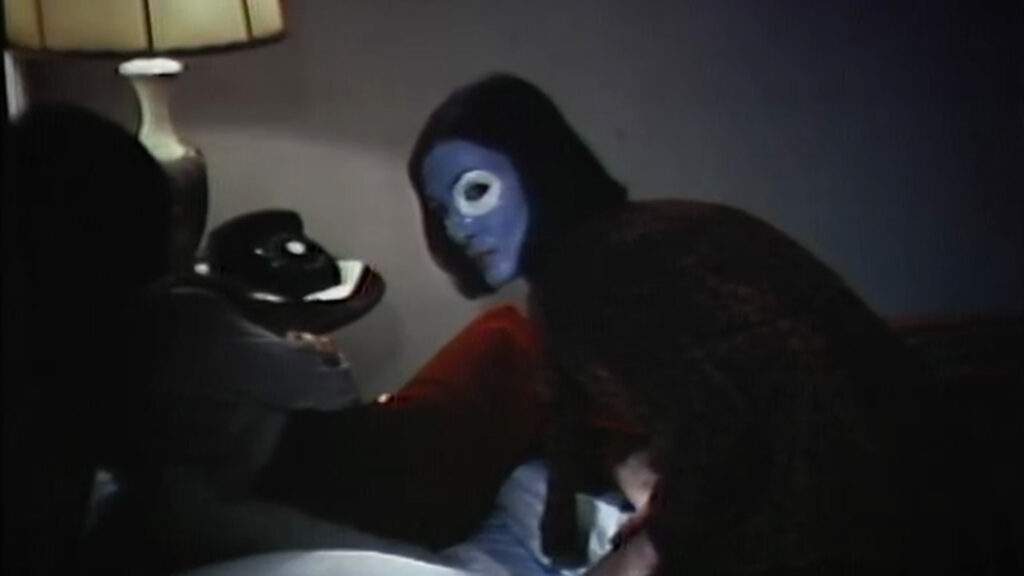
Four years prior, US writer, director, producer, and actor Karen Sperling and an all-woman crew made The Waiting Room, a fascinating illustration of second-wave feminist principles shot in an abandoned Manhattan psychiatric facility. Its series of cold, detached vignettes portray our society’s basic gender inequities, less in the mode of the era’s commercial narratives than the likes of Judy Chicago’s The Dinner Party and Chantal Ackerman’s Jeanne Dielman. It’s a vivid experiment that was very little-seen then, let alone since. By contrast, four full decades earlier, Paramount Pictures no doubt hoped for a wide audience—though they didn’t get it—with 8 Girls in a Boat, a remake of a prior German feature. Set in a very glam Swiss boarding school whose pupils look more like Broadway chorines, this obscure, starless seriocomedy nonetheless probably surprised some viewers at the time with its ultimately sympathetic, almost grrl-powerish take on out-of-wedlock pregnancy.
There are some more purely escapist titles on tap in Re:Vision. Robert Wynne-Simmons’ 1982 Irish independent production The Outcasts is a Gothic 19th-century tale of a club-footed village lass (Mary Ryan) whose latent supernatural powers are detected by a mysterious drifter (Mick Lally). When it was released to U.S. streaming earlier this year, we wrote about it here. Two major Hollywood stars of the early 1920s, Corinne Griffith and Charles Ray, had seen their popularity dim by the time of 1928’s romantic comedy The Garden of Eden. This material didn’t do much to help, but it’s handled with panache by Lewis Milestone, who just two years later would win Best Picture and Best Director Oscars for All Quiet on the Western Front. Unlikely to have risked any award consideration is Khom Arkhadej’s 1984 Thai action comedy I Am With a Monk, a cheerful adventure in which a fugitive ne’er-do-well is reluctantly taken on as disciple by a Buddhist pilgrim—though tranquility eludes them both while dodging bullets.
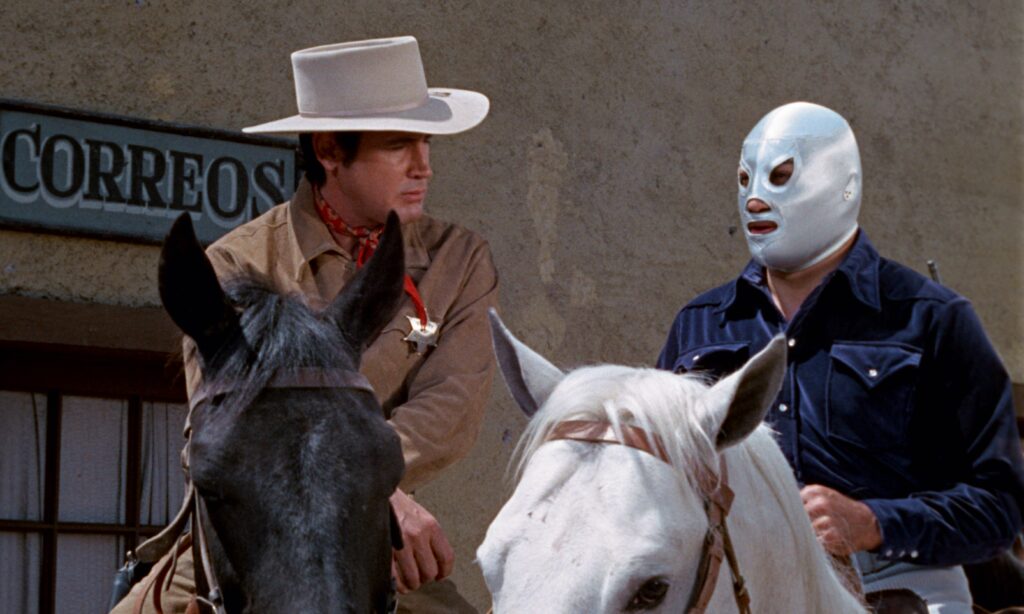
At the bottom of this particular programming totem pole lies Lepers & Sex, aka Santo vs. the Riders of Terror. Yes, the masked Mexican luchadore is once again saving us all, this time not just in the wrestling ring but amidst a period Western setting. Residents of a one-horse town are terrified when a half-dozen patients escape from a “leprosarium,” seeking freedom. What no one realizes, however, is that a simultaneous crime spree isn’t being committed by those unfortunates, but by a duplicitous gang of “respectable” citizens posing as lepers. This 1970 opus from Rene Cardona, the prolific actor-director responsible for camp classics Santa Claus and Night of the Bloody Apes, keeps Santo largely on the sidelines—but compensates with entirely gratuitous softcore sex scenes shot for export markets. None of this is as much fun as it sounds. But if the lurid combination of ingredients sounds irresistible to you anyhow, you know you’ll have to see it.
Ticket, schedule and other info for Re:Vision, Sept. 24-27 at SF’s Roxie Theater, is here. The full program guide is here.