While many Bay Area film festivals have dealt with an increasingly difficult economic climate by scaling back their events—at least those that are still with us—the Arab Film Festival is somehow still managing 10 full days, at locations throughout SF as well as single venues in Oakland and San Jose. That’s certainly a good thing, not least because the Arab world is more present (if often distortedly so) in the US than ever. Islamophobia is now a stock GOP political platform, and our government is once again fighting/funding unnecessary war in the Middle East. Several of the year’s best films to date have centered on related issues, including narrative features Palestine ’36 and The President’s Cake, as well as documentaries like Naza and American Doctor.
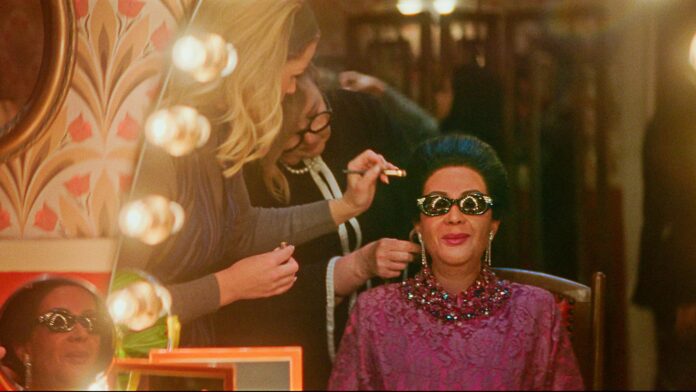
The latter portrait of US physicians volunteering at desperately understaffed, frequently-bombed Gaza hospitals (which 48 Hills previously covered here) is getting another local showing as part of the festival’s 30th edition. It begins this Thu/5 at the AMC Kabuki 8 with Marwan Hamed’s El Sett, a nearly three-hour biopic of the late Umm Kulthum (played by Mona Zak)—the hugely popular singer whose stature as “The Voice of Egypt” has scarcely been challenged in the half-century since her death. Attendees are encouraged to “dress as if you were attending [her] legendary 1967 performance at Paris’ Olympia.” The film will be preceded by presentation of the Arab Film & Media Institute’s inaugural Luminary Award for Cultural Impact to veteran Egyptian producer Mohamed Hefzy, then followed by a live tribute to Kulthum’s musical repertoire by Aswat Ensemble.
Founded by AFMI in 1996, the festival has striven to diversify its representation of the Arab diaspora in many ways—this year’s program encompasses 40+ features and shorts from twenty-six countries, a majority of those titles directed by women. Among the most impressive full-length narratives is Zain Duraie’s Jordanian debut feature Sink, whose subject matter is a universal one: It depicts a middle-class family thrown into crisis when the mother (Clara Khoury, most recently seen in the Tunisian Voice of Hind Rajab) realizes her teenage eldest son (Mohammed Nizar) is succumbing to serious mental health troubles that may not be “fixable.”
In contrast to that tightly focused drama, which takes place over just a few days’ course, there’s Abu Bakr Shawky’s The Stories, which sprawls over decades. Initially almost farcical in tone, it gradually shades into more serious terrain as war, politics, and corruption perennially hobble the path of Cairo native Ahmad (Amir El-Masry). A classical pianist, he marries the Austrian penpal (Valerie Pachner) he finally meets while studying abroad on scholarship. But their life together must constantly battle against the inequities of the society he’s perhaps unwisely returned to.
The Palestinian actress Hiam Abbass, who recently appeared in Palestine ’36 (which opened last year’s AFF) and Atonement, reinforces her international career bona fides by appearing in no less than three AFF30 features: The Tunisian drama In a Whisper, Lebanese May-December romance Only Rebels Win, and French-Algerian comedy Spices and Lies (a free outdoor screening on Thu/12). Another notable attraction is a revival screening of festival alum Elia Suleiman’s 1996 debut feature Chronicle of a Disappearance, which encapsulates the everyday oddities of Palestinian society under occupation in a series of absurdist vignettes. It’s a plotless gem whose deadpan comedic minimalism might remind you of Jarmusch or Kaurismaki; among the great musical choices are a couple oldies by “Inca princess” Yma Sumac.
The state of being stateless also very much occupied the subject of Maiken Baird’s Edward Said: Between Worlds, the documentary that is year’s Centerpiece presentation at the Castro Theatre on Sun/8. Sent to the US to be educated after his family lost their Jerusalem home and was forced into exile with the 1947 onset of the “Palestine War,” he wound up up staying—in 1963 becoming a professor of comparative literature at Columbia University, where he remained for 40 years. But despite his professional focus on Western literature, this “modern renaissance man” was also a musical prodigy, critic, and belatedly politicized major voice for Arabic (and in particular Palestinian) peoples.
His 1978 book Orientalism exposed the cultural stereotypes that allowed colonization—painting Arabs as ‘exotic,’ hedonistic, bloodthirsty, migratory, without true culture or homelands… so how could their territory be “stolen”? A frequent TV guest rebutting the parroting of Zionist talking points, Said wearily pointed out things like the calculated replacement of the very word “Palestinian” with “terrorist” in public discourse. As much a history of “the Palestinian question” as of his career and life (Said passed away in 2003), Between Worlds offers sharp insights into the last eighty years of Middle Eastern politics and perception.
Offering different angles on the same central topic are fellow documentary features Uncommitted and Citizen Osama, while Zahraa Ghandour’s artfully crafted Flana probes the often drastic disfavor accorded girls in Iraqi society. As she tries to find out what happened to a childhood friend who vanished in 2001, she hears accounts of parental abandonment, hellish orphanages, even murder of unwanted daughters—all perfectly legal.
AFF30 also has shorts programs, Q&A’s with select filmmaker guests, a “Documenting Democracy” workshop, and more. It runs Thu/5-Sat/14 at several SF locations, plus limited dates at the Alamo Drafthouse Valley Fair in San Jose and Oakland’s New Parkway. Some selections will also be available for online streaming during the same timespan. For full schedule, venue and ticket info, go here.
New releases also arriving this week:
Wild Horse Nine
When Berkeley Rep produced a series of Martin McDonaugh plays some years back, they seemed consistently brilliant, if also on the brink of ghoulish gimmickry. But his second career as a filmmaker has been uneven. I very much enjoyed the admittedly self-conscious criminal hijinks of In Bruges, then walked out on insufferably Tarantino-esque Seven Psychopaths. Three Billboards Outside Ebbing, Missouri felt like a classic case of a foreign filmmaker thinking his twaddlesome stereotypes about “America” were revelatory insights. Then The Banshees of Inisherin was just as good as those early plays, in the same idiom: Cruel, macabre black comedies of Irish rural life, seemingly pitiless until they produce a lump in your throat. It was one of the best movies of 2022, with performances that Colin Farrell and Barry Keoghan may never top.
So now there’s Wild Horse Nine—is the title an in-joke reference to Banshees’ nine Oscar nominations (and zero wins)?—which arrives with the heavy expectations inevitable to following a major success. Perhaps the most surprising thing about it is that, given McDonaugh generally seems to hit or miss, here he lands right in the middle. This is a droll, low-key, reasonably clever meditation on some very big themes that it deflates a bit. It’s good… not great. Solid… but not particularly memorable, given the talent and ideas involved.
In 1973 Santiago, Chile, Chris (John Malkovich) and much younger Lee (Sam Rockwell) are genially combative coworkers, CIA agents whose current task of undermining the nation’s democratically elected Marxist President is just another job in the loyal service of U.S. imperialism. But 72-year-old Chris, who’s succumbing to terminal cancer as well as possible dementia, no longer seems capable of keeping his lips suitably zippered. In fact, he blurts out Uncle Sam’s plan to “destabilize your democracy” to two horrified young female students in an airport lounge, to Lee’s mortification. The two men are heading to Easter Island, which Lee has always wanted to visit, and where it appears he’d now like to end his days. But political intrigue—as well as those two young women—follow them there. As does, eventually, their disgruntled boss (Steve Buscemi), plus various would-be assassins.
For all its blatant indictment of American governmental skullduggery around the globe (not excluding a certain Dallas shooting in November 1963), Wild Horse Nine is mostly a relaxed buddy picture, indulgent of well-cast actors that also include Ema’s Mariana di Girolamo, Parker Posey in a couple scenes, and Tom Waits in exactly one. McDonaugh writes dialogue such people can and do make the most of; Ben Davis’ widescreen location photography is also a pleasure. This is intelligent entertainment whose politics are served up with such offhand snark, you almost forget how bold they are in our current climate. Yet it’s also a movie you might reasonably hope would be a home run. Instead, it’s a reasonably satisfying trot to second base.
Abnormal Behaviors: ‘Littermates,’ ’New Group’
That sneaking suspicion that society is going crazy gets taken rather literally in two offbeat new films. They might sound in description like sci-fi and horror, respectively, but their mixed results land closer to social commentary in the guise of macabre comedy.
Scott Tinkham and Michael Woloson’s Littermates, which opens at Alamo Drafthouses this Fri/6, opens with a traumatized young man (Joey Bader) fleeing gunfire in the countryside. Stumbling into an open field, he’s rescued by the slightly older Chester (Oliver Woolf), who fortunately has a helicopter nearby. At Chester’s comfy A-frame retreat, complete with tennis court and hot tub, the disoriented guest begins to recover—though he’s so far gone, he must be given a name (Liam is chosen), taught to speak again, and so forth. Soon a young woman (Kahylee McGregor as Mel) shows up, similarly addled, and is put on the same rehabilitative regime.
This is a lot like childrearing, never mind that everyone here is an adult in physical terms. But the refugees have had their mental slates blanked—something to do with reaction to chemical weapons in an ongoing war, we eventually learn. Despite the title, they are not treated like puppies, and while some of Chester’s “parental” methods are a little peculiar, there is nothing sinister or kinky going on here. Indeed, until combat gets dangerously close at a late point, the main conflict here is sibling rivalry: Mel and particularly Liam act like bratty preschoolers competing for “daddy’s” attention.
Littermates is an intriguing idea that for me stayed underdeveloped—while their antics are mildly amusing, not enough happens in the bubble these three characters isolate themselves in. (It’s like a more comedic spin on Jim McBride’s equally plotless 1971 Glen and Randa, whose post-apocalyptic protagonists were likewise hapless children in adult bodies.) Once something does finally happen, the stakes do rise. But then the film abruptly jerks to a stop, leaving you with the sense of having watched sketch material stretched too thin at feature length. It’s a colorful, idiosyncratic doodle of a movie, not quite original enough to get away with so little substance.
Also presenting an eccentric surface without much depth is New Group, the second feature from Japanese writer-director Yuta Shimotsu. His first, 2023’s Best Wishes to All (which only reached the US last year), was a very striking, blackly comedic horror parable in which a young heroine visiting relatives gradually realizes that nearly all society’s well-being is predicated on a grotesque Faustian bargain. This latest endeavor starts out as if a direct sequel, with another young female protagonist waking from a nightmare in which belligerently cheerful strangers wreak violence on anyone who doesn’t conform. But bigger isn’t better, and Group finds Shimotsu losing that debut’s creepy weirdness in the quest for more elaborate effects that end up just silly.
Here, schoolgirl Ai (Anna Yamada) and newly arrived transfer student Yu (Yuzu Aoki) are among the few to resist what increasingly looks like some kind of surreal epidemic—their classmates begin assuming “gymnastic formations” (often human pyramids) for no apparent reason, encouraged by adults who themselves soon join in. These “groups” become like monstrous single organisms, wreaking violence on any “rebellious individuals” refusing to participate.
This cartoonish variation on Invasion of the Body Snatchers offers no real explication or inner logic, so it fast turns into a diverting if awfully blunt indictment of enforced uniformity. Best Wishes was unsettling because it was so suggestive—here, the metaphor is at once vague and all too visually specific. While not dull, New Group is disappointing enough that let’s hope it ends up just a fresh talent’s sophomore slump. It begins streaming on genre platform Shudder Fri/6.