I’m glad the SF Standard did a story about the last gay man to run for Congress in San Francisco. His name was Harry Britt, and in 1987, the longtime supervisor with a strong local record on issues almost beat the heir apparent to the old Burton Machine. Her name was Nancy Pelsoi.
But a withering attack by the Chron, who called Britt a “homosexual socialist,” and a ton of money for Pelosi, sent her to Washington. We can argue forever whether Britt would have been a better representative; he clearly would never have been speaker.
The Standard story, by Joe Fitzgerald Rodriguez, was balanced and fairly quotes some folks talking about the difference between Britt and Wiener. But the headline (and reporters don’t write headlines) states that Wiener, the first gay man to represent San Francisco in Congress, will “finish the mission” that the late Harry Britt launched almost 40 years ago. The Standard’s email blast, which reporters don’t write, promoted “The gay pioneer who paved the way for Scott Wiener.”
Those headlines would have made Harry sick.
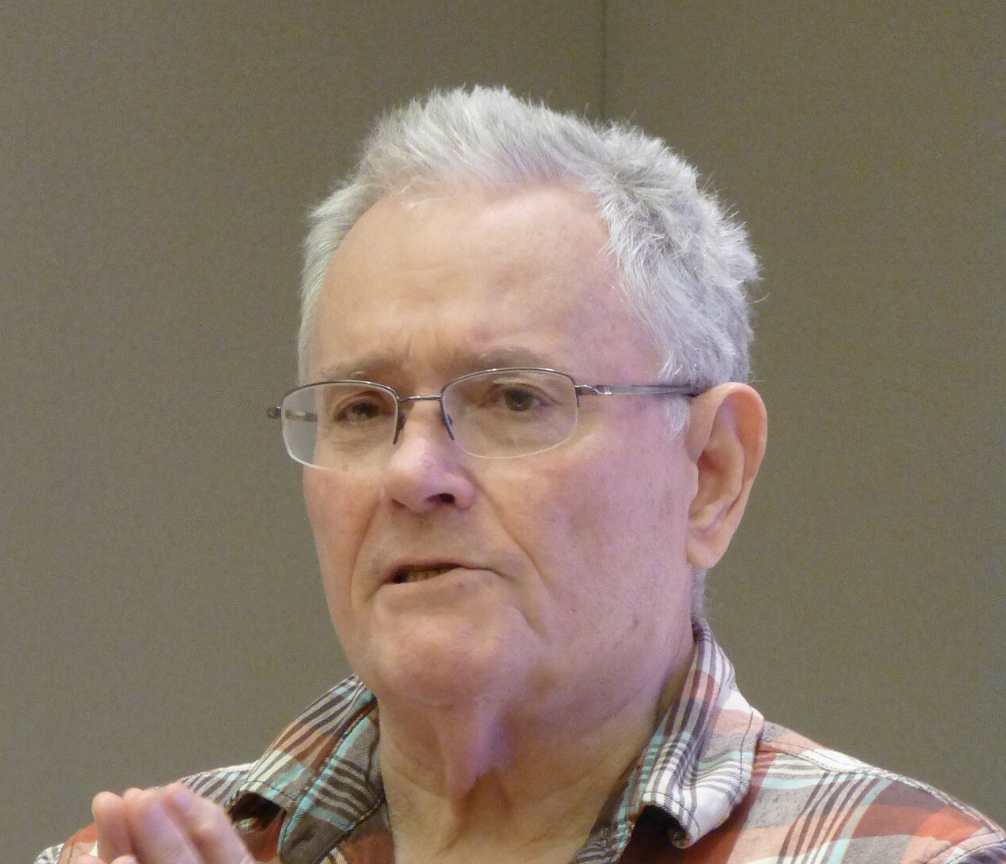
I knew Harry; for a few years in the bleak political 1980s, he was one of my very few friends at City Hall. We talked often.
I can tell you with no hesitation that Harry Britt would never have endorsed, supported, or voted for Scott Wiener for Congress. He would never want to be remembered as someone who “paved the way” for Wiener. Britt was a socialist who had no love for the gay landlords, the rich gays, the folks Harvey Milk called the “A-Gays.” Harry was always with labor, with the working-class folks and the tenants.
Britt sponsored the measure that created civilian oversight of the SF cops. Wiener as a deputy city attorney aggressively defended the rights of cops to make false arrests with impunity.
As Cleve Jones told the Standard:
“Scott, in my view, is the opposite of Harry Britt in many important ways.” Famously, Wiener favors cutting government red tape to let developers build as much market-rate housing as possible to reduce rents. Due to that stark policy difference, Jones and most of his compatriots from Britt’s era were supporters of Supervisor Connie Chan’s bid this year against Wiener. Both Britt and Wiener, however, were products of their eras.
In that era or this one, “Harry would never have supported Scott Wiener,” former state Assemblymember Tom Ammiano told me.
Ammiano talked about the days in the 1970s when the Bay Area Gay Liberation movement saw queer rights as part of a larger struggle for the rights of tenants, low-income people, union members, Black, Latino and Asian communities, and a general anti-imperialist agenda. As Gay Pride evolved, he said, it became more willing to accept the neoliberal corporatist economic agenda, as long as LGBTQ+ people were included.
“Harry was a Gay Liberation person,” he said. “He saw the intersection of the struggles.”
Harry died in 2020. His legacy lives on–in how he paved the way for victories for democratic socialists, tenants, labor organizers, and people who challenge late-stage Capitalism. I don’t think Scott Wiener is one of them.
Mayor Daniel Lurie still has considerable popularity in the city, but now that he has complete control of every department and commission, he’s going to have to deal with some problems that won’t respond well to his style of governing.
The latest point-in-time count shows the number of unhoused people in the city has increased 17 percent in the past two years, and the number of unhoused children is up 27 percent. (The Chronicle buried that trend in its story, instead focusing on the number of people who were unhoused when they arrived here. I was unhoused when I arrived here; I stayed on friends’ couches and floors until Paulo and Dave and I were able to find a three-bedroom apartment for about $400 a month. So we weren’t unhoused long.)
The city can’t solve the homeless crisis by moving people around and locking them up. More cops can’t solve the fentanyl crisis. Maybe the new Congress will send more money for affordable housing to cities, but Trump might block that. And there’s plenty of evidence that the mayor’s Family Zoning Plan will, at least in the short term, make things worse.
Now the mayor is moving to cut as many as 20 percent of the city’s permanent supportive housing and shelter beds.
The Haight Asbury Neighborhood Council will host two longtime advocates for the unhoused, Jennifer Friedenbach and Joe Wilson, at its meeting Thursday/12 to discuss the situation and how the community can respond. 7pm, 1833 Page St. To join the meeting online, go here.
Or, with the Zoom app: Meeting ID: 970 0198 5280 Passcode: 333544
The Rules Committee will consider Monday/9 a measure by Sup. Chyanne Chen that would allow hotel workers and their unions to sue if the big commercial hotels don’t meet standards for cleaning and guest safety. In practice, this is a way for the unionized workers to push back against moves to cut staff, which have included ending daily laundry and housekeeping service. From Local 2:
Tourism is a critical industry for San Francisco. In 2024, it provided 61,752 jobs and generated an estimated $604 million in tax revenue for the City. Our industry has spent years recovering from the damage of the pandemic, and we continue to see positive growth year over year. It is vital that we continue this recovery.
A crucial piece of maintaining traveler confidence is making sure that our hotels are the safest, cleanest places where anyone can meet, sleep, and eat. An essential step in maintaining that confidence has been the Healthy Buildings Ordinance, passed in 2020, requiring daily cleaning of guest rooms and regular cleaning of spaces such as lobbies and common bathrooms. These requirements ensure that San Francisco hotel rooms and spaces are the cleanest in the country, delivering the worldclass standard that tourists expect and deserve.
But there are some hotel operators that have found ways to evade enforcement. This set of amendments will allow for private right of action so that workers and worker organizations can enforce this ordinance. These amendments do not change the requirements of the Healthy Buildings Ordinance, which has been the law for nearly six years. And they in no way hurt hotels. Adding extra enforcement powers will actually help those hotels that have already been in full compliance with the law, because those properties have had to compete with those hotels that have been cutting corners by not fully complying.
I imagine that the big hotel operators will push back. It’s hard to imagine the supes rejecting this bill, but it’s not hard to imagine the mayor vetoing it.
Mayor Lurie will appear for Question Time at the full Board of Supes meeting Tuesday/12, and both Chen and Sup. Jackie Fielder have submitted questions. Fielder wants the mayor to explain what he’s doing about the conditions on Mission Street near school zones; Lurie and Fielder have already announced plans to add more community ambassadors at 16th and Mission.
Chen wants to know about “Ensuring the Crocker Amazon Park Capital Improvement Project Balances the Needs of Citywide Stakeholders with Those of District 11 Communities.” I’m pretty sure what this is about: The Recreation and Parks Department has a grant from the SF Giants to restore and expand ballfields at the park—but the grant mandates that grass be torn out and replaced with artificial turf. The plan also calls for cutting down 60 trees.
A lot of folks in the neighborhood don’t like that.
This is the problem with the mayor’s approach to running the city on philanthropy: It comes with strings attached. The full board meeting starts at 2pm.