I am not a naive fool in politics; I’ve been covering this business for more than 40 years. But I still have this deep belief that candidates for office who are part of a political movement need to ask themselves at times: Is it about me, or about us?
If they are nothing but hacks who care about their own power, it’s an easy answer. But if they have any moral center, any sense that they are running for office to advance an agenda and a cause, not just their own ego, they should stop and ask: Am I the right person, and am I doing the right thing right now, today?
Jesse Jackson, the great civil rights leader who died this week, understood. He ran for president, twice, to force the Democratic Party to move to the left on a lot of major issues. He ran to build a movement that he said, repeatedly, was about all of us, not just about him. He was never the nominee—but the legacy of that movement remains.
One of the giant issues the Democratic Party has to deal with at its convention this weekend is simple—and alarming: Democrats have controlled state government, entirely, for more than 15 years, and the collective wisdom says there’s no way a Republican can get elected governor … except for this year.
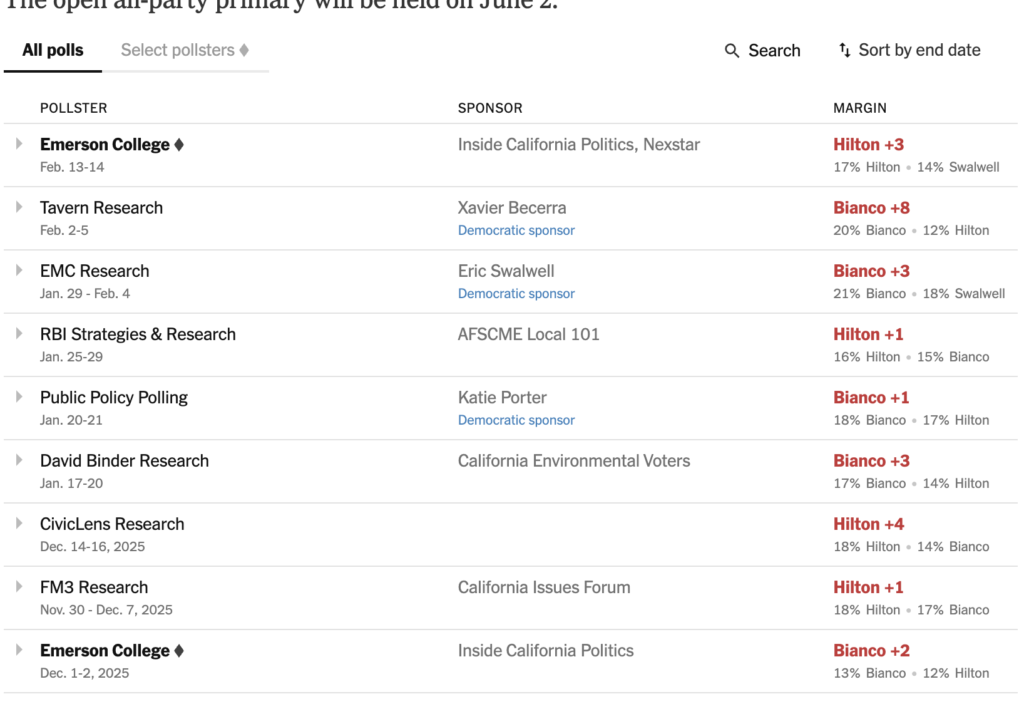
Eight Democrats, all of them reasonably credible candidates, are running for governor. Nobody has emerged as a front-runner.
The problem: California has a really screwed up primary system, forced on the state Legislature by a rogue Republican who would only provide the swing vote for a budget if his colleagues got rid of party primaries and accepted a two-two system, designed to move politics to the center. They buckled.
Often that means that two Democrats run against each other, twice. (In a regular party primary system, Jane Kim, who won the Democratic Party primary against Scott Wiener in June, 2016, would have been the state Senator from San Francisco. Instead, Wiener had a second chance, so he viciously attacked Kim and wooed Republicans to get elected in the fall.)
If the election were held today, most of the polls show, two Republicans would top the field, and no Democrat would be on the November ballot. That’s simple math: Two GOP candidates splitting the 25 percent of the Republican vote, and eight Democrats splitting the 45 percent of the Democratic vote.

We have never seen this before. The primary system could in theory disenfranchise a majority of the voters and lead to a freak outcome where a Republican would lead the most Democratic state in the country.
I’m all for democracy, and giving voters plenty of choices is a good thing. And I have always hated the idea of heavy-handed party leaders telling candidates who can and can’t run.
But the reason none of the candidates is polling above about ten percent is that none of them have offered a vision that is substantially different from the rest. It’s a field of neoliberals who are not challenging the mainstream party establishment. None of the major candidates support the billionaire tax.
In the old days, which were generally bad, party conventions sorted these things out with backroom deals and heavy-handed leadership. Good riddance.
Still … if the state Democratic Party had any real leadership (and Gov. Gav isn’t even going to the convention) the party might emerge from this weekend with a strategy to win in November.