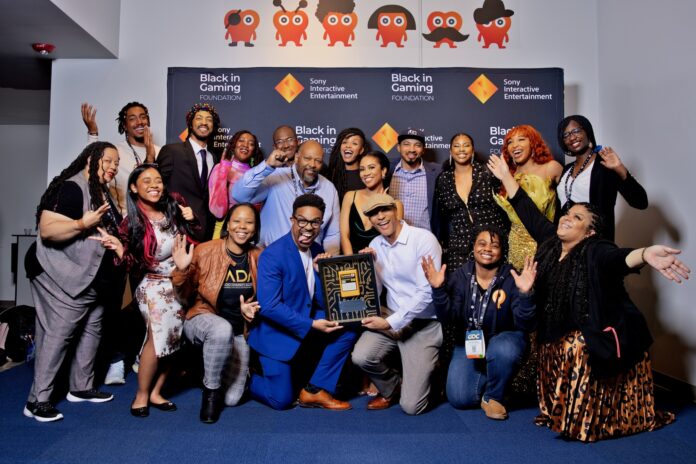
48 Hills tech reporter Leah Isobel was at the 2026 GDC Festival of Gaming (formerly Game Developers’ Conference), March 9-13 at the Moscone Center. Read her first dispatch about game-worker unionization efforts here, and (mis)adventures in AI gaming here.
The first event I attended at GDC was a roundtable titled “Uplifting Latine Game Devs Here, There, and Everywhere.” Moderated by representatives from the nonprofit organization Latinx in Gaming, the roundtable gave space for Latinx developers from inside and outside the US to discuss their experiences, from conventional game-developer struggles like trying to find publisher funding to more specific problems, like navigating immigration and seeking solidarity and support from employers or colleges.
One developer who spoke up mused that such topics were difficult to discuss in a work environment, which they experienced as “a weirdly apolitical space”; another asked the moderators if they had any support or advice for helping developers in other countries get access to visas in order to work. A developer who had flown in from Uruguay shared that they had been advised to travel in a larger group in order to pass through TSA more easily.
Later on in the discussion, that same developer mentioned that funding struggles are quite different outside of the US, saying, “I don’t know how much [funding] to ask, because for me, $100 USD is a lot because of conversion rates.” The US is dangerous, but its economic position in the world still creates an incentive for developers to engage with the market here.
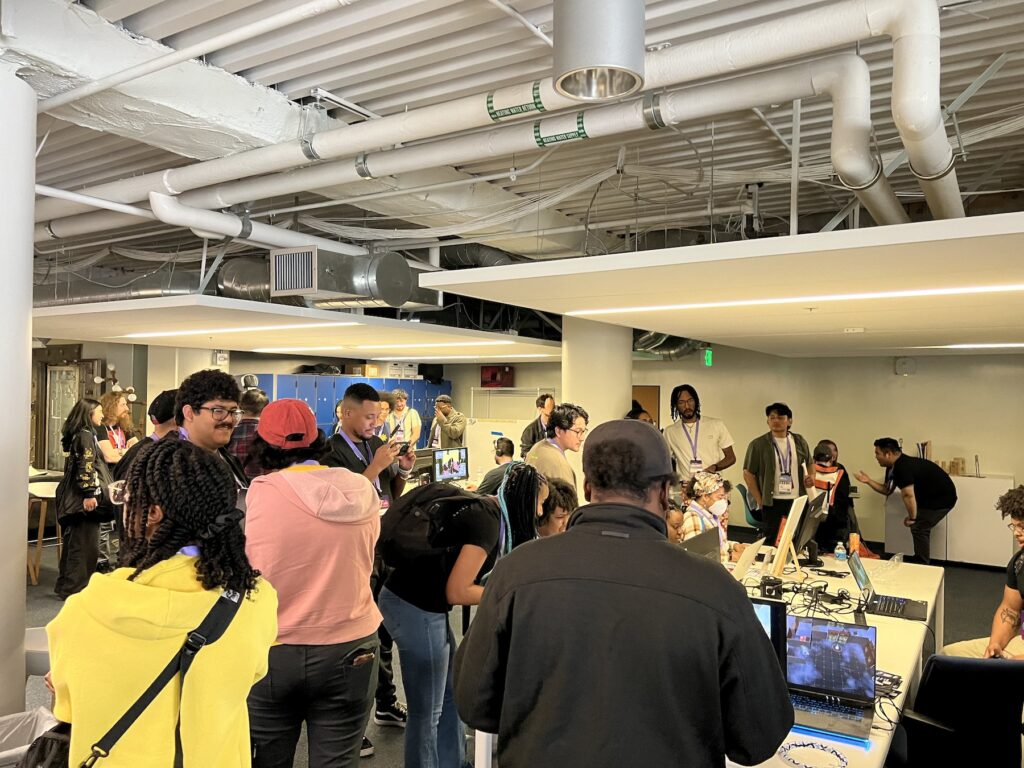
After the roundtable ended, I made my way to DG717 on Market Street for Ctrl + Unite, a networking event sponsored by Latinx in Gaming, The Black in Gaming Foundation, and AAPI in Gaming; the event was meant to serve as “a unified space for underrepresented communities to connect outside the GDC walls.” Inside, developers took the stage to give talks about their games, while attendees got to try out the various demos set up around the space.
On the second floor, I saw a display for H1B.Life, a narrative simulation game from the studio Reality Reload based on the process of applying for an H1-B visa. The game uses simulated gambling mechanics to articulate the arbitrary nature of making your way successfully through the system, and draws on interviews that the team conducted with people who have experienced it.
“The American immigration system is like a maze,” says Allison Yang, the game’s director. “So it’s very hard for someone to navigate through it. One of our team members said, before he came to America, he felt like there’s a big commercial saying, ‘This is a good life. You are really smart.’ And then when he arrived, he realized that advertisement is far, far away. There’s so many obstacles in between.”
Originally, the team was working on a more straightforward simulation of the visa process. But last year, when the Trump administration announced new restrictions on companies hiring workers via H1-B visas, the team reassessed their approach. “Now it’s not about the paper, per se. It’s really about how people are trying to figure out what they’re doing,” Yang explains. “What can they do? They used to have this dream, an immigrant’s American dream, but now this dream is collapsing. But their life goes on. So how do they repackage everything [to] make sense?”

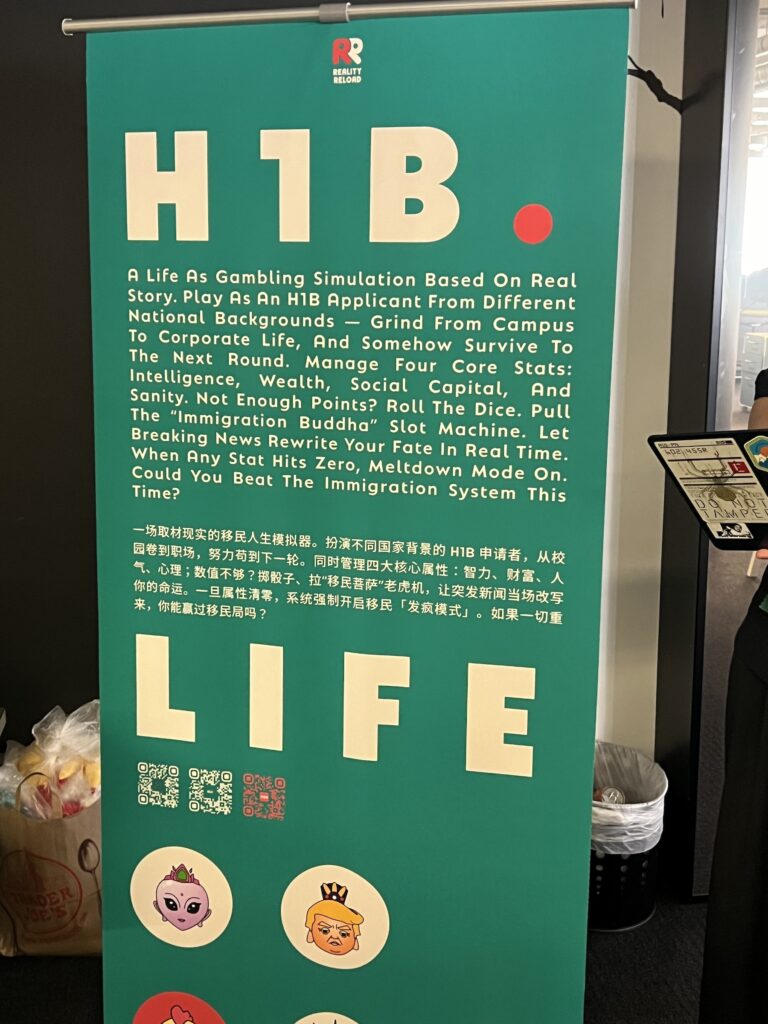
As a result, the team reworked the game’s mechanics and introduced more fantastical aspects, like “Immigration Buddhas” that grant unpredictable effects and represent the random cultural and political shifts that affect applicants. These new elements are meant to add in a “dream dimension” that articulates the subjective reality of people working under these visas.
Yang connects this approach to her experiences playing games when she was growing up in China. “I played so many, for me, foreign games… so all of these racial, gender, sexual labels could be suspended. I’m not saying it doesn’t exist. But it could be suspended a little, and I could try to understand what this person is going through in the world he or she or they live in,” she says. “And so, we want to really do this, put you inside someone’s skull or something. You couldn’t do it better. You don’t have better choices.”
In lieu of those better choices, the game instead aims to depict something more human: people’s ingenuity and resourcefulness in the face of systemic cruelty. “The more interviews and community events we did, we realized people actually are trying really hard,” Yang says. “Now, because everything is so vulnerable, a lot of them just started to take care of themselves, or trying to reach out to people, do things they think they will do after they get a million dollars or something. It’s like, this system is collapsing… But it’s also good, because now you’re pushed, finally, to think, ‘What’s the alternative?’”
It’s a question meant in the context of the people that her team has interviewed. But it feels to me like something with a broader resonance, too; it stuck with me as I wandered around the rest of the conference. For marginalized developers—specifically immigrants and people of color, scapegoated under the current US administration—what are the alternatives?
A few days later, I spoke with Trinidad Hermida Black, the board chair of the Black in Gaming Foundation. She described their mission as “to empower folks in this industry to sustain us and build more of a presence, a space for everybody to be able to play, everybody to be able to create, everybody to be able to succeed.”
One of the organization’s major initiatives is BIG Fest, an annual day-long event that takes place at the Children’s Creativity Museum during GDC and offers a forum for Black game developers and creatives to network, learn from each other, and celebrate their successes. Hermida Black explains that the event came about as a way to create a space that was missing, and to remedy an oversight in the larger conference’s programming. “One year at GDC, we submitted talks and none of them got accepted,” she says. “So what did we do? We went across the street.”
Like Ctrl + Unite, Hermida Black says that the event is both the product of and a conduit for collaboration and community-building. “I’m on the board at Latinx in Gaming. They showed up,” she says. “We showed up to their event. We’re better connected and unified than we are separate… Society has pitted us up against each other for bigger capitalistic political reasons. If they keep everybody fighting, then they can keep their systems in place that just perpetuate whatever cycles that they want to perpetuate. I personally don’t want to plug into those systems. I want to create my own.”
Our conversation touches on the sense of chaos and competition suffusing the industry right now, and Hermida Black says that while the foundation has been able to secure corporate sponsorship for their work, it’s more challenging than it used to be. I ask if they’ve received pushback as a result of the political and cultural push away from DEI initiatives; she says yes, but contextualizes that within a broader perspective.
“Back in the day— let’s keep it a buck—they wanted to be able to market [DEI and corporate giving initiatives] because it attracted talent, and we were all trying to be more inclusive with our hiring,” she says. “They needed that PR to be able to say, like, ‘Look, we’re doing things with organizations that you care about.’ It’s not being published to get media like it used to. So it’s kind of more covert. And it’s making people have to get really creative, which I don’t think is a bad thing.”
Perhaps that creativity can lead to a more equitable future down the line. I ask Hermida Black if she sees any signs of hope or optimism. She responds, “We see that our community really wants to come together and bring their friends and their allies around to see, like, this is what community feels like and looks like, and this is available to you. We just have to come together more often… I don’t know what the future looks like, but I think we’re gonna have to put our heads together and figure it out.”
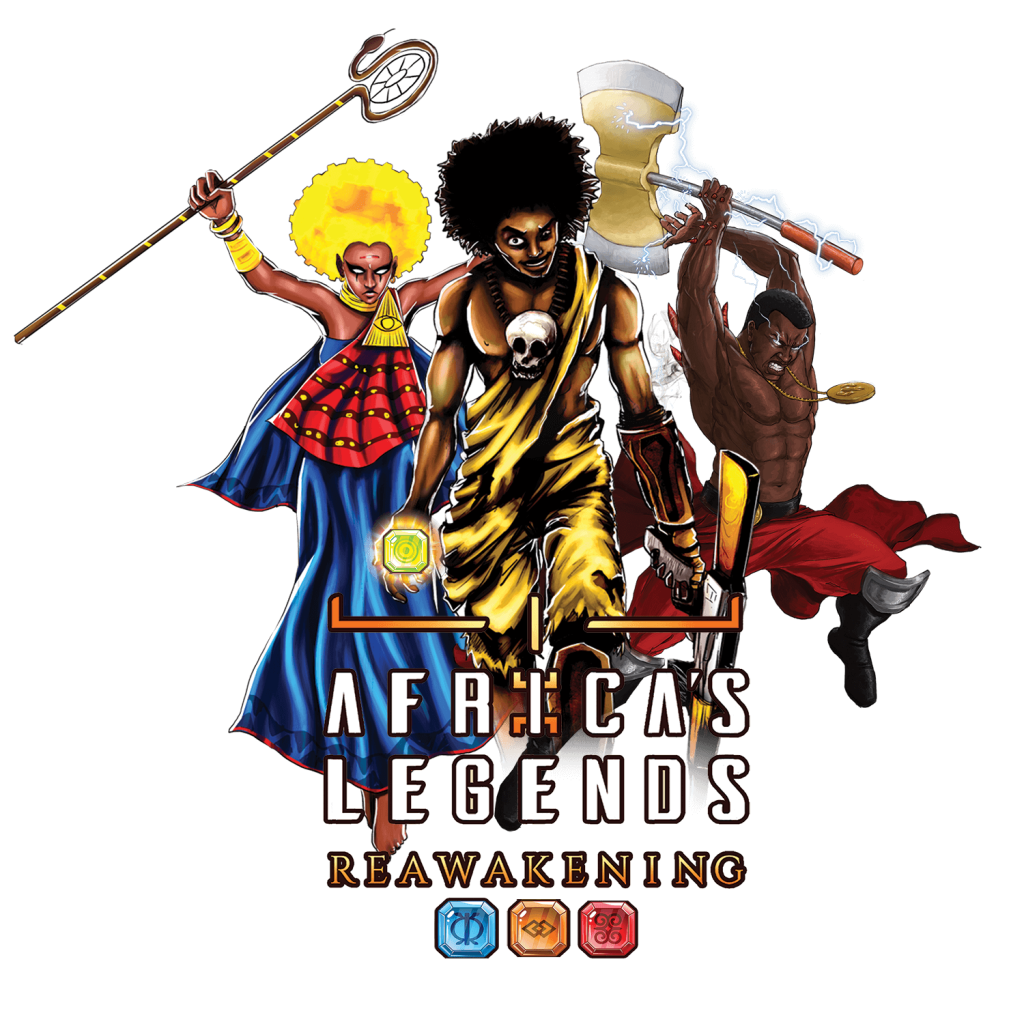
And there are examples of developers building up their own power. On Wednesday, I attended a talk given by Eyram Tawia, cofounder of the Ghanaian studio Leti Arts, titled “Decolonizing Play and the Rise of African Game Development.” In it, he traced the expansion of the games industry on the African continent and the challenges that developers in African countries still face.
On the one hand, the industry has grown rapidly due to a mass adoption of mobile gaming, and a 2025 report showed that revenues hit nearly $2 billion. Referencing this report, Tawia said, “In 2013, I didn’t have statistics, I had to call friends and ask ‘Hey, how many downloads do you have?’ Now I can say Africa is a billion dollar industry. That feels so good, doesn’t it?” But on the other hand, those revenues aren’t necessarily going towards developers in Africa. “Who were those making the money?… The usual suspects,” Tawia explained, citing the American and European titles Roblox, Fortnite, and Candy Crush Saga as the primary drivers of growth.
In this context, Tawia said that decolonizing game development would take multiple forms. For Western developers looking to engage with African players and cultures, he said, “Design with us, not about us. You could reproduce coloniality if not done well.” And for developers working on the continent, he emphasized education and training as priorities, using outside opportunities to reengage with local communities: “Collaboration and outsourcing are valuable entry points, but without ownership or equity, the model risks becoming digital colonialism. So let’s build a model where everyone wins.”