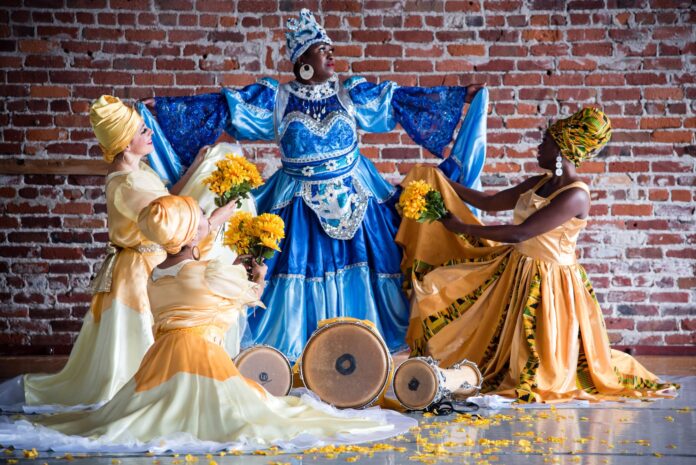
A hearty portion of the rich ethnic spectrum of the Bay Area will be on display when the 20th annual CubaCaribe Festival takes over several Bay Area venues, Wed/8-April 19. This year themed Mirando atras, moviendo pa’lante/Looking back, Moving forward, the always colorful celebration features six dance companies in performance, as well as classes, community gatherings, a photo exhibit, and a multimedia presentation, all of which uplift the vibrant cultural and artistic traditions of the Caribbean and its diaspora.
Artistic Director Ramón Ramos Alayo and executive director Jamaica Itule Simmons highlight fabulous dance companies who will perform at ODC Fri/10-Sun/12, including Alayo Dance Company (Afro-Cuban Modern), Arenas Dance Company (Afro-Cuban Folkloric), Los Lupeños de San José (Mexican Folkloric), Cunamacué (Afro-Peruvian), Alafia Dance Ensemble (Afro-Haitian), Juntos (Cuban Youth Ensemble). The powerhouse combination and interrelation of styles always brings an explosion of necessary joy and resistance.
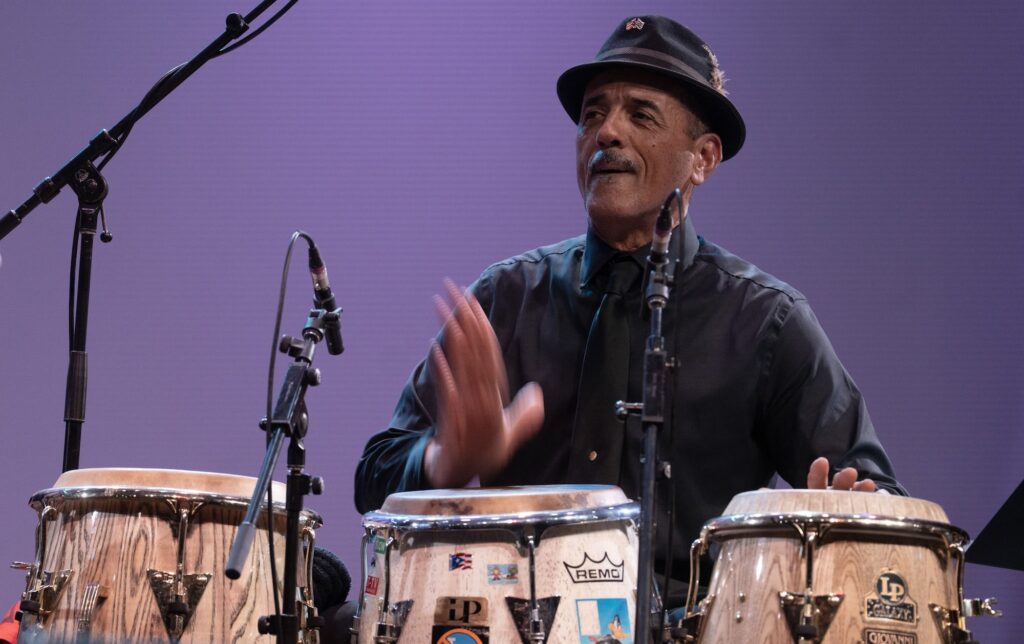
The whole festival kicks off Wed/8 at MoAD, with a multi-media presentation by San Francisco-born, internationally renowned percussionist and historian John Santos. De un Pájaro las dos Alas (Two Wings of the Same Bird): The Parallel Colonial Histories that Unite the Music of Cuba and Puerto Rico explores the distinct musical traditions of the two places given their shared colonial experience of genocide, slavery, and US intervention that created a similar foundation for musical resistance and self-expression, through musical forms such as Salsa and Latin Jazz as well as lesser known forms.
Friday, April 17, the Bayview Opera House hosts Enraizando/ Rooting Within: Connecting roots from the Bay Area to Borikén, featuring Shefali Shah, the Aguacero company, and guests, in an evening-length performance highlighting the transitional experience of young women facing womanhood through Puerto Rican Bomba music and dance. That night at the same venue sees the opening of a photo exhibit by Eli Jacobs-Fantauzzi, that will run through May 31. And don’t miss April 19’s Bombatey at La Peña Cultural Center in Berkeley, a community jam where dancers, singers, and drummers celebrate Puerto Rican music and dance culture and tradition.
Santos, in a phone interview, spoke about Lola Rodríguez de Tió, a 19th century-born poet known throughout Latin America. She was also a political activist who fought for women’s rights, and opposed slavery and Spanish colonialism. She and her husband were exiled from Puerto Rico, twice; first they went to Venezuela, then to New York City. They eventually ended up in Cuba. It’s the connection between Puerto Rico and Cuba that Santos, of Puerto Rican and Cape Verdean descent, honors by using de Tió’s own poetry for the words in the title of his presentation.
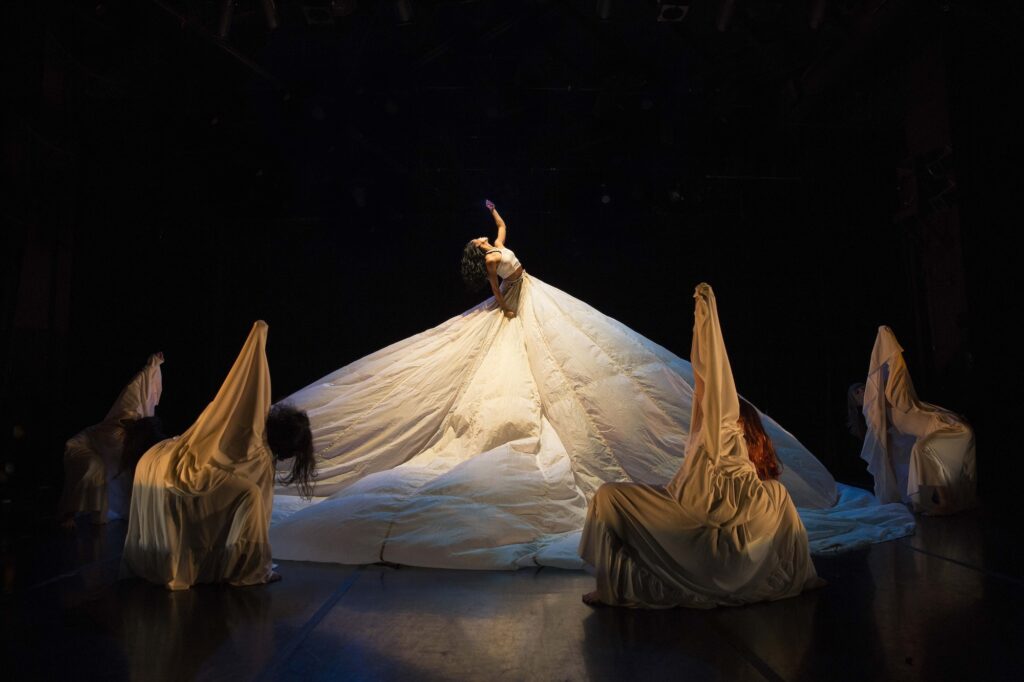
In a face-to-face chat with AD Ramos Alayo, I asked how his Alayo Dance Company contribution to the festival, A Piece of White Cloth, evolved from the first embryonic ideas to the finished form. “When I was in Cuba, I was living with a lot of visual artists who made sculptures and paintings. One day they were making a sculpture on top of our structure and I thought, why not make a piece that looks like a museum of different types of dancers, and how they can move slowly from one place to another. I had the vision, but I couldn’t do it in Cuba because I didn’t have the resources.”
By the time Ramos arrived in the US in 1997, he had forgotten about it because he was dancing with other companies here trying to make a living. Then, “I started thinking about the piece and what I could bring to it. I started looking into Yoruba gods and goddesses. They are all dressed in white, which represents cleansing—and the Obatala is the first among them.”
Obatala, known as the “King of the White Cloth,” is the most important deity in the Yoruba religion, which originates in Nigeria and Benin. As the result of the slave trade, many Caribbean regions and countries have large African populations who brought Yoruba with them and subsequently, numerous versions of it evolved, including Santaría, Candomblé, and Trinidad Orisha, for example.

“One day a person, who wasn’t a professional dancer, was dancing with a white parachute. She was working with materials and fabric. Eventually Deborah [the dancer] designed the costumes which were white as a symbol of purity.” And the parachute became part of the piece as well. Ramos also started building “structures” that looked like tapered square metal frames on wheels for the dancers to stand on and move through the museum space.
“I created this in 2004”, Ramos continued, “and for me the parachute also represents Cuban culture, it represents water—I don’t know how to describe it. It’s like a big hurricane, all those images and ideas, how I put it together. Right now it is one of my favorite pieces. I believe that everything we do should be about the repercussions on our life or outside of our life.
“It was very important to start doing my work because I have something that people here don’t have. I have Afro-Cuban modern dance, which is completely different from the post-modern [dance that exists here] right now. I bring Cuban dancers because they’re going give me so much. I don’t need to give them much. They already have it in their bodies.”
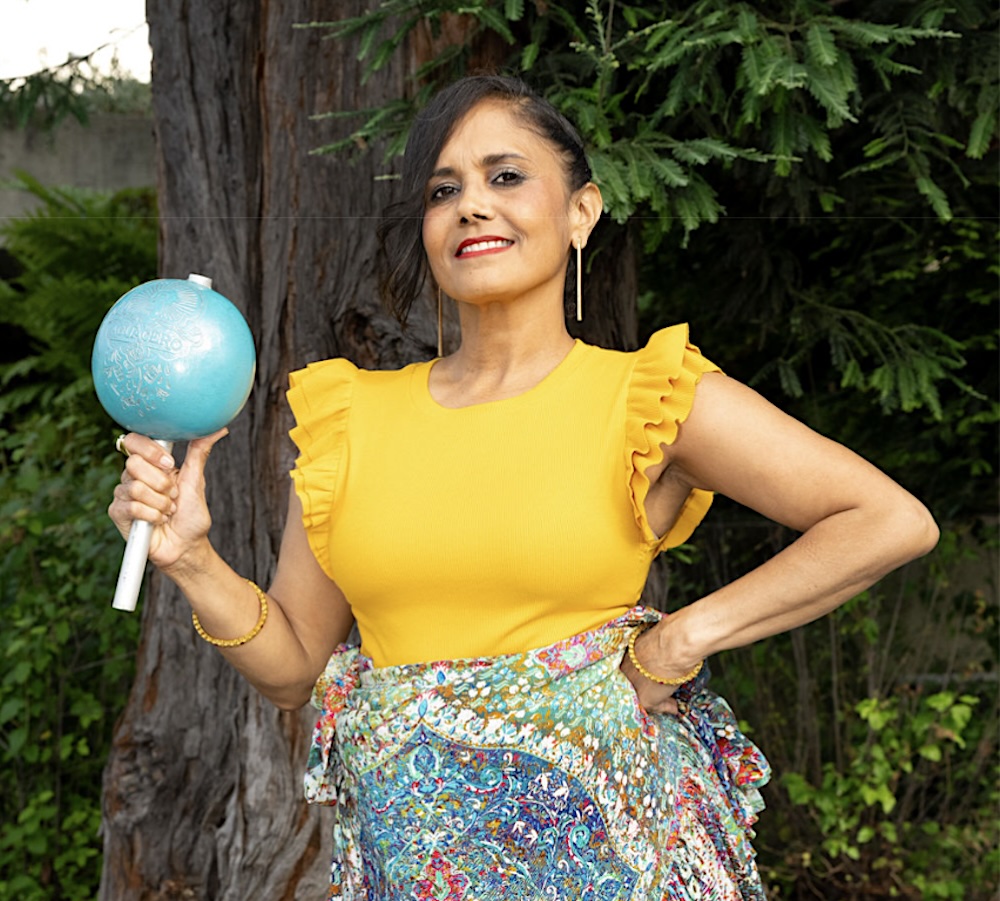
For 27 years, Shefali Shah of the Aguacero ensemble has been involved with Bomba, a Puerto Rican music and dance genre that originated through enslaved West African people and their descendants. First as a student and then as a practitioner, she has worked extensively with children and youth. More recently she started a program for teen-aged girls called Enraizar.
“I started seeing all of these children growing up,” explained Shah. “Some of them went to college, and some are in middle school and high school. I started having conversations with the mamas of the community about all the challenges that young women face as they are looking to find themselves in the midst of being influenced by a world that has so much oppression, so much hatred.
“Then, with everything that is projected on social media, even as an adult, it impacts my anxiety. I thought about the young women being pressured to look at themselves, but find themselves outside of themselves. I know very well how the arts that have been around for generations, traditional arts, can help people see themselves, even those that are not Puerto Rican.” Shah herself was born and raised in Puerto Rico, the daughter of immigrants from India.
Shah started Aguacero with Héctor Lugo. She says of the evening-length performance at Bayview Opera House with Enraizar that she’s creating, “I know that sharing their stories helps people in the audience see themselves in our stories. Not saying: no, we’re different, but saying: yes, we are connected. And that is very powerful because storytelling nowadays can save people’s lives.”
20TH ANNUAL CUBACARIBE FESTIVAL Wed/8 through April 19, various Bay Area venues. More info here.