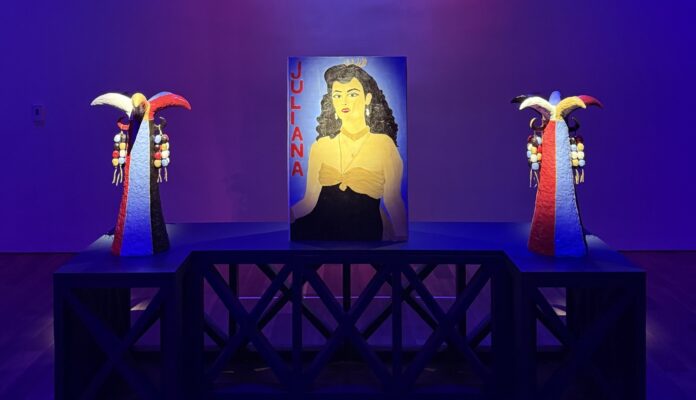
In compartmentalized altar-like installations, decorative objects, and stand-alone figurines, Maryam Yousif’s artworks present like artifacts of a forgotten culture reimagined with a modern sensibility. She draws with clay in a natural fusion, and looks to ancient representation to inform the present.
Yousif spent the first 10 years of her life in Baghdad. Her family left Iraq in 1995 after a series of wars in the region, followed by imposed sanctions and constraining government policies, urged them to leave the turbulence behind for a life in Canada. Yousif attended the University of Windsor, completing a dual degree in Visual Arts and Communications in 2008 and had two solo shows at the culmination of her undergraduate studies.
“I was a kid really, and we were all running wild and free, but I don’t take those experiences lightly. They gave me so much confidence and I felt so immensely supported by my peers. Canada was so good to me,” she said.
Following that, her parents lived and worked for a few years in Monterey, California. In 2008, after graduating from college, Yousif went there to live with them.
“I made friends who were all moving to Berkeley so I tagged along,” she said.
Yousif began working odd jobs, attended graduate school at the San Francisco Art Institute (MFA, 2017) where she met her husband and started a family. She currently lives in the Dogpatch neighborhood of San Francisco. With many friends in the Bay Area who are artists, Yousif says her community continues to champion and support each other.
Yousif’s first experience of visual culture was through the artwork of her mother, a painter and floral sculptor whose work was all over their house in Iraq. In her youth, she was also very taken by pop music, in both its Arabian and Western forms, as an expressive influence. Other key elements have shaped her creative life, among them seeing Mesopotamian artifacts for the first time at the British Museum in 2018 and taking her first ceramic hand-building class at SFAI when she was 30 years old, when she experienced “a certain feeling” around using clay as a primary medium. Becoming a teacher of ceramics was also a formative moment.
“I’ve been teaching at various levels since 2017. First in youth programs at SFAI, then an AICAD teaching fellowship provided the opportunity to teach at the School of the Art Institute of Chicago. I landed at CCA in 2023, though this semester is sadly my last one there,” she said.

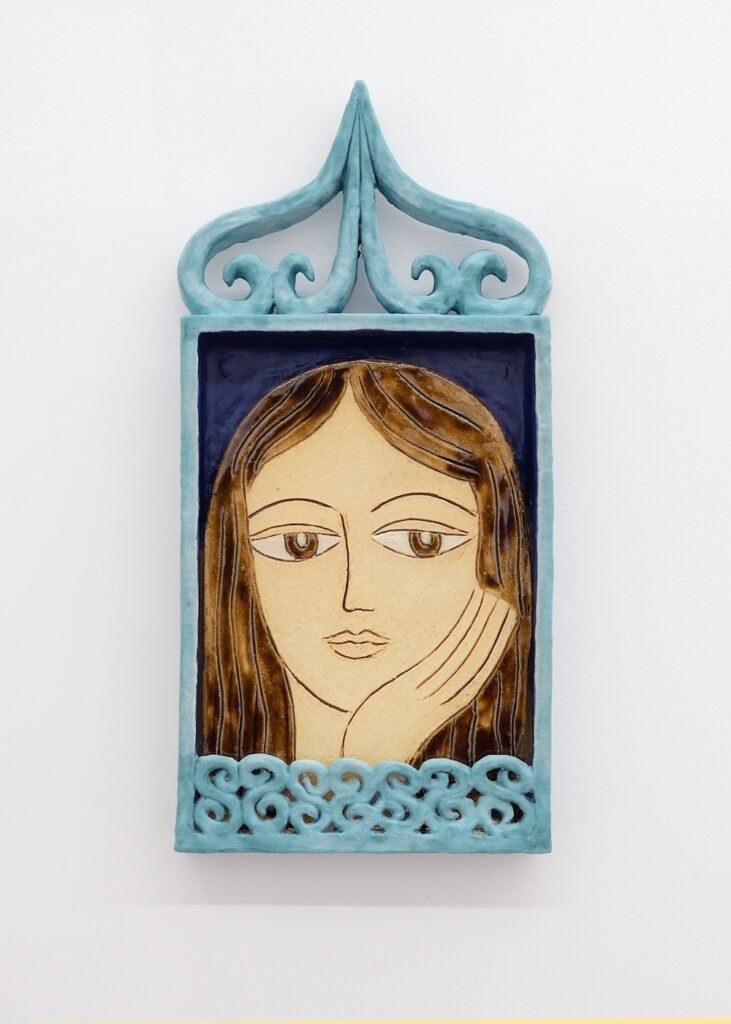
Yousif describes her subject matter as a mix of research—in particular, on historical female figures from Mesopotamia and objects associated with them—and narratives that reflect personal experiences and memories.
“It’s all done through clay, which brings its own magic and feel to the process. When it comes down to it, I’m just trying to figure out how to say something while making something. How can I make a thing that can tell a story? How do I build on the knowledge I’ve accumulated and become a better craftsperson? Clay lends itself to endless exploration in every way. I can explore technique or I can hash out a theme or story,” Yousif told 48hills.
Working from a studio she shares with her husband, artist Nick Makanna, Yousif begins her day taking stock of what needs to be done after cleaning the space, listening to music, the news, or an audiobook to set the tone.
“Everything is done in stages. I’m usually either building or glazing. I’m extruding coils, rolling out slabs, testing glazes, drawing, and writing things down. I’m covered in clay and my hands get so dry. I usually lose track of time then have to rush to pick up my son from school. Time is wild and there’s never enough of it,” Yousif said.
Her life as a creative blossomed significantly during her time at SFAI, which she says was pivotal and where she learned to “take up space” as an artist.
“I started to think about installation and telling stories through objects. I also started to see more art shows and take part in exhibitions at that time,” Yousif said.
She credits a group of graduate students at SFAI who started a space called R/SF with providing the impetus for how she continues to work today. For her solo show titled, Shamiram’s Delight, Yousif was required to make a body of work that illuminated a specific perspective.
“Going into the R/SF show, it was the first time I approached the gallery space as a starting point. I was thinking more sculpturally, less about the walls and 2D and more about the whole space. How tall things can be, what can hold up the sculptures, in what way will I use the floor?” she said.
Yousif had also just been home visiting family and in an exchange of ideas with her mother it was suggested that she consider Shamiram, a mythological warrior queen in Assyrian history.
“Shamiram is classically depicted in a carriage in a war scene against the Armenians. My mom painted this in the 1970s and it’s just been imprinted on my mind since my 20s. I wanted to change the narrative and make a show from the perspective of Shamiram dropping her weapons and focusing on her art. It was so fun and generative and worked so well with my new interest in working with clay,” Yousif said.
In preparing for the show, Yousif began her deep dive into ancient artifacts, mythologies, and the history that pertains to Mesopotamia as a visual resource, finding a wealth of inspiration to tap going forward.
“That throughline has continued in all of the work I have done since then, and though I still work in a similar way, I’m technically better. I’m older and smarter about the choices I make and I’m always looking for new ways to challenge myself,” she said.
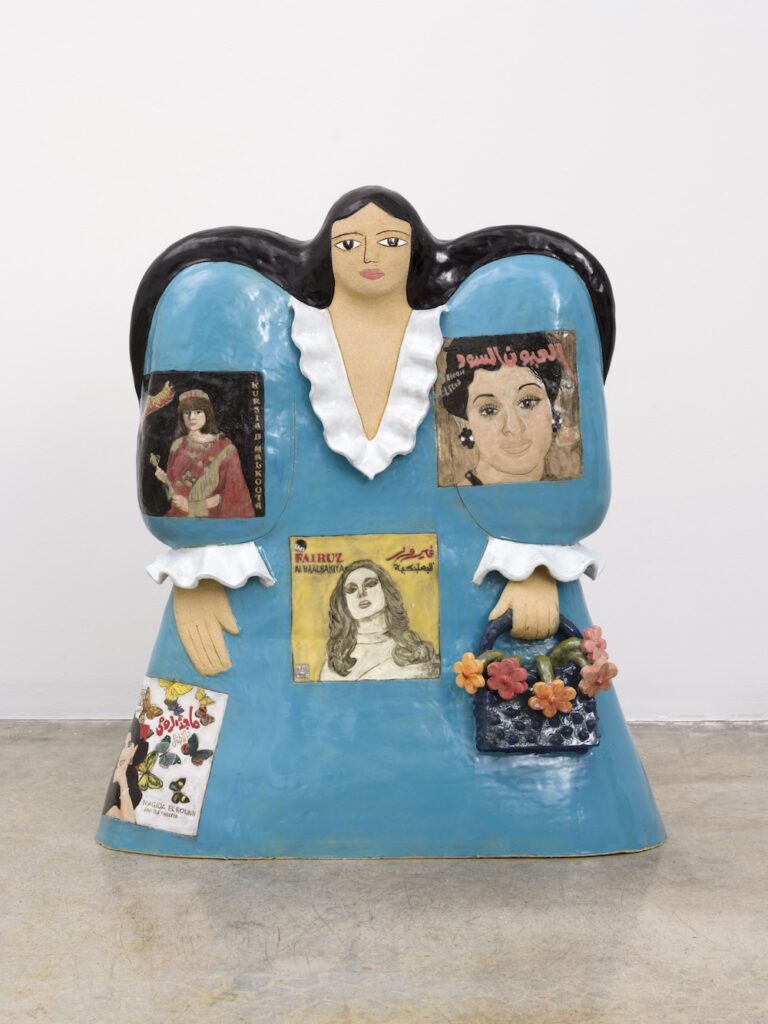
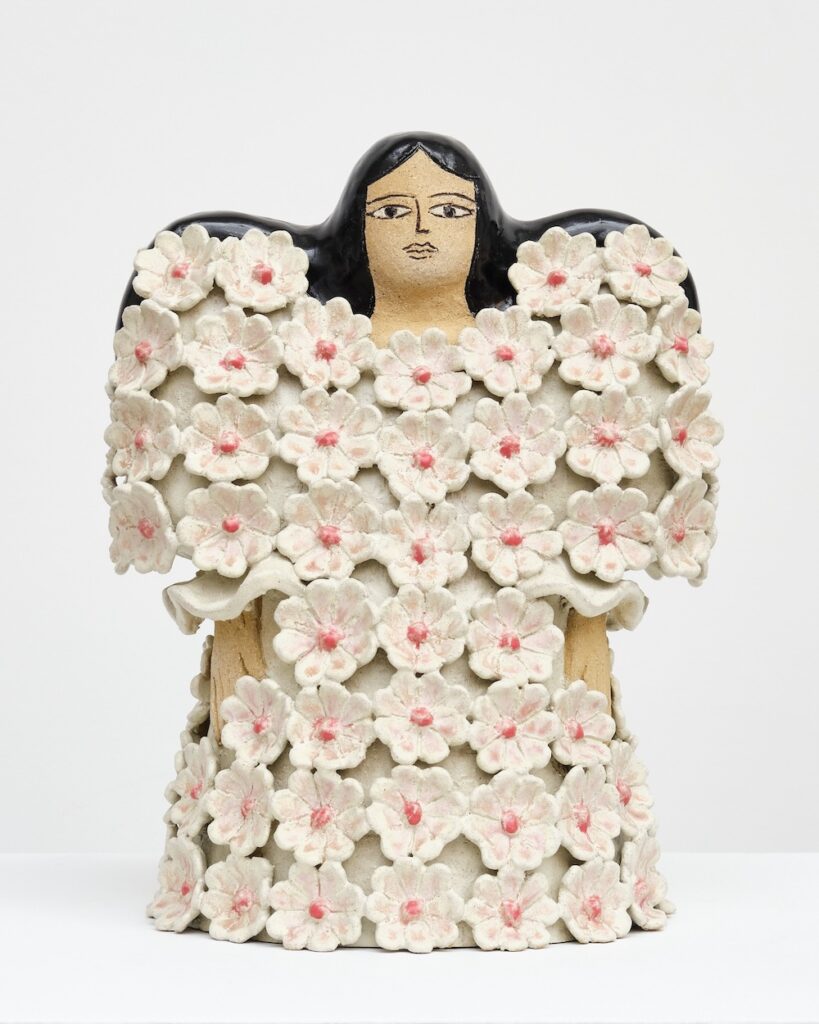
Works from her recent Habibti series take the Arabic term of endearment as a reference point for exploring the divine feminine iconography of ancient cultures. Embellishing them with contemporary attributes, Yousif merges the past with the present in a colorful and playfully expressed hybrid.
Her Riverbend series gives a nod to the two rivers (the Tigris and the Euphrates) commanding the development of the civilization of Mesopotamia, alongside recognition of the anonymous blogger named “Riverbend” who became a contemporary voice in the early 2000s for disenchanted youth. From this amalgamated contextual baseline, Yousif excavated and reformed familiar archetypes and personifications in ordered arrangements in ceramic and wood.
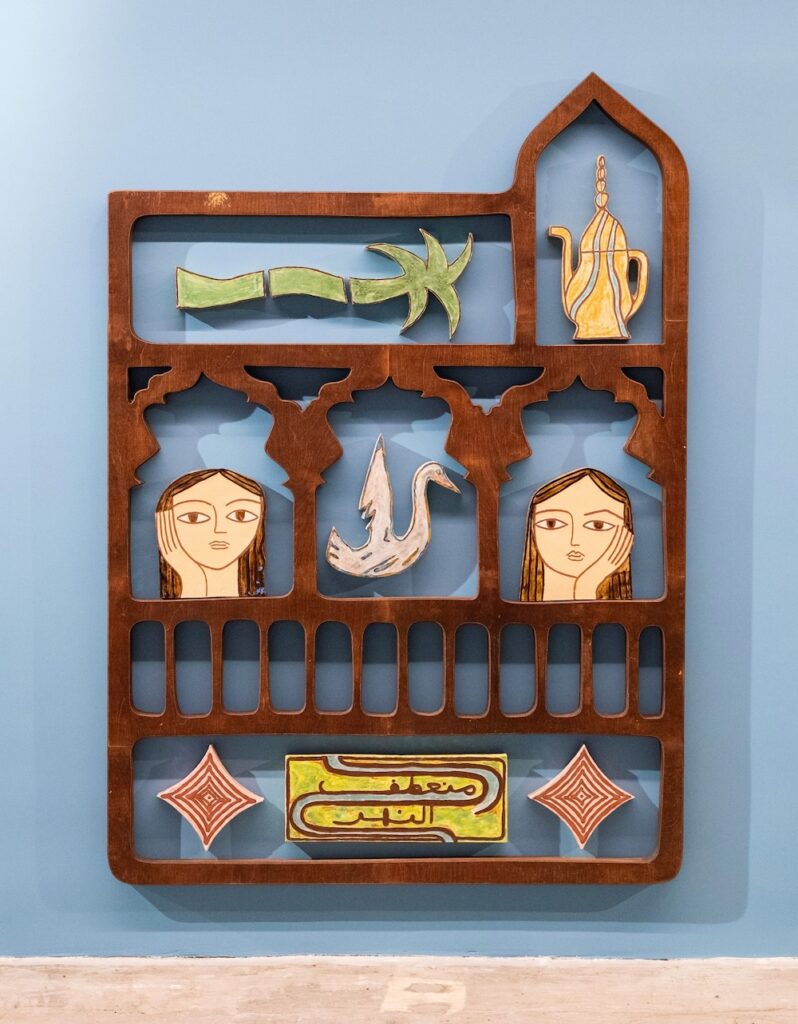
Recent exhibitions include Rave into the Future: Art in Motion, a group show curated by Naz Cuguoglu at the Asian Art Museum. Yousif has been busy completing work for her solo show, Above Earth, Under the Rays of the Sun, which runs through June 17 at The Pit in Los Angeles. The work in the show is inspired by ancient tomb objects and, Yousif says, what we choose to take with us when we move from place to place or realm to realm. Along with The Pit, Rebecca Camacho Presents in San Francisco is also a prime representative of her work.
“Maryam Yousif’s practice is a beautiful cross-pollination of personal, familial and ancestral histories,” gallerist Rebecca Camacho said of Yousif’s work. “Rooted in both her own lived experience and the deliberate research of more expansive Mesopotamian mythologies, Maryam holds her subjects’ stories with immense care. I think that sincerity, that humanity, is an unharnessable yet wildly important and tangible element in her work. Maryam has the ability to infuse her objects with soul, and that is a rare and wonderful capability.”
Indeed, for Maryam Yousif, storytelling through clay is a natural progression of her studies and her world view. She follows a pathway from ancient history to present discoveries within a preferred medium and approach. While life as an artist brings personal fulfillment, Yousif also hopes to inspire a similar feeling in others who view her work.
“I hope people who experience my work can experience joy and curiosity or something personal to themselves,” she says. “Anything but boredom.”
For more information, visit her website at maryamyousif.com.