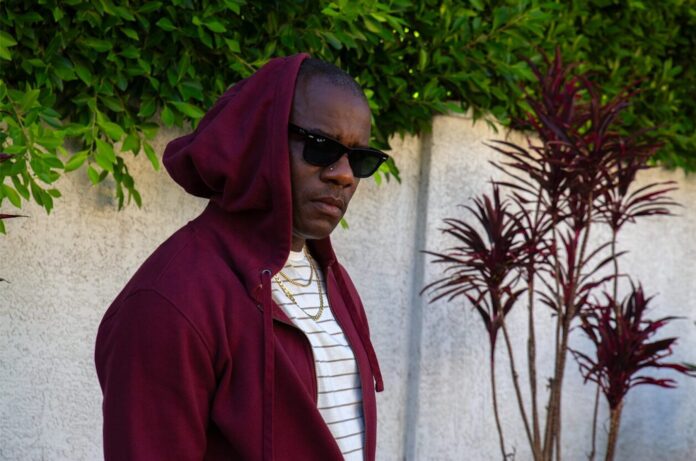
Before Sunspot Jonz helped build one of West Coast hip-hop’s most durable independent crews, he was a teenager monopolizing copy machines.
At Berkeley High, he made an underground newspaper to criticize administrators, cafeteria food, and whatever else seemed worthy of a 16-year-old’s attention. Producing it could mean hours inside a shop, enlarging pictures and arranging pages by hand. The inconvenience was part of the education. Years before homemade rap tapes became his livelihood, Corey Johnson was learning that publishing did not require an invitation.
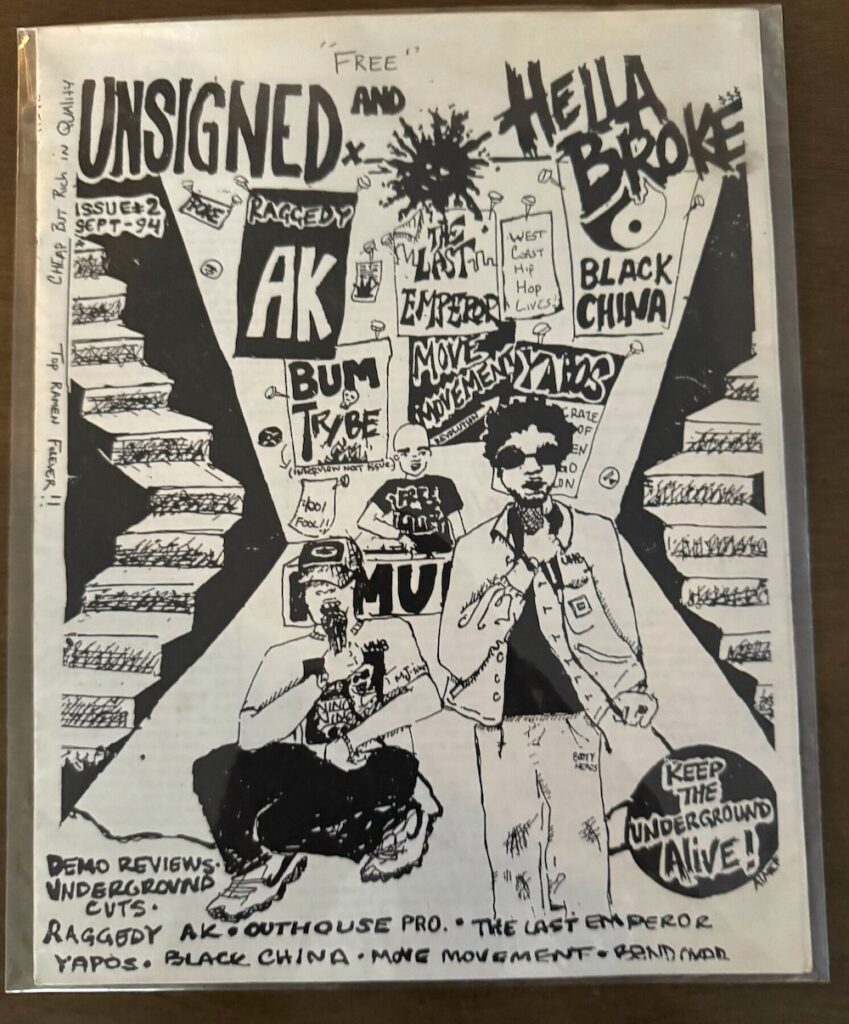
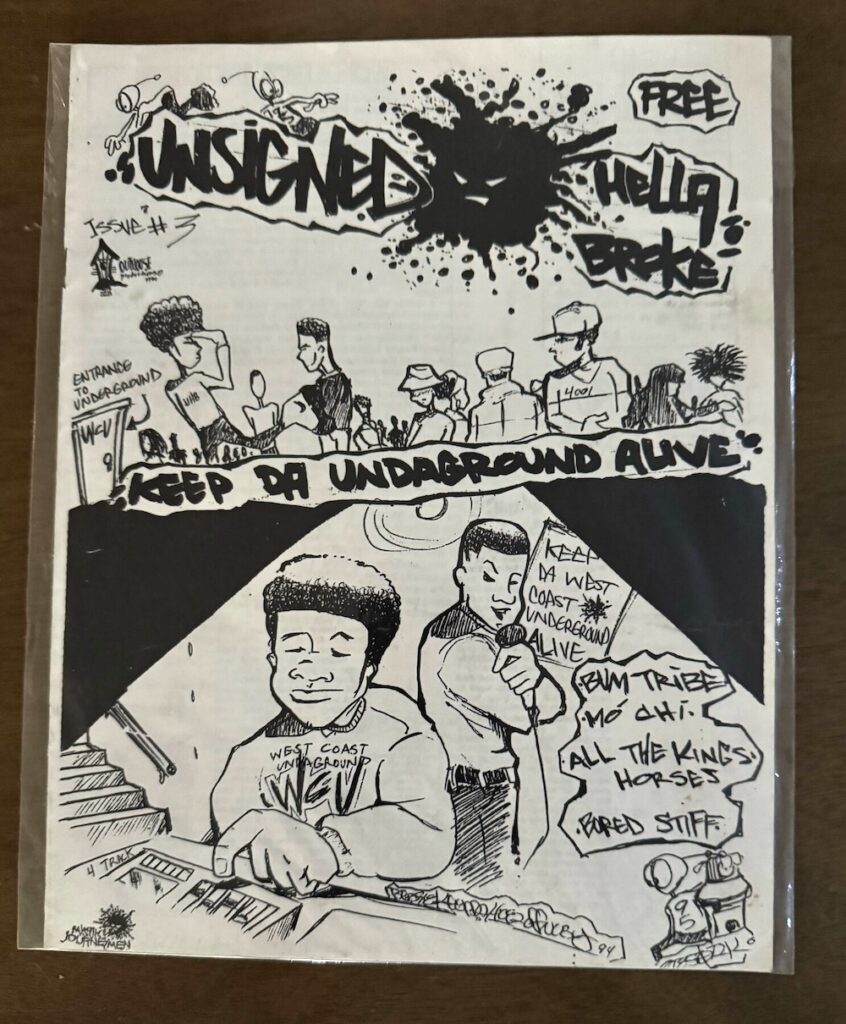
“I would be in some establishments for seven hours, and they’re like, ‘Can you get out of here now?’” he recalled. That paper from his teenage years prepared him for creating Unsigned & Hella Broke, the rough-edged zine that would give a name to a wider East Bay hip-hop network. “We need our own voice,” he said. “We didn’t even sit around and wait for anybody to tell us we are who we are.”
His refusal to wait is the thread that stretches from the sidewalks of Telegraph Avenue to Hip Hop Fairyland, the free family health and culture event returning to Children’s Fairyland in Oakland on August 22. Jonz’s work has expanded from rapping and producing into children’s books, animation, filmmaking, and community programming. The medium changes, the method does not: recognize what is missing, make it yourself, and leave the door open behind you.
Jonz’s urgency was ingrained in his identity early-on. He was adopted at four, he said, and spent much of his youth moving through foster homes and state custody. At different points, he slept in cars, closets, and behind a dryer in an apartment building’s laundry room for warmth. In East Oakland, hustling appeared more practical than staking a life on imagination. He chose imagination anyway.
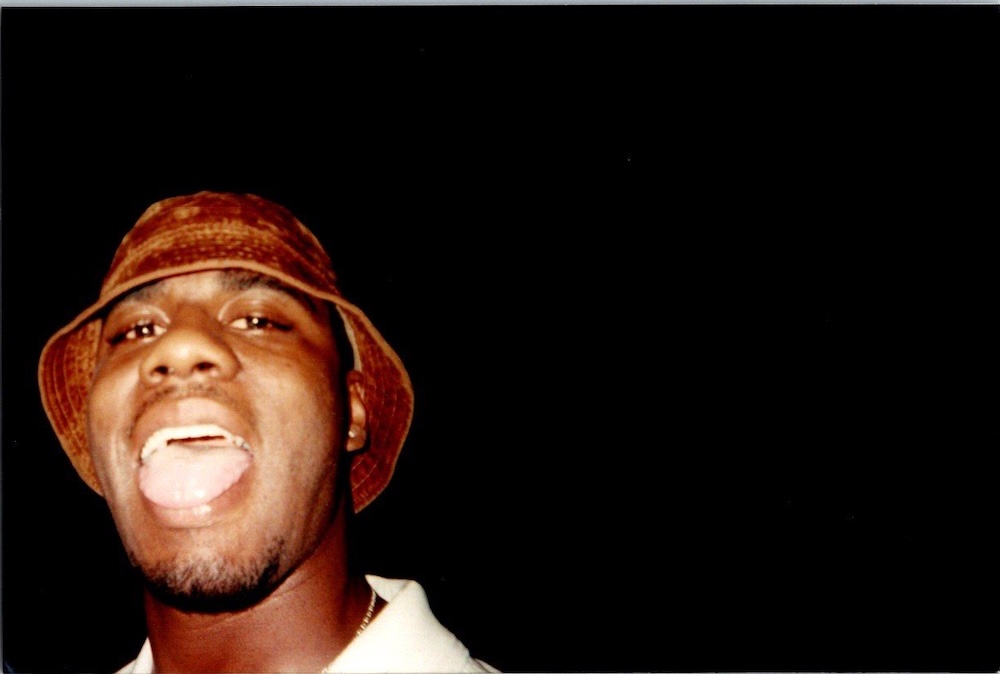
“I came back and I just decided that no matter what, I was just going to make something happen off of these dreams,” he said of leaving college and returning to the Bay Area. “If I was gonna fail, then I can always fail being a basic, typical person doing the same old shit. But I didn’t want to do that.”
Berkeley became his proving ground. He had attended Berkeley High in ninth grade and later, returned to write near the Central Library and spend long days around Telegraph. The avenue offered an unusual mix: UC Berkeley students from across the world, record stores, cheap food, and young people eager to step outside the identities school imposed on them.
“Telegraph just became the place I loved to be,” Jonz said. When he and Tommy “Luckyiam” Woolfolk began making music as Mystik Journeymen, they dubbed their own tapes and carried them there. “Telegraph kind of was the building base for everything.”

The sidewalks connected Oakland labor to Berkeley circulation. Artists recorded on four-tracks, duplicated cassettes, assembled covers and sold the results by hand. Jonz could reach listeners who would carry the music home to other cities and countries. The exchange was personal and immediate: a conversation, a few dollars, a tape passed from one palm to another.
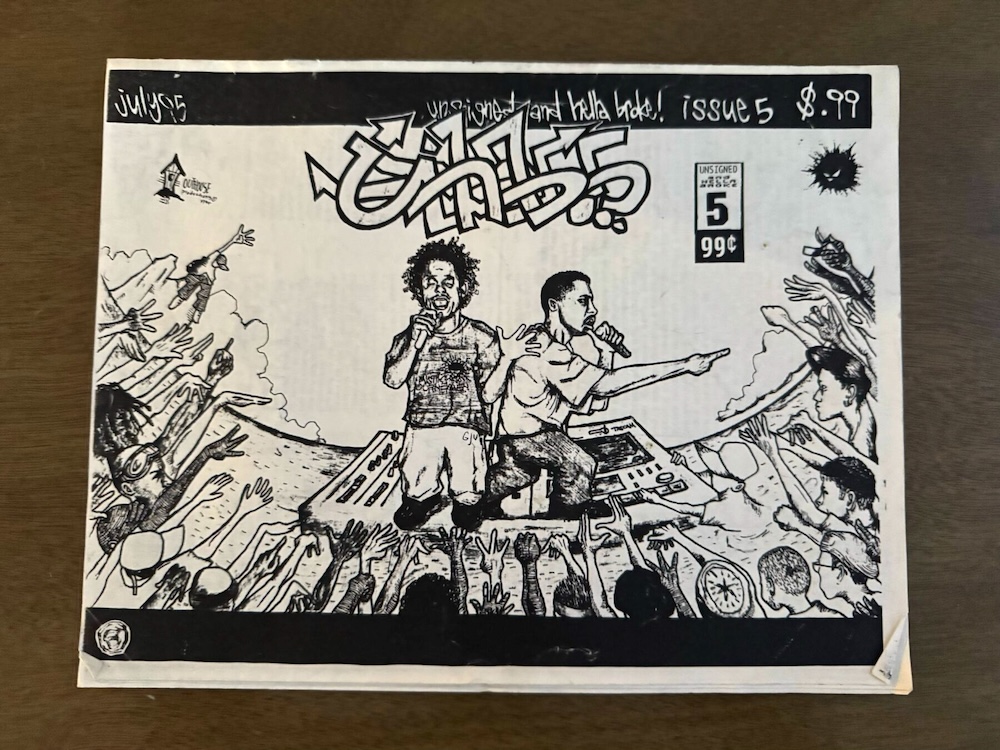
Years later, KQED would document that ecosystem as the “Unsigned and Hella Broke” era, a loose community that also included Fundamentals, Kirby Dominant, Queen Nefra, Hobo Junction, and other artists circulating along Telegraph.
The phrase came from Jonz’s zine, but he insists it was never a simple declaration of poverty. “Unsigned and hella broke was also unsigned and hella dope,” he said. “We can make our own lane. We can create our own destiny.”
Jon Jordan met Jonz through mutual friends around 1991, when Telegraph was still a destination for records, clothes, pizza, and chance encounters. He remembers Unsigned & Hella Broke as a folded, handmade dispatch carrying local demo reviews, graffiti, scene reports, jokes and rumors. Informality was part of its authority: the people making the culture were also recording it. “Corey has always been about organizing people so that people can maximize their own potential, and everybody has a good time,” Jordan said.
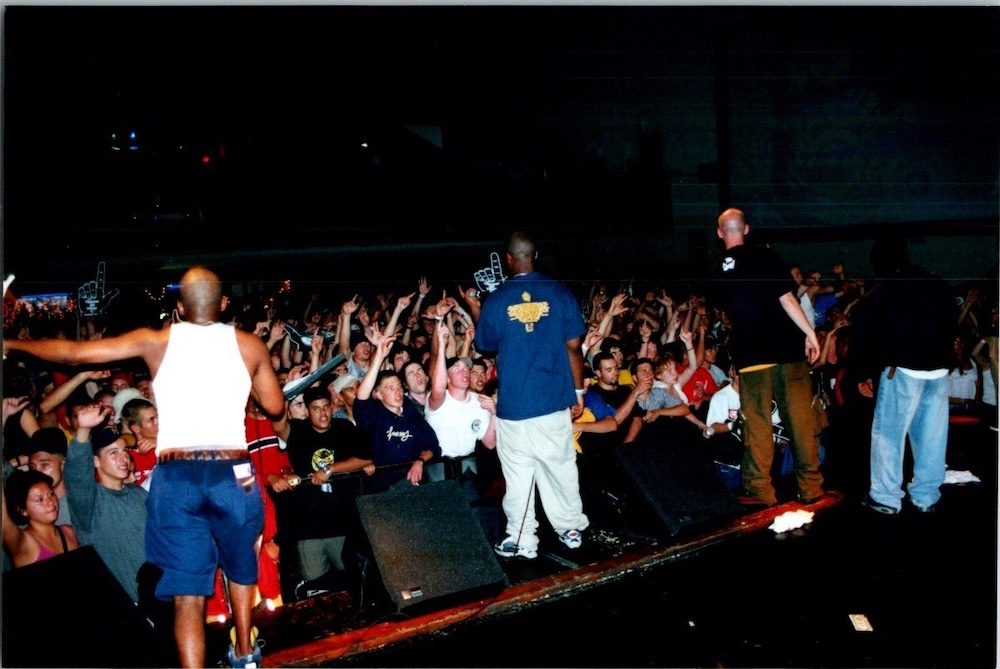
What began with a few individuals widened into shows and warehouse parties. Broke Ass Summer Jam became an answer to the commercial radio festivals many young fans could not afford. Early events could cost a few dollars plus a packet of instant ramen. They were playful, improvised, and serious about access.
Jordan watched those economics become a world. At the early loft parties, he recalled, people arrived holding ramen packets and snacks for admission. “I’d be like, ‘This is crazy. They’re building their own little thing,’” he said. Oakland housed much of the party infrastructure; Telegraph supplied the public-facing push, where the music traveled hand to hand.
They were also meant to be safe. Jonz remembered violence surrounding other parties and shows while his crew worked to create rooms where people could make art without anticipating a fight or a shooting. “We find some universal understanding through weed,” he said, describing those gatherings, “and then I’m playing music, and we find universal understanding through that.”
Mystik Journeymen became the nucleus of Living Legends, the collective co-founded in 1996 by Jonz and a group including Luckyiam, the Grouch, Murs, Eligh, Scarub, Aesop, and Bicasso. They toured without the industry add-ons artists were told they needed, cultivating audiences overseas and releasing music through their own network. The greater achievement was building an infrastructure in which independence could last.
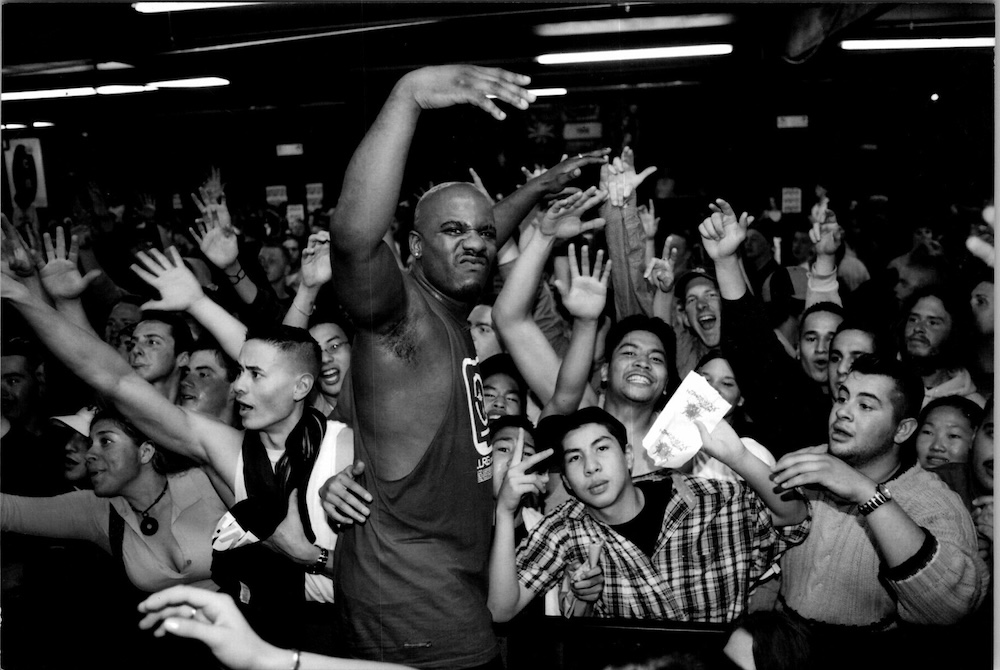
Kirby Dominant, a UC Berkeley alumnus who knew Jonz from the early scene, watched that organizing instinct operate at close range. Jonz included him on records, brought him on tour, and continued making room for him across decades. “He’s still a beacon for independence in hip-hop, and doing it yourself, because he’s still doing it,” Dominant said. “His whole thing was ‘break that fear.’”
That instinct now reaches audiences too young to remember cassette J-cards. Through Hip Hop Scholastics, Jonz has helped shape Hip Hop Fairyland as a back-to-school gathering combining music, dance, beat-making, and art with dental screenings, health enrollment assistance, and children’s literacy. Its first iteration grew around his book The Dentist and the Fire Breathing Dragon. The fourth event arrives August 22 at Children’s Fairyland, where Jonz spent time as a teenager when his father lived nearby.
The location may indicate that Jonz is completing a circle—but he’s far from being reduced to nostalgia. He continues recording and describes projects spanning albums, a Mystik Journeymen documentary, film, animation, and Braveheart Books, his children’s publishing banner. He spoke enthusiastically about Bubbles the Brave, a story involving visitors from a planet where love is free, and about new music that remains part of the same imagined universe.
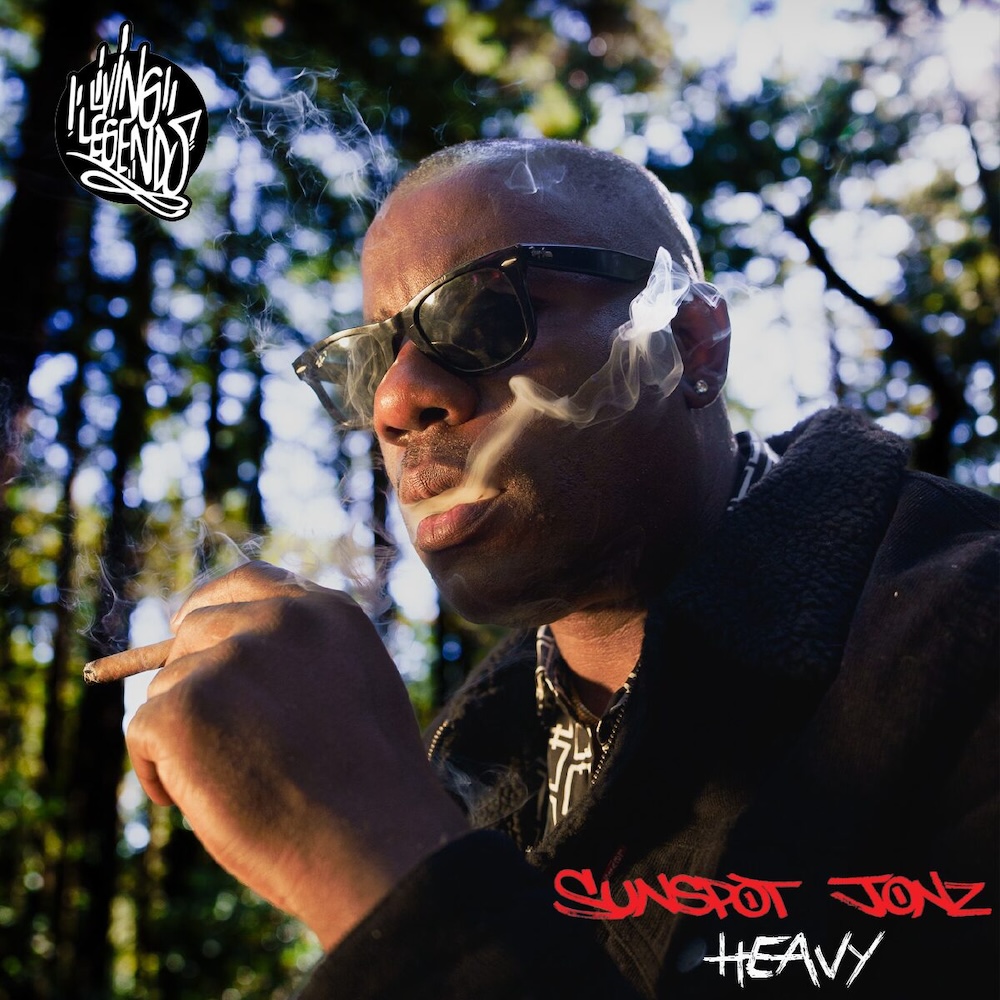
“People say, ‘Oh, you’re always working.’ I call it breathing,” Jonz said. “These things help me breathe, so I can get deeper and deeper and create more and more.”
That abundance can obscure the organizing principle beneath it. Jonz is not only a project-designer. He builds containers for people: a zine for artists excluded from glossy magazines, a party for listeners priced out of the big show, a collective that could tour without waiting for a label, a children’s book that makes oral health fantastical, a public event where care arrives through rhythm and play.
There is a temptation to treat the handmade era as a lost world: Leopold’s is gone, music no longer needs a cassette deck, and Telegraph’s cultural rhythm has changed. While the pulse has changed, the useful inheritance is the permission artists gave themselves.
Jordan sees the same organizing capacity in Jonz’s present community work and imagines it scaling further. “I can see that guy in City Hall,” he said, contemplating what that same sincerity could bring to larger civic work. Jonz, he added, is not selling people a dream he does not believe. He is asking them to help do something tangible “for the community or for hip-hop or for the kids.”
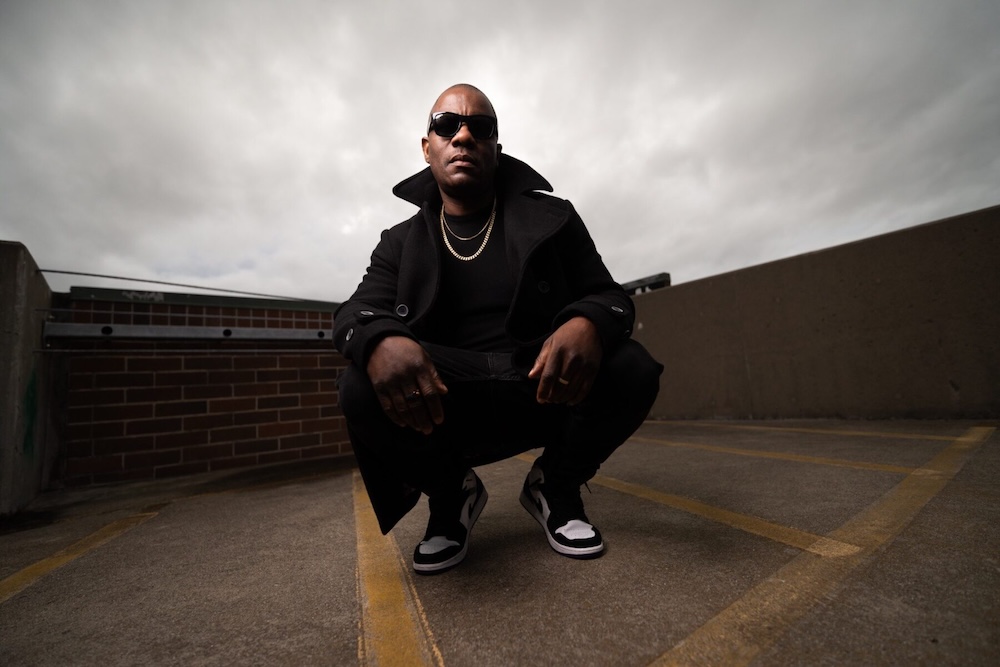
Jonz still describes imagination as a practical survival tool. “My legacy is love,” he said, “and the love of yourself.” He hopes people remember that he made safe places to express themselves and encounter one another. “Everything that I create is a different part of my soul,” he continued, “and a different understanding of how I process life—but as well, how you can process your life through imagination.”
On Telegraph, imagination once looked like a Xeroxed sheet and a dubbed tape. At Fairyland, it may look like a dragon teaching a child not to fear the dentist. Jonz has spent decades changing the form while protecting the proposition: if the world has not made a place for you, start building—and make it large enough for somebody else.
HIP HOP FAIRYLAND August 22. Children’s Fairyland, Oakland. More info here.