For Babeth Mondini-VanLoo, a day spent filming artist Joseph Beuys at the Guggenheim and a night documenting the Slits in a club belonged to the same creative life.
“I don’t believe in a division between high art and low art,” she told 48 Hills. “Both were my world.”
That world comes into view at the third annual Studio 8 Film Festival. Running Fri/6–Sun/8 at the 4-Star and Roxie theaters, the fest celebrates filmmakers connected to the San Francisco Art Institute. The festival is named for the school’s former film production studio on Chestnut Street, where George Kuchar and generations of students made movies.
The weekend opens at the 4-Star with experimental and personal documentary shorts by this year’s open-call jurors, Ed Jones, Michael LaRocco, and Jacalyn White. Among them is Jones’ Nine Years Behind the Wheel, a visual diary of his late-’70s adventures driving a San Francisco night-shift taxi. A conversation moderated by V. Vale of RE/Search and a reception follow.
The next afternoon, the 4-Star hosts Personal Visions, a selection of 18 shorts featuring work by Susan Weiss, Colette Standish, Kavena Hambira, Irene Carvajal, and the WE DA PEPO collective.
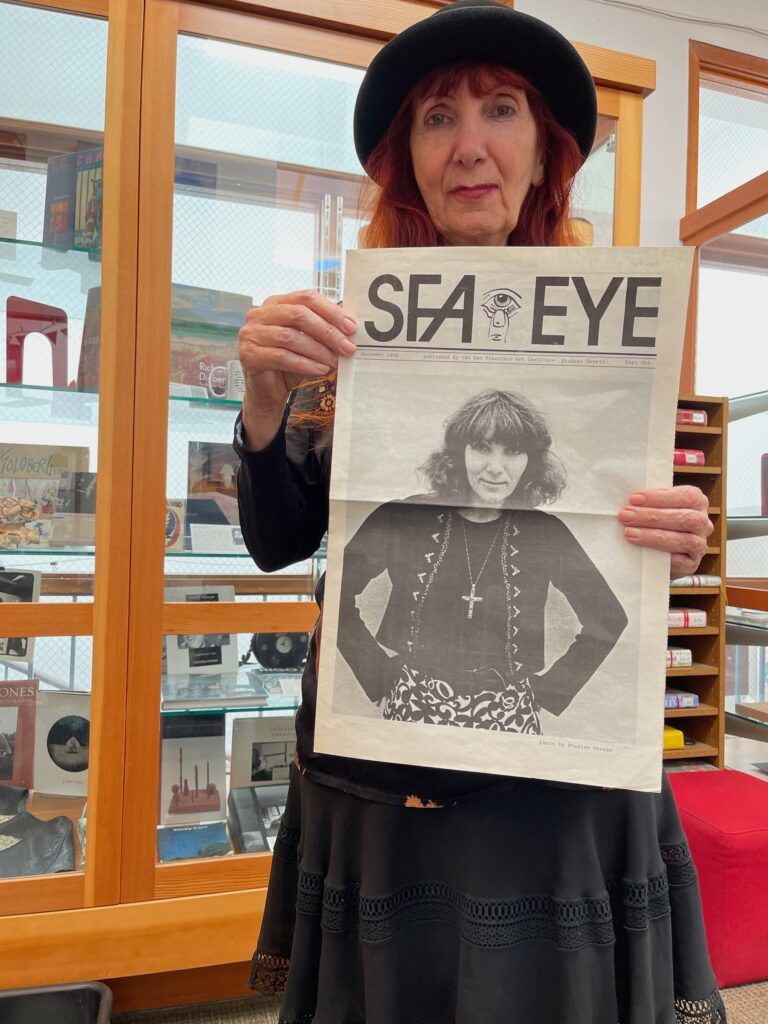
On Sunday, the festival moves to the Roxie, where Mondini-VanLoo will receive the Legacy Award and present four films on Sun/8. The program ranges from the Sex Pistols’ final concert at Winterland to Arnold Schwarzenegger posing as a living sculpture, with stops for Keith Richards and the European art movement Nouveau Réalisme along the way. A conversation follows with San Francisco curator Tanya Zimbardo.
Outside the festival, Mondini-VanLoo, who earned her MFA in film at the Art Institute, will also screen her recent documentary, Dalai Lama: My Religion Is Kindness, at the Roxie on Nov. 7 and at the Rafael Film Center on Nov. 15.
Born in the Netherlands, she studied performance and sculpture with Beuys in Düsseldorf before coming to the US. His idea of “social sculpture” influenced her, which held that art and life were inseparable.
In New York, she met Andy Warhol through Beuys and spent time at the Factory. But she found the city overwhelming. “It was a heavy time,” says Mondini-VanLoo. “I was young, and it seemed like almost every week somebody was dying or overdosing.”
Looking for a place where art and life could meet, she traveled across the country and found the San Francisco Art Institute. There, she met teachers and artists, including Kuchar and filmmaker Gunvor Nelson, as music and cinema fed each other.
“Many students were musicians, and the punk scene was vital,” Mondini-VanLoo says. “You could find me at Mabuhay Gardens almost every evening, documenting what was happening.”
Mondini-VanLoo contributed to the punk publication Search and Destroy. Through that circle, she attended the Sex Pistols’ final concert at Winterland in Jan. 1978. She recalls the room’s energy was “alive.”
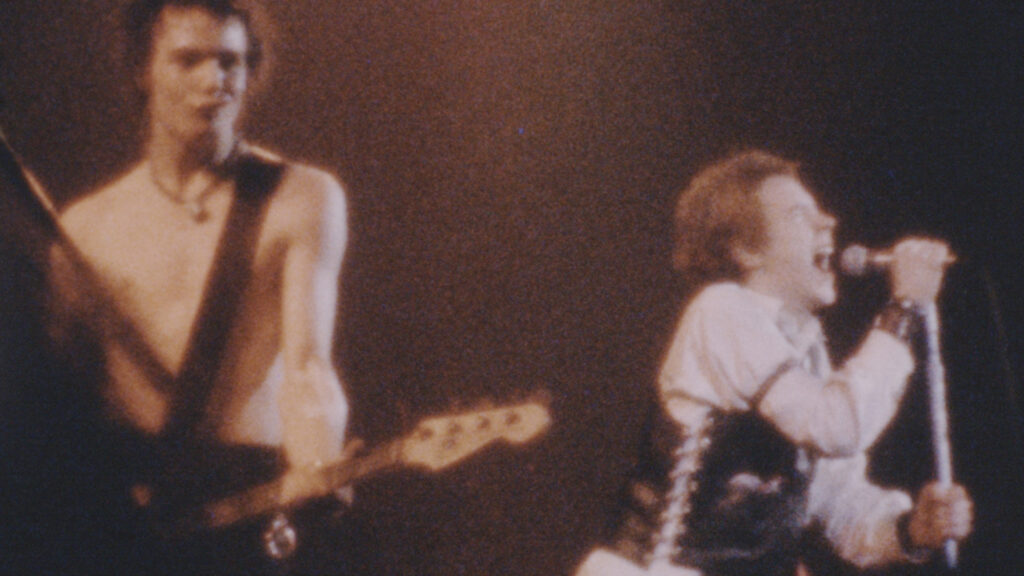
Her 1978 film Berlin Wall & Sex Pistols pairs that concert with footage she shot of the wall in Germany. For Mondini-VanLoo, the connection was political: she saw the band’s lyrics and its resistance to the music industry as part of an engaged punk movement.
The meaning emerged in the editing room. Using an optical printer, she made images move from stillness into motion, a gesture she associated with the band’s power to spark change. The film ends with a message calling for the wall to come down.
“Nobody dreamed the Berlin Wall would fall,” says Mondini-VanLoo. “Every time I see that image, I’m happy it happened.”
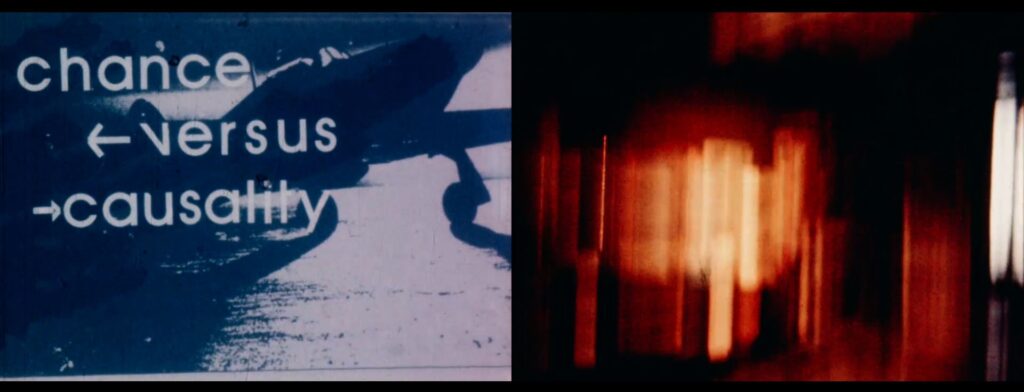
The Studio 8 program also revisits 1979’s Chance Versus Causality, her two-screen film following artist Daniel Spoerri through San Francisco, Paris, and Cologne. One screen provides art-historical context and conversation; the other moves through associative images and found footage. The film includes Christo’s Running Fence and encounters with artists Jean Tinguely and Niki de Saint Phalle.
Mondini-VanLoo asked Cabaret Voltaire to create the soundtrack. Because chance was central to the project, the band saw some of the material but did not score a completed film in a conventional way. The group even recorded one version with their eyes closed, she says, and she mixed the recordings together.
Her 1977 short Not Guilty: For Keith Richards, made with friend and visiting Art Institute artist Abel Ferrara, responds to Richards’ 1977 drug bust. Mondini-VanLoo says she and Ferrara were angry at what they saw as the media’s role in portraying the musician as a trafficker.
“That little film was about media manipulation,” she says.
It also captured a gathering of people from the period, including late German filmmaker Rosa von Praunheim in the background. “It’s a short film,” adds Mondini-VanLoo, but I think it shows the energy of the time.”
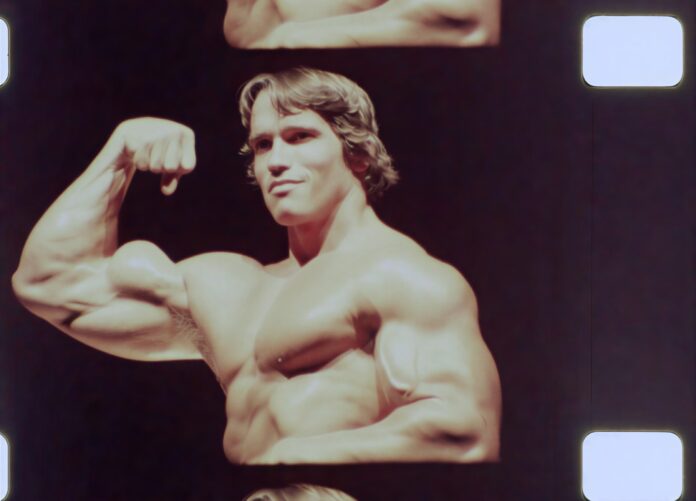
For Arnold Schwarzenegger: The Art of Bodybuilding, Mondini-VanLoo approached the future actor and politician with a different proposition: Would he pose as a living sculpture?
He liked the idea, so she filmed him around the 1976 Mr. Olympia competition and followed him on tour. Her later film, from 2020, combines that footage with an interview her former husband, Raymond Mondini, conducted.
The experience challenged her assumptions. “I had a preconceived idea that bodybuilders weren’t intellectually developed,” says Mondini-VanLoo. “I was wrong.”
Schwarzenegger, she recalls, immediately understood her interest in the body as performance and sculpture.
Mondini-VanLoo’s connections at the Art Institute extended beyond filmmaking. She and photographer Pamela Moser, known as Camera Z, organized a performance art series and invited visiting artists. They worked with Tuxedomoon performer Winston Tong; Bruce Geduldig, her former student, later created the band’s stage projections.
She also recalls helping bring Angela Davis to teach at the school, an accomplishment she remains proud of. And she carried work from San Francisco to Europe, traveling with experimental films and programs by gay and lesbian filmmakers. Only later, while teaching in Berlin, did she recognize that exchange as part of an emerging transatlantic network.
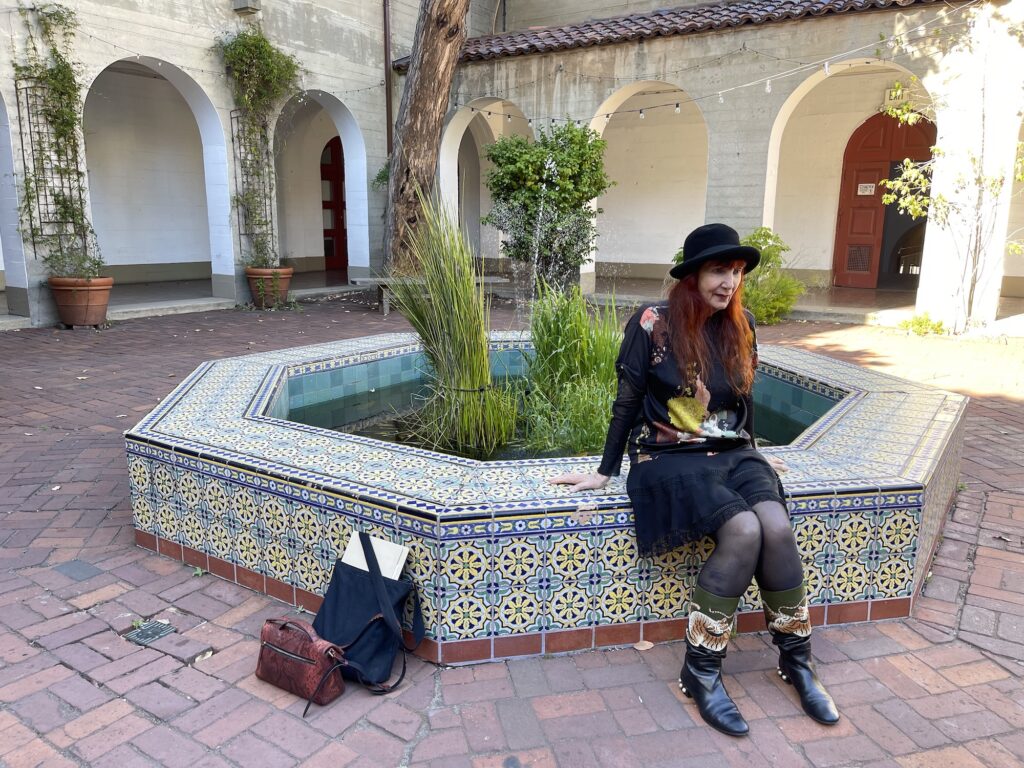
The Art Institute’s closure in 2022 still hurts. She hopes its 151-year legacy survives in a place where people can meet and make work together.
“Making art is one of the greatest resources we have as human beings,” says Mondini-VanLoo. “It’s where we can develop and realize our potential.”
That belief also connects her early work to her later exploration of Buddhism. Mondini-VanLoo began making Buddhist films in the late ‘80s and eventually co-founded BOS, a Buddhist television station in the Netherlands, where she served as programming director for 13 years. She also founded the International Buddhist Film Festival Europe.
For her, Beuys’ assertion that everyone is an artist parallels the Buddhist idea that everyone has Buddha potential. She says both offer ways to develop as a person.
Her new Dalai Lama documentary continues that interest in putting ideas into practice.
“My Religion Is Kindness is also an activist film,” says Mondini-VanLoo. “It offers a medicine against war and hatred.”
STUDIO 8 FILM FESTIVAL Nov. 6-8, 4-Star Theater and Roxie Theater, SF. More info here.
DALAI LAMA: MY RELIGION IS KINDNESS Nov. 7, Roxie Theater, SF. More info here. The film also screens Nov. 15 at the Rafael Film Center in San Rafael. More info here.