
48 Hills hit up the annual Noise Pop festival (February 19-March 1) to sample the indie music feast. Check out our full coverage here.
SML doesn’t play songs live, per se. They don’t run their so-called hits, joints, or jawns for the masses.
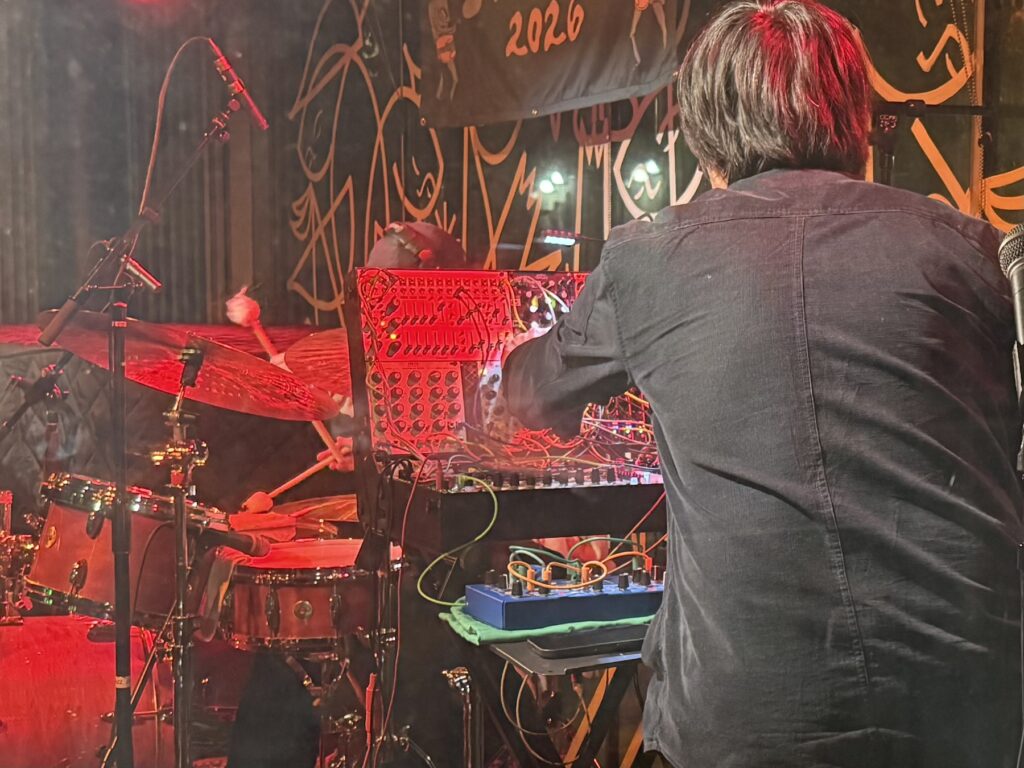
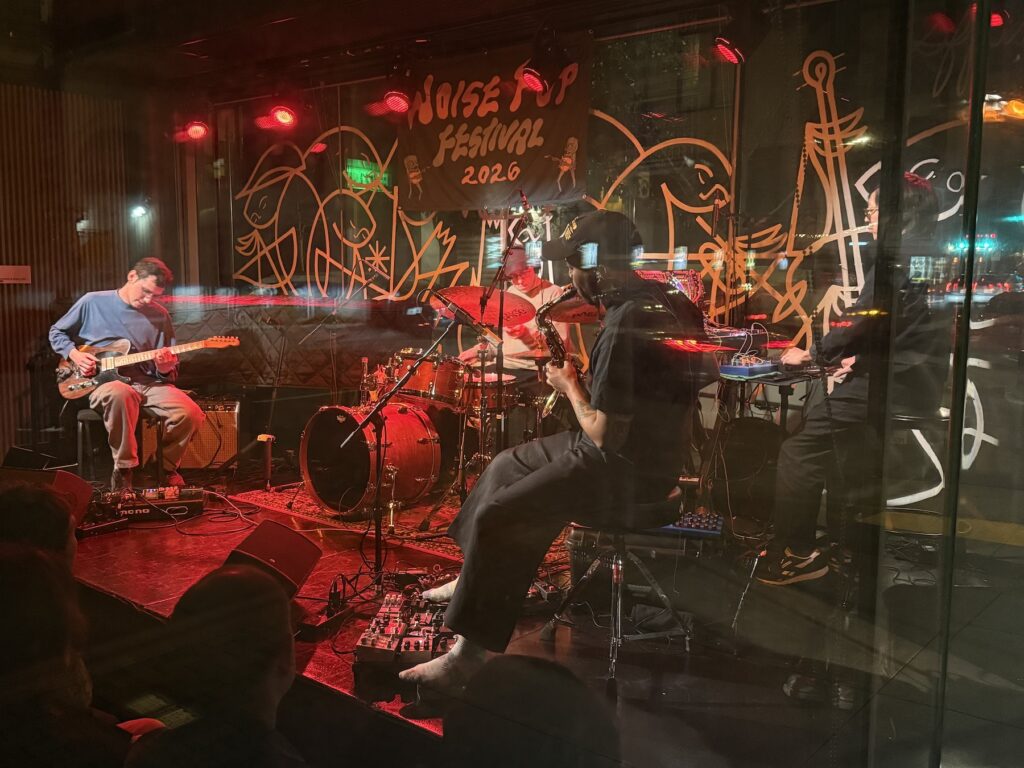
On February 27 at the Joe Henderson Lab at SFJAZZ, as part of the Noise Pop festival, synthesist Jeremiah Chiu, saxophonist Josh Johnson, percussionist Booker Stardrum, and guitarist Gregory Uhlmann canoodled about sections for a couple of minutes before launching into the next. Intense listening capabilities from these exquisite players required, more than anything else, a great deal of trust. They posited about thematic structures, which somehow got agreed upon, live in the moment through a collective groupthink. Right there on stage. No words spoken, just an exchange of bizarrely intense looks. Ranging from “we’re almost there” to “don’t you dare.”
That’s trust, people. That high-wire balancing act unfolded for almost an hour before the 100 or so collapsible chair-seated attendees, who wouldn’t have changed their location for a thing. Everyone in that sold-out Joe Henderson Lab knew these off-the-cuff, makeshift jamming rituals were what you paid for in real time. Following how they get from one stretch to another is the actual payout. There’s nothing like what’s happening in SML in the music world right now.
This union of musical telepaths has never actually entered a recording studio together; most of SML’s members have residencies in other, larger groups. Which might explain the glaring absence of Anna Butterss, bassist and anchorperson of the group, who you can always rely on just when things are about to get a bit too light in the frequency? Butterss always arrives, right on time, to lather on that slick, gravitational ooze. It’s footing. When hands get sweaty, and backsides get tight, Butterss recalibrates the arrangement, returning everything to heartbeat tempo at square one. While Chiu did double duty quite well, make no mistake, Butterss was missed.
The band’s two albums, which have wreaked havoc with avant-garde jazz fans, electronic music heads, and indie-rock enthusiasts, consist of recordings from a handful of live performances in various cities by the band, which get manipulated, smooshed into submission, disassembled, and then rebuilt with Afrobeat chug, saxophone sound layers, and mechanical bleep-percussive plucks.
As improvisers first and foremost, the LA-based outfit’s music evokes the styles of Herbie Hancock, Chick Corea, and Wayne Shorter, reminiscent of their jazz rock performances with Miles Davis, who at the time was exploring Krautrock while blending funk elements. SML’s Small Medium and Large, from 2024, exemplifies the apex punch of call and response found in Fela’s Afrobeat ferocity; How You Been, from late 2025, illuminates the Tai chi version of Kung Fu, accenting the act of movement itself as the gift, not the intensity of it.
In concert, they begin with maybe a repetitive rhythm from the drummer, mallet in one hand, stick in the other, making a rolling interaction seem familiar, not foreign, like a newly heard reggae tune that soon catches on and sparks everyone’s attention. Ponder that, while a gurgling of percolating synth wave from Chiu washes up briefly from the fingers of that cold playing synthesist. Or peep saxophonist Johnson, who loops up and samples a hefty, broad-wide wall of commotion. When it’s presented as the aggressive moving background centerpiece, it alerts everyone in the band, “it’s go time,” and they are off.

As I arrived at the show too late to enter for the first set (Muni, am I right?), I stood outside in the SFJAZZ lobby, sipping a perfectly smoky Paloma cocktail where the mezcal operated beneath the surface like a hearty barbecue rub, while the live SML performance was broadcast over the sound system, with a bit of the low-end frequencies coming across as tinny. As I stared at the names of the SFJAZZ donors on the Giant Steps Wall, I was thinking about my late uncle Donald Washington, a jazz vocalist himself who worked with Jazz Action Movement in the Bay, and impressed upon me as soon as I moved to The Bay in the ’90s how important SFJAZZ would become once they built their own structure to house their own shows.
Swirling back around in my brain was SML’s elongated one-hour take that, from outside the performance Lab, started to resemble some of the ambient abstract compositions brought to life by the late Hiroshi Yoshimura via his environmental music series. Just the way notes were pinging, bouncing, absorbing energy from the impact on surfaces and then propelling themselves, those sounds onto other surfaces, making the arrangements seem reactionary, constantly in rotation, revolving, and evolving.
But from the inside of Joe Henderson Lab during the second set, these stretches took percussive journeys, full and half-time excursions. Experimental? Yes. Jazz? Well, that’s the easiest way to label it. The four-person crew sailed in and out of ambient structures, purposely swanning right into funk-rock and techno polyrhythms—cooked up by Chiu, nailed down by Stardrum—and easily slid into some proto-Detroit electronic segment, that had many folks headnoddin’, shouting out a bit, and feeling a certain type of way. Johnson had his looped-up pedal working, building these musical avalanches from a multitude of mini sax solos, establishing that background ephemera for the band to bounce ideas off of.
The energized palette of notes, filled with horizontal flights even as the band landed the plane, colored the stunned faces of exiting attendees, transformed by something they did and could not believe happened.