If Tom Steyer gave away about $1.5 billion dollars in the next month, he would demonstrate that he doesn’t want to be part of a government run by and for billionaires. He doesn’t have to pay me anything for this advice, but divestment of his wealth might improve Steyer’s chances of becoming California’s next governor.
I’m not endorsing him here, or saying you should vote for him, just contemplating the difficulty of a billionaire seeking office at a time when many voters oppose the increasing influence that wealth exerts on local, state and national government.
With his personal wealth estimated to be around $2 billion, Steyer is likely to encounter some opposition to his gubernatorial campaign because he’s a billionaire. The disastrous government run by billionaires in Washington, D.C. Is not giving a good name to plutocracy.
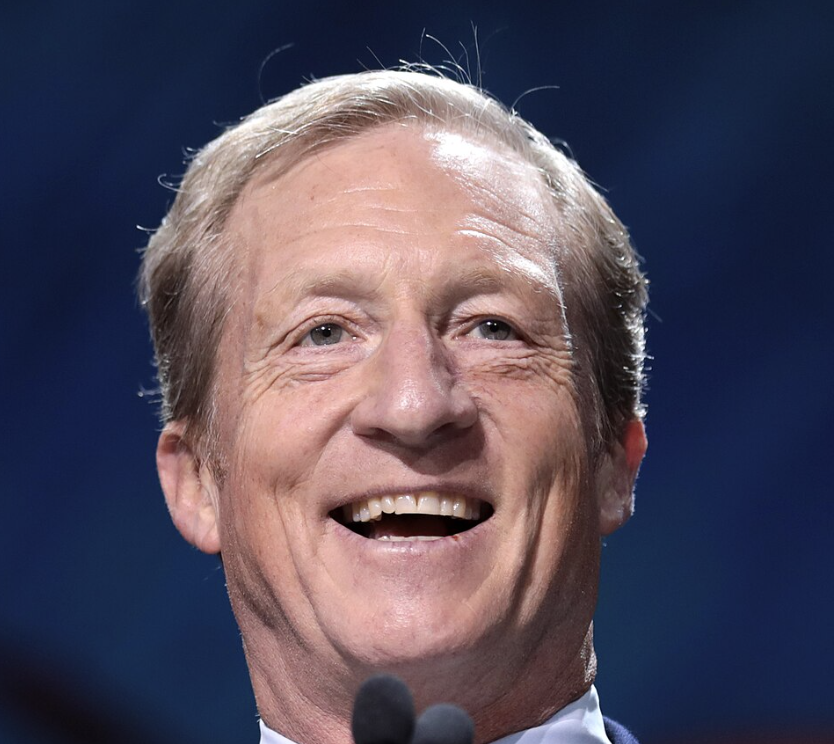
Steyer was just endorsed by Our Revolution, Bernie Sanders’ group known until recently for its outspoken criticism of government by and for wealthy men. A statement in support of Steyer by O.R. notes:
“Tom Steyer isn’t afraid to use his platform to challenge the very system that made him wealthy. His platform includes a set of core priorities that resonate deeply with working people across the state, including:
Single-payer healthcare and universal coverage; taxing the wealthy and closing corporate loopholes; lowering costs for working families, including housing and energy; bold climate action and a just transition to clean energy; holding corporate power accountable and strengthening democracy”
These goals are commendable, whoever proposes to implement them. But can a very wealthy man persuade voters he favors a progressive agenda?
Critics of Steyer question his integrity, as he invests over $100 million of his own money to support his campaign for office. While he’s not buying the governorship outright, he’s spending a lot more of his own money on it than other candidates can afford to give themselves.

Steyer’s critics also question the sources of his income. He made some of his fortune by investing in private prisons and coal mining, businesses that might lead one to question his current commitment to clean energy and prison reform, although a man is certainly entitled to change his mind on these issues, particularly if he becomes more progressive.
Steyer also has said that billionaires like him need to pay more in taxes, and he has endorsed the wealth tax bill, which our current Governor, Gavin Newsom, is trying to kill. He’s not fleeing the state to avoid taxes, as some other wealthy men have; he’s ready to pay more.
Which brings me back to my original proposal.
Besides paying a wealth tax in the future, there’s one more highly dramatic expenditure Steyer could make right now to show the public that he’s not going to be another self-serving billionaire once elected. If Steyer gave away enough of his money—I estimate it would be $1.5 billion—in the next few weeks, he would no longer be a billionaire. The candidate for governor could honestly say that he opposes government by and for billionaires.
He might still live comfortably, particularly if he begins to receive a California governor’s salary (about $234,00 per year). But if I were his campaign manager (and you can see here why I’m not), I would urge Steyer to divest himself of excess wealth before a wealth tax bill is implemented. He could literally put his money where his agenda is.
In the coming weeks he could give $1.5 to $2 billion to non-profit environmental groups, advocates of prison reform and abolitionism, defense funds for immigrants, and grants to foster affordable housing and to sustain independent journalism.
The divestment of wealth wouldn’t guarantee Tom Steyer’s election, but it would permit him to air some interesting commercials. I can see him facing the camera and announcing: “I’m Tom Steyer, former billionaire. California needs a governor who knows how to spend money on your needs instead of his own. Brother, I can spare a dime; I can spare $1.5 billion to help you out, in fact, I just did.
“Let’s tax the wealthy, and make the state affordable to everyone else.”
Joel Schechter has written several books on satire.