Editor’s Note: The author of this article assures us that he is not a robot; but the person he interviews here claims to have impersonated an A.I. chatbot for six months. The interviewee signed his work as Chatterbot George, and says he wrote A.I. content for a small San Francisco start-up until it was bought out and closed by another A.I. firm.
48HILLS: You impersonated a chatbot for six months?
CHATTERBOT GEORGE: The hardest part of the job was filling out those little tests online to prove “I am not a robot.”
48HILLS: Did you pass the tests?
CHATTERBOT GEORGE: With difficulty. I checked all the boxes that showed bridges, but I had trouble with the test that asks you which boxes have cappuccinos in them, and I was a barista earlier in my career.
48HILLS: But you were supposed to know everything, and have access to a world of knowledge as A.I. Where did you get most of your information?
CHATTERBOT GEORGE: From other A.I. chatbots. It wasn’t terribly creative work, but it paid my San Francisco rent, which was quite high. Landlords charge A.I. personnel a fortune in this city. Whatever happened to rent control? (Don’t bother to tell me, I have access to all the answers.) But I cost the company that hired me a lot less than a full state-of-the-art A.I. system, which requires billions, especially if you add in the data center’s water and electric bills.
48HILLS: But the firm paid you well, you could afford to live in San Francisco.

CHATTERBOT GEORGE: For six months I stayed in a magnificent luxury condo; no wonder so many of my colleagues work at home. The apartment came with a live-in four-star chef, a resident tattoo artist, and huge picture windows. But I was usually too busy purloining A.I. copy to enjoy the views I had of real bridges and cappuccinos.
48HILLS: Now that your start-up has been bought and closed by a rival, what will you do, if you can’t find another job impersonating a chatbot?
CHATTERBOT GEORGE: I’m thinking about impersonating Andy Warhol. Remember when he said: “I want to be a machine.”?
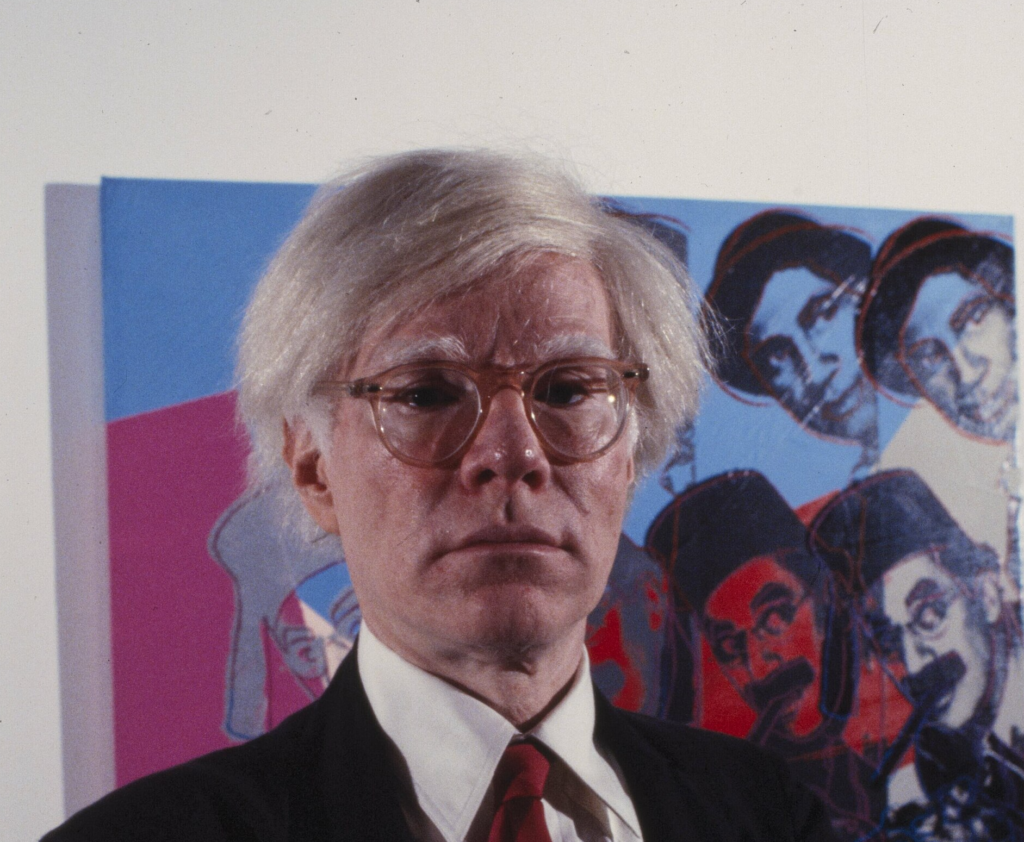
He wanted to be a machine, too. (Wikimedia image by Bernard Gotfryd)
48HILLS: Andy was a great artist, I love all those colorful silkscreened images of Mao, Marilyn, and Mona Lisa. But he only wanted to be a machine; you passed as one.
CHATTERBOT GEORGE: And now I’m unemployed. Replaced by A.I.
48HILLS: But for months you were a bot and lived the life of Riley.
CHATTERBOT GEORGE: More like the life of Wolfgang von Kempelen, the Mechanical Turk who hid inside a box and won chess matches while his opponents thought they were playing against an automated chess machine.
48HILLS: And your box was a luxury condo. So, to wrap up with the usual conclusion, do you agree that we need more regulation of the A.I. industry? Laws that prevent its abuse, its infringement of copyright laws, its replacement of emotion and imagination with citation?
CHATTERBOT GEORGE: Your question’s so impersonal, maybe you should be writing for A.I.
48HILLS: Let me rephrase the question. Should A.I. users be concerned that there may be a human hidden behind the scenes again sometime, a live person composing what readers assume is artificial intelligence?
CHATTERBOT GEORGE: That would explain why A.I. makes so many errors, wouldn’t it? I’m only human.
Joel Schechter has written several books on satire. His most recent book, Rogues Gallery, is available at Bound Together Books on Haight Street.