Jess Sabogal can’t be put into one category when it comes to making art. Rather, they check many boxes within a diversely defined art practice. Sabogal has long used printmaking and large-scale public murals to document and disrupt narratives surrounding queer, trans, migrant, women of color, gender-nonconforming, and Indigenous people.
“I am a social practice artist working across public art, printmaking, sculpture, photography, and ceramics. I began 16 years ago as a muralist, and have since expanded into three-dimensional work, bronze casting, clay, and installation. Through portraiture, I erect my own monuments to create visibility in communities worldwide that preclude and exclude members of my community,” Sabogal said.
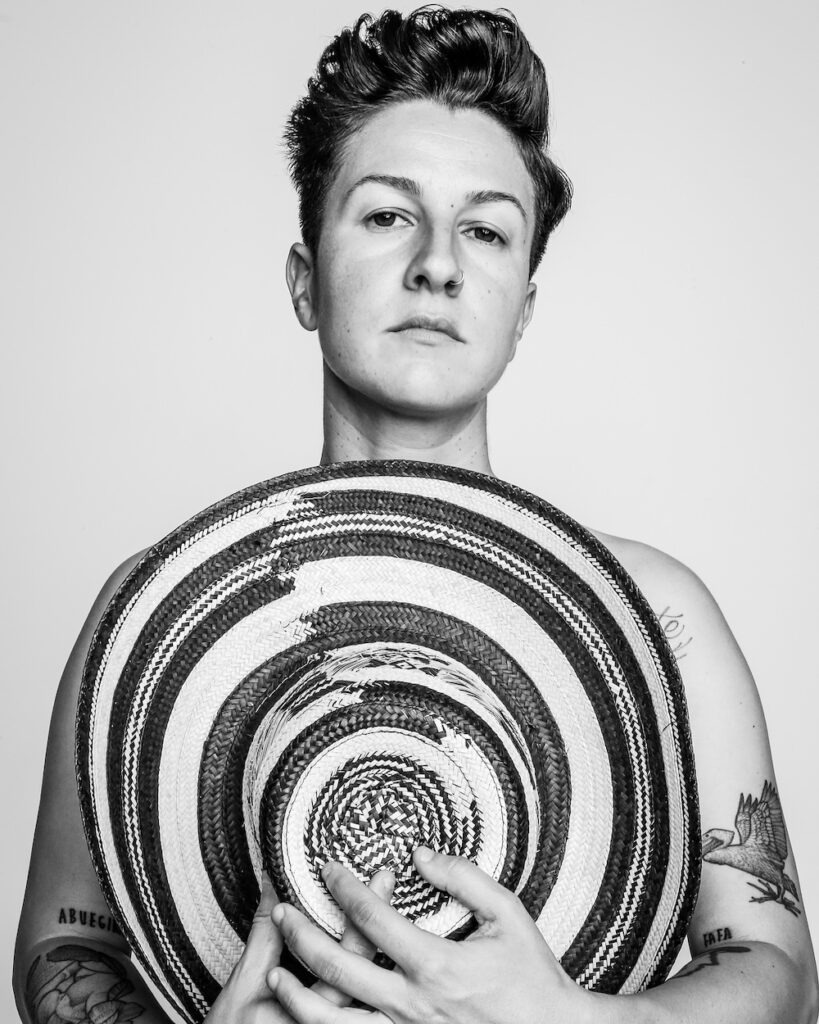
They explain that their commitment to creating public art through large-scale, hand-painted murals is shaped by the tension they experience in their body while navigating spaces that deny their right to exist.
“Each work captures this ongoing negotiation of safety, visibility, and belonging. By making these narratives visible in everyday spaces, I hope not only to foster moments of empathy, but to challenge our communities to reimagine public spaces where our presence is seen, honored, and protected.”
Born to Colombian immigrant parents at Kaiser Permanente Hospital on Geary Boulevard in San Francisco and raised in Daly City, Sabogal says they were formed by myriad influences growing up: outdoor basketball practice in the Daly City fog, long drives on the 280, the murals along 24th Street, and the political histories of the Bay Area from the Black Panther Party and the Third World Liberation Front to the occupation of Alcatraz by the Indians of All Tribes.
“At the same time, I was shaped by the humidity in Barranquilla that made my hair curl as it should, the yellows of the colonial houses in Cartagena, and my abuela Leonor’s ajiaco (a traditional Latin American soup) waiting for me whenever I arrived in Bogotá. I grew up understanding that home could be several places at once, and all of them continue to shape how I see the world and make art,” Sabogal said.
Currently an MFA Candidate of Art Practice at Stanford University (2027), Sabogal lives in East Oakland, near High Street and 880, and commutes to Palo Alto six days a week for school.
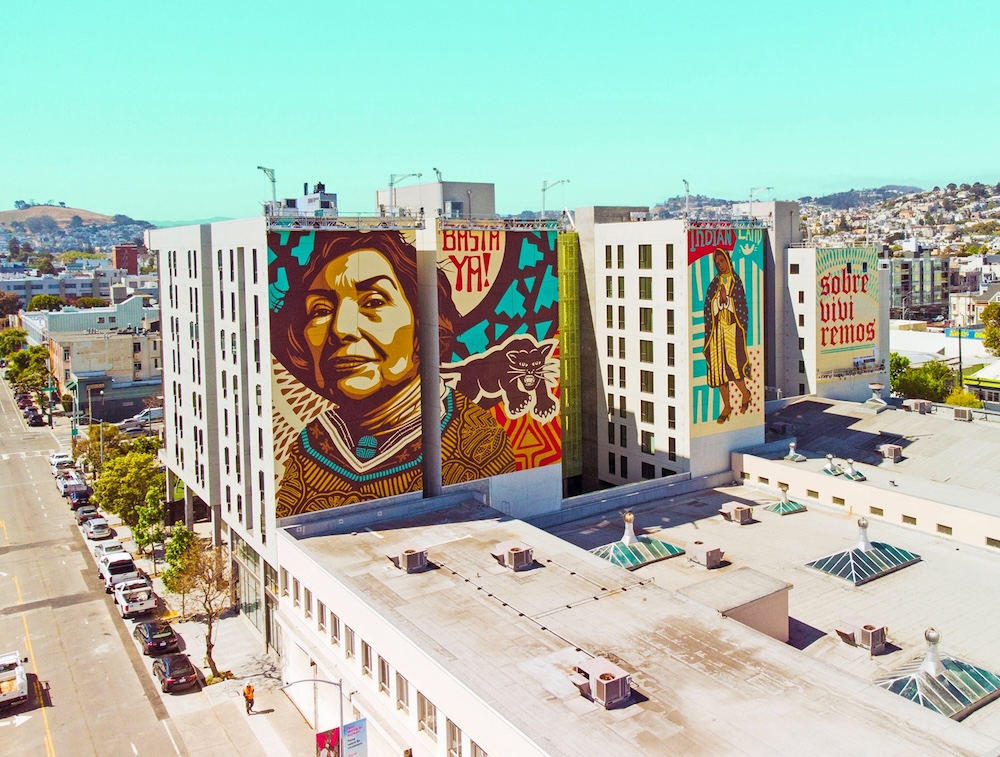
“Oakland raised me as an artist, and even though much of my current studio life takes place at Stanford, this is still the city that shaped my practice,” Sabogal told 48hills. “The Bay Area’s reputation as the epicenter of cultural transformation, innovation, and social change is the backbone of my work. I take enormous pride in having been raised here to believe that liberation must be collective, for all of us or none of us. That belief shapes my worldview and runs through everything I make. I am always grateful to return from abroad to a place where I can be my full, authentic self.”
When seeking inspiration or the courage to address pressing issues, Sabogal draws strength from the direct approach of artist Emory Douglas. Regarding process, in 2012 Sabogal interned with woodworker Jared Rusten on 23rd and Bryant Streets in San Francisco.
“It completely changed the way I look at objects, materials, and how things are built. It taught me how the world works.”
They are also guided by the wisdom and spirit of Bay Area elders and mentors Yolanda López, Ester Hernández, Amalia Mesa-Bains, and the Mujeres Muralistas.
“Their work taught me that an artist can document a community, challenge injustice, and honor both struggle and triumph. I feel a responsibility to continue that lineage while making work that speaks clearly to the realities of my own time,” Sabogal said.
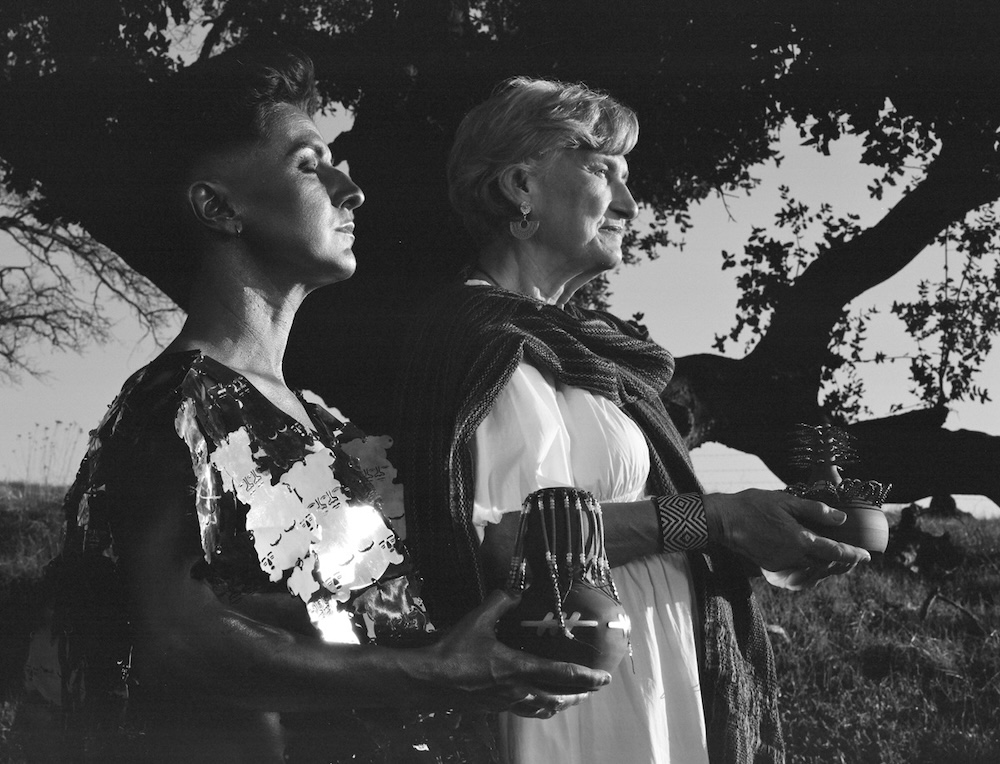
Four years ago, Sabogal co-founded Taller SANAA with their life and collaborative partner, Shanna Strauss, on the first floor of their apartment. It became their shared studio for printmaking, public art, framing, fabrication, and the development of both their individual and collaborative practices, including being stewards of a Griffin etching press from the 1960s. For several years, Sabogal moved between Taller SANAA and Kala Art Institute.
A pivotal moment in the evolution of Sabogal’s work was recognizing that they wanted to transform the monumentality of their two-dimensional prints and murals into permanent, three-dimensional sculptural forms. That desire led Sabogal to pursuing an MFA at Stanford. Engaging specialized fabrication techniques, Sabogal works across campus between the sculpture lab, ceramics studio, foundry, and metal shop, depending on what a particular work requires.
“This next chapter extends my practice into three-dimensional public forms, asking who becomes a monument, whose histories are defended, and how materials such as bronze can carry these communities into public memory. After I graduate, I hope to move towards public sculpture projects around the Bay Area,” they said.
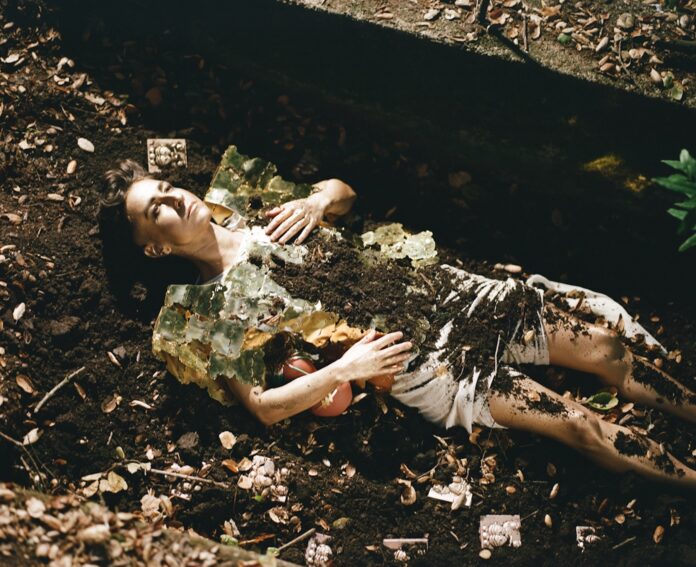
Sabogal’s current project includes staged photographs made before and after top surgery, utilizing various elements that move between intimate ritual and future monumentality.
“Through my own narrative, I am building a visual language that insists that trans life is sacred and that its liberation opens freedom for all,” Sabogal said.
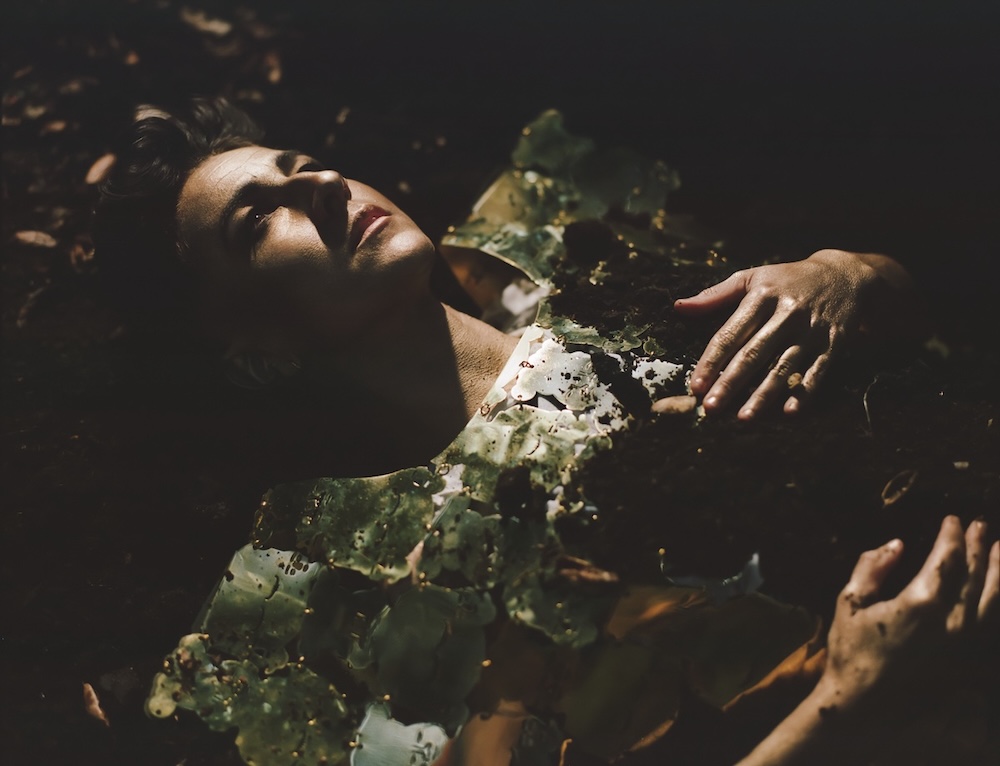
In three works, Let the Dirt Teach Me My Name, Surrendered, and Mama Leads Me Across, Sabogal uses burial as a ritual act of transition.
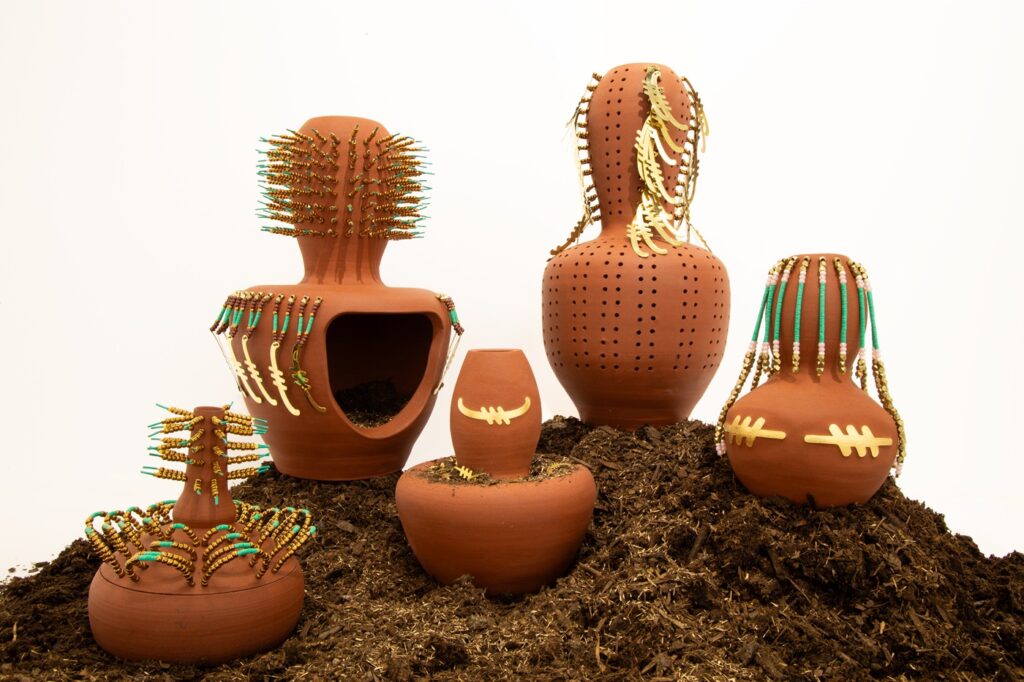
“Drawing from the myth of El Dorado and pre-conquest Colombian funerary practices, these works present my gold-painted body partially buried in a grave, wearing a brass breastplate made from mythological hybrid beings marked with top surgery scars. Beneath the photograph, beaded ceramic vessels marked by scar-like forms are arranged with bronze soil. Around the image, cast bronze tiles depict guardians who bear witness, protect, and accompany the body,” they said.
As Sabogal’s relationship to gender evolves, an ongoing process has begun to guide the questions they ask through their work.
“As I started thinking more deeply about transformation, protection, death, and rebirth, I became interested in the Muisca civilization’s ritual practices. I learned that chiefs, shamans, and warriors were buried with wearable gold objects intended to protect them in the afterlife. That discovery shifted my focus toward pre-Columbian funerary traditions and the possibility of making my own transitional funerary objects. What does it mean to design physical objects for a self who is transforming and another who is being born? What do I want brought forth with me and what am I leaving behind? These are just some of the many questions I don’t quite have answers to but am working through as I create,” they said.
In their first piece in this exploration, Sabogal designed a hybrid creature with two heads, three eyes, two noses, two mouths, and two additional heads held in its hands.
“It embodies the ‘other’, the many queer and trans ancestors who walk with me, including those who were unable to live as themselves, unseen or unrecognized, yet remain visible in my work,” Sabogal said.
While sanding more than one hundred brass components, Sabogal learned, almost accidentally, that you can polish brass to a mirror finish. This discovery reshaped the symbolism of the piece.
“I have long thought about trans people as mirrors, messengers of the extraordinary who reflect truths society refuses to see,” they said.
While taking an Indigenous Archaeology class, Sabogal learned that when an archaeological site is excavated, only three materials reliably survive over time: bones, metals like gold and bronze, and ceramics. That understanding directly shaped their material choices for work included in the first-year cohort exhibition, Unearthed, Unbound at Stanford’s Coulter Gallery.
Important questions for Sabogal have since become, What is on the other side of the ritual? What does queer and trans heaven look like, feel like, smell like?
“Much of my work has been shaped by trauma, pain, death, and survival,” they said. “I am now interested in what happens when the work is no longer organized only around what we have endured. What does it mean to speculate seriously about freedom? What kinds of images, materials, and forms become possible when I begin from the premise that I am free, that we are all free?”
That shift has been difficult for Sabogal as survival has been such a powerful framework for their practice thus far.
“I am becoming more interested in what comes after survival: pleasure, abundance, transformation, and the possibility of a future we have not yet been allowed to fully imagine,” they said.
Sabogal was included in the group show, Beyond The Surface: Exploring Visibility in Print, at Galerie Myrtis in Baltimore, which closed in July. Next for Sabogal is their thesis show opening in May 2027 at the Stanford Art Gallery.
In addition to these pursuits, Sabogal keeps up an interest in restoring mid-century furniture and says they are equally serious about pastries.
“I will plan entire days around a bakery, especially when I am traveling! I also love trying new restaurants, talking about food, and deciding what and where to eat next.”
Within such a dedicated practice, Jess Sabogal hopes viewers of their work will feel the force of being seen at full scale. And for the communities represented in their work, a hope that the images create a sense of pride, recognition, and protection.
“I want someone to encounter a figure who looks like them, carries a history they recognize, or reflects a way of being that they have rarely seen honored in public, and feel that their life is worthy of monumentality,” Sabogal said. “For everyone else, I want the work to interrupt the habits of looking that make some people visible and others disposable. I want it to challenge who we have been taught deserves joy, permanence, and the freedom to exist in public space.”
For more information, visit their website, jessicasabogal.com and on Instagram.