Almost everyone who claims to care about democracy agrees that Citizen United was a terrible decision, and that getting big corporate money out of politics has to be a priority.
But most politicians, like Gov. Gavin Newsom, wring their hands and say: Nothing we can do. The Supreme Court has ruled.
But that might not be true.
Robert Reich, public policy professor at Berkeley and former secretary of labor, makes a good point (that had never occurred to me) in a substack post. He points out that corporations are creatures of the states, not the federal government.
Corporations are legal entities that have extensive rights, including the right to do business, to hire and fire people, to donate money … many of the things human beings can do. By creating a corporation, business people can avoid personal liability for a wide range of actions.
But those rights are entirely the purview of the state that grants the corporate license—and, Reich says, states can place any restrictions they want on those licenses.
For example, they could withhold the right to make political contributions.
A measure to do that is headed for the 2026 ballot in Montana. From Reich:

When a state exercises its authority to define corporations as entities without the power to spend in politics, it will no longer be relevant whether corporations have a right to spend in politics — because without the power to do so, the right to do so has no meaning.
Delaware’s corporation code already declines to grant private foundations the power to spend in elections.
Importantly, a state that no longer grants its corporations the power to spend in elections also denies that power to corporations chartered in the other 49 states, if they wish to do business in that state.
Of course, corporations can move their charters; lots of them already incorporate in Delaware, which has limited transparency and low taxes. But if a Delaware corporation wants to do business in California, and California denies corporations the right to spend money on politics, that corporation has to comply.
If the movement succeeds in Montana, it can spread. As Reich points out, 75 percent of voters want to overturn Citizens United.
Maybe that’s a good issue for the Newsom for President campaign. He could start right here at home; the Legislature will be back in session in January.
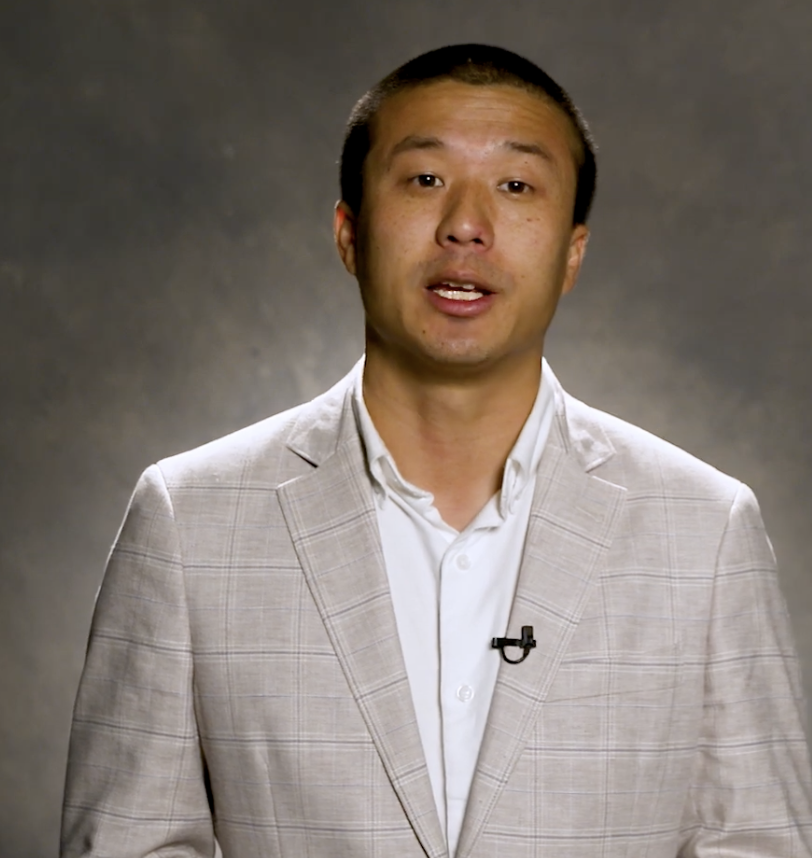
After a series of hearings and a few amendments, Mayor Daniel Lurie’s Rich Family Zoning Plan is headed for the Board of Supes Tuesday/2—and immediately, his new pick for D4 supervisor, Alan Wong, will be facing a tough vote
Wong, a member of the Community College Board, has run in the past with progressive and labor support, and was an aide to progressive former Sup. Gordon Mar. Much of the progressive community opposes or has serious concerns about the upzoning proposal, which also is unpopular on the West Side of town.
IT would allow for the demolition of existing commercial spaces and rent-controlled housing in buildings with fewer than three units. It includes no new sources of money for the state-mandated affordable housing. And data shows it will fail to bring down housing costs by more than a trivial amount.
I called and texted Wong Sunday afternoon, but he hasn’t responded. I get that; his phone must be blowing up. And unlike Lurie’s previous pick, Wong has a lot of political experience; he’s not likely to stir up trouble for the mayor the same day his appointment is announced.
But he only has one free day before he has to cast a vote that could have a huge impact on his political future.
The SFMTA is moving to allow more cars on a stretch of Market Street that has been closed to anything except buses and taxis (real taxis). The Mayor’s Office has already allowed some Waymos to pick up and drop off passengers in the no-car zone—and now there’s a plan to allow Uber and Lyft to join the party.
The SFMTA’s Citizens’ Advisory Council voted to recommend the cars not be allowed on Market. The Keep Market Street Moving coalition opposes the idea. So does WalkSF.
But the SFMTA staff argues that the additional private vehicles haven’t slowed transit service (yet), and recommends that “all day operations by service providers” be allowed to continue and expand.
The full SFMTA Board will hear a presentation on the project Tuesday/2, and it’s projected to come up around 4pm. Car-free Market advocates are encouraging people to show up and present public testimony. The meeting’s at City Hall Room 400.