How has this been the best year for music so far this decade? The 2020s have been a rough enough ride that you could say that about every year, and I’m hesitant to waste space with a troubled-times spiel, but the amount of great music released in 2025 is at odds with just how drab and anti-art everything seems these days.
Yet artists finally seem to be teasing out a happy medium between the realm of the digital, which isn’t always especially musically pleasant to approximate, and the realm of the analog, which would be nice to have back but which bears a whiff of good-old-dayism in a time when the Internet is an overwhelming fact. A lot of this music seems to be coming from Europe; I don’t know how sheltered they are from the worst of mass dumbing-down and cultural rot, but at least it’s easier to get a free arts education over there, which might explain why the two best albums I’ve heard this decade have come out of Copenhagen.
The first is ML Buch’s Suntub from 2024, the first album I’ve heard to use the musical tools of the virtual world without actually referencing it at all. There are no mentions of screens or computers, and even a driving song is so ambiguous I thought that flowers “sliding by” were moving on their own, but its definition of beauty is so in touch with the spirit of this time in history it proves that beauty existed there in the first place, which is reassuring.
The second—the best album of this year—is MK Velsorf and Aase Nielsen’s Opening Night.
1. MK Velsorf and Aase Nielsen, Opening Night
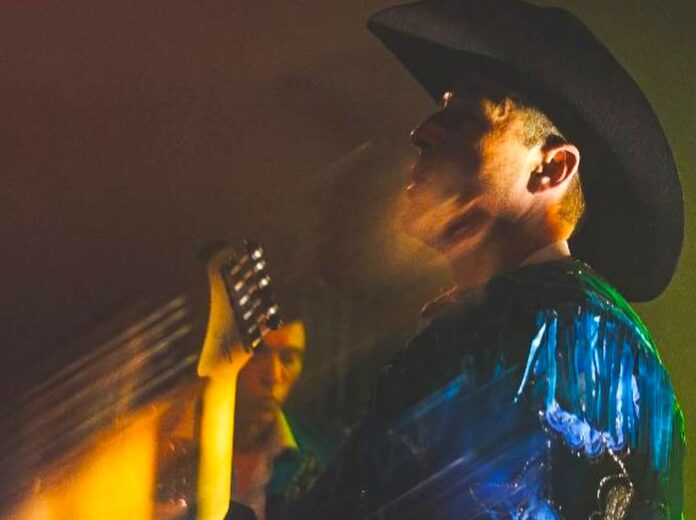
This is not an album I think anyone involved expected to be a masterpiece, except maybe Laurel Halo, who put it out on her AWE label on Valentine’s Day. It’s a recording of two improvisers, both from Denmark, performing on guitar (Velsorf) and synth (Nielsen) at the opening night of a small underground art space in LA. The only year-end lists I’ve seen thus far to feature it are those by people who I know personally, mostly because I won’t shut up about it.
Yet no album I’ve heard so acutely captures something I’ve felt from time to time as a musician: the isolation of being on the road, the knowledge that your journey is operating on a different trajectory from that of the sedentary audience. When you’re onstage, you’re not really part of the party, and all the conversation goes on without you. When you’re traveling to faraway places, you’re only really seeing the hotel and wherever you go out to eat most of the time. This isn’t a complaint, just a hard fact, and Opening Night captures this sort of mind-drift through the same balance (to quote Philip Sherburne’s review, half “URL” and half “IRL”) Buch struck with Suntub.
The musical reference point is slow drum-machine ambient funk by the likes of Gaussian Curve and K. Leimer. But when I first heard it, the thing I thought of at first was mallsoft, a sub-subgenre of vaporwave designed to sound like it’s echoing through the speakers of a mall. Music that’s happening somewhere, not here. There’s a subtle pall of reverb on everything that makes them sound like they’re playing in an empty room. Where are all the people? The thunk of the artificial snare sounds like the echoing footfall of a confused early-arriving guest. The chords are slow, creeping, more the stuff of ‘90s TV scores than the plaintive dusk laments on Gaussian Curve’s Clouds. This isn’t the soundtrack to a party but to a crime scene investigation.

But subtly, brilliantly, the duo conveys the way one’s mind can wander during an assignment like the one recorded on Opening Night. The second track features the sounds of water and frogs, as if the artists have gently astral-projected out of time and into the Pleistocene roots of Los Angeles that gave us the La Brea Tar Pits. Then, the coup: On the 15-minute title track, which takes up a third of the album by itself, they bring in the sound of the party. The conviviality is like pressure shock; you almost forgot what the album was. And over the hiyas and seeyas of the assembled partygoers comes the most beautiful and understated progression, ending in an unresolved minor chord, just so you can feel the cold when all the partygoers eventually leave.
2. Los Thuthanaka, Los Thuthanaka
The strength of Elly and Joshua Crampton’s music has been a not-very-well-kept secret in the experimental underground for some time, but even those who hoped the Bolivian-American siblings would take their improvisational duo act to the studio might not have expected something like this: a fever-pitch hour of indigenous folk rhythms and blindingly epic collage, opening with a mess of divas and DJ tags that (like the rest of the album) is so emotionally overwhelming you might not gain sight of the grander architecture until your second, or third, or fourth listen. Unmastered and unavailable on any streaming service, Los Thuthanaka is literally incapable of being slotted into an algorithmically curated experience, and because this thing is blowing up (best album of the year on Pitchfork), you can bet the siblings are making bank off the $11.11 price tag that stands between the world and an hour of transcendence.
3. Rat Heart, Dancin’ in the Streets
A Northern English producer picks up the current drifting across the scene from Copenhagen and makes a singer-songwriter album, not always with himself as the singer. It’s as shameless as its Prince rip, but it opens such vast chasms of spliffy Euro-paranoia it makes a theoretical third Burial album seem redundant. And the spoken-word bit that seems obligatory on ambient albums these days is actually good this time, and funny.
4. Piotr Kurek, Songs and Bodies
Slow—like the world is being tipped gently like a bowl and you have no choice but to slosh along with it. The Polish composer’s new album shows a mesmeric style I’ve never heard anything quite like before, bearing some resemblance to the ambient end of ‘90s and ‘00s post-rock (think the Album Leaf or El Ten Eleven) but paced at an ooze and ribboned with stray tassels of vocoder, their words twisted past comprehension as if by those old-timey scroll speech bubbles.
5. Klein, thirteen sense
The London sound-diarist came to a revelation last year when she picked up a scabrous black-metal guitar for Marked, and Thirteen Sense tightens her new sound, giving the world in “Double Life” one of the rare shoegaze songs to achieve that genre’s full promise even in an era where everyone and their uncle is making it. Also of note is the ambient follow-up Sleep with a Cane, less striking just by nature of blending into the background rather than pummeling the ears but still an alluring maze to get lost in.
6. Chuquimamani-Condori, Edits
The other great product from the Crampton camp this year, almost as good as the family affair (see #2), timed for the artist’s nuptials and set at the same emotional register as an actual wedding. At 1:40:00 it never lets up, and after a while it starts to feel like pop has always sounded like this. Highlight: the Faith Hill “Believe” edit that drowns her in lasers, accordions, and a man asking “why?”
7. Erika de Casier, Lifetime
With NewJeans’ “SuperShy” paying for her smørrebrød, I thought the Danish darling of neo-Y2K Matrix-pop had foregone songwriting for soundscaping. But when I listened again and again to soak in those sweeping synth chords and shaved-down breakbeats, I found myself drawn to the words—the stealth hooks everywhere you look, the sly subversions of pop’s youth cult through her unusually frank discussion of aging, and the counterintuitive turns of phrase that are so much of what makes Scandinavian pop engaging.
8. Voices from the Lake, II
The return of two old masters I’ve grown fond of. I wish I could bring this album back to 2015, when I listened to the first one amid heavy rain with a bunch of hippies at an Oregon co-op. Skip the 44-minute mix on streaming and get the full hour-plus thing from Bandcamp; it’s not as expansive as its movie-length predecessor, which remains a milestone in ambient techno, but it’s close.
9. Melvin Gibbs, Amasia: Anamibia Sessions Vol. 2
In which Chicago’s Hausu Mountain picks up the baton from Editions Mego, one of the greatest electronic labels of all time, in shepherding the no-wave lifer Melvin Gibbs’ work: an ascension not just for the label but for the 67-year-old bassist, who compiles two decades of sessions into a patchwerk directly descended from electric Miles (Pete Cosey even shows up) but unmistakably kin to the post-vaporwave prog weirdness on which Hausu staked its fortune.
10. Oneohtrix Point Never, Tranquilizer
Daniel Lopatin’s best album in almost 15 years is inspired by a San Francisco institution, the Internet Archive, and its dedicated efforts to preserve music whose tenuous digital existence could end suddenly (as did so much of the MySpace backlog). As a career musician with credits on a Super Bowl halftime show and an Adam Sandler movie, Lopatin knows his music isn’t going anywhere, and he takes opportunity of his vantage point to create a massive and indestructible sculpture in memory of all the media that has and will be lost, inscribed with two words that are the only ones you’ll hear on this album: FOR RESIDUE.
11. Gloorp, Gloorp ‘Em Up
The percussion is the selling point on this album by Philly drum savant Garrett Burke, but the thing that makes it near-AOTY material is its attitude. It’s sexy the way Charlie Dompler is sexy, the way the Philly chicken man is sexy (the rotisserie one, not the “Atlantic City” one). The cover is somehow poignant—the vulgarity of sandwich juice dripping down a white shirt, standing in for something real, regional and vanishing. Brian Eno complained computers don’t have enough Africa in them. I posit they don’t have enough Philly in them.
12. Joanne Robertson, Blurrr
The ambient-folk album à la 2025: vocals that sound like they were miked through a pair of cheap headphones, surrounded by string arrangements by Oliver Coates that are so sumptuous you’d swear you were in the Van Dyke Parks ‘60s. Incredible that an album so tapped into the Gen Z zeitgeist was made by a 47-year-old painter whose sideline in music has only just started to usurp her main gig, who was making competent freak folk in the late ‘00s but whose magpie sensibility found the perfect alignment with Dean Blunt’s camp of outré-music miscreants.
13. Jenny Hval, Iris Silver Mist
Hval is one of pop’s most interesting conjecturers; her songwriting proceeds kind of like the cloud of irrational thoughts that might pop into the head of a particularly inventive and well-read college student after a bong rip. Watching her sort through this web of connections is as fascinating as ever on Iris Silver Mist, but listening to it you realize what really sets her apart from the pack of indie strivers is her ear: she likes billowing, uneasy house chords that give up new tones as they dissipate, just like the legendary perfume that inspired the album’s name.
14. Biosphere, The Way of Time
The still-underrated ambient veteran signs with the hot AD93 imprint for an eerie collection that anticipates the impending Arctic apocalypse through vodka-stiff drum machines and apocalyptic samples from an old radio play. Distant recordings of birds sound bottled from an older and vanished world. Geir Jenssen mastered “Arctic ambient” in his day, but this is the actual Arctic resident’s first album that understands his home is under threat: a closer-to-home sequel to his masterpiece of nuclear anxiety, 2011’s N-Plants.
15. Dijon, Baby
The Bieber collaborator and One Battle After Another co-star turns in a morass of album soup that shifts violently from a pole of pure happiness (the titular baby, his own child) to an abyss of pain (“My Man”) on which he chokes and splutters so violently he almost becomes a baby himself. The Prince scream as harsh noise—there’s a new trick. Good to know the psychedelic funk masterpiece is still a thriving art form, even if the pivot into cheese on the last two tracks cushions the impact of the preceding half hour a bit.
16. Jefre Cantu-Ledesma, Gift Songs
Just press play and you’ll know why this is on the list within about two seconds. Nobody makes ambient albums that come on as strong as this sometime Zen priest and one-time San Franciscan, who co-ran the great local Root Strata label and has moved from pastoral drumless shoegaze to a more classical style indebted to early pioneers like Harold Budd and Laraaji. At this he excels, and Gift Songs joins the earlier milestone Tracing Back the Radiance as the definitive record of his sound.
17. Call Super, A Rhythm Protects One
The best product thus far of the still-nascent minimal techno revival (see also recent records from Anthony Naples, Loidis, K-Lone and Jörg Kuning) doubles as a tribute to the lost art of the DJ mix, with 12 of his own tracks lined up end to end and blessed with credits from fake monikers like Louis Lupin and Conny Slipp that could hopefully blossom into serious side projects. And even if it’s kind of a ripoff of Ricardo Villalobos’s Fabric 36, how many other albums can even claim to attempt such a thing? Keep an eye on any one of Joe Seaton’s disguises.
18. Lucy Railton, Blue Veil
Isolating the moment a cello’s bow comes into contact with the strings and presenting it as a cataclysmic event, the London improviser’s new album is some of the scariest drone since her own collaborations with Kali Malone and Stephen O’Malley on 2023’s landmark Does Spring Hide Its Joy. Railton does everything to make you feel the vibrations short of pressing your face against the instrument.
19. Skrillex, Fuck U Skrillex You Think Ur Andy Warhol But Ur Not! <3
The Skrillex album I wish had come out in high school, when my budding approximation of “taste” as a music critic was at war with my desire to find the sickest drops. Sonny Moore got his roses from the critverse once producers started flipping his wubs for more experimental purposes, but this megamix of mostly archival material proves how good he’s always been.
20. Darkside, Nothing.
The best album from Nicolas Jaar and Dave Harrington’s prog-disco project is at once their most hive-minded (Tlacael Esparza joins on drums) and the one most aligned with Jaar’s increasingly obtuse and politically charged vision. Two decades in, the Chilean-American producer still carries himself as a brash young gun, and he’s sharpened formidably as a singer. Dave Harrington paints in shades of tangled wire rather than the E2-E4 guitars of yore, and Esparza turns in a bugnuts drum performance evocative of Dodo nKishi’s work on Mouse on Mars’s Idiology.
Honorable mentions: The Bug and Ghost Dubs’ Implosion, a sound clash between two dub-techno juggernauts; Coatshek’s Sound Bath, space disco optimized for fucking; DJ Elmoe’s Battle Zone, a mallet-drenched oddity something like the Out to Lunch of footwork; Lauren Duffus’s Can’s Gone Warm, abstracted striver ballads from a promising South London talent; Earl Sweatshirt’s Live Laugh Love, with the onetime enfant terrible settling into effortless midcareer brilliance; Huremic’s Seeking Darkness, sample-plundering post-rock at mountainous scale; Jonny Nash’s Once Was Ours Forever, Windham Hill-esque guitar music that lays the gloop on blindingly thick
More honorable mentions: Loukeman’s Sd-2, ecstatic punk dance tunes where the corniness is part of the package; More Eaze and Claire Rousay’s No Floor, a road diary chronicling the friendship of ambient’s best young duo; Ø’s Sysivalo, swansong of the troubled noise genius Mika Vainio; Hayden Pedigo’s I’ll Be Waving As You Drive Away, lustrous desert blues from Amarillo’s dark-horse mayoral candidate; Playboi Carti’s Music, proof Atlanta has been the most reliable cradle of cutting-edge mainstream music for the last 10 years at least; Pulse Emitter’s Tide Pools, a head-spinning trip through a proggy waterworld; Purelink’s Faith, Y2K clicks-n-cuts revivalism done right; and Strategy’s A Cooler World, a subversion of Arctic ambient armed with nothing more than a sampler.
DOG OF THE YEAR: Djrum, Under Tangled Silence. I hope this album gets Felix Manuel a ballet commission, but is more sexless, institutional, quasi-classical UK club music really what the world needs?
REISSUE OF THE YEAR: Yo La Tengo, Old Joy. The soundtrack to Kelly Reichardt’s 2006 buddy film, a movie so thick with Oregon greenery you could drown in it, is the only thing explicitly underlining the loneliness of its thirtysomething hippie protagonists. They try to bridge the gap between them but end up only demonstrating how far they’ve grown from each other, and it’s easy to see a little of yourself in either of them. The long-running Hoboken trio Yo La Tengo, who know the magisterial doldrums of the American road trip, are the perfect candidates to score this kind of movie. Their bluesy score originally appeared in shortened form on the They Shoot, We Score comp, but here it stands alone as a 26-minute EP perfect for a short drive with a lot to think about.
Reissue honorable mention goes to this year’s excellent Arthur Russell reissues, Sketches from World of Echo and Open Phrases Where Songs Come In And Out. Did you know he used to live in a fire-walking Buddhist commune on Pine Street for a spell in the late ‘60s? This year also saw a reissue of Moodymann’s Black Mahogani, one of the greatest house albums ever recorded. The more people hear that album, the better.