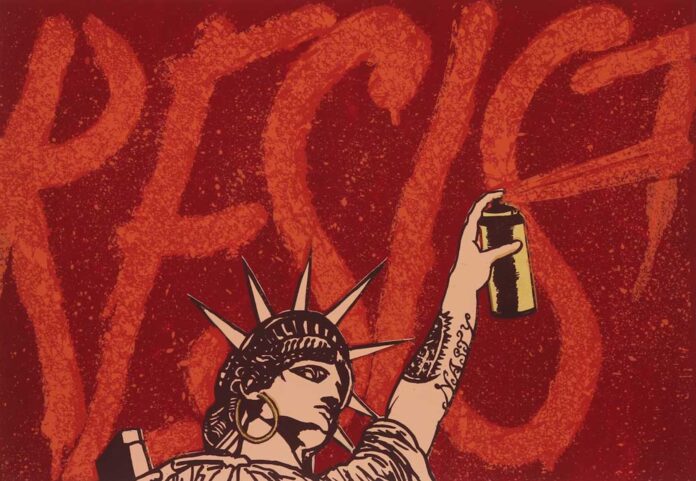
As director of the Castro LGBTQ cultural district, Tina V. Aguirre is well-versed in the queer and trans world-building that has taken place in the iconic neighborhood. That being said, “I want to make it clear, this also happened in SoMa, the Tenderloin, and the Polk. There have been queers in all of San Francisco, going back to the Gold Rush,” they clarify. Along with co-curator Caro De Robertis, Aguirre brings that city-wide perspective and a powerful message of resistance, resilience, joy, and hope to Conjuring Power: Roots & Futures of Queer & Trans Movements (March 13-August 23 at Yerba Buena Center for the Arts).
The exhibition centers on local intergenerational queer and trans artistic leadership, and was developed in collaboration with the GLBT Historical Society. Its broad sweep includes works by Ester Hernández, Serge Gay Jr., Crystal Mason, Tanya Wischerath; along with artifacts, archival films, inventive new prints based on historic protest art; and excerpts from 20 oral histories drawn from De Robertis’ work with the acclaimed Elders Project. Notably, Conjuring Power shines a special light on artwork from the next generation of local LGBTQ+ creatives.
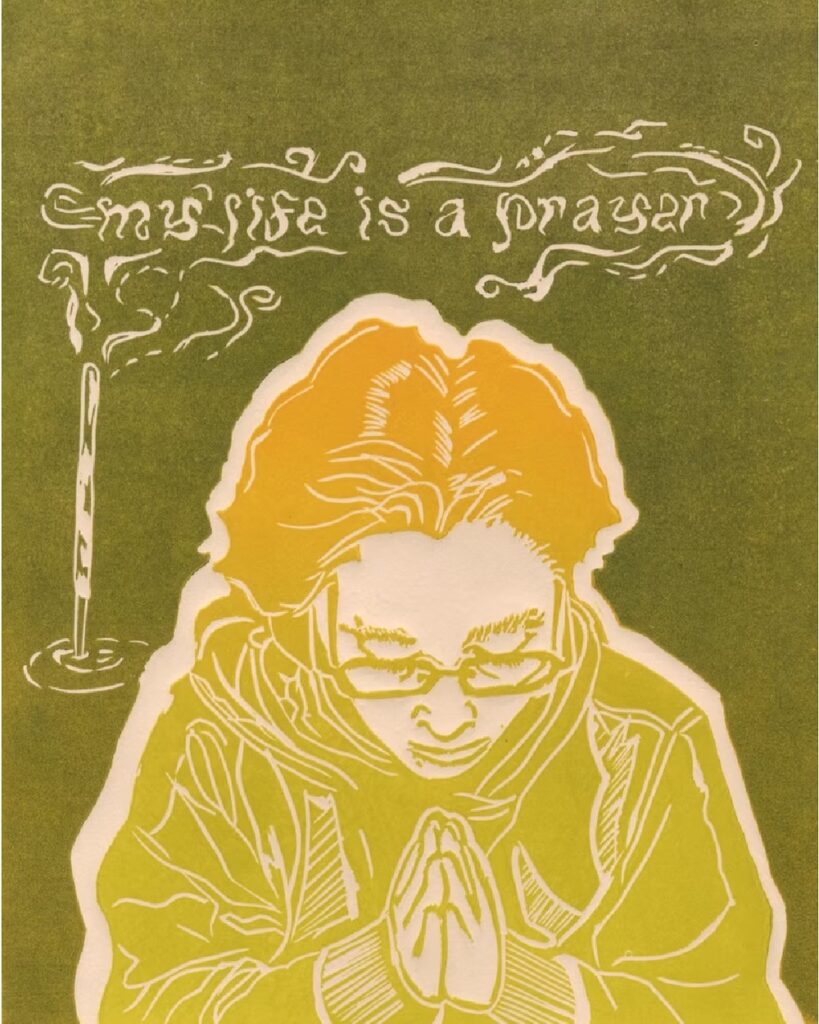
In a shared interview with 48hills, its two curators speak about the exhibit’s cultural, social, and political importance, plus the essentiality of LGBTQ+ arts ancestry. They emphasize the exhibition’s upcoming special events that amplify the resilience and pageantry found in queer and trans communities across the region and around the world.
Aguirre conjures archival photos of 1950s Castro residents showing people of color, people in drag, large gay parties, and more. In the 1970, a proliferation of new gay bars signaled an openness to queer small business owners and their clientele.
“Rents were low even before the Castro became an enclave for queer people,” Aguirre says. “It was a working-class neighborhood with mainly Irish American families. It went through an economic downturn and lower rents meant it became cheaper to open small businesses. There was a welcoming to queers.”
In the exhibit, these foundational underpinnings show up most directly in collages developed by Serge Gay Jr. employing ephemera from the GLBT Historical Society. “[Gay’s collages] highlight early groups that built the community, not just in the Castro, but also in other areas where lesbians, queer and bi women, Latinos, trans, and other people celebrated queerness in all its multitudes,” says Aguirre.
The show includes a wealth of world-building from its multiple generations of creatives. “They draw from ancestral history learned from teaching artists and focus on retelling history,” says Aguirre. “They interpret history and create new art. It provides an artistic treatment to the moment we are experiencing now. Caro and I want people to realize we’re not in isolation, not alone. We cans look toward a better future of what we can be and should be: fabulous, wondrous and loving.”
“Tina and I shared a vision of how roots and futures are not separate entities in queer identity and culture,” says De Robertis, an award-winning author and a professor at San Francisco State University. “We envision what’s possible for our futures because we know we have a rich inheritance from the past. Often, queer and trans culture is not understood to be intergenerational. I’m a queer person raising children, but I didn’t grow up with that in my home. We have to find and create that in spaces like the museum.”

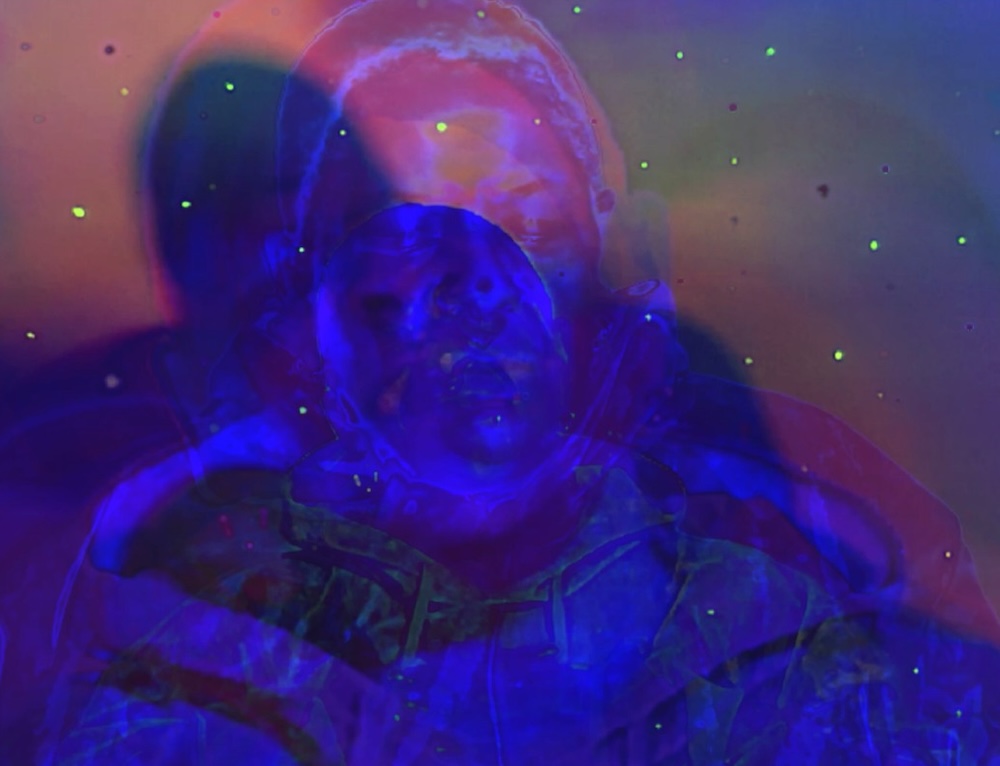
In the show, oral history clips allow visitors to hear real-life stories at interactive audio stations offering the voices of 20 queer and trans elders of color. “They speak to the idea that the freedoms we have today, the freedom to be all we are and to engage in authentic queerness, is because people came before us to blaze those trails. Many are still alive and still making culture,” says de Robertis. Original artwork by Tanya Mischerath accompanies the audio clips and displays paper-cut portraits of each elder.
“I learned that YBCA needs this in the same way queer people and their allies need this,” says Aguirre. “They had a regime change in their leadership. There were issues around artistic censorship, I learned they are wiling to learn from what I consider a past mistake. It shows in how they turned up and actually embraced our approach, which is queer in terms of aesthetics, politics, culture, and queerness in all its variations.”
To support not just YBCA’s growth, but that of children who will attend the exhibit on field trips, they developed a linked K-12 curriculum.
“We’re sharing with everybody that queer families and fabulosity exists. There’s still a disconnection between generations, different factions, and community groups. This exhibit is a means to engender hope, highlight resilience, and (establish) that queer joy is resistance. Love and joy has to be a part of everything we do that moves us forward as humans, especially for queer and trans folks,” says Aguirre.
De Robertis grounds her hope in history. “It has always been the work of queer people to work against erasure. These things are still true and urgent, but also not new. The good news is that we have a long lineage from which to draw.”
CONJURING POWER: ROOTS & FUTURE OF QUEER & TRANS MOVEMENTS runs March 1-August 23. Yerba Buena Center for the Arts, SF. More info here.