
The chief executive officer of PG&E did not fare well at a Board of Supes hearing today.
Sumeet Singh showed up to answer questions about the December blackout, and none of the members of the Public Safety and Neighborhood Services Committee seemed to accept, or even believe, most of his answers.
Singh in essence said that, hey, these things happen, we are very sorry, and we will try to do better. He said that PG&E had worked closely with the city from the start—although he couldn’t explain why it took two hours for his staff to alert the Department of Emergency Management.
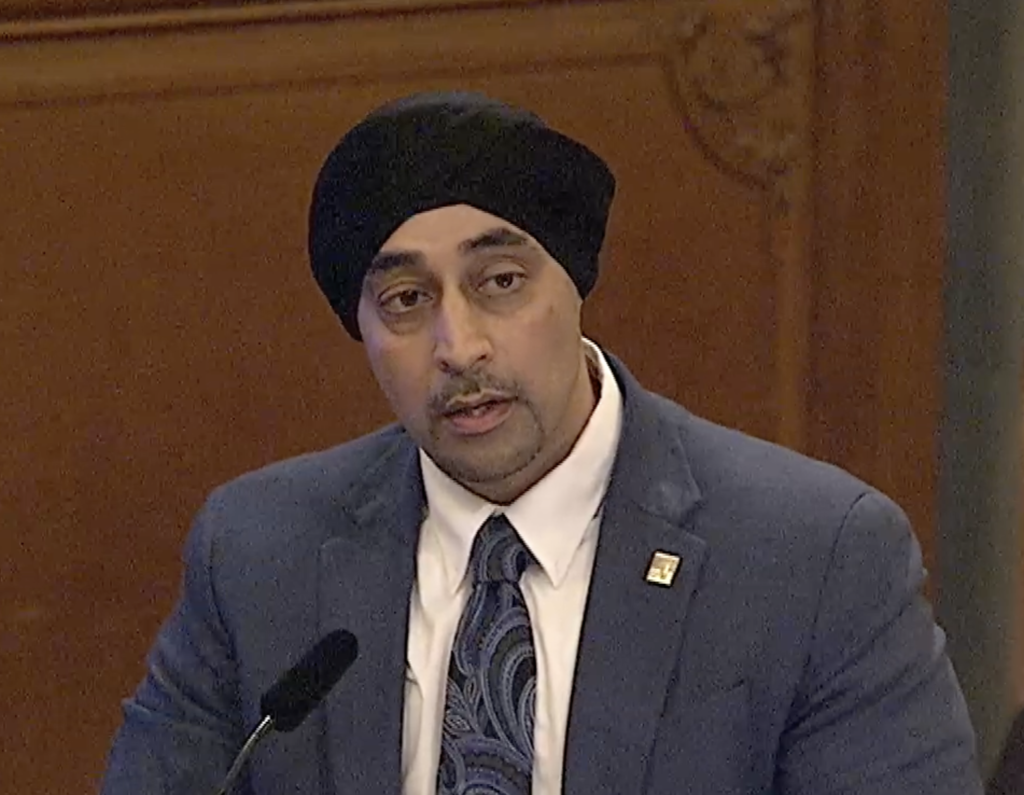
Singh said that, compared to an earthquake, this was a relatively minor problem, and the company was doing everything possible to help prevent future disruptions and to pay merchants for lost inventory.
The merchants who testified were not impressed.
Sean Kim, who owns Joe’s Ice Cream and represents the Geary Merchants, said that after the power went off, he lost much of his stock. Filing a claim with PG&E, he said, was difficult and time consuming, particularly for a small business owner.
“There are no clear guidelines,” he said. “They want to know how many cups, napkins, toilet paper … How many slices of tomato go on a burger?”
It seems to me that this is not a good time for PG&E to be acting like the worst type of insurance company and asking for the cost of tomato slices.

Then there was the political intrigue.
Sup. Bilal Mahmood demanded to know why, when vulnerable people in the Tenderloin and the West Side were without power, electricity was restored to the Opera House.
Singh said that wasn’t just his decision; Mayor Lurie contacted PG&E and asked for temporary power for the Opera.
Gabe Greschler at the SF Standard dug into this a bit, and found that Lurie was asking for as special favor to restore electricity for a facility where his daughter was performing in The Nutcracker.
From his story:
A text message obtained by The Standard through a public records request shows that Lurie received an update from a PG&E representative about the opera house during the blackout.
“Opera house update,” Jake Zigelman, PG&E’s bay region VP, wrote to Lurie. “Our team is onsite and has been in touch with the opera folks. We’ve been told they have enough natural light and emergency backup power to move ahead with 2pm performance. We have a vendor mobilized to support temporary generation for the 7pm show. Not 100% on timing but working feverishly to make that happen.”
Then shortly after the Standard story appeared, Mahmood tried to backtrack and protect Lurie. On Twitter, he insisted that Singh’s account was “a despicable statement” and praised the mayor’s work.
PG&E is also trying to cover its tracks, but I watched too, and it seemed to me that Singh was simply answering Mahmood’s question.
We also saw a preview of howe PG&E is going to attack the city’s efforts to take over its local distribution system and create a public utility.
After Sup. Matt Dorsey put forward a resolution affirming the city’s policy of municipalizing PG&E, representatives of the company and the Bay Area Council tried to argue that buying the system would be way too expensive—and would “risk diverting resources from housing and public safety.”
Nice try.
PG&E and the Bay Area Council are well aware of how municipal revenue bonds work. The money to buy out the system would not “divert” resources from any other public priorities. In fact, by any reasonable analysis, the revenue the city would get from selling electricity, even a low rates, would vastly exceed the cost of borrowing.
San Francisco would net hundreds of millions of dollars a year—which could go for housing and public safety. Most of the 2,000 or so public power agencies in the country are net revenue generators.
Dorsey promised a future hearing on municipalization. Let’s hope it includes a serious study showing just how much additional revenue the city would make after PG&E is gone.