As if the world didn’t have enough trouble already, with wars, climate catastrophe, and the Donroe Doctrine, a recent news report warned that the United Nations soon may go bankrupt and close its New York headquarters. Instead of convening diplomatic meetings there to negotiate ceasefires, urge disarmament, and respond to earthquakes and famine with international rescue operations, the UN itself appears to be in need of a rescue.
California could solve this problem: Offer the UN funds and space in San Francisco, where it began.
We have ample, empty downtown space for a new headquarters, maybe around Union Square if Macy’s moves out. Governor Gavin Newsom and Mayor Daniel Lurie can hold a joint press conference and invite the United Nations to take up residence in the city where the UN charter was first signed by member nations in 1945.
It all began in San Francisco’s Herbst Theatre, across from City Hall, and City Hall could now welcome it back. New York’s loss would be our gain.
I can see the headlines now: “UN moves to San Francisco. California offers to pay the dues Donald Trump refused.”
Two billion dollars owed to the UN by the United States account for a large part of its financial crisis. Fortunately, San Francisco, as a city run by and for billionaires, has plenty of wealthy men who can help pay the bills and finance a new or renovated building’s construction to accommodate the UN.
Consider the worldwide publicity that money would buy for the city, and consider all the downtown restaurants, shops and hotels that will find business booming once hundreds of UN diplomats begin to work and live here. And what’s a couple of billion given to the UN by Nvidia or Meta or Google, compared to the astronomical sums their companies and new A.I. industry in town are valued at these days?
A high-end UN sponsor like Nvidia might ask for the new West Coast assembly hall to be named after it — it would become the Nvidia United Nations (NUN)—and another sponsor might require a new luxury office complex it builds for UN delegates to be called Salesforce Tower Two. But I suspect the UN’s General Secretary would accept these names if it enables his organization to survive a New York closure and re-open in San Francisco.

Local voters who complained in the past that our Board of Supervisors should confine its business to city matters, and not take positions on international issues such as genocide in Gaza, could now agree that wars abroad, and global climate catastrophe are local issues: “It’s something our city should address,” the supervisors will agree, “take it up the street to the UN.”
San Francisco already offers sanctuary to refugees from other countries. But now we have an opportunity to welcome hundreds of nations, the whole United Nations.
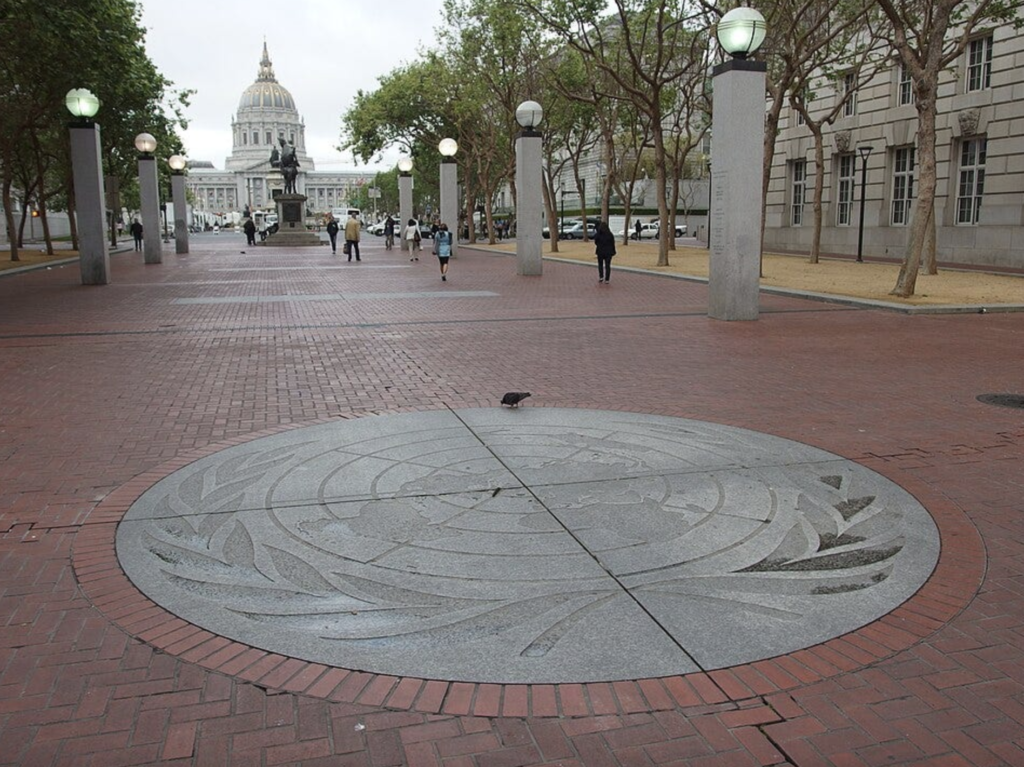
Mayor Lurie already has turned to some of his friends and friendly foundations for grants to improve city life; surely, he can find a few local billion dollars to lure the UN here and keep its peace-seeking assembly alive. And the UN may well accept the invitation. San Francisco already has a U.N. Plaza. How about bringing the rest of the U.N. here?
Donald Trump may object, because the newly relocated and generously endowed UN will rival his own new organization, The Board of Peace, which requires its members to pay him a billion dollars for a permanent seat on the board. That fee—$1 billion less than Trump owes the UN in dues—may seem like a bargain to some state leaders, but since Trump has given himself veto power over all Board of Peace decisions, joining with him also means surrendering final control to him.
San Francisco’s U.N. will be more democratic than the Board of Peace, and its delegates won’t have to brave ice and snowstorms every winter, as they do at the in New York.
Speaking of Trump, which I am reluctant to do any more than necessary, there’s one line in the recent Times report on the UN that I consider comic journalism of the first order. Farnaz FassihiI writes for theTimes that the UN “warned it would run out of money by July and have to close its New York headquarters if countries, namely the United States, did not pay annual dues that amount to billions of dollars.” That phrase, “if countries, namely the United States,” sums up the problem faced by the United Nations without mentioning the president by name, briefly denying him the attention he lives for.
Following Fassihil’s commendable example, I too will omit a certain well-known name here as I speculate that the U.N. might not face so many crises if countries, namely the United States, spent less of their budget on gunboat diplomacy, deployed fewer naval armadas like those now threatening Venezuela and Iran, and instead more generously funded peaceful international meetings among diplomats.
United Nations, won’t you please come home?