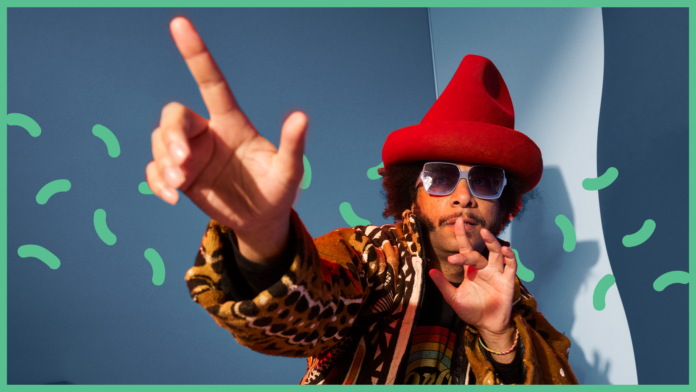
Hot on the heels of the Memorial Day Weekend release of his new movie I Love Boosters, Oakland-based multi-hyphenate icon Boots Riley will bring his signature mix of political provocation, surreal humor, and Bay Area storytelling to City Arts & Lectures (Thu/28; Sydney Goldstein Theater, SF) .
In conversation with KQED journalist Alexis Madrigal, Riley will discuss his provocative film, as well as his broader ideas about capitalism, consumerism, and collective struggle that have shaped his career across music, film, and TV.
With his hip-hop group The Coup, his 2018 anti-capitalist nightmare comedy Sorry to Bother You, and his 2023 series, “I’m a Virgo,” Riley has consistently approached social critique through contradiction, chaos, and humor.
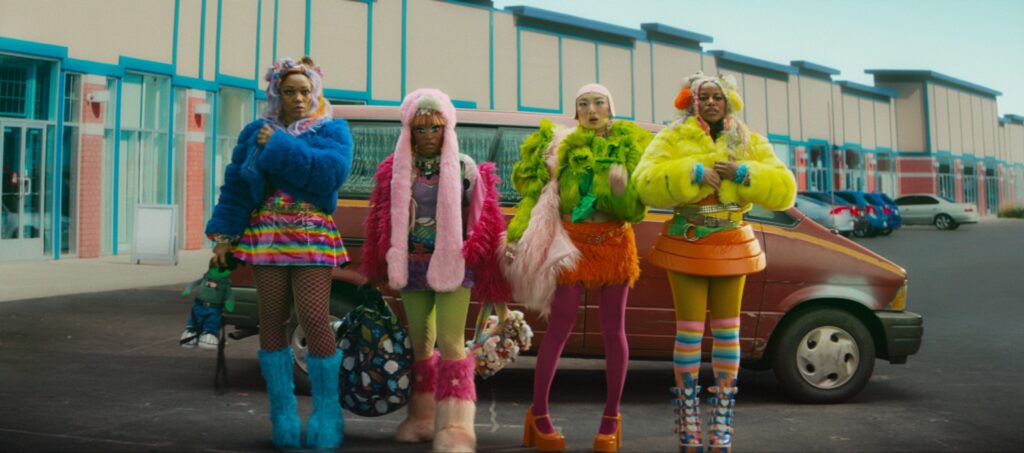
I Love Boosters, which screened as the Centerpiece film at the 2026 San Francisco International Film Festival (SFIFF) last month, continues that tradition, using crimes of fashion, unfair labor practices, and Bay Area decay to tell a story that feels wildly heightened while remaining emotionally grounded.
Riley told 48 Hills that the film truly comes alive with an audience.
“You gotta see it with the crowd,” says the writer-director, describing recent screenings as “often raucous experiences,” where laughter erupts unpredictably, and the communal energy becomes part of the movie itself.
At the center of I Love Boosters is the idea of survival through style. Riley explained that the film grew out of years spent as “a broke rapper trying to stay fly,” surrounded by friends who boosted, aka shoplifted, merch while navigating economic instability.
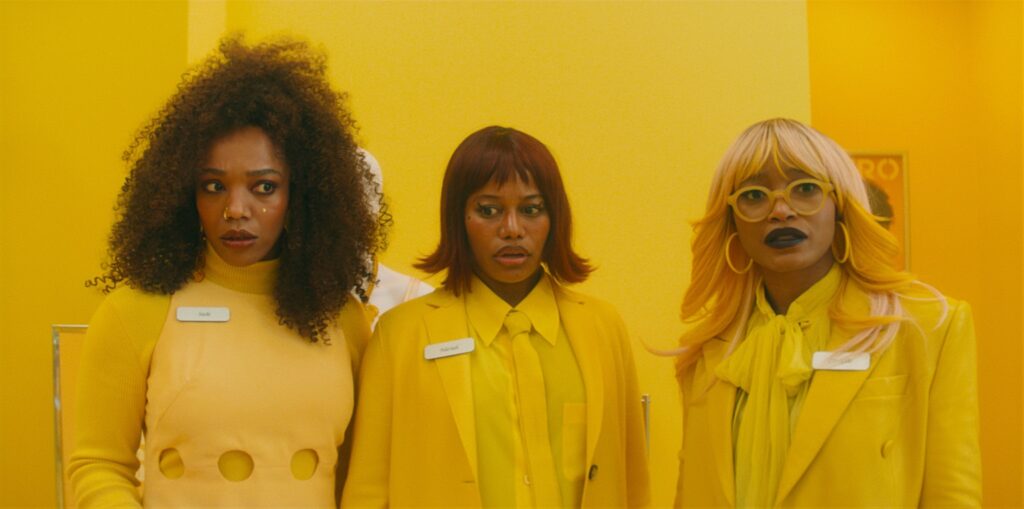
Set against collapsing malls, luxury towers, and fractured neighborhoods in a rapidly changing Bay Area, the film follows a trio of stylish outsiders surviving through theft, hustle, and reinvention while navigating a world shaped by inequality and consumerism, embodied in the film by a villainous fashion maven Demi Moore.

The story itself centers around Corvette (glamorously played by Keke Palmer), the story transforms boosting into an act of self-expression and survival inside a culture where identity is increasingly tied to what people can buy, wear, and display.
Riley spoke about periods in his life when he convinced himself that fashion did not matter, but later realized that such a mentality led to emotional emptiness. Paying attention to stylistic details, he argues, becomes a way of appreciating life itself. At the same time, every object carries the labor and time of the people who created it.
Looked at in that way, clothing is elevated to a form of self-expression and evidence of collective human effort, and boosting becomes a necessary component of fashion’s democratization, as style is reclaimed from luxury systems and transformed into a communal language.
Humor remains Riley’s primary tool for exploring those ideas. In his mind, comedy is inseparable from life’s harsh realities. “I don’t know how people write things without humor,” he says, explaining that incongruity sits at the center of both tragedy and politics.
That same contradiction defines the Bay Area landscapes running through I Love Boosters. Although much of the production was shot in Georgia, Riley intentionally anchored the film in recognizable fragments of Oakland, San Francisco, Hayward, Concord, and Walnut Creek.
The malls featured throughout the movie become symbols of transformation and collapse. Hilltop Mall appears with closing signs, while Southland Mall-inspired architecture evokes spaces that once thrived but now feel hollowed out.
The film’s leaning apartment tower, home to fashion mogul and Corvette’s arch nemesis, Christie Smith (Demi Moore), references San Francisco’s infamous Millennium Tower. Built on compressed clay instead of bedrock, the luxury high-rise became a symbol of the city’s unchecked development and displacement—an image Riley uses as a metaphor throughout I Love Boosters.
One squatter location in the film, inhabited by Corvette and a fellow booster, uses the exterior of an abandoned McDonald’s in Oakland, reflecting how many longtime residents remain tied to the Bay Area through community, even as affordability disappears.
Despite the bleakness of the film’s economic backdrop, Riley does not believe culture alone can dismantle systems of inequality. Instead, he argues that art is a reflection of material struggles.
“There are all these songs about people selling dope in the ’90s because there were a lot more people selling dope in the ’90s,” he says matter-of-factly.
Riley believes challenging the onslaught of tech culture requires labor organizing and collective action rooted in real-world conditions. He points to growing unionization efforts within the tech industry itself as the kinds of material struggles that could eventually generate new forms of counterculture.
“The movement this film nods to is a mass, militant, radical labor movement,” says Riley.
Riley hopes attendees at his upcoming City Arts & Lectures event watch I Love Boosters beforehand, as the discussion will likely move fluidly among the movie, politics, and his larger body of work. He believes audiences will leave the movie and his conversation thinking about the power of collective action.
“I want them to be inspired to join organizations and organize on the job,” Riley says. “I want them to feel that they don’t have to be alone in their individual struggle.”
BOOTS RILEY Thu/28, 7:30pm, Sydney Goldstein Theater, SF. Tickets and more info here.