Sophia Maddox grew up loving The Beach Boys. It’s one of the many traits she shares with her dad, Daniel Arguelles. Whether Arguelles’ own father shared that love had been anyone’s guess.
The question lingered across generations. Arguelles spent his life wondering about the father he never knew, and Maddox inherited the same mystery about the grandfather she would never meet. Raised in Southern California by her devoted single father, she accepted that some branches of her family tree would remain blank.
Then, in 2022, a genetic genealogy test changed everything.
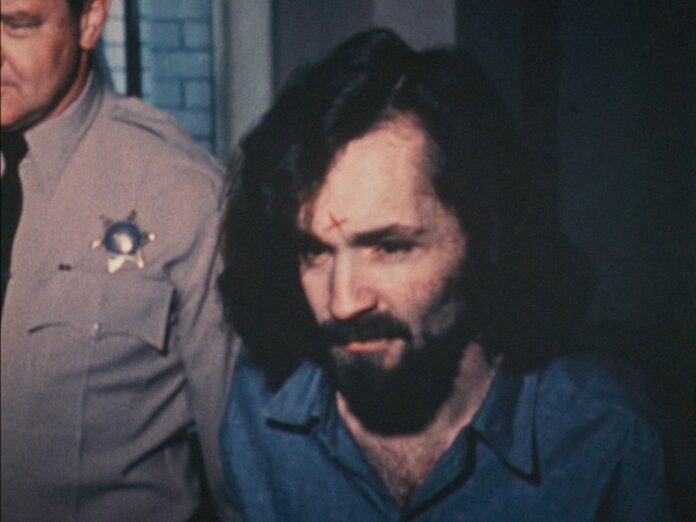
When her father’s DNA results came back, they revealed a shocking truth: Arguelles’s biological father—and Maddox’s grandfather—was Charles Manson.
“It’s wild,” Maddox tells 48 Hills. “I feel like I’m on the verge of tears all the time, but I’m keeping it together.”
That revelation became the basis for My Grandfather Charles Manson (streaming on Hulu and Disney+), a documentary co-directed by Maddox and producer-writer Alexandra Orton.
Alongside one family’s reckoning with inherited trauma, the film also explores Charles Manson’s formative years in the Bay Area before the murders that made him infamous.
Through DNA evidence, archival research, and interviews with former Manson Family members, historians, and law enforcement officials, Maddox confronts an unsettling question: How do you reconcile your identity with a legacy of unimaginable violence?

Her investigation also uncovers previously unreleased records and exclusive audio recordings that shed new light on Manson’s early life and psychology before his death from colon cancer in 2017 while serving a life sentence.
Although Manson became synonymous with the August 1969 murders of actress Sharon Tate, coffee heiress Abigail Folger, celebrity hairstylist Jay Sebring, aspiring screenwriter Wojciech Frykowski, Steven Parent, and, the following night, Leno and Rosemary LaBianca, the Manson Family first took shape hundreds of miles north.
Manson spent much of the Summer of Love in San Francisco, moving into UC Berkeley librarian Mary Brunner’s apartment and recruiting followers in Haight-Ashbury before relocating the group to Southern California. One of his eventual victims, Folger, also grew up in the Bay Area.
More than five decades later, the motive for the murders remains hotly debated.
In My Grandfather Charles Manson, former prosecutor Stephen Kay defends Vincent Bugliosi’s “Helter Skelter” theory, about stoking a racial war to bring on the apocalypse. Others argue Manson, an aspiring singer-songwriter, acted out of personal revenge after Beach Boys drummer Dennis Wilson introduced him to music producer Terry Melcher, who declined to sign him after the Beach Boys recorded Manson’s song “Cease to Exist” as “Never Learn Not to Love” without crediting him.
Because Melcher had previously lived at the Benedict Canyon home where Tate was later living, some believe the house—not its occupants—was the intended target.
Still, others contend the killings were intended to weaken the case against jailed Manson Family member Bobby Beausoleil, a prominent figure in San Francisco’s psychedelic music and art scene, arrested for the murder of musician Gary Hinman.
The film explores each theory without claiming to settle the debate.
While the documentary revisits the murders and motives that made Manson infamous, its emotional center lies elsewhere. Every revelation ripples through Maddox’s own family, particularly her relationship with the father who raised her.
“I decided I wanted to make a documentary in my childhood apartment with like $5 in my bank account and a dream,” says Maddox. “I didn’t want to run from the situation that I was in.”
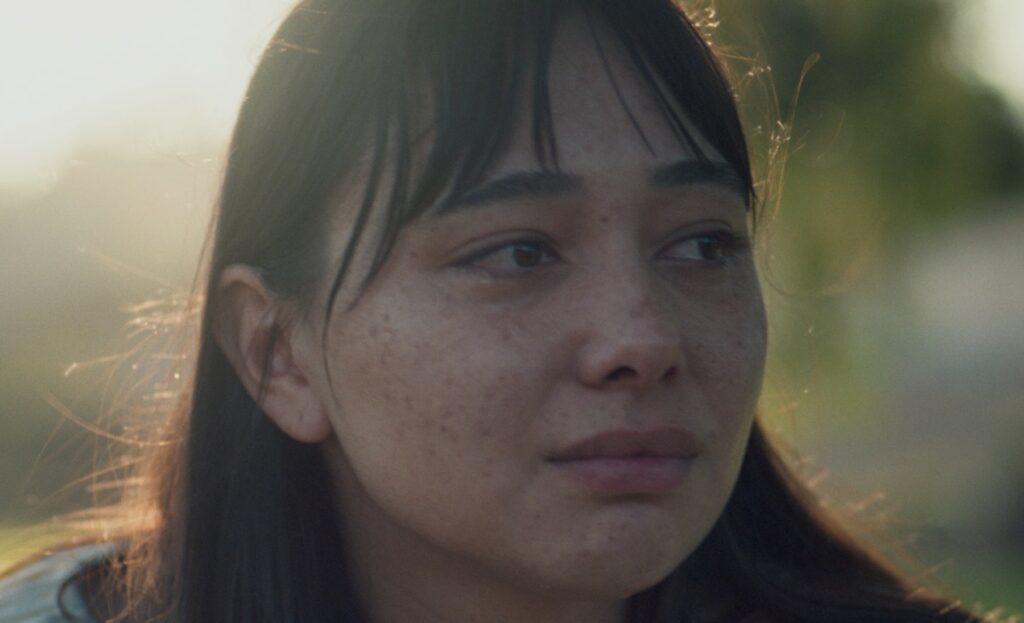
Watching audiences respond to what began as a deeply personal project still feels surreal.
“Now people are watching it and asking me questions,” she says. “It’s really wild. It’s really a beautiful experience to be able to share my story with the world now.”
Before producing documentaries including “Secrets of Playboy,” Maddox’s co-director, Alexandra Orton, worked on the genealogy series “Who Do You Think You Are?” After tracing the family histories of countless celebrities, she says nothing prepared her for Maddox’s discovery.
“I have never heard a story like this,” says Orton. “The second I heard who her grandfather was, I was just like, ‘Oh my God.'”
Meeting Maddox convinced Orton there was a film far more meaningful than its shocking premise.
“I think the information I was getting was empowering,” Maddox says. “It’s hard work breaking generational traumas … going to therapy and doing the work. I cannot carry it on my shoulders. I’m trying to do as much good as I can in this lifetime.”
One lesson from therapy—that facing difficult truths could become a source of strength—became the lens through which Maddox approached the film, confronting both her family’s history and the question of how Manson evolved from an abandoned child into a cult leader.
“It changed with every subject that I spoke to,” she says. “The surprising thing is unexpected people … can be harmful. And the people you expect to be trustworthy can let you down.”
One of the film’s most uncomfortable moments comes during an interview with a photographer connected to The Beach Boys’ circle who sexually harasses Maddox. The encounter was especially painful for the budding filmmaker, who had grown up idolizing the band’s music, long before she understood its complicated ties to Manson.
Their 1967 track, “Heroes and Villains,” in particular, always put a smile on her face.
“I grew up on The Beach Boys,” says Maddox. “They kind of carried me through some really lonely times.”
The sequence becomes a broader examination of the Bay Area counterculture that helped shape Manson’s early following, exploring how ideals of peace and personal liberation often concealed exploitation, abuse, and coercive control.
“I also love counterculture,” Maddox says. “But it had extreme pitfalls that left many women particularly vulnerable. It was important to showcase that.”
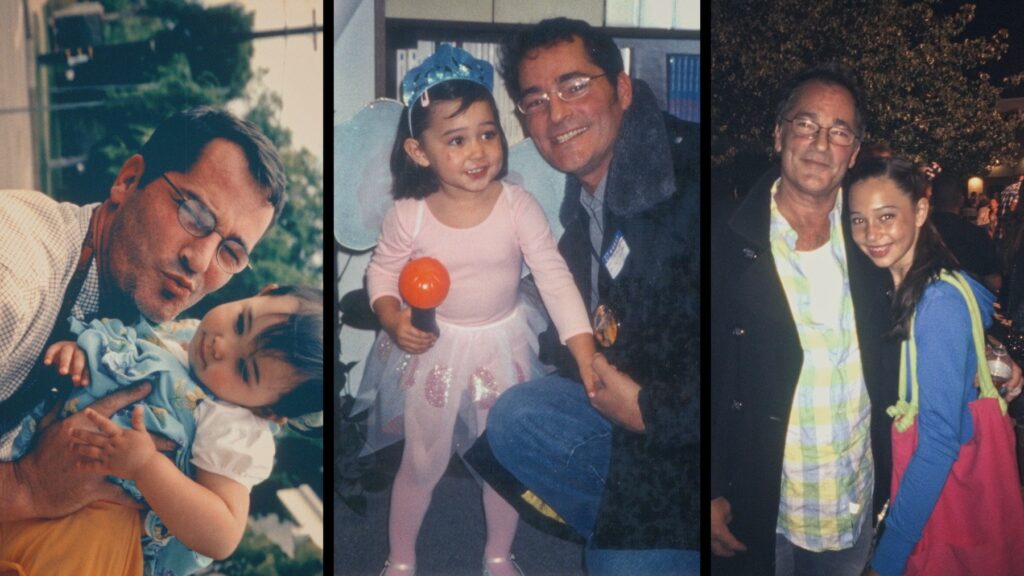
Ultimately, however, the documentary is just as much about Maddox’s father as it is about her grandfather—a reflection of Maddox’s determination to turn an extraordinary discovery into something restorative.
“She was already trying to metabolize it in a way that could be healing and that she could grow from,” Orton says. “I found that to be very inspiring.”
Daniel Arguelles was born after his 17-year-old mother, Darlene Large Pons, had a brief relationship in 1959 with a man she knew only as “Charlie Dear.” Years later, after Manson became internationally infamous, she reportedly came to suspect he was Daniel’s biological father. She never publicly confirmed that belief and kept it private until her death in 2020.
The discovery gradually strains the once-close relationship between father and daughter. Daniel struggles to confront the reality of Manson’s crimes, and by the film’s conclusion, he and his daughter are no longer speaking.
That remains the case today.
“I had such a great father growing up,” says Maddox. “He raised me with so much love. We still haven’t spoken, but my door is always open.”
She recognizes the revelation affected her father differently.
During production, she changed her surname from Arguelles to Maddox—Manson’s birth name—as a way of acknowledging her biological lineage without embracing the infamous Manson surname.
Her father, meanwhile, was forced to confront the news without decades of conversations around trauma, therapy, and mental health.
“I’ve been given tools that he dreamed of getting in his life,” Maddox says. “My processing time is going to be different than his. I’ve come to accept that, love him from afar, and be grateful for what he gave me. I hope he and I can reconcile one day.”
MY GRANDFATHER CHARLES MANSON is now streaming on Hulu and Disney+.