It was impossible not to harken back to All Elite Wrestling‘s last major Bay Area event while attending the league’s fifth annual pay-per-view “Forbidden Door” at San Jose’s SAP Center on June 28. That was “Revolution,” which hit San Francisco’s Chase Center in early 2023. One half of that long-ago show’s main match, Bryan Danielson, was to retire the following year, ending a legendary career that first got going at Hayward’s indie professional wrestling promotion and training school, All Pro Wrestling. And that night’s defending world champion was Maxwell Jacob Friedman, better known to fans as MJF. He lost the title on the evening in 2023. He was back to regain it at “Forbidden Door.”
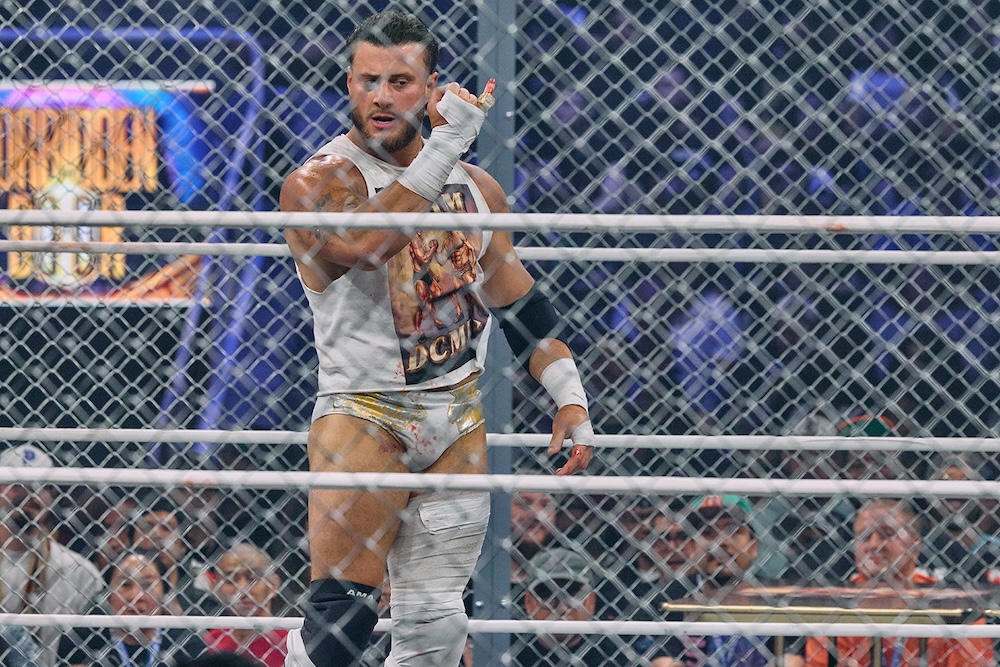
Indeed, MJF was one of eight “Revolution” 2023 stars returning to the Bay Area. MJF’s character might be uncharitably described as a loathsome bad guy enamored with his own greed and ego, or (charitably) as a contender with complex motivations. Whatever your perception of his ring persona, he’s a lynchpin star on a roster that is rightfully called one of the best talent collections in pro wrestling history.
Of course, any such superlative, not to mention AEW’s tagline “where the best wrestle,” stokes the ire of the WWE, whose corporate-conditioned “sports entertainers” exist in an ad-first ecosystem of Saudi Arabian sportswashing, powered by an AI-slop laden business model that purports to be the one true way to present live and televised events centered around the squared circle.
The WWE’s market dominance (or monopoly) of the pro wrestling landscape has been in effect since the league’s primary rival, Ted Turner’s World Championship Wrestling, collapsed in 2001. It went unchallenged until AEW was launched in 2019. A bad-faith online cottage industry emerged to demean AEW, which insists that AEW is nothing but a house of cards. That narrative persists because toxic fandom thrives in the world of WWE, where wrestlers are fired en masse every year to enrich shareholders at its parent company TKO—which let’s not forget, also owns UFC, the star player in the Trump administration’s idiocracy, right there on the White House lawn.
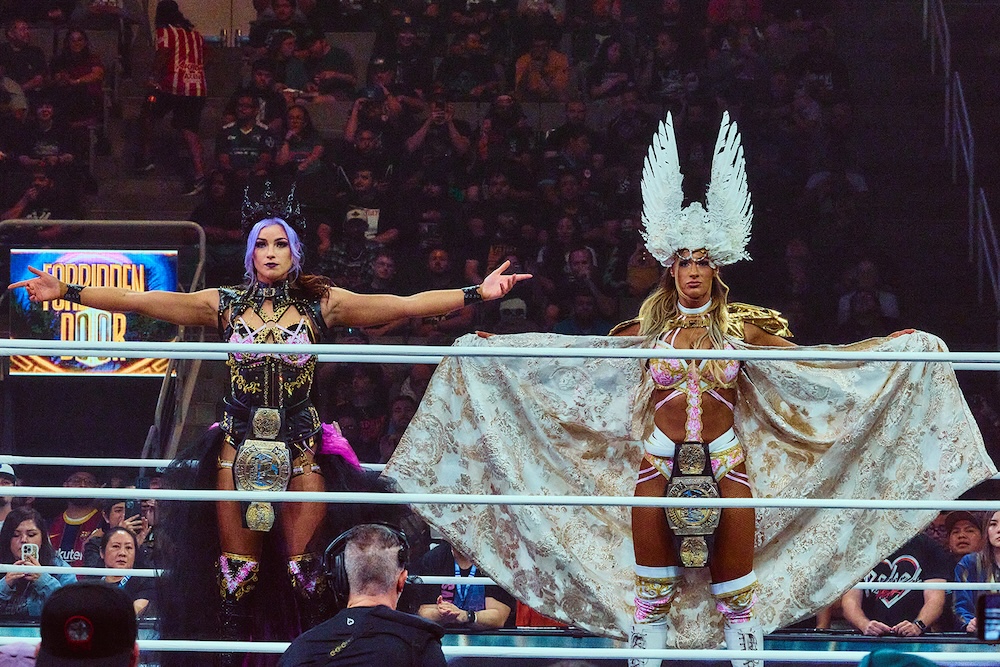
AEW ‘Forbidden Door’ in San Jose, June 28. Photo by Danny Acosta 
AEW ‘Forbidden Door’ in San Jose, June 28. Photo by Danny Acosta 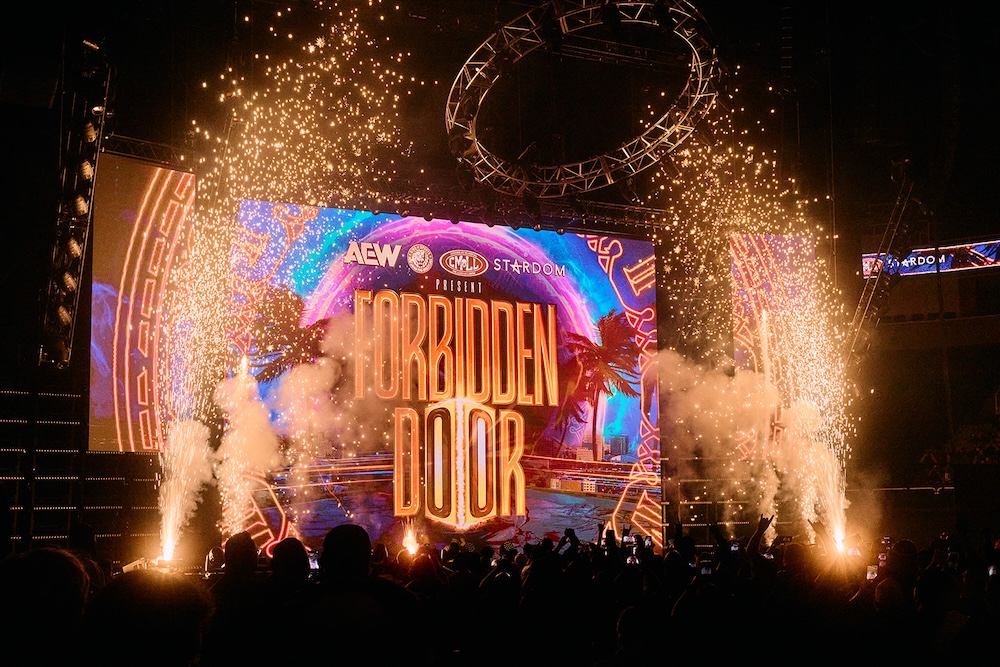
AEW ‘Forbidden Door’ in San Jose, June 28. Photo by Danny Acosta 
AEW ‘Forbidden Door’ in San Jose, June 28. Photo by Danny Acosta 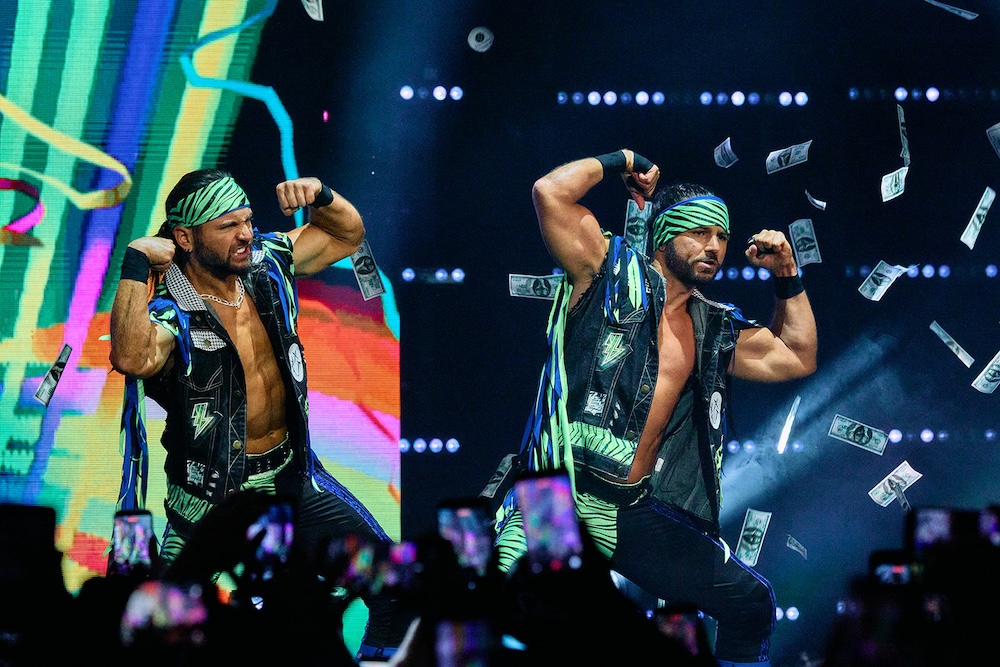
AEW ‘Forbidden Door’ in San Jose, June 28. Photo by Danny Acosta
But let’s get back to “Forbidden Door.” The event was carried out in collaboration with Mexico’s Consejo Mundial de Lucha Libre (CMLL), the oldest wrestling promotion company; New Japan Pro Wrestling (NJPW), established in 1972; and the Japanese all-women’s brand Stardom. It delivered fans an experience that honored wrestling’s traditions, its modern competitive landscape, and a global spirit of cooperation rarely seen at this scale. After all, if you’re going to call your league “where the best wrestle,” you better be searching the world for top talent.
AEW storytelling might at times miss the mark due to natural pitfalls that arise from producing 52 weeks of TV per year, but its pay-per-view events have become a way to overcome the limitations of the form, and to present pro wrestling’s simple morality play as a more nuanced story, with a more physically robust package. “Forbidden Door” produced a standout night of action. The series’ detractors deride it as an experiment with no clear purpose, underdelivering on its cross-promotional “dream” matches, yet it continues to entrench itself in pro wrestling lore with high-octane, memorable bouts that regularly refine and redefine the league’s brand.
It is worth noting, what with America being a failing state and all, that some of the event’s performers fell victim to nightmare work visa situations. Not all the talents that should have been in San Jose were present, which makes you think about how the event could have been even stronger in a less xenophobic national atmosphere.
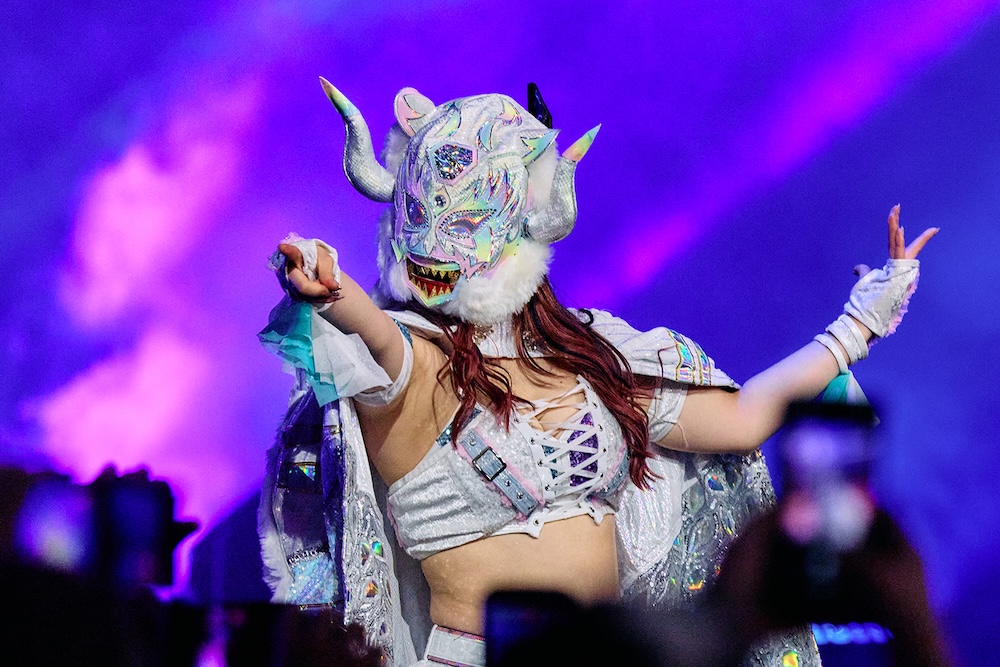
WCW occasionally featured NJPW stars, and contracted Mexican luchadores in the 1990s on TBS and TNT. But historically, non-English speaking wrestlers from pillar countries like Mexico and Japan have largely been presented as marginalized characters in the United States, even when they had considerable talent. So perhaps where AEW most truly sets itself apart is by presenting international talent with consistency and cultural competency, valuing them at every level of the card. Mexican and Japanese wrestlers are given free rein to be their fully capable, embodied, compelling, complex and diverse selves—instead of filler. AEW fans have the opportunity to connect with these more authentic iterations, no matter the performer’s style, background, or language.
AEW’s high-caliber events, like the recent five-hour sprint in San Jose, don’t insult fan intelligence, but rather encourages them to see the wrestling world that lies beyond the United States. The approach positions the league as inclusive, rather than a restrictive and trampling force. While WWE balks at everything outside its own league, AEW affirms and adds to the legacies of Mexican lucha libre and Japanese strong style.
The league is able to welcome talent from around the world thanks in part to owner Tony Khan’s seemingly infinite pockets (Khan also owns the NFL’s Jackson Jaguars and the Premier League’s Fulham F.C.). AEW has hired a steady and strategic stream of top global stars, including headliners at this year’s “Forbidden Door” like England’s Will Ospreay—a game-changing “Aerial Assassin” that cut his teeth in NJPW and would be at home in British sports and gangland movies alike—who was matched up against “Swerve” Strickland, a Black American from Washington who served in the US Army (and was barely utilized during his former WWE stint) for the Owen Hart Foundation Men’s Tournament final. The two captivated fans with a match that surpassed their former fights, and Ospreay prevailed after 30-plus minutes of top-notch attrition.
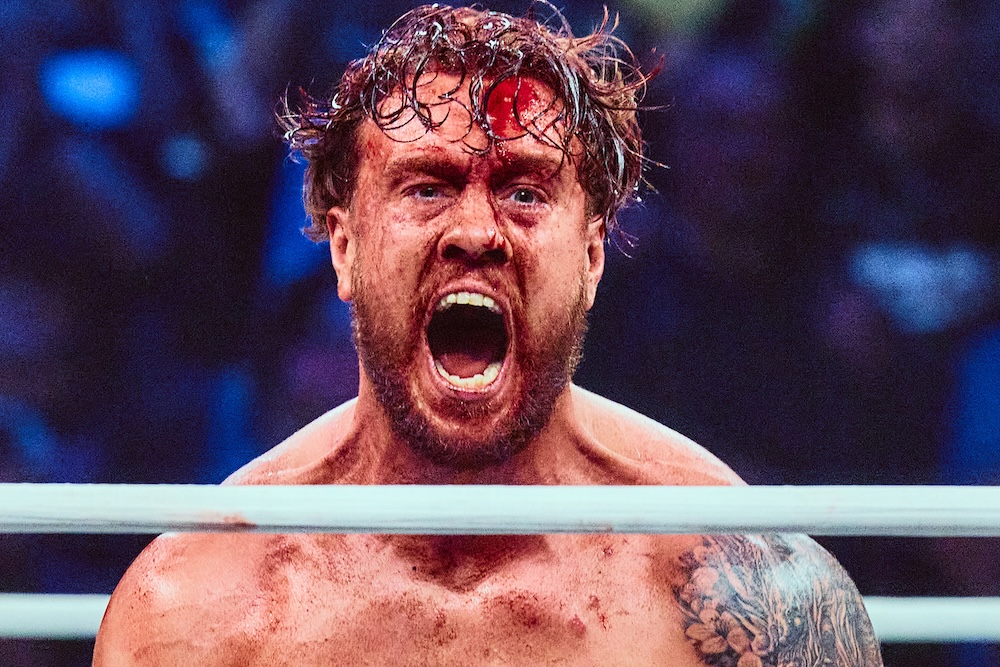
AEW ‘Forbidden Door’ in San Jose, June 28. Photo by Danny Acosta 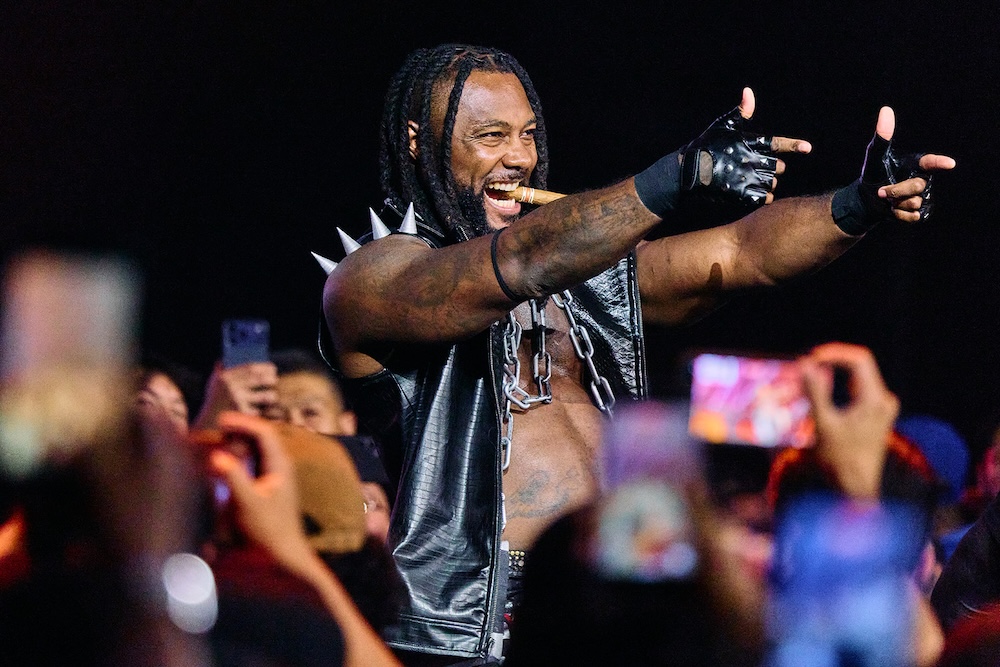
AEW ‘Forbidden Door’ in San Jose, June 28. Photo by Danny Acosta 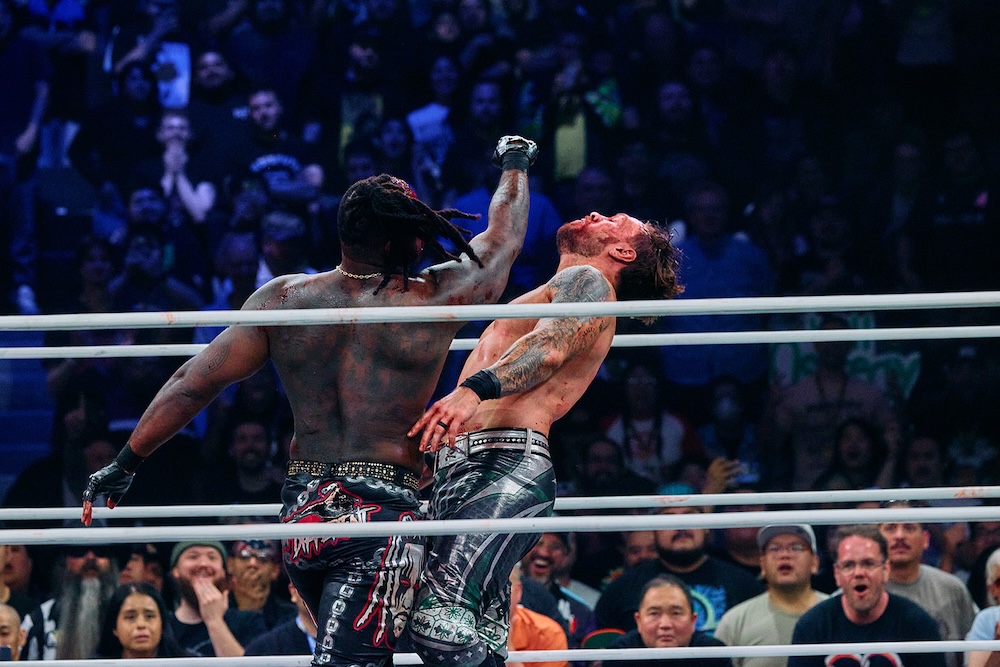
AEW ‘Forbidden Door’ in San Jose, June 28. Photo by Danny Acosta 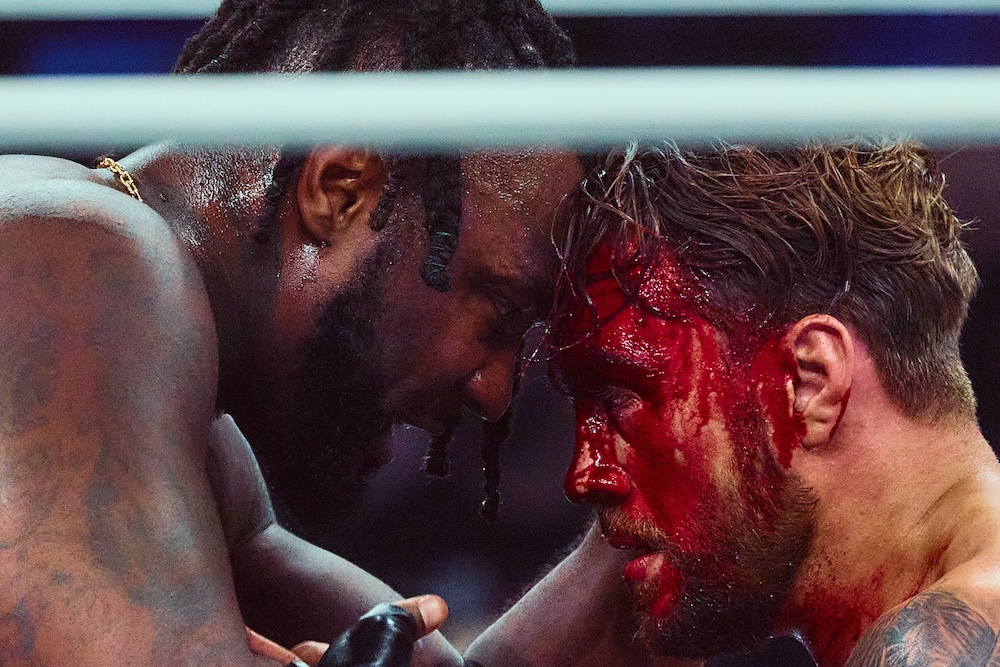
AEW ‘Forbidden Door’ in San Jose, June 28. Photo by Danny Acosta 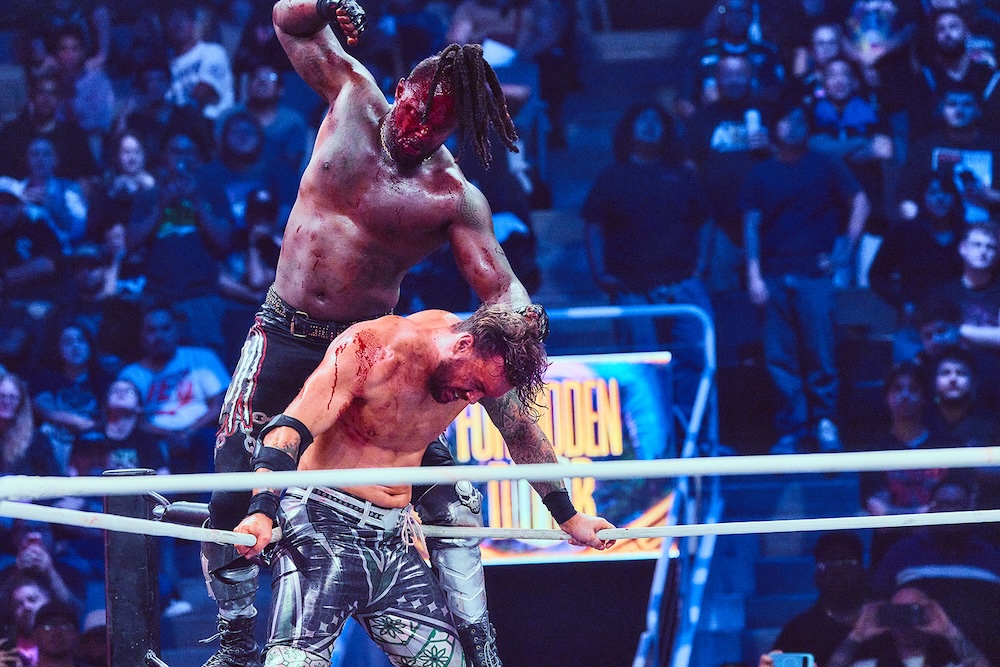
AEW ‘Forbidden Door’ in San Jose, June 28. Photo by Danny Acosta 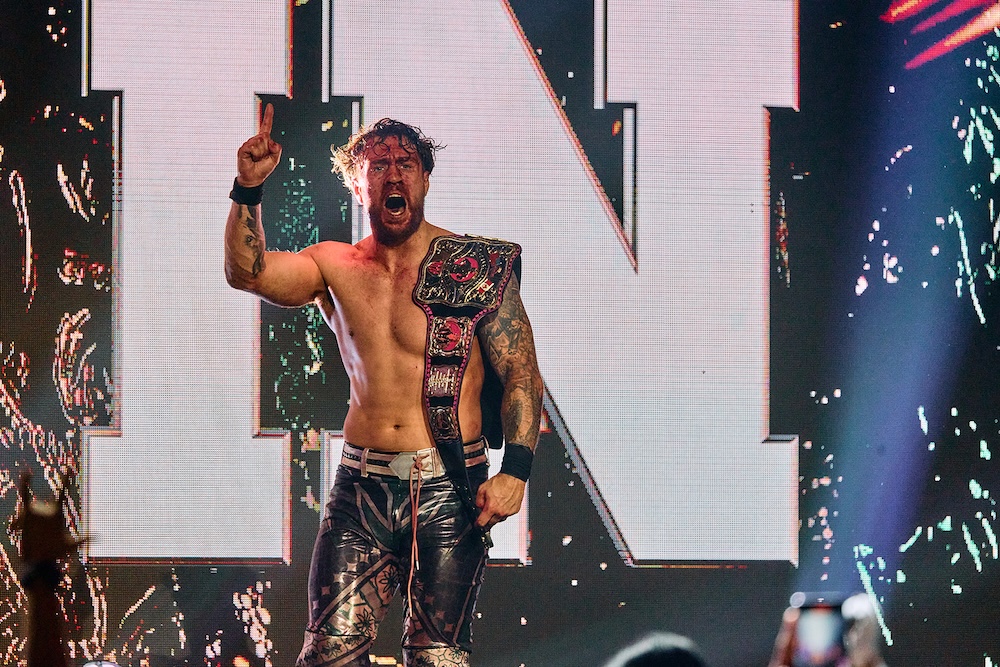
AEW ‘Forbidden Door’ in San Jose, June 28. Photo by Danny Acosta
Ospreay’s win came after finishing as runner-up in last year’s tournament, and just after recovering from neck surgery. Now, he’ll go on to headline the biggest stadium in his home country—London’s Wembley, where he’ll compete in the world championship on August 30. Earlier in the night, Mercedes Moné, a women’s wrestling pioneer and former Wrestlemania headliner who is currently at her peak, became the first two-time Owen Hart Cup winner, beating sentimental upstart Maya World.
Truth be told, Ospreay, Moné, Strickland, and MJF are a few of the names on AEW’s roster who vie for the title of world’s best wrestler. As such, a major wow factor threaded through “Forbidden Door.” Khan’s bottomless war chest can only account for part of that wealth—and it points to the high value of AEW’s openness to spotlighting talent from around the world.
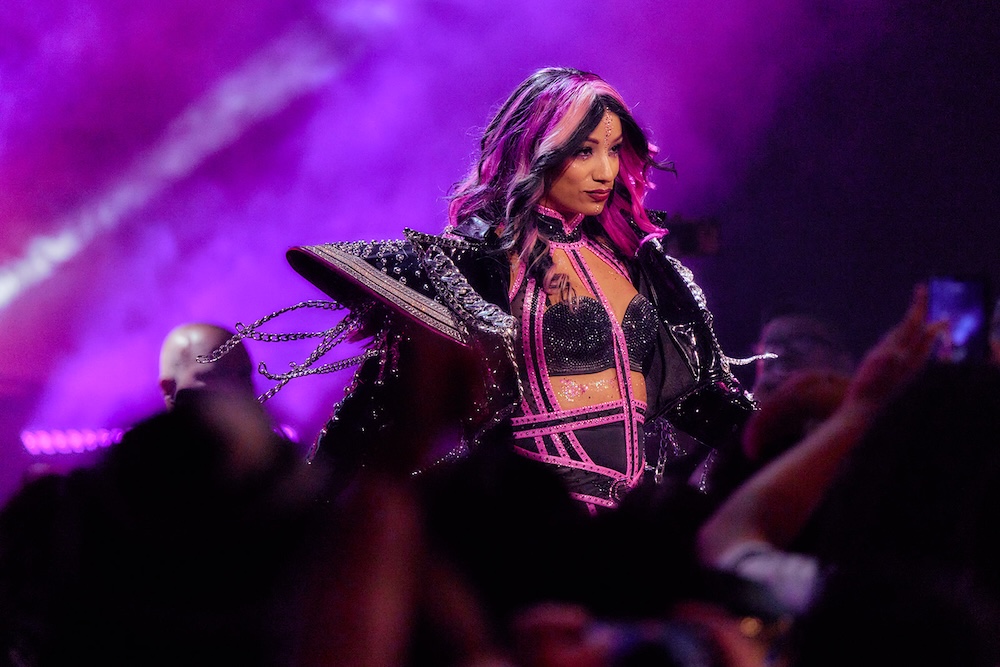
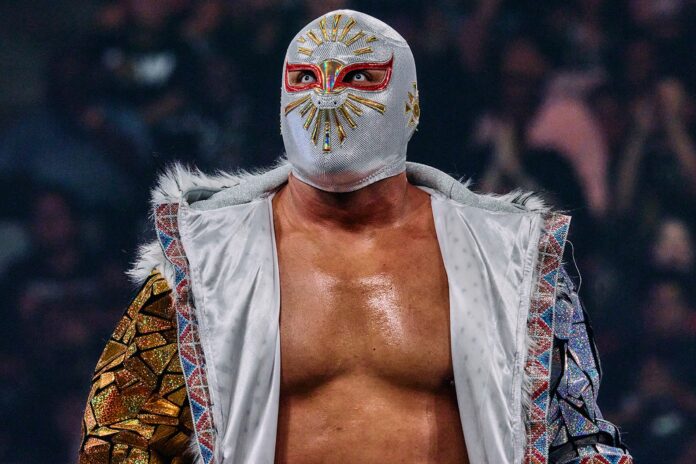
The main card of “Forbidden Door” opened with a tag team party starter featuring Místico, the luchador who has defined Mexico’s wrestling millennium. Even in this, his late career renaissance, Místico is capable of selling out CDMX’s Arena Mexico, and is the biggest attraction in the world by a tangible margin. CMLL surpassed its record sellouts from last year in just six months of 2026, thanks to the man’s status as a living legend. San Jose’s fervent Mexican fanbase was thrilled by Místico and other elite luchadors throughout “Forbidden Door.”
NJPW athletes have made repeated trips to the San Jose Civic Center in the last decade, and the Japanese performers leaving it all in the ring drew huge reactions throughout the night. Importantly, Khan has worked out dual contracts for cornerstone wrestlers, meaning Místico can maintain his obligations in Mexico for CMLL, while becoming an AEW regular. The league has similar deals with Japanese stars who want to keep a foot in NJPW, a flexibility that demonstrates reverence for the wrestlers’ best interests, and that serves promotional partners and international fans well.
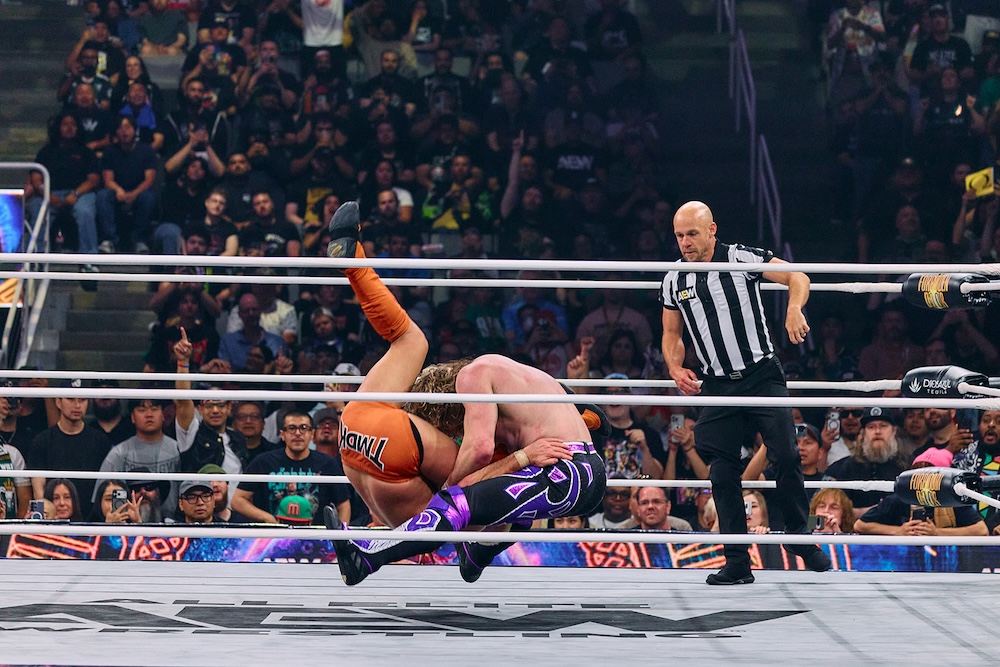
The second main card match was between Kenny Omega, the Canadian renowned for his world championship runs in NJPW, and whose success endowed AEW with enough credibility and compelling talents for the league to find triumph in its early years. He faced off with AEW’s consensus top technical grappler, England’s Zack Sabre Jr.—the first non-Japanese wrestler to defend his world title at the Tokyo Dome’s biggest show of the year. The third bout on the main card featured Bandido, a luchador who AEW let loose last year in both the United States and in Mexico, resulting in the man known as The Most Wanted becoming a 2025 Wrestler of the Year candidate and arguably, Mexico’s prime luchador. His opponent was Jon Moxley, the US brawler who has been AEW’s ace, a multi-time world champion who has set the standard when it comes to being able to headline anywhere in the world.
On the women’s side, AEW world champion Thekla from Austria successfully defended her title against Stardom standout Starlight Kid, a masked Japanese wrestler. Upon Thekla’s arrival to AEW, she was immediately treated like the impact player she is.
Rounding out the card were Canadian duo Adam Copeland and Christian Cage, who were both winding down three decades at the top of the industry by defending their AEW world tag team championship title against fourth-generation wrestler David Finlay, born in Germany to parents from the north of Ireland, and his US stablemate Clark Connors. (Switchblade Jay White, a former NJPW world champion from New Zealand, surprised fans by returning to prevent Finlay from cheating Copeland and Cage.)
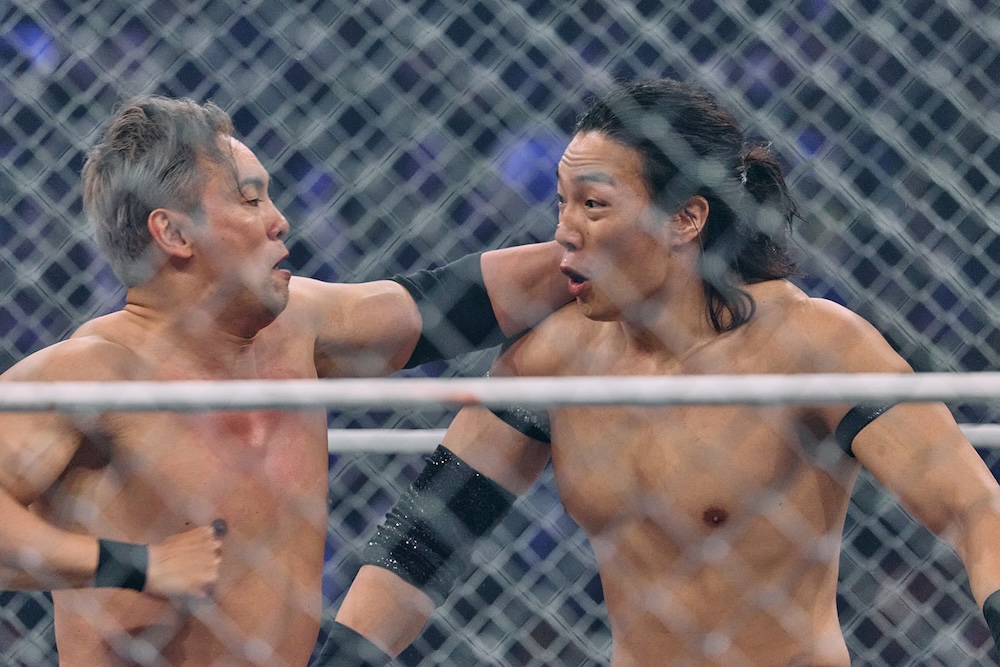
The cage match was another crowd-pleasing face-off between—again—two men who could each be be argued as the best wrestler on earth; Japan’s Kazuchika Okada and Okada’s heir apparent and rival, Konosuke Takeshita. The most recent AEW world champion, Darby Allin, was in the cage too, opposite two wrestlers considered AEW’s future: Black American Kevin Knight of Washington, and Australia’s Kyle Fletcher. Lastly, there was Andrade “El Idolo”—Mexican lucha libre royalty, a proven world-caliber main-eventer, who is once again firing on all cylinders with US audiences.
Between September 2018’s independent prologue event to AEW’s official launch titled “All In,” which AEW has brought back as its yearly flagship event, and May 2019’s league-first pay-per-view event, coming a month after Okada headlined the Garden, the professional wrestling landscape underwent seismic shifts. These changes were motivated by the assertion that there had to be life outside of WWE. AEW has, in Ospreay’s words, “restored the feeling” for pro wrestling fans, who can trust that the league will provide its grapplers with fair treatment—that recognizes they’re not disposable bodies, but performers deserving of dignity, and who have paid a real price to entertain fans (as proof, look to former NJPW world champion and current NJPW President Hiroshi Tanahashi’s appearance during this year’s “Forbidden Door.”)
Those values can easily be seen in AEW’s decision to name their tournament for Owen Hart, a high-flying grappling pioneer from a famous family who lost his life due to the WWE’s negligence in 1999. When his widow Martha finally got the rights to Owen’s name and likeness, AEW launched the tournament, which benefits The Owen Hart Foundation.
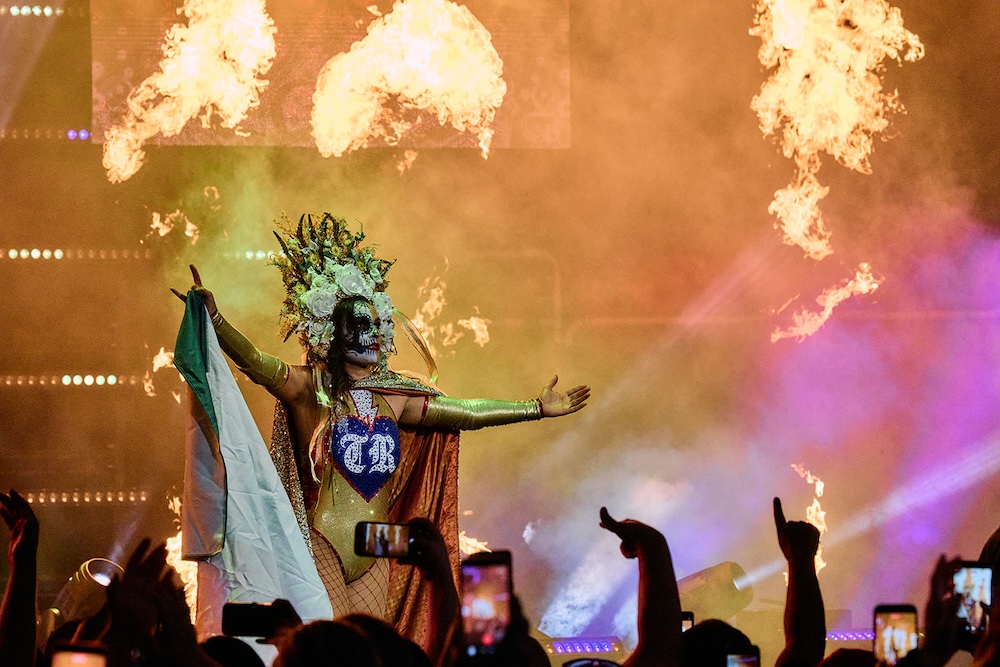
AEW ‘Forbidden Door’ in San Jose, June 28. Photo by Danny Acosta 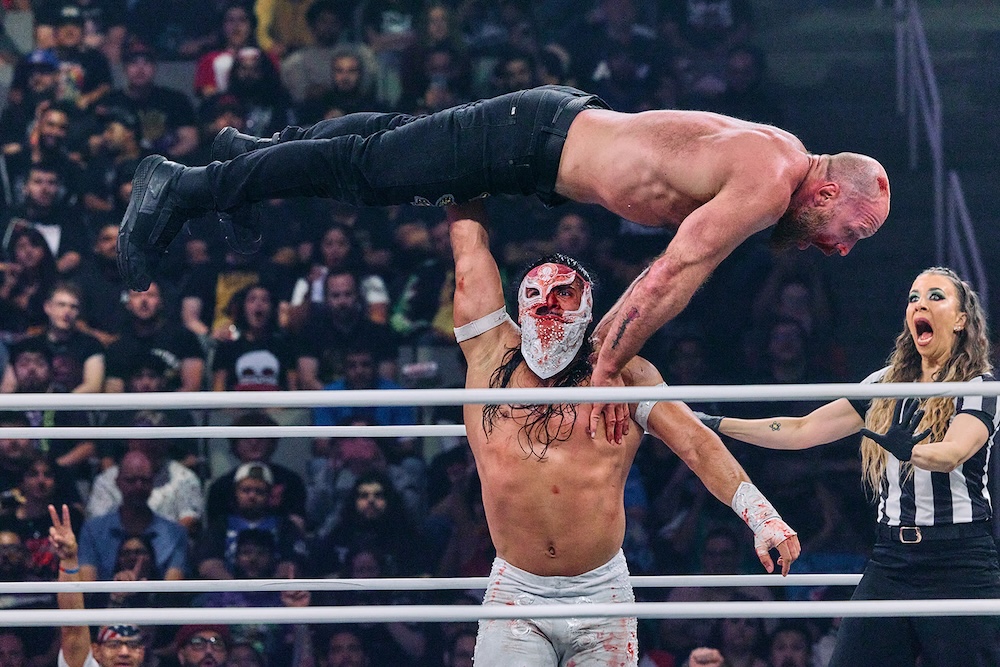
AEW ‘Forbidden Door’ in San Jose, June 28. Photo by Danny Acosta 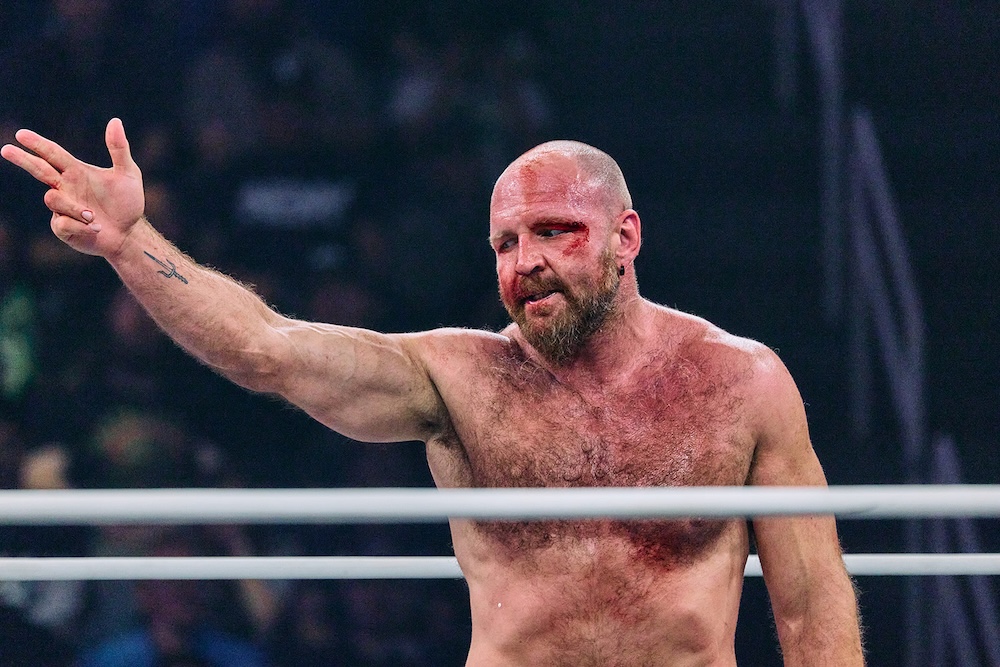
AEW ‘Forbidden Door’ in San Jose, June 28. Photo by Danny Acosta 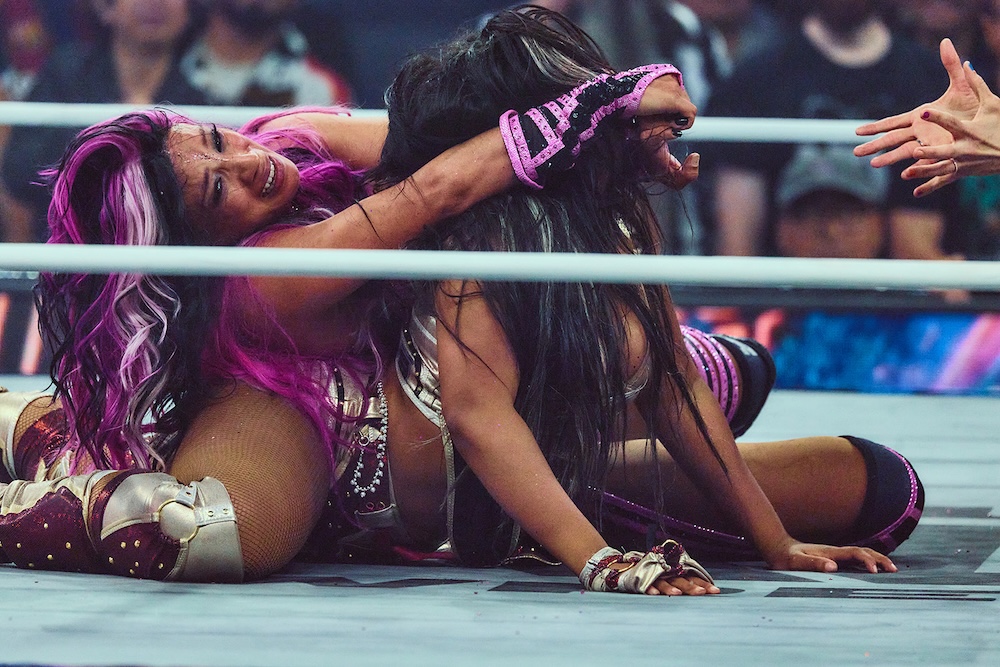
AEW ‘Forbidden Door’ in San Jose, June 28. Photo by Danny Acosta 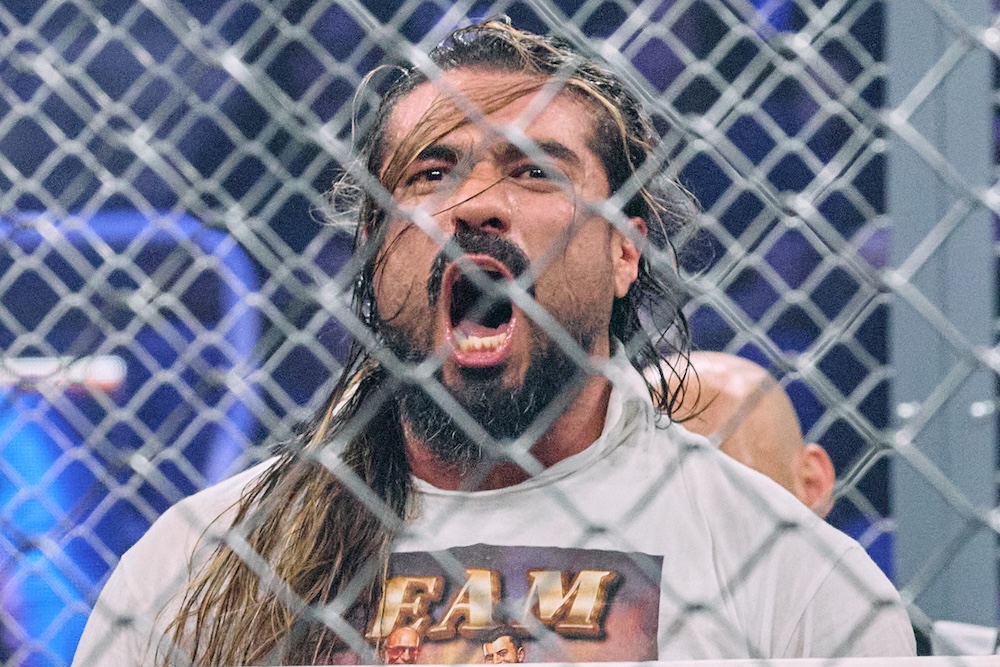
AEW ‘Forbidden Door’ in San Jose, June 28. Photo by Danny Acosta 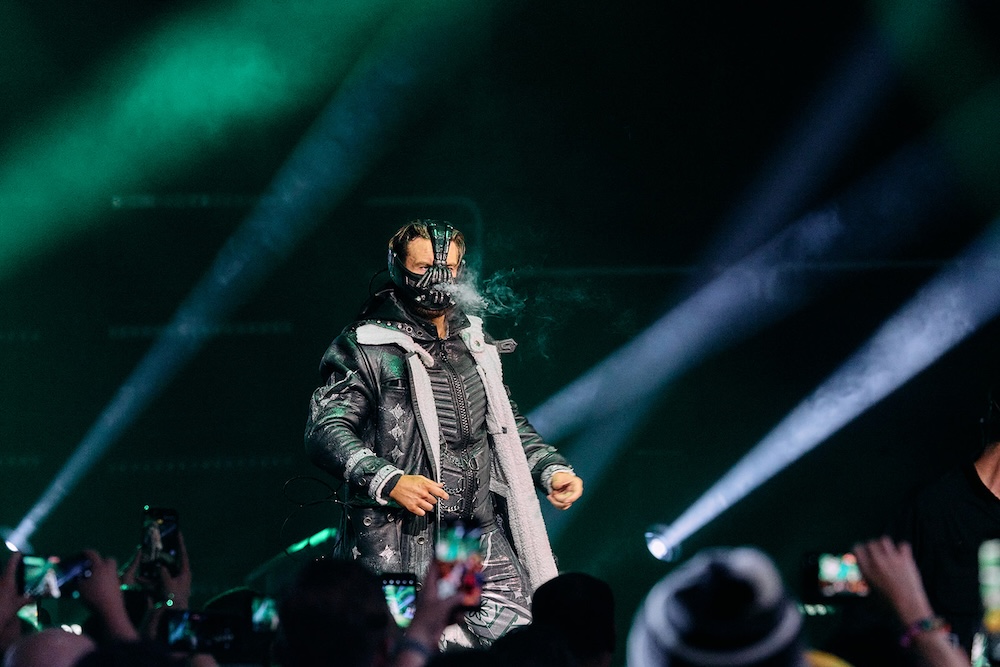
AEW ‘Forbidden Door’ in San Jose, June 28. Photo by Danny Acosta
That sense of equality makes AEW a league in which top players can find themselves becoming the world champion, a feature that is somewhat akin to the NBA having had eight different champs in the last eight years. MJF lost to Omega less than two weeks after “Forbidden Door,” on AEW’s weekly TV show “Dynamite” during a themed edition dubbed “Beach Break.” That means Omega will be the defending AEW world champion at Wembley Stadium, and fighting title challenger, 2026 Owen Hart Tournament winner, and hometown hero Ospreay. The London event will feature eight different wrestlers, demonstrating the roster’s depth. That title made it evident that the fights in San Jose ramped up the drama on the road to London, another memorable benchmark for AEW towards becoming the kind of promotion company that can fill stadiums.
To put it in terms the Bay Area and Silicon Valley might understand, the “Forbidden Door” refers to a once-closed ecosystem transformed into something like an open source network. Its latest installment proved that AEW cornerstone events are thriving. And the disruptor league is deserving; its value proposition informs an increasingly impressive portfolio, one that is forward-thinking and unapologetically authentic.