
Each time Sheila E. returns to Northern California for a gig, she knows her big, beautiful Bay Area family will beat a path to her door.
“The first thing that pops up is that all 500 of my relatives want to get into the concert for free,” she tells 48 Hills. “I’m joking, but I’m not.”
Family aside, coming home carries a deeper significance for the Grammy-winning percussionist, singer, and songwriter. When Sheila E. takes the stage alongside Morris Day and The Time at Blue Note Napa Summer Sessions on August 21, she’ll be performing in the region that made her.
“The culture of the Bay Area is who I am,” she says.
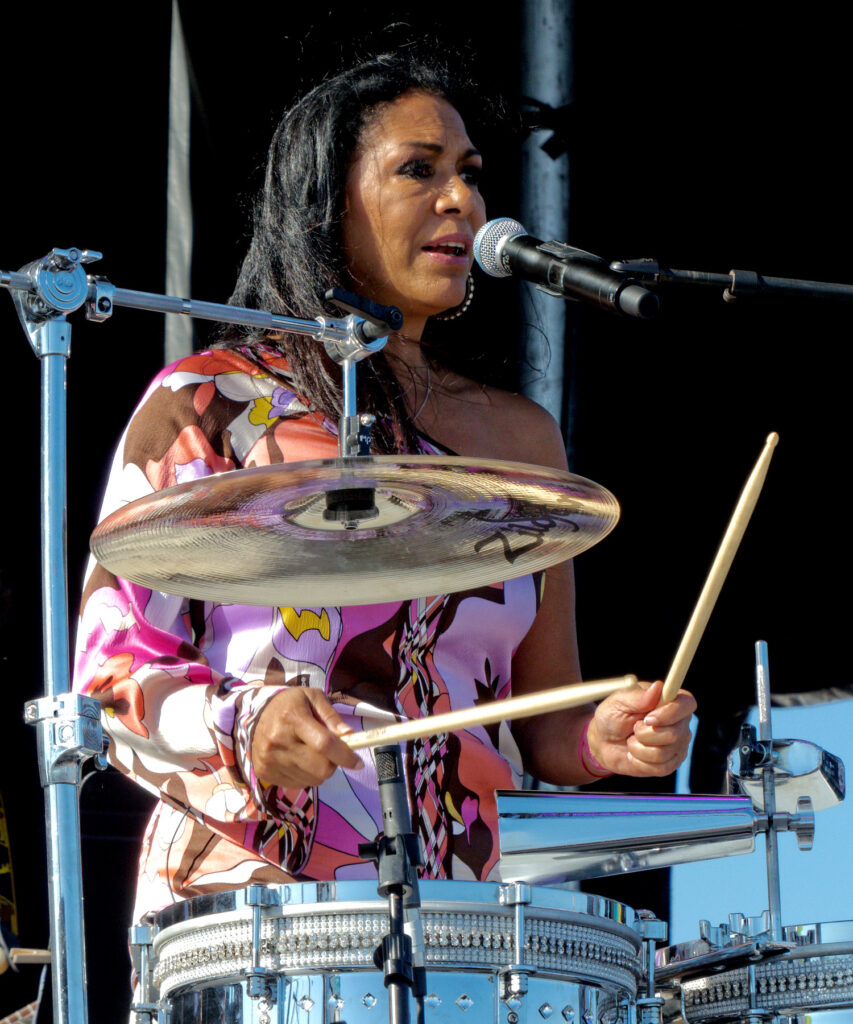
For Sheila E., born Sheila Escovedo in Oakland, that culture began at home. Her father, legendary percussionist Pete Escovedo, filled the house with music that ranged far beyond the Latin jazz for which he became famous: Motown, R&B, and funk. With those sounds in the background, a young Sheila was studying classical music and playing violin by age nine.
Then there were the musicians constantly coming through the door.
“People would come to our home and rehearse in the living room,” she says. “Having these musicians and artists over jamming allowed me to learn by playing.”
The Escovedo family itself could nearly constitute a history of Bay Area music.

Pete and Sheila’s uncle Coke Escovedo both played with Santana and helped found the Latin rock group Azteca. Her uncles Alejandro, Javier, and Mario Escovedo carved paths through rock, punk, and Americana, while her brother Peter Michael Escovedo became a percussionist and bandleader.
Her godfather was another percussion giant: Tito Puente.
Sheila E.’s sense of what a musician could be was also forged in the Bay Area’s parks and streets, where musical cultures routinely collided.
She remembers drum circles in Berkeley and gatherings in San Francisco’s Mission District, where musicians brought instruments and rhythms from Brazil, South Africa, Peru, and elsewhere, and simply played together.
“We were always just jamming, and there were a lot of women that would come,” she says. “I grew up in that kind of environment, so I thought that being a woman like that and playing with other artists was normal.”
Only after she began traveling outside the Bay Area for recording sessions did she discover that the rest of the music business didn’t necessarily see things the same way.
Some musicians would look at her and wonder what she was doing there. “That’s when it got a little weird,” she says.
But that didn’t stop her. By the early ’80s, Sheila E. was already working with some of the biggest names in music, including George Duke, Marvin Gaye, and Lionel Richie. Gaye would even turn the stage over to her while changing costumes during shows.
“He’d say, ‘Sheila, you take over the stage,’” she remembers. “It’s a 26-piece band. And he picks me to take over the stage.”
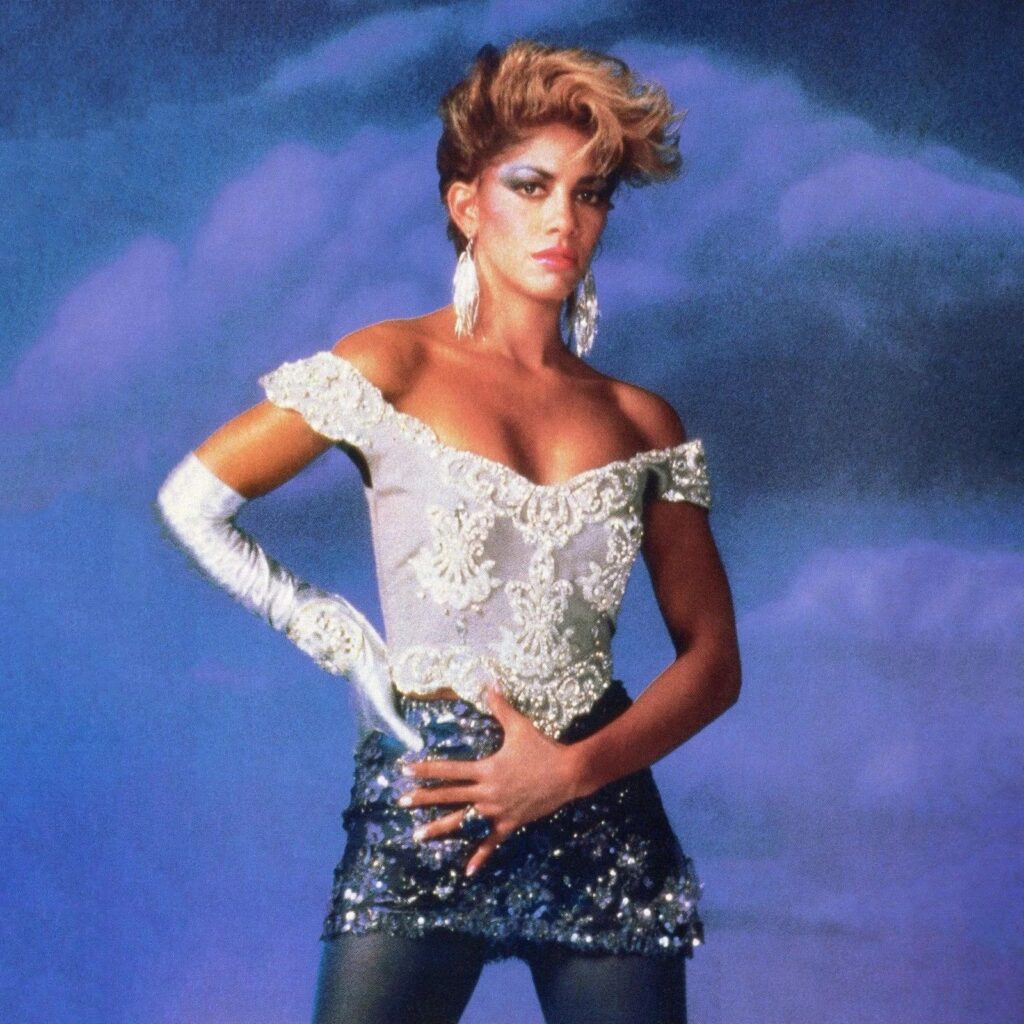
Those experiences helped prepare her for the solo career that would make Sheila E. a household name. Her 1984 breakthrough, “The Glamorous Life,” followed by songs such as “The Belle of St. Mark,” “A Love Bizarre,” and “Holly Rock,” transformed the percussionist into a pop frontwoman, while her collaborations with Prince became an indelible part of ’80s music history.
Four decades later, one of the most consequential chapters of her recording career would bring her back to where she started.
Her album Bailar, co-produced with Tony Succar, plunged fully into salsa, bringing together performers including Gloria Estefan, Rubén Blades, Gilberto Santa Rosa, and Mimy Succar. Its recording of “Bemba Colorá,” featuring Estefan and Succar, earned Sheila E. the first Grammy of her career in 2025 for Best Global Music Performance.
The win was especially meaningful because the project drew so deeply on her cultural and musical roots.
“Oh, it was everything,” she says.
Sheila E. had long wanted to make a salsa album, and the form demanded something different from her. She considers salsa more challenging than Latin jazz, citing everything from its rhythms and Spanish-language vocals to its breaks and arrangements.
“I wasn’t doing it to win a Grammy,” she says. “I did this for my heart, for my family, for the culture, and for the Bay Area. I grew up listening to salsa music.”
She remembers artists including Puente, Celia Cruz, and Eddie Palmieri coming through Oakland and San Francisco when she was growing up, part of a thriving musical ecosystem that made the Bay Area a crossroads for Latin music.
That connection continues through Bailar Deluxe, which expands the project with new material, including “Vuelvo,” on which Sheila E. sings entirely in Spanish. The album also recasts “The Glamorous Life” through a Latin lens. Sheila E. & Friends Bailar Instrumentals, meanwhile, strips away the vocals to put the arrangements, ensemble playing, and percussion front and center.
And she isn’t finished yet.
“There’s new music coming out,” she says. “I’m thinking of music every single day. There’s new Latin pop, R&B, and Latin jazz coming. It’s a little bit of everything.”
That refusal to settle into one category makes sense for someone raised amid the Bay Area’s musical cross-pollination. It also helps explain why, after more than five decades, Sheila E.’s career still feels expansive.
For the artist, that sense of musical community extends well beyond the stage.
She co-founded Elevate Oakland to bring music and arts education directly into Bay Area schools, continuing a tradition of community involvement she says began with her father when she was a child.
She remembers Pete Escovedo loading percussion instruments into the car and taking his children to perform for young people who otherwise had little access to instruments or music programs.
“We’ve done so much for the community because it’s who we are,” she says. “We are the community.”
Elevate Oakland brings working musicians, singers, songwriters, DJs, dancers, and choreographers into schools during regular class hours to teach and mentor students. Sheila E. says the organization has served more than 3,000 young people and currently has 12 schools waiting for its help.
“The Bay Area music culture influences them,” she says. “And all they need is the opportunity and the chance.”
Sometimes those students wind up performing at concerts with Sheila E. or her father, bringing the lessons of her childhood living room full circle.
For all the accolades that have accumulated along the way—a Grammy, a star on the Hollywood Walk of Fame, a Latin Grammy Lifetime Achievement Award, and inductions into the Modern Drummer and Percussive Arts Society halls of fame among them—community remains central to how Sheila E. talks about her work.
That spirit will carry into her Napa show with Morris Day and The Time, best known for such funk-rock smashes as “Jungle Love,” “The Bird,” and “Jerk Out.”
Sheila E. promises a show built for dancing and singing, but also one where spontaneity remains part of the appeal. A surprise guest might be a fellow musician—or simply someone she spots in the crowd.
“We’ve done shows with Morris many times over the years, and we have a blast,” she says. “Everyone who comes to the show loves it.”
For Sheila E., though, a Northern California performance inevitably carries another layer. It means returning to the place where she first watched musicians turn living rooms into stages, where women joined drum circles without wondering whether they belonged, and where salsa, funk, R&B, rock, jazz, and classical music could all be part of the same musical education.
More than five decades after leaving that living room for stages around the world, she still measures her legacy in similarly intimate terms.
“I hope that I can make a difference in someone’s life,” Sheila E. says. “One person at a time—through love and music.”
SHEILA E. AND MORRIS DAY AND THE TIME August 21. Blue Note Napa Summer Sessions, Napa. More info here.