The fall festival season has commenced, and one of the big early takeaways from its premieres to date is that the rest of the screen year will bring unflattering attention to several prominent figures. There are acclaimed new documentaries about Elon Musk and incarcerated Theranos founder Elizabeth Holmes, as well as a drama (Primetime) about ethically questionable reality TV series To Catch a Predator and its host Chris Hansen. Needless to say, with midterm elections coming up, the timing is very good for attention to be drawn towards bad actors and hyperbole manufacturers allegedly working for the public good.
This week’s new films are also primarily nonfiction, though they tend to be less muck-raking than celebratory. Admittedly, there’s not a lot of scandal to be mongered from the subjects of the inaugural Critter Fest, which takes place at SF’s 4Star Theater Thurs/17-Sun/20, with streaming access also available for some programs during the same time period. This latest addition to SF Indiefest’s stable of annual satellite events is just what you’d expect, offering 19 titles “about animals, pets and wildlife.”
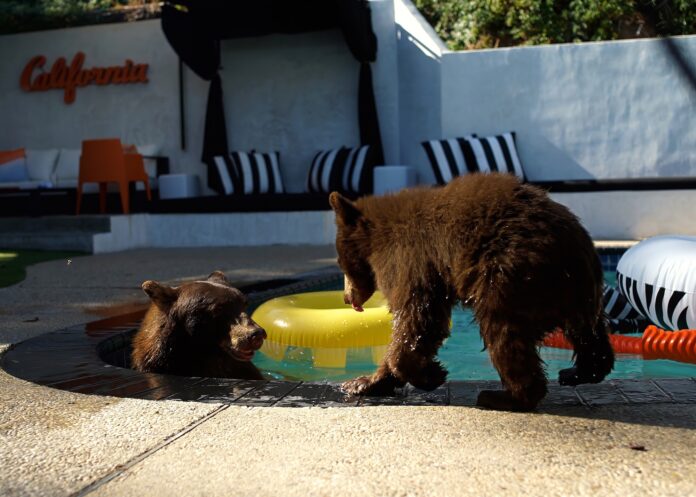
Among documentary features are The Ark, focusing on a family home in Eastern Ukraine that by necessity became a sanctuary for domestic creatures displaced by war; Better Call Babs, about a real-life “pet detective” recovering lost or stolen four-legged BFFs; plus opening night feature Second Nature, which examines sexual/gender diversity in the non-human sphere, and is narrated by Elliot Page. There are also several animations, including a free SPCA-sponsored outdoor show on Fri/18 at Proxy of 2019’s family-friendly ‘toon The Secret Life of Pets 2, whose voice talents include Kevin Hart and Harrison Ford. There are also live-action films about cats, dogs, bats, ducks, flamingos, cows, toads, wasps, owls, Western Snowy Plovers, “tripawds” (three-legged canines), Bears in Hot Tubs, and more. Full program, schedule and ticket info is here.
Other new arrivals put the spotlight back on our own two-legged species, several focusing on a stellar artistic life. Brydie O’Connor’s Barbara Forever distills the complex personality and prolific career path of Barbara Hammer, who made over eighty films before her 2019 death at age 79, following a long struggle with ovarian cancer. A “late bloomer” (she was in a heterosexual marriage and didn’t make love to a woman until reaching 30), she more than made up for lost time by creating a screen “lesbian history in a world where we’re invisible.” They began very much in the personal, avant-garde modes of experimental cinema in the late 60s and early 70s, then eventually encompassed such comparatively widely-seen feature documentaries as Nitrate Kisses and History Lessons.
This doc’s title isn’t just a tribute: Hammer herself avidly pursued visibility, recognition, posterity. She rejected the compartmentalization and dismissal of lesbian work by major institutions, stubbornly winning a place at the Whitney Biennial, major film festivals, and so forth. Her frequently naked self was often onscreen, yet hers was an art of self-exposure not rooted in vanity but critical, sometimes ruthless inquiry. Largely drawn from archival materials, Forever is a fine overview of an important artist. It opens Fri/18 at SF’s Roxie Theater. Director O’Connor will be present that opening night, as well as at preceding single shows at BAMPFA (Wed/16) and the Balboa Theater (Thu/17).
Hammer spent some key formative years in San Francisco, as did Sam Green, the director of The Oldest Person in the World—which also wrestles with legacy, mortality, and cancer. It starts as a playful investigation of the titular phenomenon, i.e. the media attention that surrounds each (often fast-) succeeding holder of a crown whose age has lately fluctuated between 115 and 119. Green visits some of them, hopping from Brooklyn to Italy to Japan and so forth.
But the first-person musings he’s previously brought to such projects as 32 Sounds and Utopia in Four Movements, some of them “live” performance-projection mixes, takes a more urgent turn once he himself gets a serious health diagnosis. The result is a globe-trotting yet very personal meditation that will thoroughly charm some viewers, while it may strike others as a bit over-calculatedly twee. It opens Fri/18 at Bay Area venues including the Roxie, Marin’s Smith Rafael Film Center, and Berkieley’s Elmwood.
Is moviegoing itself terminally ill? Though Hollywood just experienced its highest-grossing summer ever, theaters have been struggling to stay open for decades—ever since television first provided a major reason to stay home, with cable, VCR’s, streaming and most recently COVID providing further threats. In 1929 there were approximately 22,000 venues—now it’s less than 3000.
Particularly hard-hit are more rural communities where such facilities have been disappearing for decades, as memorably depicted in Larry McMurtry’s novel The Last Picture Show and its classic 1971 film version, both set in the early 1950s. That movie is liberally excerpted in Rustin Thompson’s The Last Picture Shows, a pleasant sort of photographic essay surveying “small towns of the American West” that are now at risk of becoming “cinema deserts”—places where youth may never acquire the moviegoing habit, because it’s no longer a local option.
Taking his camera from Washington to Colorado to New Mexico, and all points in between, Thompson records well over a hundred locales where theaters (some dating as far back as 1914) once existed, but now have been abandoned, repurposed or demolished. But there are also those still hanging on, often family operations that endure out of sheer dedication rather than any profit motive.
Many remain humble establishments, but there’s the occasional jewel, like The Washoe in Anaconda, Montana—one of the nation’s most spectacular surviving original art deco movie palaces. With its insights into general problems for exhibitors today (such as major studios’ restrictive booking policies), Shows is educational as well as nostalgic. It plays SF’s Balboa Sun/20-Mon/21, and the Orinda Theater as of Fri/25, with other dates and venues listed here.
Mention should also be made of two tributes to singular careers. This Sat/19 at 1:15 the Roxie will host “Larry Reed: A Life in Light and Shadow,” a program of short films and performance excerpts from the recently deceased, SF-based founder of Shadowlight Productions. Its shows over the last near-half-century melded traditional Balinese shadow-puppetry techniques with non-traditional subject matter, bringing to visually exquisite life everything from Native American folktales to Shakespeare and modern literature. Info is here.
Releasing to US streaming platforms on Tue/22 is Twiggy, which played the Mostly British festival here earlier this year. Actor Sadie Frost’s documentary charts the life and times of Leslie Hornby, a working-class teen who under that titular monicker became the unlikely international face of “Swinging London” in 1966. She subsequently made forays into film (The Boyfriend), stage (My One and Only), TV, recording albums, and more. Still alive and kicking at 76, she remains a charmer, even if we’re not entirely sure why some interviewees (like Dustin Hoffman and Brooke Shields) are here.
You’ll have to decide which of two starry flashbacks to attend this Saturday night, September 19, as they are taking place simultaneously on either side of the bay. SF Silent Film Festival is presenting a 100th-anniversary screening of The General—the slapstick Civil War epic that many have since pronounced Buster Keaton’s greatest achievement, though in 1926 it was actually among his less popular or acclaimed features. The San Francisco Conservatory of Music Orchestra will perform Timothy Brock’s original score at the Orinda Theatre, info is here.
Back in San Francisco proper, there’s a very special revival of 1981’s Body Heat, a directorial debut for writer Lawrence Kasdan (who’d already had a hand in the Star Wars and Indiana Jones franchises) that not only made his career, but helped make major stars of Kathleen Turner and William Hurt. It’s a steamy variation on The Postman Always Thinks Twice, with Richard Crenna as the unsuspecting small-town spouse whose existence gets in the way of his wife and her lover. Among the many viewers it made a great impression on was actor and eventual director Joan Chen, who that same year would move from mainland China to the US. Now a longtime SF resident, she’ll discuss it at the 4Star with fellow director Alice Wu as part of the latter’s “I Lost It Over…” series, following the film itself. More info here.
One new drama that was available for preview is The Weight, Padriac McKinley’s own feature directorial debut. Matthew Booi, Shelby Gaines, and Matthew Chapman’s screenplay is an original period piece with Ethan Hawke as a WWI veteran fallen on hard times—along with the rest of the country—by 1933, four years into the Great Depression. He and his motherless young daughter are evicted from their flat in Eugene, OR, then separated from one another once he’s railroaded into a criminal conviction. That lands him in a prison labor camp overseen by warden Russell Crowe, who notes the new inmate’s handiness and offers to free him before his child will be put up for adoption. If, of course, he does a “job.”
That entails stealing gold bars from a mining operation and hightailing it through miles of wilderness. To heft those bricks, several other inmates’ presence is required (including ones played by Avi Nash, Austin Amelio, and Lucas Lynggaad Tonnesen). En route, they reluctantly accept the company of a Native woman (Julia Jones) who insists on being taken along. There’s not a terrific amount of trust amongst this ornery bunch. Internal tensions are exacerbated by hardship, heavy loads, pursuing armed men, and the suspicion that they have been set up to fail anyway.
Due to the usual mysteries of financing, location-shooting in Bavaria stands in for the Pacific Northwest—which it does, persuasively enough. Everything else about this violent morality tale is nicely done, though The Weight is in the end just OK. Its characters boil down too simply into good or bad camps; the adventure-slash-thriller aspects are more familiar than inspired (there’s a perilous rope-bridge episode, another involving a river logjam, plus much shooting). The fadeout feels trivial after some prior gestures at metaphorical-odyssey grandeur, a la The Revenant.
It’s a handsome, well-cast, pretty good movie, albeit one that never quite lives up to its own implied ambitions. It opens in theaters nationwide on Fri/18.