
I have now received three mailers accusing Sup. Connie Chan of opposing everything in the world, and promoting state Sen. Scott Wiener as the Congressional candidate who will say “yes” to developers.
For the record: Wiener has now, belatedly, said he will say “no” to the data center in Dogpatch. So he appears to agree that there are times elected officials and community leaders have to oppose bad things.
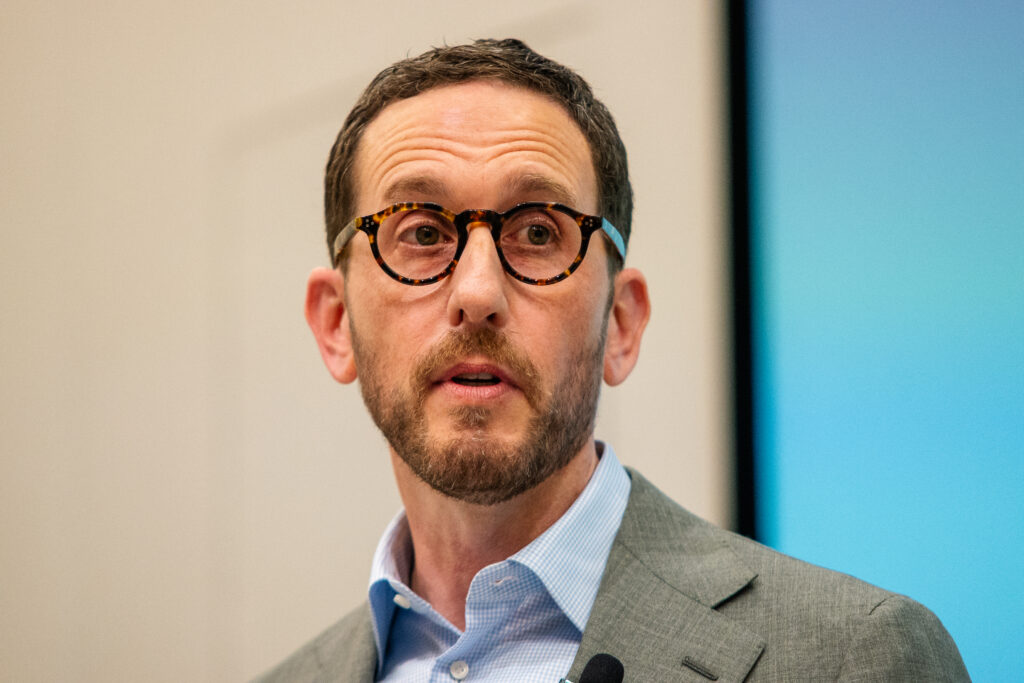
But Wiener’s campaign didn’t pay for any of those mailers. The disclosures on the back say “paid for by Abundant Future.”
You won’t find any details about Abundant Future on the SF Ethics website, where local campaign have to file disclosure documents, or on the Secretary of State’s website, where statewide campaigns have to file. It’s a federal PAC, and the disclosures are on the Federal Elections Commission site.
And those are some disclosures.
In the past year, the PAC has raised more than $1.3 million. It’s a federal PAC, but seems to be spending most of the money in one Congressional district, supporting Wiener. The committee spent $887,000 in the spring opposing Saikat Chakrabarti; Wiener’s allies apparently thought the centimillionaire was more of a threat to Wiener than Chan. Now, it’s all about defeating Chan.
It’s a large amount of cash moving into a local Congressional campaign, even by today’s standards, and it’s worth a moment to look at the donors to this massive PAC, because it says a lot about the individuals and organizations that want to see Wiener in Congress.
Among them:

—The Charter Schools Action PAC, which supports undermining public schools by diverting money to private charters: $25,000.
—Laura Skelton Yakovenko, a former top executive at Airbnb, which operated an illegal hotel website for years in San Francisco, driving thousands of evictions: $100,000.
—Public First Action, which claims to be an organization pushing for limits on AI, but is funded to the tune of $20 million by Anthropic, and has a branch that supports conservative Republicans: $500,000
—Michael Moritz, a San Francisco tech billionaire who has backed right-wing candidates for a wide range of offices (and also funds the SF Standard): $100,000
—Chris Larsen, another tech billionaire who supports conservative local candidates: $100,000
—John Wolthius, founder of Twillow: $50,000.
—Dede Wilsey, heir to a local real estate fortune who often backs Trump-allied Republicans, gave a measly $5,000.
Individuals and businesses have various reasons to give money to candidates. Some, mostly the low-level donors, sincerely back that person’s positions. Some, the lobbyist donors, want access. But big money like this means the oligarchs who are dominating this country in way that has never happened in history are making their preference clear.
From the UK Guardian:
It is, in certain ways, an apt comparison. Like modern America, the Gilded Age saw a small number of men tower over US politics and industry alike. Rising atop a swell of wealth inequality, figures like Cornelius Vanderbilt, Andrew Carnegie and John D Rockefeller mixed private interests with public policy, opening doors in Washington and beyond with ease. Their model is a clear precedent for figures such as Elon Musk, Mark Zuckerberg, Larry Ellison and more.
Yet the further we get into the 2020s, the more the comparison to the Gilded Age risks obscuring, rather than enlightening, realities in the US. There are parallels, yes. But the current situation in the US now dwarfs even the height of the Gilded Age, both in terms of the total levels of wealth inequality brought to bear, as well as the influence this small cohort of men now have.
Contemporary America, then, is not a redux of the Gilded Age. It is instead something else: the Age of Oligarchy. And if those wealthy figures would have their way, it’s an era that’s only just beginning.
The oligarchs didn’t want Chakrabarti, and they don’t want Chan. They are willing to spend big to get Wiener into Congress.
Full disclosure: My independent adult daughter works on the Chan for Congress campaign.