Good things often come in small packages, a logic that certainly applies to 3rd i’s San Francisco International South Asian Film Festival—an annual event that this year clocks in at just under 48 hours, from the evening of Fri/9 through late afternoon on Sun/11. But what the fest’s 24th edition may lack in quantity, it makes up in quality, with a weekend program at the Roxie Theater whose previewed elements are uniformly strong. They span a geographic breadth focused largely on India, Pakistan and Bangladesh, while allowing room for works by or about diaspora communities beyond.
Providing a microcosm of that global reach is the opener “Celebration of the Extraordinary Work of Avie Luthra,” featuring a live Q&A with the British-Indian writer-director. The program will feature several of his shorts, which pack a lot of storytelling into half an hour or less. They’ll include 2002’s Cross My Heart, a farcical tale of a young interracial London couple (Pushpinder Chani, Sophie Okonedo) threatened by the late relative who feared his fully Westernized nephew was “not Indian enough” to merit a substantial inheritance. The much more serious, poignant 2005 Lucky (which Luthra later expanded into a feature) is about a South African orphan of Zulu ethnicity. He’s shipped from home village to city, where it’s assumed his uncle will care for him. That turns out to be a false hope—yet Lucky (Joy Mwandla) finds a surprising new parental figure in an initially hostile, older Indian-heritage neighbor (Muthal Naidoo).
The schedule ends Sunday with another substantial narrative in less-than-full-length form. Lanky French-Sri Lankan actor Lawrence Valin made a splash at last year’s 3rd i with feature directorial debut Little Jaffna, itself adapted from his prior short. He’s back (albeit just with a prerecorded Q&A) in the form of The Loyal Man, a midscaled 2020 drama likewise set in a particular Parisian underworld. His character’s faithful subservience to a Tamil crime boss gets tested when he develops protective feelings towards Minnale (Aurora Marion), a newly arrived emigre sure to be exploited by her traffickers. Its gracefully crafted, well-cast 37 minutes will be paired with Shruti Parekh’s shorter Brooklyn-shot fiction Homebody.
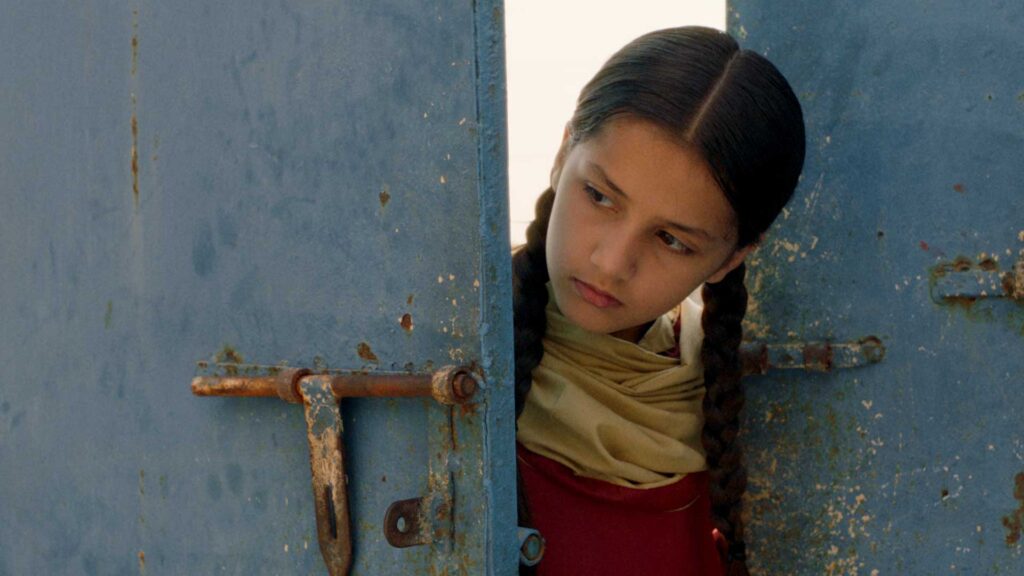
In between, an ongoing “Voices of Women” spotlight encompasses Indian writer-director Anusha Rizvi’s (Peepli Live) recent The Great Shamsuddin Family, a robust domestic seriocomedy, and UK-based Seemab Gul’s debut feature Ghost School. The latter is an artfully low-key indictment, with magical realist elements, in which a bright 10-year-old girl (Nazualiya Arsalan) is dismayed to discover the only school in her Pakistan village has been closed for possibly supernatural (or just bogus) reasons.
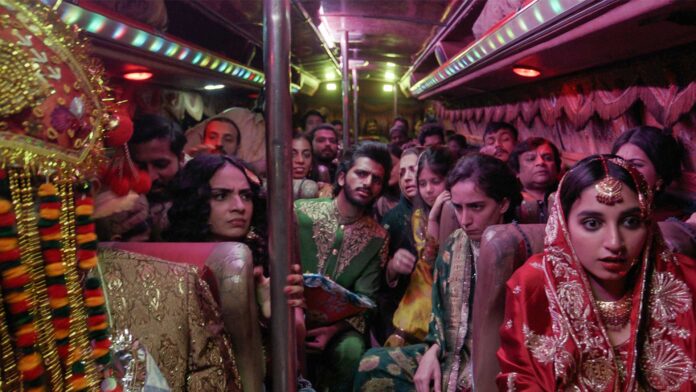
Refined understatement is also the hallmark of Mahde Hasan’s Sand City, which finds two otherwise wholly dissimilar loners (Mostafa Monwar, Victoria Chakma) united by their surreptitious thefts of sand from a glass factory in Dhaka, Bangladesh’s vast capital. On the other hand, no flamboyance of style or content is spared in veteran Pakistani actor-director Sarmad Sultan Khoosat’s Lali. It commences with a wedding between separately “cursed” bride (Mamya Shajaffar) and groom (Channan Hanif) in which everything that could possibly go wrong, does. Yet that’s just the beginning of their travails, despite fortunate amorous chemistry between both parties in this arranged chemistry. Heavy on shock value, occasionally pretentious, this bold mix of the grotesque, deadpan and fantastical is always aesthetically striking.
There are also two highly disparate documentaries: Gautam Sonti’s Technocats examines the Indian engineering schools whose intensely demanding curricula have produced many of the digital era’s most powerful corporate CEOs. Harsha S. Reddy and Chris Chekuri’s Eternal Trees, Eternal Mountains by contrast focuses on the Chenchus, forest-dwelling South Indian tribal peoples who’ve succeeded in preserving their own language, culture and hunter-gatherer lifestyle despite all the outside world’s hectic changes.
For full festival schedule, program and ticket info, go here.
This weekend sees the arrival of two among the year’s most politically loaded releases. At the New People and Alamo New Mission starting Fri/9 (and Roxie as of Mon/12), there’s Yuval Abraham and Rachel Szor’s UK-produced documentary NAZA, a reportedly devastating expose of deliberate lethal targeting of Palestinian civilians by the Israeli Defense Forces. Like the duo’s prior No Other Land, it’s already won critical acclaim and various festival prizes. It has also been taken seriously enough by Netanyahu’s government that the filmmakers (both Israeli Jews) have been threatened with having their citizenship revoked for “treason.”

Opening nationwide on Friday is The Social Reckoning, Aaron Sorkin’s followup to the 2010 Social Network. This time, he’s the director as well as scenarist, dramatizing former Facebook employee Frances Haugen’s 2021 leak of damning internal documents revealing the platform’s dubious ethical decisions. In her first film since winning the Academy Award for Anora, Mikey Madison plays that whistleblower. Jeremy Allen White is the Wall Street Journal reporter she collaborates with, and Jeremy Strong—taking over the role from Network’s Jesse Eisenberg—essays our very own not-so-beloved Mark Zuckerberg. Unfortunately, neither NAZA or Reckoning were available for preview by deadline.
There are, however, a couple other worthwhile new releases we were able to catch in advance:
Your Mother Your Mother Your Mother
Despite two Oscars (for Moonlight and Green Book), Oakland native Mahershala Ali hasn’t quite found his niche onscreen—he’s a strikingly authoritative actor not fully served by the likes of Jurassic Park Rebirth or various voice-only gigs. So it’s good to see him carry this second feature by Bassam Tariq, whose first Mogul Mowgli was equally tailored to the talents of Riz Ahmed.
Latif (Ali) is a Houston husband, father and military veteran with a murky criminal past he’s abandoned for Islamic faith, as well as the demands of his three children—who are newly motherless, his wife having recently passed away. But Latif’s erstwhile boss Mike (Laith Nakli) won’t let him go legit so easily. The latter’s ne’er-do-well nephew Hatty (Abubakr Ali) is a wannabe-gangsta pornmonger who’s attracted hostile attention from Pastor Hwan (John Cho), a particularly crazy local evangelical “Christian” cult’s leader. Mike wants Latif to kill this threatening “man of God.” By the film’s midpoint, our hero’s attempt to stay neutral has failed, amidst what’s pivoted from pressure-cooker family drama to a violent thriller between warring factions.
This is in gist that somewhat tired chestnut, the “Retired hitman forced back into action to protect his loved ones, eventually unleashing all Hell’s Fury” narrative. The emphasis on Latif’s flawed parenting (esp. re: Adia as his teenage daughter) and troubled faith does add some depth. Ultimately, however, this is still a genre piece—one that eventually goes over-the-top, to ends at once a bit pretentious and cartoonish. Still, it’s handled with style, providing a strong showcase for the star’s peculiar gravity in both personality and physical presence. Your Mother opens Fri/9 in Bay Area theaters.
Never After Dark
Writer-director Dave Boyle may be familiar to local viewers for prior US independent features like White on Rice and Surrogate Valentine that played the SF Asian American Fest. He’s since moved from Japanese-American characters to movies produced in Japan, in Japanese. This twisty horror thriller avoids genre cliches by mixing both supernatural and serial-killer elements in an effectively matter-of-fact way.
Airi (Moeka Hoshi) is a loner who travels from gig to gig, albeit not strictly solo—she has a late sister whose ghost only she can see and speak to. Gifted with paranormal abilities, her unique profession is “to help souls come unstuck and move on to the next world.” That’s now led her to a remote former hotel recently acquired as a private home by a somewhat ditzy widow, who’s been frightened by appearances of a restless spirit.
Overriding her adult son’s skepticism, she’s hired Airi, who promptly banishes the two in order to get down to work. Almost immediately, specters and poltergeist-like disturbances reinforce the client’s claims. Accustomed to such things, our rather eccentric, gruff heroine has scant anxiety. That is, until she begins to grasp that these hauntings might be trying to warn about something else: A “flesh and blood monster” very much to be feared.
While it takes quite some time getting to the action (and that axe), Boyle’s chiller never feels slack, as it builds atmosphere and quirky characterizations towards a satisfying degree of peril. If you’re looking for an intelligent new horror entry to scratch the Halloween-season itch, here it is. Never After Dark opens as part of the Roxie’s “Beautiful Nightmares” series of otherwise vintage Japanese fantasy films at New People this Fri/9.
Those looking for more familiar genre thrills should take note that the same night brings the start of the Balboa’s “Horror on Film” schedule, running through Oct. 31. Kicking off with Robert Rodriguez’s excellent 1998 teen version of Body Snatchers, The Faculty, it offers four more frightfests on actual 35mm celluloid: Osgood Perkins’ recent Longlegs, the original ’73 Exorcist, and thirty-year-old franchise starter Scream, plus George Romero’s endlessly influential 1968 Night of the Living Dead (shown on 16mm). The full schedule is here.