
Onscreen, 2025 was no better or worse a year for movies than most others. Offscreen, however, it was full of fear and loathing: Encroaching AI technology made it look like a huge number of traditional jobs within the industry would soon be toast; an ongoing series of colossal corporate mergers likewise suggested a future of reduced activity, human input, and creative risk. The return of a POTUS both obsessed with and endlessly resentful towards “Hollywood” resulted in a stream of impulsive, sweeping White House announcements that panicked the business, even if so far they haven’t generated much real policy. (Among other things, the tariff-crazed President proposed punitive measures on content produced outside the US, which would have seismic repercussions since so many productions now are shot overseas, because it’s cheaper.)
Then there’s the general bending of knee by CEOs to Trump, which might ensure them favorable treatment in the short run but could have a very chilling effect in the long. Already it’s said that racially diverse casting, LGBTQ+ representation etc. are on the downturn, presumably for fear of MAGA’s wrath over “DEI.” Major studios are entering the “faith-based entertainment” business, hitherto mostly a sector unto itself. January 30 will see the already heavily-promoted wide release of an documentary about the First Lady—produced by Amazon MGM, directed by Rush Hour’s Brett Ratner, in his first such endeavor since six women accused him of sexual assault and harassment in 2017. (Incidentally, Trump has called for another Rush Hour movie to be made—and Paramount has complied.)
Melania reportedly cost over $40 million—a sum that could fund anywhere from 80 to several hundred average non-fiction features. Gee, I wonder where all that money went? You might as well ask why the personal worth of the spotlit emigre’s husband apparently doubled during the last two years, when he was ostensibly sacrificing all for public service on the campaign trail and in office. It’s simply a cosmic mystery, perhaps even a Prosperity Jesus “miracle.” In any case, Melania will soon be at a theater near you, an “intimate chronicle offering a rare glimpse into the life of” the Slovenian former model. One suspects it will present a fantasy spectacle to rival the latest Avatar. (Thankfully, we already have a genius parody from a decade ago—Ed.)
Strange times. There is a reason you don’t hear much about the films made during prior fascistic regimes, such as the Third Reich or Mussolini’s Italy—they were mostly crap, propaganda and fluff micro-managed by the State. In the here and now, we are constantly distracted here by faux-controversies, such as Sydney Sweeney’s jeans commercial, that upon closer scrutiny appear to be little more than an echo chamber for conservative media outrage at nonexistent liberal outrage.
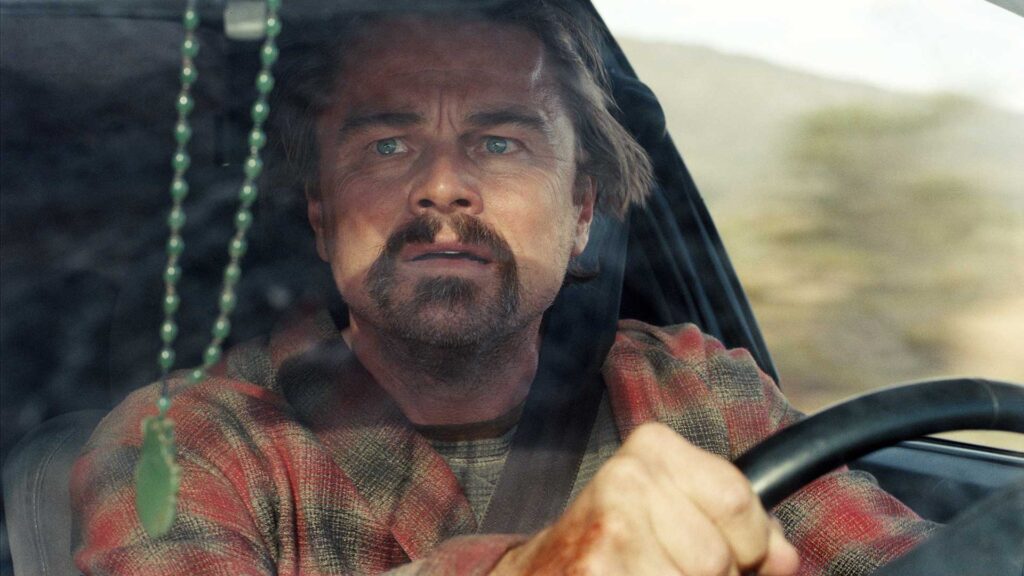
It paid testament to our bizarro cultural landscape that the most politically incendiary (and quite possibly best) movie of the year, Paul Thomas Anderson’s One Battle After Another, stirred almost no response from Trump World. That despite its arguable glamorizing of “radical leftists,” portrait of a de facto underground railroad for the undocumented, suggestion that we’re all puppets for a secret cabal of crazy rich white male racists, and a villain (played by Sean Penn) who’s an even more cartoonish illustration of uniformed macho military psychosis than Pete Hegseth. Even if it hadn’t been so good, it would still be 2025’s most prescient film—written several years ago (and shot before Trump’s re-election), yet complete with depiction of US troops invading towns to terrorize immigrants. That so much of it was nevertheless funny seemed another accurate reflection of our surreal epoch.
In any case, Battle was just one among numerous very good fiction features released here during the last twelve months. Here’s a personal narrative-feature top ten, in alphabetical order, with links to prior 48 Hills coverage. All titles are U.S.-produced unless otherwise noted. In the case of complicated international co-productions, I’ve just listed the nation of primary identification:
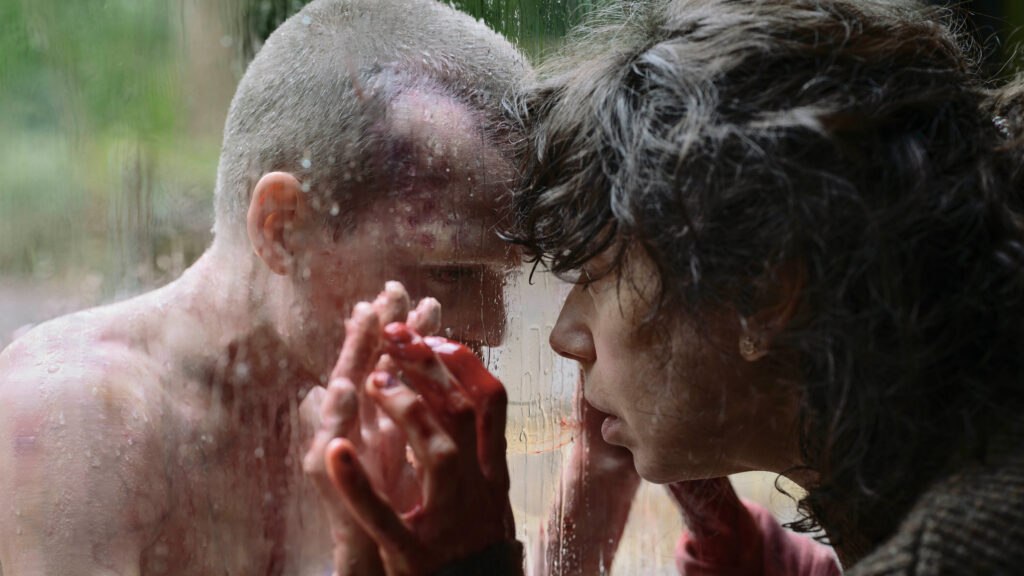
Bring Her Back (Australia, Danny & Michael Philippou)
Dead Mail (Joe DeBoer, Kyle McConaughy)
Friendship (Andrew DeYoung)
Good Boy (Ben Leonberg)

Left-Handed Girl (Taiwan, Shih-Ching Tsou)
On Becoming a Guinea Fowl (Zambia, Rungano Nyoni)
One Battle After Another (Paul Thomas Anderson)
The Secret Agent (Brazil, Kleber Mendonca Filho)
Train Dreams (Clint Bentley)
Urchin (UK, Harris Dickinson)
Honorable Mentions (listed in the order that I saw them):

Santosh (India, Sandhya Suri), Eephus (Carson Lund), The Friend (Scott McGehee, David Siegel), Sinners (Ryan Coogler), Viet and Nam (Vietnam, Truong Minh Quy), Best Wishes to All (Japan, Yuta Shimotsu), Rent Free (Fernando Andres), Sovereign (Christian Swegal), Oh, Hi! (Sophie Brooks), To a Land Unknown (Greece/Palestine, Mahdi Fleifel), Shoshana (UK), Weapons (Zach Creggar), Bugonia (Yorgos Lanthimos), Nouvelle Vague (France, Richard Linklater), Sentimental Value (Norway, Joachim Trier), The Plague (see below, Charlie Polinger), Marty Supreme (Josh Safdie), Roofman (Derek Cianfrance), My Father’s Shadow (Nigeria, Akinola Davies Jr.)

Top 10 Feature Documentaries:
The Alabama Solution (Andrew Jarecki, Charlotte Kaufman)
Becoming Led Zeppelin (UK, Bernard MacMahon)
Checkpoint Zoo (Joshua Zeman)
Devo (Chris Smith)
The Encampments (Michael T. Workman, Kei Pritsker)
Monk in Pieces (Billy Shebar)

Predators (David Osit)
Riefenstahl (Germany, Andres Veiel)
Sudan, Remember Us (France, Hind Meddeb)
Swamp Dogg Gets His Pool Painted (Isaac Gale, Ryan Olsen, David McMurry)
2000 Meters to Andriivka (Ukraine, Mstyslav Chernov)
The White House Effect (Pedro Kos, Jon Shenk, Bonni Cohen)
(This is a list that could be much, much longer, but I opted to go with personal favorites rather than include every doc this year that was worthy or important.)
This current week straddling holidays is never a busy one for openings, as the big Christmas releases are still taking up screens and most filmgoers’ attention. Bucking that trend is writer-director Charlie Polinger’s above-noted The Plague, which has been advanced as eligible for 2025 awards though it’s opening in most US theaters (including SF’s Metreon and Alamo Drafthouse) on January 2.
Modest and starless, apart from a relatively small role for Train Dreams’ Joel Edgerton as the sole adult authority figure (he’s also one of the film’s producers), it’s a long-shot for any major prizes. But it’s a strong, confident, unnerving drama about bullying—a subject that seems only to grow more relevant in our society—as well as a stealth example of moviemaking that might be imperiled in the near future. Not just because it’s a less-than-wildly-commercial endeavor, but because it’s exactly the kind of offshore production this White House opposes: A story set in a nonspecific US suburban locale that was actually shot in Romania, because doubtless that kept budgetary costs down.
Ben (Everett Blunck, who recently played Griffin In Summer’s much more obnoxious juvenile protagonist) is a 12-year-old kid sent off to a boys’ water polo training camp, on what appears to be a college campus otherwise abandoned for the summer. We eventually learn Ben is here at least in part because things at home are “kinda weird”—his parents have just separated. So he’s maybe a little more anxious in general than he normally would be… but like any kid in a new environment, eager to fit in. He soon discovers there are many unspoken “rules” to that, the sort that claim to be all in harmless fun (until they get out of hand enough for adults to notice), but which get enforced with cruel, wolf-pack rigidity.
The smallish group of tweens has already selected one among their ranks to ostracize: Hapless, awkward Eli (Kenny Rasmussen), who has psoriasis or some other skin condition, and gets treated with ritualized elaborate avoidance as having “the plague.” Ben feels sorry for Eli, but he’s relieved that he himself isn’t the object of this negative attention, at least. Until he is. The change is abrupt, complete, and irreversible under the gleefully malicious command of wee sociopath Jake (Kayo Martin). Jake is not among the older or larger kids. But he is capable of controlling them all, exhibiting a born sadist’s flair for inflicting pain without attracting wider notice. And even when he does attract notice (from Edgerton as the camp’s coach), he laughs off any disciplinary appeal to decency, or shame—though just out of grade school, he is already scarily devoid of those qualities.
The Plague is one of those unpleasant rite-of-passage films where a kid is harassed by peers to the point of desperation, and the effect is intense enough to qualify as psychological horror. Polinger has a good ear for how boys talk about girls (and “gay” stuff) at this experience-free stage in developing sexual curiosity. The plot of small but tense incidents ends up vividly illustrating how the bullied might turn to bullying, all that pent-up emotion easily going from one extreme to another. There’s not much in the way of melodrama or big set-pieces here, yet the suspense builds to something near-explosive. This is not exactly a fun holiday watch, but it is compelling, very well-crafted, and hard to shake.