It’s been a tough last few years for Bay Area film festivals, with many having to scale operations back, while a few shut down for good. But this week sees the return of two among the hardiest survivors: SF IndieFest launches its 28th annual program on Thu/5, the same night that the Mostly British Film Festival opens its 18th such event.

SF Indie remains, as it was from the start almost three decades ago, a home for enterprising, adventurous, often highly personal projects that seldom sport big-name talent or hefty budgets. There are no lack of big ideas, however, starting with this year’s opening night selection of Santacon. Seth Porges’ documentary charts the evolution of what’s now alternately embraced and abhorred as an annual “Bromaggedeon” of public intoxication, vomiting, urination, fights, vandalism, etc.
But in 1994 it began as something quite different, an offshoot of the San Francisco Cacophony Society and its Dadaist, anti-capitalist pranks. Those early years—which despite their relative harmlessness, attracted considerable police presence right away—are the primary focus here, with just cursory attention given to the nationwide, regurgitative latter-day reality. It’s a boisterous, then ultimately wistful look at one more good thing that went large and pretty much lost its original spirit. Though you could argue, the world still needs one occasion per year when women can be “sexy elves” and dudes can drink beer in pajamas all day.
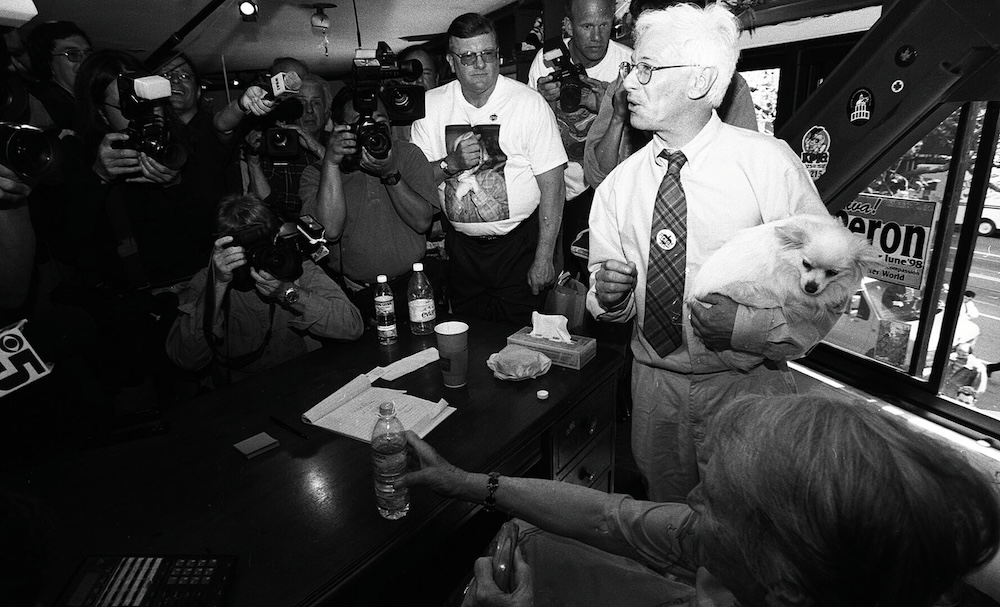
Other features with a particular local angle or origin include Kip Andersen and Chris O’Connell’s Join the Club, a stirring nonfiction flashback to the career of late SF pot dealer Dennis Peron, who founded a buyer’s club to provide those fighting AIDS and other ills with medicinal weed—and to launch a long, tough fight for the legalization of medical marijuana. Among his fiercest opponents was SFPD officer Joe Bannon, which created the odd dynamic of two high-profile gay men at loggerheads over an issue largely associated with straight stoners and hippies. Heavy on archival footage, it’s an absorbing look at several decades of San Francisco history that directly impacted policies around the country.
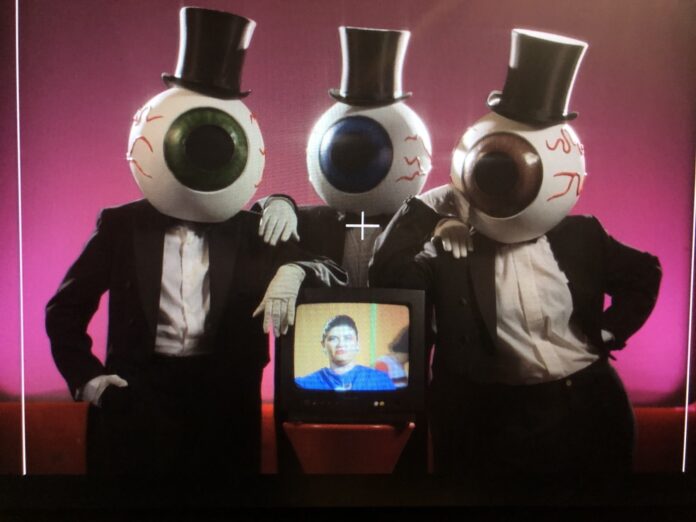
Additional Bay Area-centric documentaries include Marie Losier’s Barking in the Dark, about long-running, stubbornly anonymous avant-garde “rock” music and art collective The Residents; and Jeff Nucera & Jonathan Ruane’s Tight & Nerdy, whose titular subject is a burlesque troupe dedicated to the ouevre of Weird Al Yankovich. Narrative features with significant local roots are Lauren Shapiro’s Alameda-set coming-of-age story Still Life, Kieran Thompson’s wilderness mystery The Only Way Out Is Through, and Orinda-based Tyler Graham’s quirky caper tale Buffalo Buffalo Turquoise Buffalo.
Of course the shorts and features in IndieFest cover considerably broader geographic range, including films from Spain and Israel. Among world premieres, there’s Spike Kittrell’s All My Friends and Kevin Lee Luna’s I’m A Stranger Here Myself, both impressionistic portraits of fictive lives in transition. There’s tongue-in-cheek horror (Jump Scare), absurdist comedy (Tooth Shop Fiasco), period drama (The Invasion of the Barbarians), a Romeo and Juliet update with dialogue entirely drawn from Wu-Tang Clan lyrics (C.R.E.A.M.), and much more.
The two official closing night features on Thu/12 come from very different places. Lilian T. Mehrel’s debut feature Honeyjoon has a Kurdish-Iranian refugee mother (Amira Casar) and her very Americanized daughter (Ayden Mayeri) reuniting for a somewhat awkward shared vacation on a paradisiacal island in the Azores. Despite the pleasures scenic and otherwise (Jose Condessa plays their hunky tour guide), this accomplished seriocomedy arrives at a complex, bittersweet tenor. Contrastingly trigger-happy and antic is Dead Souls, purportedly a final film for indie legend Alex Cox of Repo Man and Sid & Nancy. The director himself stars as a mysterious stranger who materializes in an Arizona frontier town of the late 19th century, seeking intel of a curious nature. This eccentric “western” is duly inspired by Gogol’s same-named poem.
All live screenings will take place Thu/5-February 15 at SF’s Roxie Theater, with filmmakers and other guests frequently expected to attend. Many program selections can also be streamed on-demand via SF Indie’s concurrent Virtual Fest, complete with recorded Q&As where available. For overall info on schedule, films, tickets, et al., go here.

Mostly British has spent nearly two decades highlighting comparatively mainstream films from the U.K. and its erstwhile “empire”: Ireland, Australia, India, New Zealand, and South Africa. That encompasses not just new films, but ones about to be released (like Emerald Fennell’s imminent Wuthering Heights, with Margot Robbie and Jacob Elordi), a few you may have missed in limited recent release (including ones we previously covered, such as Don’t Let’s Go to the Dogs Tonight, Grand Tour, and the excellent Urchin, and some archival golden oldies. Once again, the entire festival will take place in-person at SF’s Vogue Theatre—there’s no streaming program.
Old and new come together in the opening selections for Thu/5. Mr. Burton is a biopic about the title figure (played by Toby Jones), a bachelor teacher in a 1940s Welsh hamlet who takes an interest in a young student named Richard Jenkins (Harry Lawtey). The latter has the drive and talent to rise above his disadvantaged background—and his mentor proves so helpful that the lad eventually takes his last name. Thus was born Richard Burton, world-famous actor of stage and screen, eventually notorious for his on-and-off relationship with movie mega-star Elizabeth Taylor. This dramatized peek at his early days will be preceded by the digitally restored 1959 Look Back in Anger. That film version of John Osborne’s then-incendiary play, which kickstarted the whole British “Angry Young Man” vogue, provided Burton with one of his most distinctive roles as a furious working-class malcontent directing fury at both wife (Mary Ure) and eventual mistress (Claire Bloom).
It was the first feature film for director Tony Richardson, who would win the Best Picture Oscar five years later with bawdy costume romp Tom Jones—also being shown here, on Sat/7. He found time that same year to produce the humbler “kitchen-sink realism” exercise Girl With the Green Eyes, starring Rita Tushingham as an Irish country lass who falls in love with a much older married man (Peter Finch). It was based on a novel by the late great Edna O’Brien; both Girl and documentary Blue Road: The Edna O’Brien Story will be shown Sun/8.
Fri/6 brings an interesting recent film that bypassed Bay Area theaters, Oliver Hermanus’ History of Sound, with Hamnet’s Paul Mescal and Wake Up Dead Man’s Josh O’Connor as young ethnomusicologists who fatefully meet while in college during WWI. Their milieu is worlds away from that of Twiggy, the “Swinging London” icon whose career is charted in Sadie Frost’s documentary. Teenaged Lesley Hornby shot to fame as the “Face of 1966,” an unlikely supermodel from a working-class background, with zero hauteur or pretense. Later on she moved from on to movies, TV, the stage and music, never making as much of an impact as she had in fashion, but remaining a much-liked figure. Other nonfiction portraits in Mostly Brit this year include Call Me Dancer, about a Mumbai street performer lifted to the international ballet scene, and Rave on the Avon, whose subjects are swimmers and environmental activists much-attuned to one of the planet’s more fabled rivers.
Irish features encompass two showcases for older actors, the comic ensemble piece Four Mothers (with Fionnula Flanagan, among others), and romantic drama Four Letters of Love, whose participates include Pierce Brosnan, Helena Bonham Carter, and Gabriel Bryne. There’s also the more rambunctiously youthful Christy, as well as Dead Man’s Money, a black-comedy spin on Macbeth set in a rural pub.
Venturing further afield, there are contributions from Australia (With Or Without You, Inside), India (police thriller Bayaan), New Zealand (inspirational choir-competition tale Tina) and Syria by way of U.K. (Brides, which dramatizes the plight of naive westernized Muslim girls lured into running away to marry jihadists). Another U.K.-funded production, Akinola Davies’ Cannes prizewinner My Father’s Shadow, is an impressive fiction about two small boys who accompany their much-loved but oft-absent father to Lagos during a perilous 1993 election season.
Crowdpleasers on tap include 1981 period sports drama Chariots of Fire, whose Best Picture win was one of the biggest Oscar upsets on record; and recent The Great Escaper, a fact-derived tale featuring Michael Caine and the late Glenda Jackson as a nonagenarian couple whose relationship stretches back over 60 years. It was a final film both for both stars—she passed away and he retired after production wrapped.
In a much less genteel vein, closing night selection I Swear on Thu/12 offers another tale derived from real life: That of John Davidson (Robert Aramayo), a Scottish boy who begins to experience involuntary physical and vocal tics, eventually extending to blurted obscenities. Even after his condition acquires a legitimate medical diagnosis (Tourette’s syndrome), he is disapproved of, ostracized, punished, and occasionally beaten by everyone from peers and parents to club patrons. Davidson later became a leader in spreading awareness and decreasing stigma towards this affliction. Kirk Jones’ film ekes comic mileage out of his plight while nonetheless providing a good deal of pained sympathy, not to mention a very winning protagonist. I Swear will hopefully get a regular U.S. release later this year.
This Mostly British Festival edition, running Thu/5-February 12 at the Vogue, will also have a number of filmmaker and other guests, notably veteran actor Kate Burton (Richard’s daughter) of Grey’s Anatomy on opening day. For full info, go here.
If you’re looking for something more in the realm of pure popcorn escapism than either festival above can provide, two new exercises in elevated horror might satisfy that itch. Neither really are horror, in a strict sense, but both use its elements as a lure. Sam Raimi, who started out in that genre via the awesome original Evil Dead movies long before reaching a mainstream apex with the first Spider-Man trilogy, is slumming again in the same glorified-B-movie waters last tested in 2009’s Drag Me to Hell.
Send Help has Rachel McAdams as a corporate HQ office wallflower who’s nonetheless brilliant enough at crunching numbers to have won a promise of executive promotion from the previous CEO. When he dies, however, his bratty son and heir (Dylan O’Brien) hands that reward to one of his frat bros. Further humiliations are piled on our heroine—who, admittedly, is the kind of uber-nerd even colleagues find a bit off-putting—until a business trip goes south. Only she and the boss survive a plane crash, swept onto a desolate island where it turns out her skill set (as a serious Survivor buff) is advanced… and his is non-existent. Still, this temporary reversal of power dynamics can’t entirely correct matters, because Junior really is a dick, and his keeper is not above retaliatory acts.
Like Drag Me, Send Help (which opened wide last weekend) cranks up familiar pulp plot elements a few notches to ends that, while occasionally squirm-inducing, are closer to cartoonish black comedy than serious thrillerdom. Also like that earlier effort, it is thoroughly enjoyable without ever quite touching the greatness this director is capable of. But why quibble: He’s having fun, and so will you.
A different animal is yet another Dracula, this one from Luc Besson, the veteran Gallic director of ultra-slick, frequently English-language entertainments that generally run a narrow gamut between espionage action blowouts (La Femme Nikita, The Professional) and elaborate sci-fi or children’s fantasies (The Fifth Element, the Arthur series). Like a distinctively European cross between Michael Bay and Baz Luhrmann, he is an idiosyncratic-yet-mall-flick-accessible maestro of the visually-distinctive-if-depthless spectacle.
Coming not long after Robert Eggers’ Nosferatu, this latest take on Bram Stoker’s tale is much closer in spirit to Francis Ford Coppola’s gaga 1992 version (or John Byrum’s lesser-remembered 1979 one with Frank Langella) in its purple Gothic romanticism, with little attempt at stirring evoking any real terror. The writer-director’s current male muse Caleb Landry Jones plays a 15th-century Eastern European prince who renounces God after the death of his wife (Zoe Bleu), getting damned to vampiric eternal life as a result. Four decades later, he finds her reincarnated in the form of an English estate agent’s fiancee. Christoph Waltz plays a vampire-hunting cleric, equivalent to the usual Van Helsing role.
Waltz brings a light, arch wit to the proceedings, though even he appears a bit bored once they enter conventional action territory for a castle-storming climax. Landry, who went gamely bananas as Besson’s Dogman a couple years back, also approaches his part with a degree of self-mocking irony—at one point this Dracula is introduced as a wrinkled crone whose latex face and baroque wig resemble nothing so much as a costume fit for Bjork or Nina Hagen in concert. Novelties include living gargoyles, a dance number, a nunnery sequence recalling Ken Russell’s The Devils, and other rather camp extravagances that do not ask to be taken seriously. (Nor does a score by Danny Elfman, of Simpsons and Tim Burton fame.)
The film is lavish and energetic. Yet it doesn’t feel like a cogent vision, let alone an urgent one. There’s never any sense Besson cares about this particular story—it’s just another marketable hook on which to hang his usual expensive, busy, decorous sensibility. Nor does it help that the love story meant to assume central focus sparks no chemistry between leads, and Bleu’s flat performance is echoed by French actor Ewens Abid’s nondescript one as her fiance. It’s an entertaining enough movie, albeit one of those occasions where Luc Besson provides heaping plates of eye candy that leave you hungry for substance an hour later. Dracula opens in theaters nationwide this Fri/6.