I spent Saturday walking around the California Democratic Party convention, looking for candidates for statewide office who are willing to publicly support the potential billionaire tax for the fall ballot.
I didn’t find many.
Eight Democrats are running for governor. In most conventions I’ve covered, candidates typically speak to the assembled delegates, then make themselves available to the news media. This time, with such a packed house, each got less than ten minutes, and left through a back door, so I never got to question them directly.
So I did the best I could, talking to staffers, asking for media contacts, and listening to what the candidates said in their presentations to the delegates.
Only one candidate for governor, Tony Thurmond, the state superintendent of public instruction, has openly and actively supported the wealth tax, and he only did so recently. Politico reported Jan 16 that none of the eight candidates backed the idea.
I asked representatives from every campaign to tell me where their candidate stood. Some Katie Porter staffers said she decided to back the measure today; I asked for confirmation and got none. Some Betty Yee backers said they think she might support it; I asked for official confirmation and got none. Same for Eric Swalwell.
If they want to be on record in support of this plan, they are not making much of an effort to let the voters know.
None of the candidates for governor mentioned this specific tax proposal during their speeches.
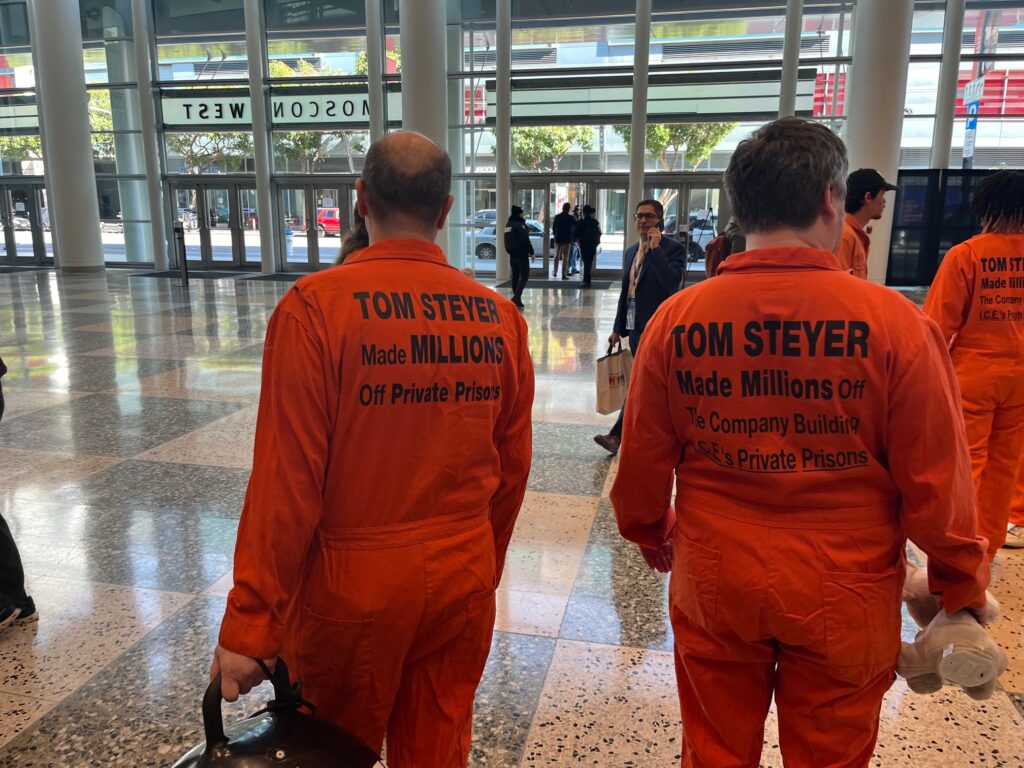
Tom Steyer, who is a billionaire who talks about taxing billionaires (and is the only candidate who has made this a centerpiece of his campaign) says that the measure is flawed. I agree; it should be an annual tax, and I’m sure, as Steyer says, “we can do better.” His press office said he would vote for it “if it’s the only thing on the ballot to raise revenues for health care and education.” That’s hardly a ringing endorsement.
The billionaire tax measure, imperfect as it may be, is at this point, the only serious proposal to tax great wealth that has a chance to come before California voters, and would set a huge national standard: Taxing wealth is the only way modern civilization is going to survive.
On the other hand, Steyer is the only candidate who is calling for Prop. 13 reform, and in a report he put out, cites our research into how the likes of Donald Trump steal hundreds of millions of dollars from local government through tax loopholes.
Former Sup. Jane Kim, who is running for insurance commissioner, told me she supports the tax. None of the other candidates in that race have said they are on board.
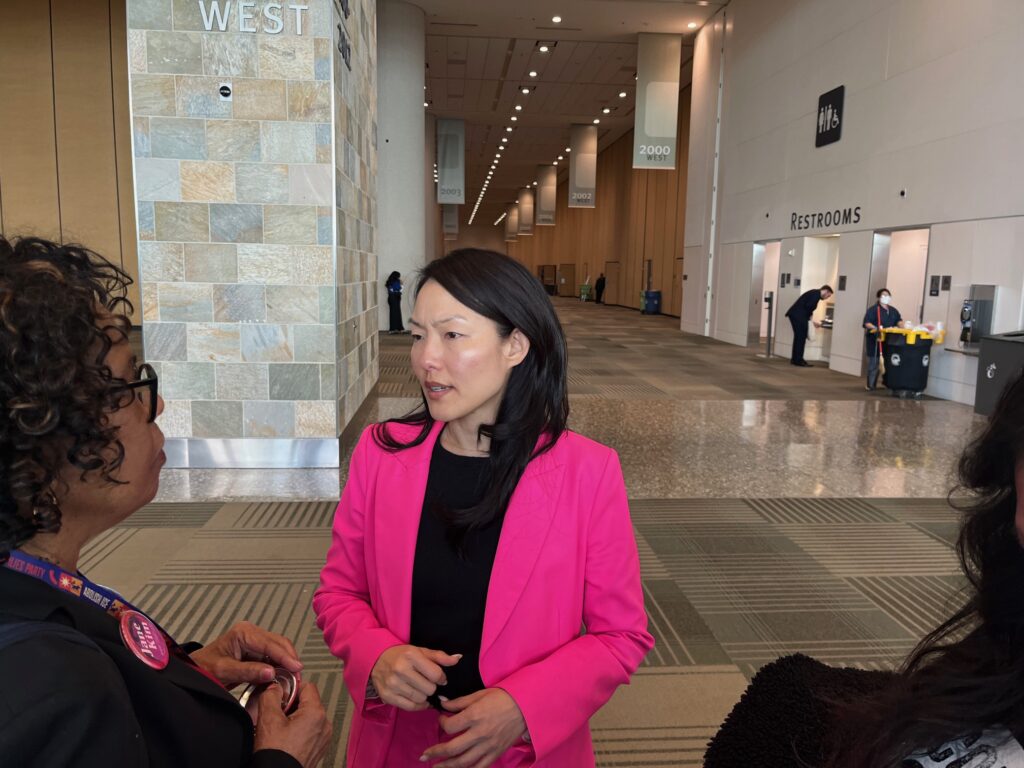
I asked Steven Bradford, who is also running for insurance commissioner, if he supported the billionaire tax. He told me that “some people may have a 401 (k) with $1 million in it.” I reminded him that this tax would only hit people with $1 billion or more in assets, and that’s not a typical 401 (k). “This is just hypothetical,” he replied.
None of the candidates for lieutenant governor mentioned the tax in their speeches, or have made any statements supporting it.
Naturally, Gov. Gav is against it.
I will be blunt: Addressing economic inequality with major new taxes on the very rich was not at the top of the agenda of most of the candidates who want to lead California for the next four years.
But at least the concept of a wealth tax is now on the table, and the delegates were talking about it, and even if this particular plan doesn’t make the fall ballot, or loses, the campaign has opened a discussion that’s been missing in California and national politics for 50 years.
Every candidate for governor talked about the horrors of the Trump Administration. All of them said that California needs to address affordability. Most of them talked about building more housing—but nobody talked about social housing, although Thurmond said he would “build two million homes and tax the billionaires to pay for it.”
Katie Porter held up a white board that said “Fuck Trump,” and promised to deliver single-payer health care, affordable housing, free child care, and zero tuition at UC and CSU. She offered no plan to pay for that, although she said “billionaires are standing in our way.”
On her campaign website, she mentions nothing about taxing the rich, saying that
I’ll bring businesses, workers, and government together to solve problems and ensure the next generation of technological innovations and economic advancements happen right here in California. I will fight for sustainable good paying union jobs and to ensure our workers have the skills and training they need to thrive in the modern workforce. Every Californian should have the opportunity to be part of California’s economic success and reap the benefits from the amazing things that happen here.
Kim, a former SF supervisor who has been the California director of the Working Families Party, told the delegates that the insurance crisis in the state is a matter of bad policy: “When the insurance companies say we will have to pay more or they will leave the state, that’s not a health market; that’s a hostage situation.”
She called for a statewide disaster plan, and “expand the public option at low cost.”
We all knew that the party would not end up endorsing a candidate for governor; the threshold is 60 percent, and with so many candidates, nobody would come close. Rep. Eric Swalwell got 24 percent of the delegates, the most of any candidates. Betty Yee got 17 percent, and Tom Steyer 13 percent.
In the insurance commissioner race, Kim and Ben Allen were virtually tied at 40 percent—and nobody else was close. If that’s a sign of how the primary might go in June, Kim will make the final ballot in November.
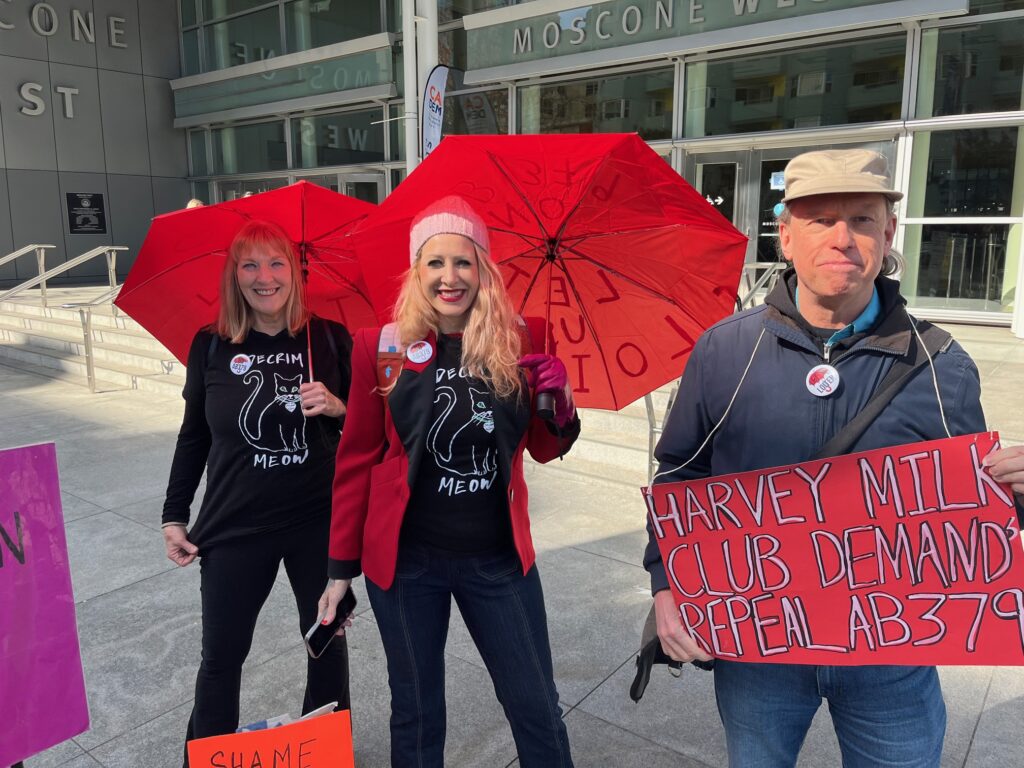
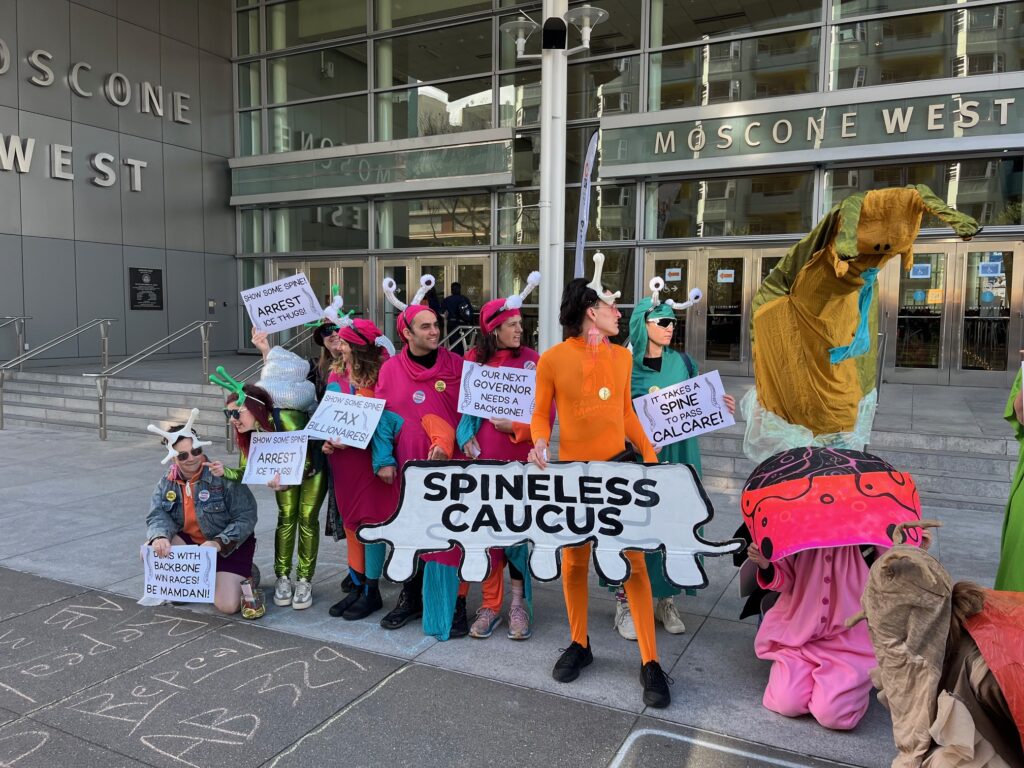
As always, the most fun at the convention happened outside on the streets, where sex workers demonstrated against a Democrat-led bill that makes it easier for the cops to arrest anyone who might look as if they are loitering with intent to commit prostitution. A group calling the Democrats “spinless” featured pieces of missing spines and non-vertebrates. A rally for trans rights drew a large crowd.
And inside, the right wing of the party remained in near-total control.