
I just bought a copy of Player Piano, Kurt Vonnegut’s first novel, published in 1952. It describes a terrible, dystopian society where a supercomputer controls almost everyone’s lives, and robots have replace humans in so many jobs that millions of talented, motivated people have little or nothing worthwhile or fulfilling to do.
It took 74 years, but we may be getting there.
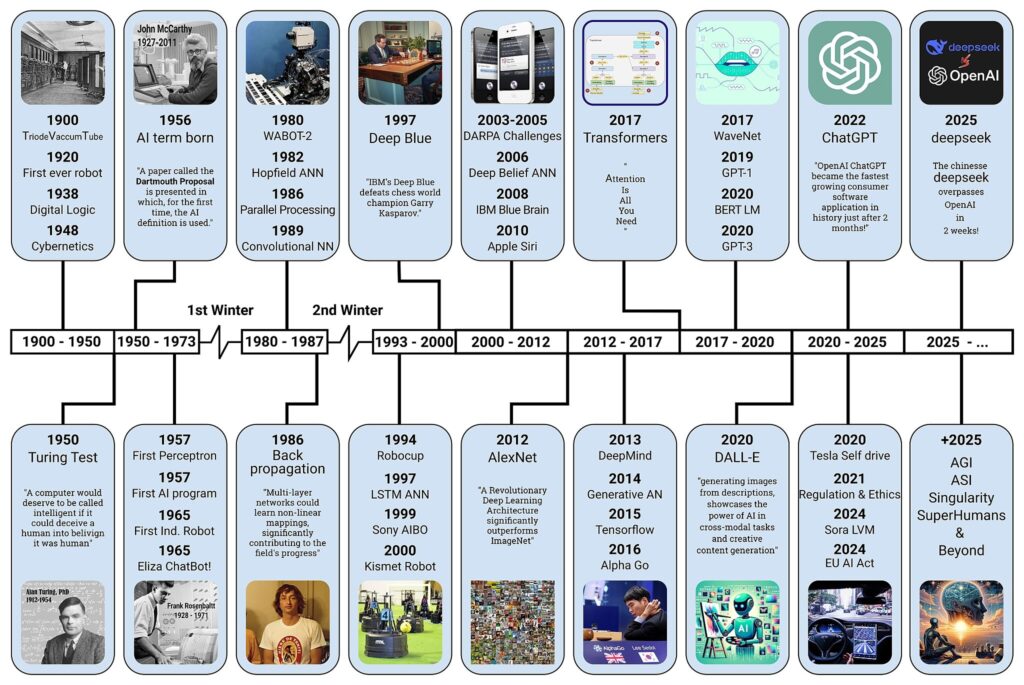
Tech companies laid off more than 100,000 people in the United States in 2025, and a new study suggests that more than 11 percent of the current workforce could soon be replaced by AI, amounting to a loss of $1.2 trillion in wages.
More than 2 million people in the US have the primary occupation of truck driver, and those jobs will all be gone in a decade.
I don’t worry about AI becoming sentient and taking over the world. I worry about how many people define their worth (and eat and pay the rent) through their paid jobs, and the terrible risk we are not taking with that model.
In the era of modern capitalism, starting with the Industrial Revolution, technological advances have destroyed jobs, but created new ones. (Not always better ones, but new ones.)
A lot of experts say this time is different.
So where is that $1.2 trillion in lost wages going to come from?

For starters, tax breaks for the very rich have cost the lower 90 percent $47 trillion since 1975, so there’s money available. The Big Tech companies that destroyed the cab industry, caused tens of thousands of evictions, are seeking to destroy public transit, and helped elect and legitimize Donald Trump have never paid anything remotely resembling a fair share of taxes.
But let’s just look at AI for a moment, since everyone is talking about the impacts—and feeling them. (I don’t know this for a fact, but I suspect Mayor Daniel Lurie, who is close to the local AI folks, is looking for ways to replace city workers with AI as he moves to lay off at least 500 people who have decent union jobs.)
It seems pretty obvious that our society needs to tax the profits of these companies to provide benefits to the millions who lose their livelihoods to technology—and have no other employment options. That most likelu will take national legislation.
Here’s another idea, one that San Francisco or California could implement right away: Impose the equivalent of a payroll tax on every company that replaces a human job with AI.
San Francisco has long taxed payroll as an approximation of a company’s size. (Thanks to state law, cities can’t tax corporate profits, so can only place levies on payroll or gross receipts; in the past couple of years, the policy has shifted away from payroll and toward gross receipts, but it’s well established that a local payroll tax is legal.)
How about this: A worker makes $50,000 a year. The employer replaces them with AI. That computer program is now doing what was human work; why not impose a payroll tax on the company at, say, half of what the human earned? The company is still saving way more than $25,000, since the AI needs no pay, benefits, or retirement and can work 24 hours a day.
That money could go into a fund to pay a decent basic income to everyone who was displaced by the new technology, until they can find other work (and for life, if that work doesn’t exist)?
I spoke to Betty Yee today. She has quite a bit of experience in tax law; she served on the Board of Equalization and was state controller. She is running for governor, and told me she supports the idea—and she thinks it’s perfectly legal. “Either that or tax their profits,” she said.
San Francisco could impose this with a simple ballot measure. It wouldn’t harm “innovation;” AI companies could go ahead and do all the terrifying stuff they want. But the displaced workers would have a chance.
Since Lurie and his allies oppose the overpaid CEO tax, how about this one?
The Board of Supes will hear Tuesday/10 what appears at first glance to be a simple appeal of the use of a single building on Vallejo Street but is actually a key test of whether this conservative board will protect the rights of tenants and prevent the destruction of rent-controlled housing.
In 2010, according to city documents, a developer and speculator named Peter Iskander, who has a record of evicting seniors under the Ellis Act, bought a four-unit building at 524 Vallejo and, perhaps by threatening evictions, bought out all the tenants.
From a statement filed with the board by former tenant L. Molast:
From 2010 to 2013, all plans that Developer shared with the community and the building residents showed the proposed redevelopment of the building would contain four separate units. During that time Developer offered each building resident the option of buying her or his unit after redevelopment. Developer offered me my unit (524 Vallejo) for purchase at $550,000. No units were offered for rent after the completion of the redevelopment.
Instead, records show, Planner Vicent Page told the Planning Commission that “at some point between 2016 and 2022 all four units were merged without authorization and the subject property has been functioning as a single family dwelling ever since, even though the assessor recorder’s data for the property reflects that it is legally a four unit building.”
The current owners, Katelin Holloway and Ben Ramirez, who are occupying the property as a single unit, have asked the city to legalize the illegal conversion. They’ve offered to add one new housing unit, and keep the rest of the building as “a family-sized home.”
They argue that restoring the property to four units would
require the displacement of our family, as meeting current code would necessitate inserting kitchens and unit infrastructure into existing living areas, eliminating the ability for the home to function as a family residence.
The appelants say when they bought the building they didn’t know it was illegally converted.
The Planning Commission was deadlocked, 3-3 on the plan, with all of the members appointed by the mayor voting for approval and all of the members appointed by the supes voting against. In a deadlock, the proposal fails.
The Planning Department is urging the supes not to overturn the decision. The city doesn’t allow the conversion of four rent-controlled apartments into a single large unit.
From the Affordable Housing Alliance:
There really should be no confusion or ambiguity here, despite the appellants efforts: The address itself makes clear that it is a four unit building; The 3-R Report, a required disclosure in any real estate sale, states that it is a four unit building; The property tax record and property tax bill state that it is four units; And former tenants from each of the four units clearly state that is a four unit building.
From the San Francisco Anti-Displacement Coalition:
This case represents a direct challenge to San Francisco’s hard won policies that protect and preserve rent-controlled housing. Should the Board of Supervisors overturn the Commission’s decision, the City will be giving the greenlight to speculators seeking to convert rent-controlled multifamily housing into mansions. The result will be a net loss in housing and an increase in displacement across the city. Our existing protections, including the Tenant Protection Ordinance which passed unanimously in January, will be undermined and more rent-controlled units will be lost. …
We understand the owners or their proponents may have suggested a “compromise” that the owners be allowed to remain in the converted property with a restriction that upon sale it would be restored as a 4-unit building. We view such a status quo outcome as a major setback for housing policy and for the many other families who are searching for rental housing. The status quo, with or without the provision of an ADU in the basement, would reward the owners for disregarding the legal status of the building as a 4-unit apartment and indefinitely extend the loss of at least two rent-controlled housing units. It would also set a dangerous precedent for other owners to feign ignorance, bend the law when it is convenient for them, and continue the legacy of displacing tenants and erasing the history of rent-controlled units.
From John Grant, a former resident:
I lived in my unit for 17 years before being forced out in 2013. I can attest to the fact that there were four (4) separate units that housed 4 families, all of whom were forced to vacate or be evicted. The new buyer lied to the Planning Department and claimed that there were only three units even though there were actually four units. I would still be living in that affordable rent-controlled apartment in the great neighborhood of North Beach that was my home, but instead I have been forced out of the Bay Area.
I don’t know what the current owners knew when they bought the building and moved in, but I know if the city retroatively legalizes this, plenty of greedy speculators will buy rental buildings, evict the tenants, and turn them into expensive mansions for the rich who are moving to this city in droves.
That hearing starts at 3pm.