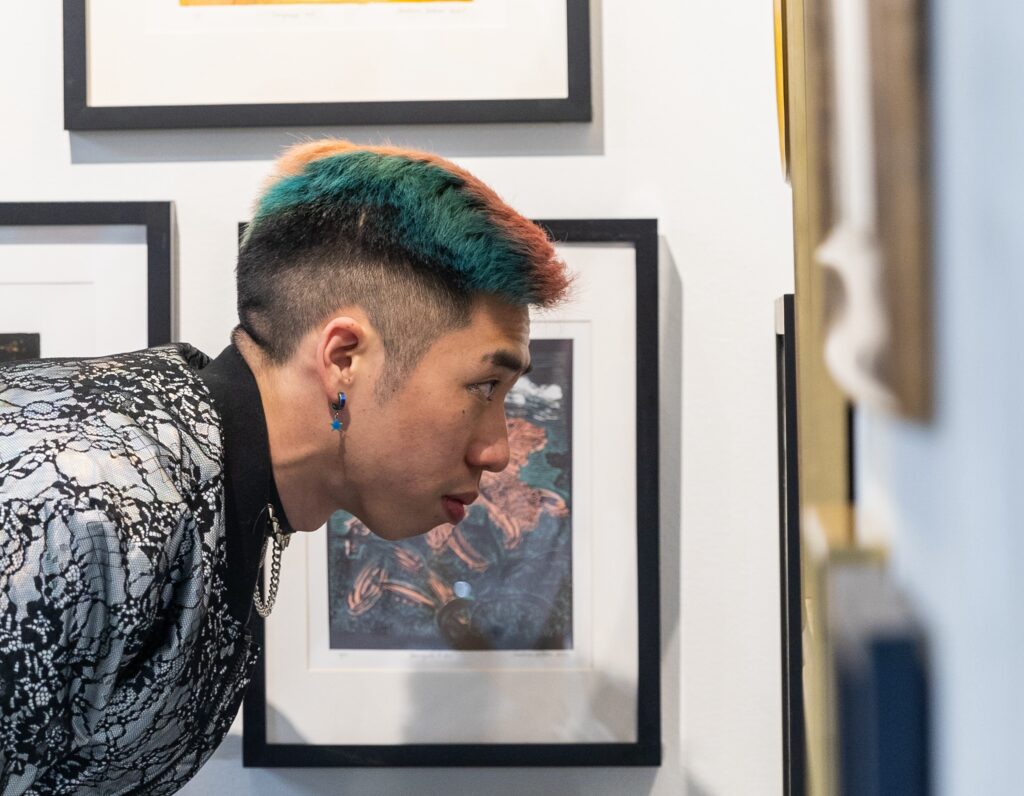
Inside the annual Superfair (Thu/19-Sun/22 at Fort Mason’s Gateway Pavilion, Pier 2, SF), it doesn’t take long for the atmosphere to feel less like an art fair and more like a community gathering. Music flows through the enormous waterfront warehouse as visitors wander among paintings and sculptures with drinks in hand.
Artists stand beside their booths explaining the stories behind their work, conversations spilling into the aisles as strangers pause to ask questions or point out a detail they’ve just noticed. Somewhere nearby, a live demonstration is underway, while around the corner a film projection flickers quietly against the wall.
That mixture of art, conversation, and unexpected encounters is exactly the environment The Superfair tries to create each year. The artist-driven event—formerly known as Superfine Art Fair—returns with independent artists presenting everything from painting and photography to sculpture and installation.
But the event has never been designed to feel like a conventional art market. Instead, its organizers treat the space as a temporary cultural ecosystem where art exists alongside music, film, food, and performance, encouraging visitors to move fluidly between disciplines rather than experience them in isolation.
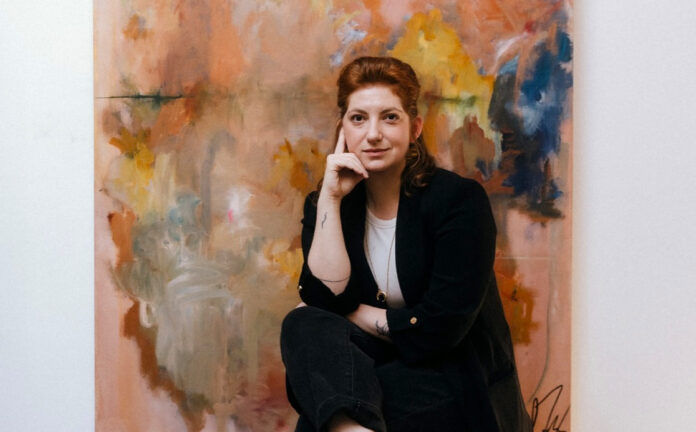
For artist and Superfair lead curator Sharone Halevy, the atmosphere surrounding the artwork is just as important as the artwork itself.
“Art is a reflection of our experiences,” says Halevy. “And often that is so incorporated with a soundscape. If you’re going to an art fair and it’s dead silent, it creates this tentative energy because there isn’t an indicator on how to feel.”
To illustrate the point, she turns to cinema. What if 1978’s Halloween had been scored by Brandi Carlile instead of John Carpenter, she asks. Of course, all the expected gravity of the horror goes out the window faster than Michael Myers in the final scene. Sound shapes mood, and mood shapes how people respond to what they see.
At The Superfair, the soundtrack leans toward funk and soul, music chosen less for spectacle than for how it subtly shifts the energy in the room and loosens the social atmosphere.

“We want people to come in and automatically feel cool,” Halevy says. “Like it’s a cool thing to look at art, meet artists, catch a live art demo, or see a bit of our film festival.”
Halevy has arrived at that philosophy through personal experience. Before joining the fair’s curatorial team, she spent several years participating in the event as an exhibiting artist herself.
Standing behind a booth and talking directly with visitors changed how she understood the relationship between artists and audiences. The most memorable encounters, she discovered, rarely had anything to do with sales alone.
Instead, they came from conversations—moments when someone stopped in front of a piece, asked a question, and began engaging with the work and the person who created it. Those exchanges often continued long after the fair itself had ended.
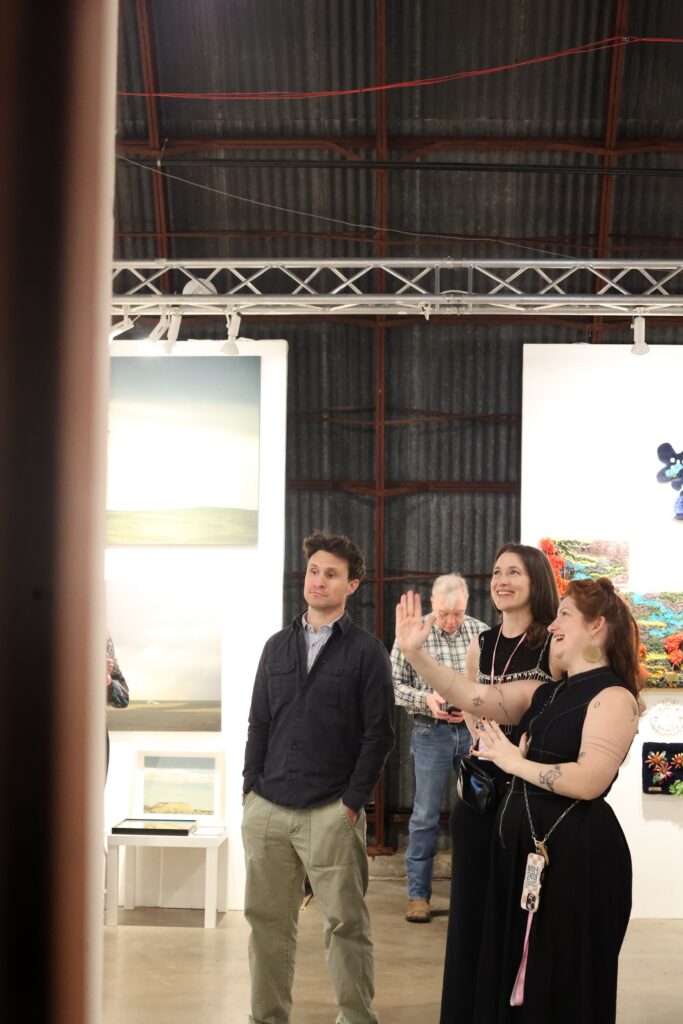
That sense of connection shapes the entire structure of the event. Unlike most art fairs, where galleries act as intermediaries between artists and collectors, The Superfair allows artists to sell their work directly. Visitors meet the people behind the artwork, hear how the pieces were made, and often leave with a deeper understanding of the creative process.
Not to mention that it also changes how people think about collecting. “Often we think about art, and there’s this idea of, ‘Oh, well, I can’t afford art,’” says Halevy.
But the threshold for collecting, she argues, is far lower than many people assume. Prices start at $100, and many visitors discover that buying art can be as simple as finding a piece that resonates and talking with the artist.
This year’s San Francisco edition brings together 180 artists across more than 40,000 square feet of Pier 2, with more than 70 percent of them coming from the Bay Area.
Halevy, who spent most of her life in New York, sees that local creative culture as one of the reasons the fair continues to thrive here.
“In San Francisco, there isn’t as much frenetic energy around the artwork and the art world,” Halevy says. “Everything has a bit more outreach, and it’s not as exclusive. The art is of equal caliber, except it’s so much more inviting.”
The venue itself helps reinforce that openness. Pier 2’s vast warehouse floor allows the fair to unfold organically rather than in rigid rows.
Visitors may drift from a painting into a sculpture installation before turning a corner to discover filmmaker and artist H. P. Mendoza’s evolving installation ATTACK! DECAY! RELEASE!, presented in collaboration with the Frameline Film Festival. Nearby, a program of LGBTQ+ short films curated by Frameline plays throughout the weekend, while live art demonstrations periodically draw small crowds around working artists eager to explain their process.
Other projects invite visitors to become participants themselves. The collaborative mural Draw Your Golden Gate encourages guests to sketch their own interpretations of the city’s iconic bridge, gradually building a shared artwork throughout the fair. Installation artist Risa Iwasaki-Culbertson returns with a whimsical undersea photo environment, while food vendors—including Ritual Coffee, AvoToasty, and Mochi Dough—help transform the warehouse into more of a festival than a traditional exhibition hall.
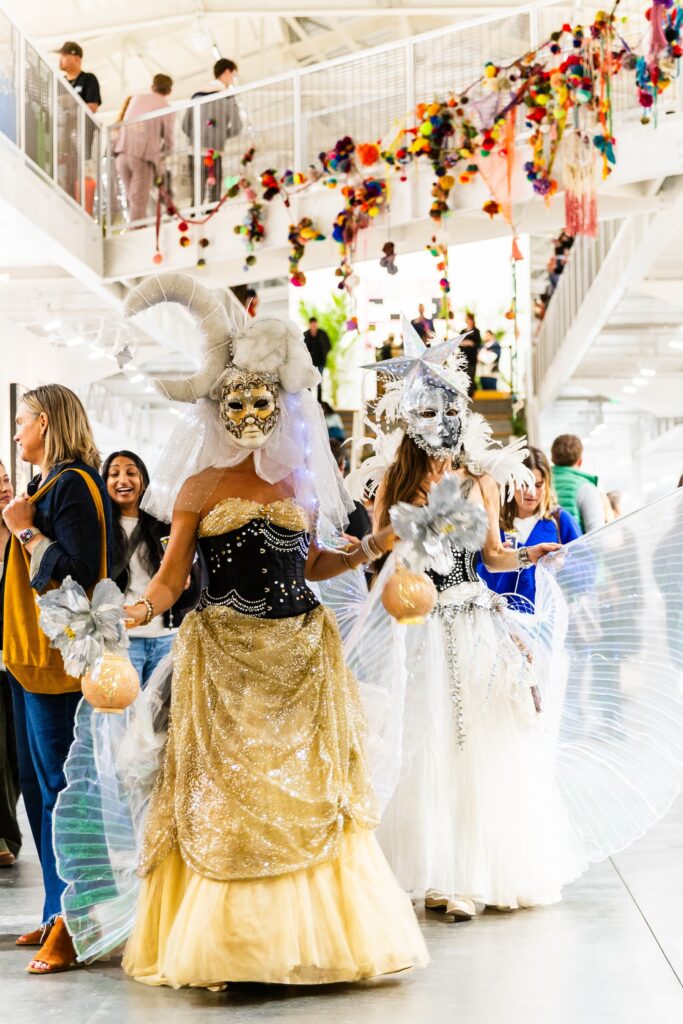
The opening-night celebration pushes that atmosphere even further. Disco Mermaid—an intentionally playful kickoff event—combines vinyl DJ sets, live art performances, oracle readings, and a harp-playing mermaid installation presented by Catalyst Arts beneath spinning disco balls.
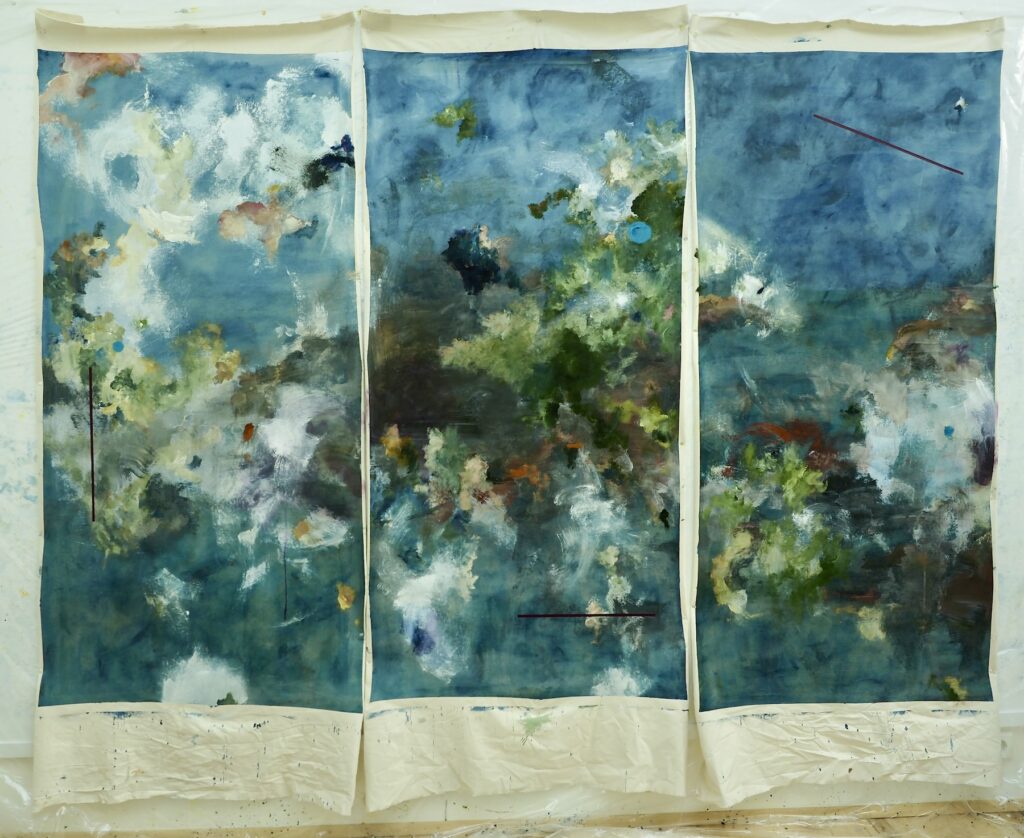
Halevy will have a piece in the fair this year, though her curatorial responsibilities limit how much work she can bring. She plans to show a single monumental triptych measuring roughly nine feet wide and seven feet tall.
The oil painting’s title reads like a quiet piece of poetry: I Eat Cheerios…Thinking Of You…As The Fog Rolls In. Though its imagery evokes San Francisco’s familiar coastal haze, Halevy created the work during a summer she spent in Iceland, describing it simply as “a beautiful blue piece.”
The opportunity for collectors to gain firsthand insight into artists’ work is one of The Superfair’s biggest draws. Though the event lasts only a few days, the connections it sparks often endure long after the booths come down and the pier returns to its usual waterfront calm.
“If you come through, break those barriers, and get to meet artists, it creates an amazing domino effect,” Halevy says. “It’s going to get people going to a studio visit, following artists, and looking for other exhibitions.”
In other words, the fair is only the beginning. “It’s not only about purchasing,” says the artist-curator. “It’s also about showing up.”
THE SUPERFAIR runs Thu/19-Sun/22 at Fort Mason’s Gateway Pavilion, Pier 2, SF. More info here.