For more than seven hours, hundreds of people from all over the city testified at the Board of Supes Budget and Appropriations Committee, and almost all of them were opposed to the Lurie Administration’s service cuts.
The stories were painful: Speaker after speaker talked about how essential public services, sometimes lifesaving services, were facing cuts. They begged the board not to go along with a brutal attack on anything that helps low-income people, seniors, immigrants, people with mental health challenges, the unhoused, and so many other San Franciscans who are part of this city survive day to day.
The organizing by the People’s Budget Coalition has already had a positive impact: According to preliminary estimates, members of the committee have identified about $20 million worth of “add backs,” programs that the mayor wanted to cut but that the supes are asking to be restored.
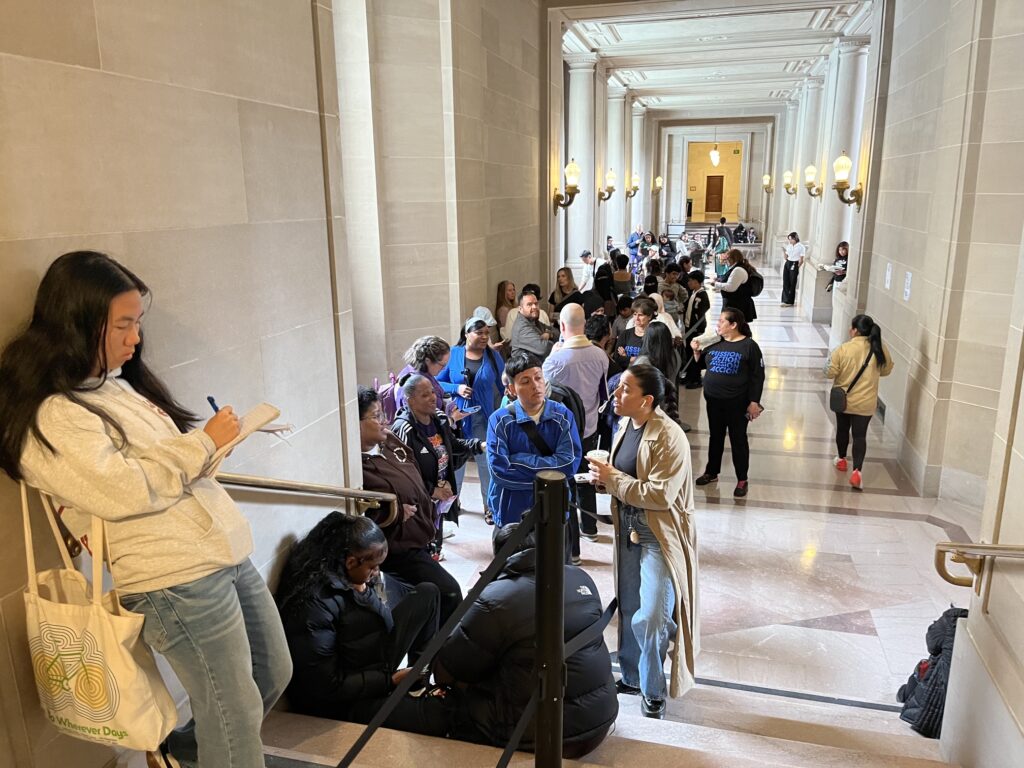
Among them is the Free City College program, which is wildly popular—but it’s not clear that Free City will be fully funded, meaning some students who need financial help to go to college may be left behind. “It’s not enough to fund all of our students,” City College teacher and union activist Alissa Messer said.
The money for add backs generally comes from savings the Budget and Legislative Analyst finds in the mayor’s proposal. Among other things, the BLA recommended that the Police Department lose $1.6 million from the mayor’s proposal, mostly for positions that have been vacant or seem unnecessary—and in this case, from inflated costs for new vehicle purchases. The BLA notes that the department was asking for more money than it actually costs to buy new police cars.
The Adult Probation Department wants to take over the pre-trial diversion program, which a nonprofit has run successfully for decades; that would cost the city as much as $12 million more. Eliminating the mayor’s “Reset Center,” which is probably illegal anyway, along with BLA recommendations for cuts to the Sheriff’s Department, would save $17 million.
But the supes don’t seem inclined to make all those cuts, so it’s possible they won’t find all the money they need to fund $20 million worth of add-backs.
And some critical programs are still at risk: The add-backs don’t at this point include saving three health clinics—the Huckleberry Youth Cole St Clinic, the Larkin St. Youth Clinic, and the Southeast Mission Geriatric Clinic. Open Door Legal could still lose $440,000 for Westside Elder Services. The Public Defender’s Office could lose $350,000 that provides stipends for low-income people to serve on juries. That’s just part of the list.

The Police Department budget, meanwhile, is more than $900 million. That’s up 23 percent from four years ago. No other department is getting more than a very modest increase.
One speaker noted that the mayor is not required to listen to the public comments: “This is his fault,” the speaker said.
Some of the supes on the committee were paying attention some of the time. They were also reading emails, looking at their phones, and doing other business. At one point, it appeared Sup. Matt Dorsey was shopping for shoes.
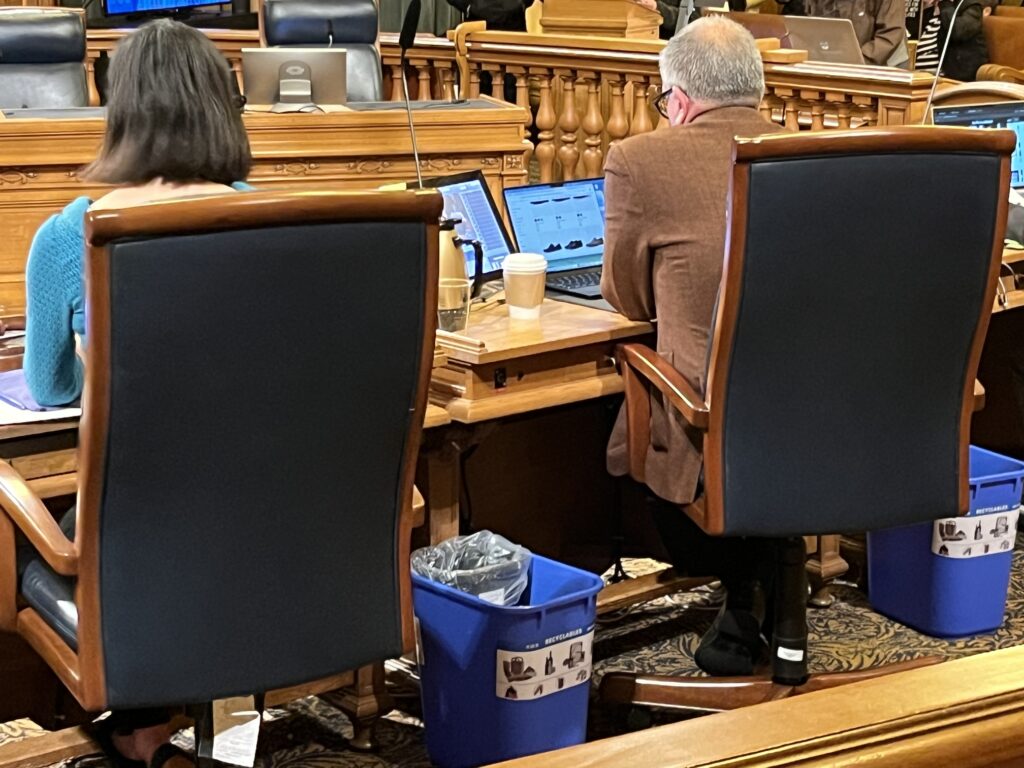
“Window shopping,” he told me. “I can’t afford new shoes.” (The supes make $175,000 a year.)
“I’ve actually been very engaged,” Dorsey said. “I’m listening. I was even nodding when the AFT 2121 speaker gave a plug for the drug treatment counselor training program.”
I know it’s a long day, and people can multitask, but we are paying these folks to listen to all the speakers, and given the stakes, shopping or doing other business is not a good look.
In the end, after all the testimony, this will come down to a series of negotiations with the Mayor’s Office. By the end of the day tomorrow, the supes will have a final list of add backs.
But many essential programs won’t make the cut.