
Mayor Daniel Lurie may well be undermining his own affordable housing bill by attacking another affordable housing measure—one that doesn’t conflict with his proposal.
The mayor has teamed up with Sup. Myrna Melgar to create an Affordable Housing Trust Fund that will ultimately set aside as much as $125 million a year for non-market units.
That measure, Prop. C, has widespread support at City Hall.
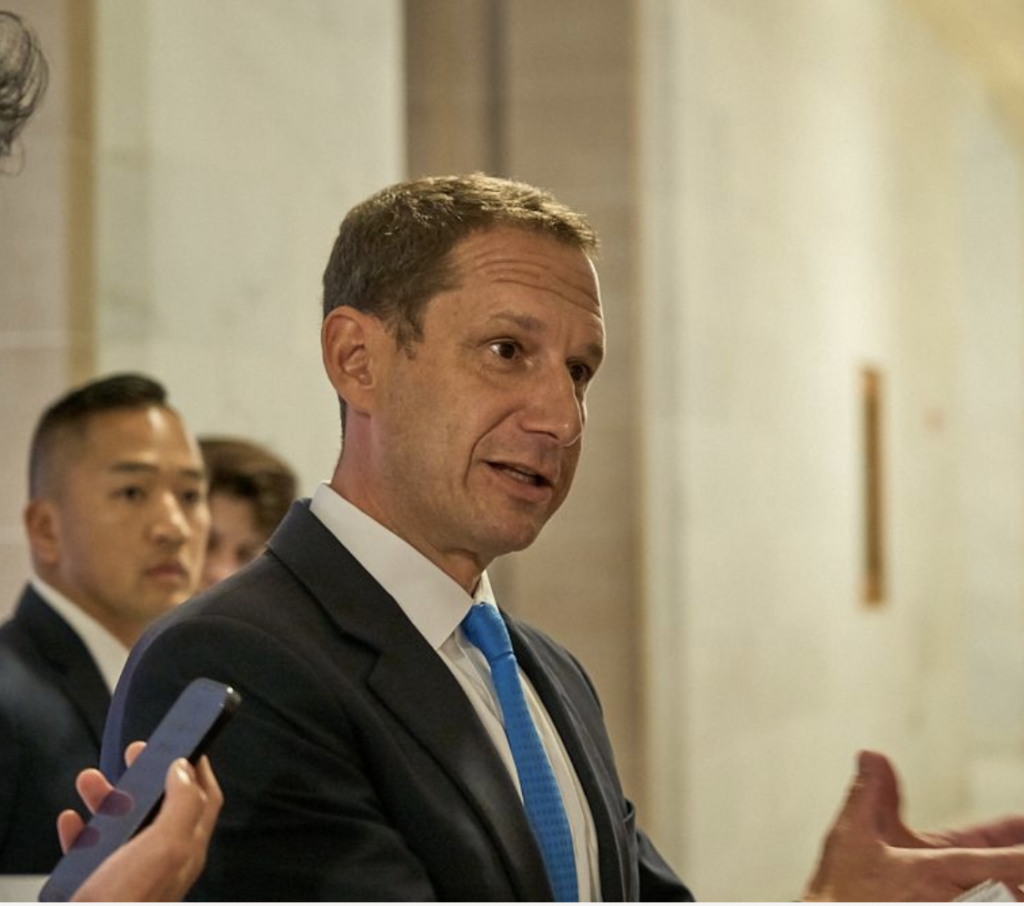
But the mayor is attacking another measure, Prop. I, which would mandate that the existing tax on high-end property sales go where the voters intended—for social housing.
Since that measure, also called Prop. I, passed in 2020, the city has collected hundreds of millions of dollars in transfer taxes on the sale of properties worth more than $10 million. But former Mayor London Breed, who opposed the measure in part because she disliked its sponsor, Sup. Dean Preston, who defeated her hand-picked candidate for supe in D5, refused to allocate the money the way the voters intended. Lurie has continued that pattern.
The 2026 Prop. I would simply say: The voters wanted that tax money to go for social housing, so that’s what the mayor and the supes have to do.
Lurie’s message, released last week: If we set aside money for affordable housing, we won’t have as much money to pay the cops. The SF Standard headline says it all: “Affordable housing measure would deprive cops of funding, Lurie says.”
In his statement, Lurie said Prop. I would

carve a massive, permanent hole in the city’s general fund — the same fund that pays the firefighters, paramedics, and police officers who respond when San Franciscans call 911.
(He also called Prop. I, the social housing measure, a “slush fund” with no accountability. As Joe Eskenazi points out in Mission Local, that’s really odd—since the Mayor’s Office would control and allocate the money. Is Lurie saying his own office lacks accountability?)
The problem here is that two affordable housing measures are on the ballot. They don’t conflict; if both pass, the mayor will have his trust fund, and he will also have to allocate the high-end transfer tax money to housing, as the voters intended.
That would add up to about $250 million a year for non-market housing, enough over ten years to make a huge dent in the city’s affordability gap. After Trump is gone, if a Democrat who cares about housing is in the White House to add federal matching funds, we could be talking about as many as 20,000 or more social housing units by 2036, enough to bring down prices across the city.
But the voters aren’t going to be paying that close attention to the differences between Prop. C (the trust fund) and Prop. I (the transfer tax for affordable housing). They’re just going to see “affordable housing.” And if the mayor is out there saying affordable housing money takes resources from the cops, he may be killing his own measure.
There’s a more important point here: The $125 million in revenue that comes into the city from Prop. I would not exist if the voters hadn’t believed it would fund affordable housing. A proposal for a “cop tax” went down in flames.
So this isn’t normal General Fund money. It’s money that was, according to the Ballot Handbook, all of the political arguments, and even a Board of Supes resolution, earmarked for affordable housing.
Lurie is now trying to prevent the voters from confirming that this is affordable housing money—so he can keep funding the cops at astonishing levels, even as some of them earn more than $500,000 a year.
That’s the priority of the current mayor—at a time when rents have never been higher and the need for non-market housing has never been greater. And it may backfire on him.