Advocates for science, health and general sanity breathed a sigh of relief at the beginning of September when the House of Representatives passed a short-term funding bill, called a continuing resolution. The measure, which keeps the government open through Dec. 11, contains language that was previously passed by the Senate barring implementation of a notorious new rule from the White House Office of Management and Budget for the duration of the CR. While that provision got mentioned briefly if at all in most media accounts, it marks a significant short-term win.
The OMB rule, which we reported on over the summer, would have made nearly all federal grants—to state and local governments as well as nonprofits— subject to the administration’s political whims. It would have let political appointees overrule the longstanding peer-review process under which decisions about funding for research are guided by actual experts, not political hacks. But the wording is so broad it could have blocked funding for anything seen as contrary to administration priorities—or even cut it off with a project half completed.
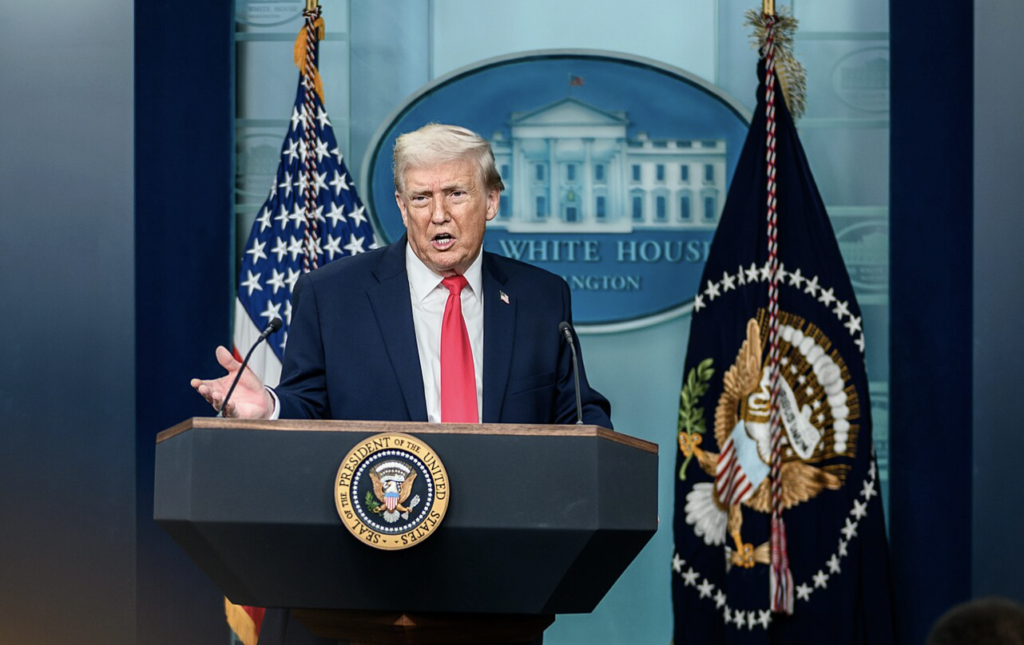
This has serious implications for everyone, but especially for blue states and cities like San Francisco. The SF Unified School district, for example, has already battled the Feds over Trump administration attacks on funding related to its diversity, equity, and inclusion programs. Under the OMB rule, which among other things specifically forbids funding of anything involving “the denial of the sex binary,” it’s entirely possible that SFUSD’s policies protecting transgender students could lead to a broader cutoff of federal dollars. California and most Bay Area governments have a variety of policies that stand in direct opposition to administration priorities, policies local voters overwhelmingly support.
While the administration has already tried to cut off some federal grants that offend Trumpian ideology, up to now it’s been piecemeal, and these actions have often been stymied in court. The new rule, if it ever takes effect, would institutionalize these legally dubious efforts to override funding decisions made by Congress, likely making funding cut-offs both much more widespread and more complicated to fight.
The short-term blockage of the rule came after a storm of opposition, with a wide variety of organizations—scientific and medical groups, nonprofits, consumer groups, environmental groups and more—deluging both the official public comment portal as well as Congress with messages of opposition. The group I volunteer with, Defend Public Health, was among them, and celebrated the nearly 500,000 public comments that flooded in.
But a brief delay is not the same thing as victory, and a long road lies ahead. Meanwhile, some federal departments have started putting forth their own funding regulations that incorporate some elements of the now-stalled OMB rule.
So what happens next? The same organizations that rallied against the OMB rule in June have already started working on the next steps in both legislative and legal strategies:
Congress: Much as Trump and OMB Director Russell Vought (of Project 2025 fame) may dislike it, Congress still has the constitutional authority to decide what funds the federal government spends and how it spends them. The recently passed continuing resolution only runs into December, by which time Congress will have to pass a series of new appropriations bills to keep the government running through the next fiscal year. Congress could attach the same language it used in the continuing resolution to these bills.

That’s the simplest alternative, but it does have complications. To completely block the rule, the language would need to be included in every single funding bill going forward until and unless this or some future administration withdraws the rule. That’s not impossible by any mean—the CR passed with a big, bipartisan majority—but it will require constant vigilance.
Congress could also pass stand-alone legislation blocking the rule permanently That’s the simplest solution—one bill could put the thing out of its misery unless some future Congress changes its mind—but it might be harder to get done. It’s not clear that the big, bipartisan majorities that agreed to block the rule via language attached to a must-pass funding bill needed to prevent a government shutdown would support a stand-alone measure. And Trump could veto the bill without fear of killing essential funding that might upset voters, meaning that to stick, two thirds of both houses of Congress would need to support it. Even if the midterms produce narrow Democratic majorities in both houses, that’s far from certain.
The courts: If Trump decides to push ahead with the rule after Dec. 11, you can bet it will land in court. While I can’t yet say precisely who will end up suing, multiple organizations are already considering litigation strategies, and several suits are possible
Alas, that’s not an easy path, either. Plaintiffs will need to be those who face direct harm, and litigants will need to strategize around any backdoor administration efforts to implement the rule piecemeal, department by department. A lawsuit can likely only be filed once the rule begins to take effect, so the plaintiffs would then immediately seek an injunction blocking implementation. Given the Supreme Court’s recent tendency to use procedural rulings to let the Trump administration move ahead with legally dubious moves (like building his ballroom and issuing postal rules to restrict voting by mail) as the cases move through the courts, it could undo any such injunction. So, litigation may not stop the rule from going into force, at least temporarily, without congressional action.
None of this should be necessary. The OMB rule is a blatant attempt to nullify the constitutional structure that gives Congress authority over spending, but it’s going to be a long battle to drive a stake through the heart of this monster.
Advocates will want to keep the pressure on Congress as the fall progresses. And while it’s true that Bay Area representatives aren’t likely to side with Trump and Vought, they’ll need to hear from constituents that this must be a priority. As the date for action gets closer, multiple organizations will be issuing calls to action, so keep your eyes open.