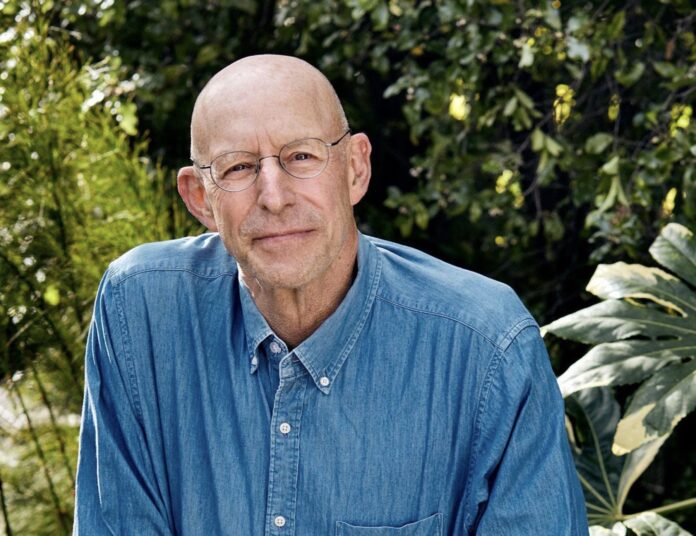
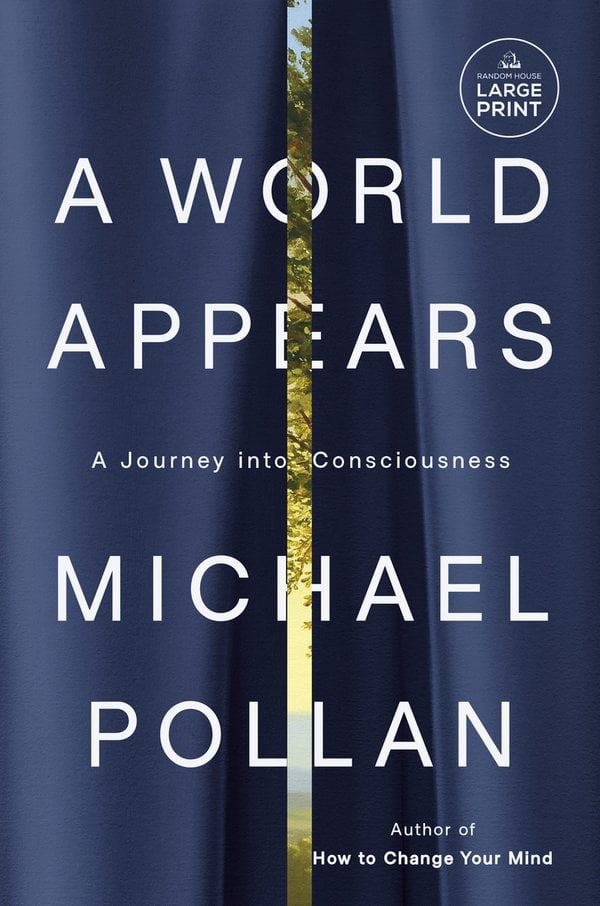
An argument could be made—even if he doesn’t himself believe it—that New York Times bestselling author Michael Pollan has for decades been in pursuit of transcendence. Bliss, even. In articles, essays, and each of his 10 books— and especially latest A World Appears: A Journey into Consciousness—the Berkeley-based writer chases understanding of human interaction through a close study of nature, in pursuit of a different kind of awareness.
His approach varies. It might come from examining our meals (The Omnivore’s Dilemma); building a one-room house (A Place of My Own); playing with fungi and fermenting cheese (Cooked); imbibing LSD (How to Change Your Mind); committing other potential federal crimes (This Is Your Mind on Plants), or exploring how the estimated two billion cups of coffee people drink per day has changed politics, caused wars, upended or established economic strength, and more (the audiobook Caffeine).
A World Appears sees Pollan, who lives in Berkeley, venturing into consciousness from multiple perspectives: scientific, philosophical, literary, spiritual, psychedelic, personal. Digging and climbing through neuroscience and what the field has and has not contributed to understanding the human brain and mind—inter-related, but not nearly one-and-the-same—form the core of the book. Among the scientists he researched and interviewed in greatest depth is Christof Koch, a neuroscientist and proponent of integrated information theory.
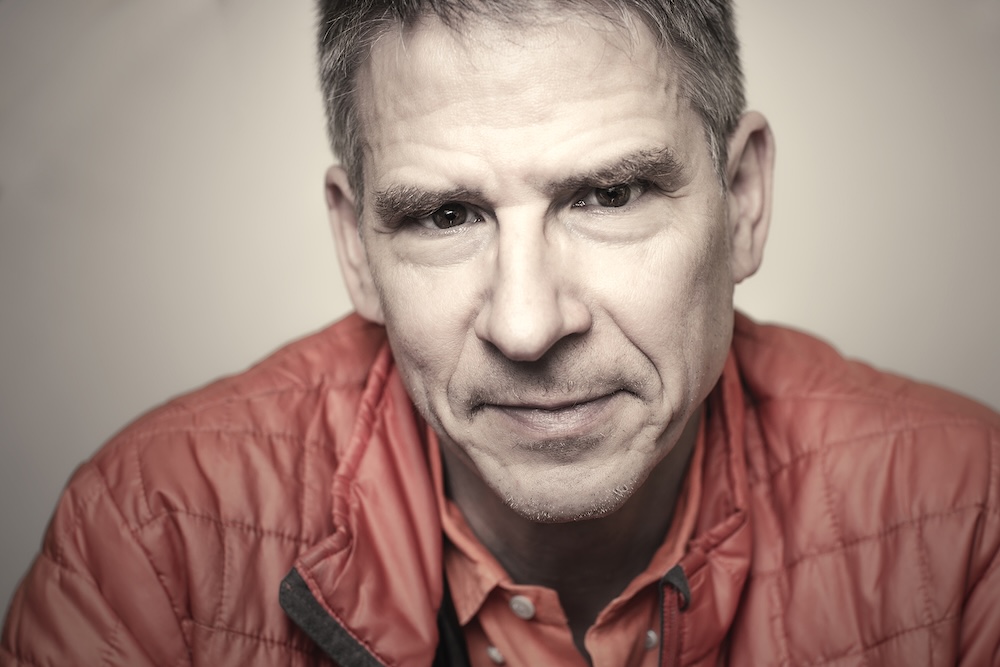
In his search for the neural correlates of consciousness, Koch sought the location of a physical, interconnected system within the brain. Along the way, he experimented with psychedelics and in so doing, joined in a kind of brotherhood with Pollan. Curiosity is the key that unlocks this clubhouse, and both men in their work display it in abundance.
On October 13 at Zellerbach Hall, Pollan and Koch will appear together onstage. Presented by both Cal Performances and UC Berkeley Center for the Science of Psychedelics and moderated by Shayla Love, the event will see them discuss their books, consciousness science, psychedelics research, and more.
Two weeks before his meet-up with Koch, Pollan told 48 Hills he is most interested in hearing him talk about his psychedelic experience and where it has led. “If you are willing to give up the idea that consciousness emerges from brains, what does the science look like? His epiphany was that idealism is true: Consciousness perceives matter. How do you design experiments to prove that idea?”
Quantum consciousness, a topic back in the news these days, is not addressed in A World Appears, but likely to enter the conversation. “Quantum physics, I don’t understand very well,” says Pollan. “One reason I keep coming back to Koch in the book is that he’s that rare scientist who’s willing to change his mind.
“He started out believing neural correlates and then realized, ‘Shit, that’s not gonna tell us what we want to know.’ He then adopted integrated information theory. I’m curious to hear how wedded he is to that. Then he had this psychedelic experience that changed everything again.”
Scientists, according to Pollan, rarely change their minds. “The saying goes, ‘scientific ideas change one funeral at a time.’ People have to die off for ideas to change. Christof’s making change while he’s alive; I admire that,” he says.
In his book Pollan is like-minded, proposing a “new kind of science” might be necessary to effectively study consciousness. Language and tools are lacking to study the most complex issues, such as the definition of self and no-self, the evidence of consciousness and intelligence in plants, insects, and bacteria that lack brains, AI and the role it might play in the future, and more. Teetering between objectivity and subjectivity, between science and the humanities, seems to thrill Pollan.
Asked if new approaches are needed and if people studying consciousness even agree on what they’re studying, he says, “Those are good questions. One thing holding us back is that we have science based on third-person, objective, quantifiable reality. We’re dealing here with a subjective, qualitative, first-person phenomenon. There’s a fundamental miss-fit.”
He mentions Galileo, who abandoned matters of the soul to the church and focused on material reality. “That legacy has made it hard to make progress. Science has to fold lived experience and personal perspective in. That’s hard to do. The definitions of consciousness still have some slipping and sliding between them. It’s hard to wrap our arms around consciousness because we can’t get outside of it to look at it cooly, clinically, objectively.”
Another problem; labels and definitions of consciousness change as if blown by variable winds. Like panaceas, categorization makes people feel comfortable by reducing the stress of the unknown and a sticky, thorny topic to explain.
Since completing the book, Pollan continues to think about the perils and possibilities of AI, conscious machines, and related matters. “I still think we’re being fooled by the fact that we’ve trained these chatbots to act as if they’re conscious. If you read the Claude constitution, an amazing document written by philosophers and used to train Claude, it’s basically training it to act like a person, to have a moral status, to have a superego. But I still think it’s mimicry.”
Conscious machines display agentic behavior; acting as if they have an ego and can operate independent of human intervention and insight. “That makes me wonder, can you disaggregate consciousness? Is it possible to create an ego that has self-interest and operates in the world without the rest of consciousness? Are there other aspects of it machines can acquire? It’s no accident AI machines are developing consciousness,” Pollan concludes. “They’ve read all the novels, poetry, and everything written about it.”
The author receives intriguing leads, wacky theories, and provocative ideas from conversations with audiences. “I also learn what’s on their minds. The idea of consciousness being polluted right now. What would consciousness hygiene look like? How do we defend it? That’s not in the book. That whole line of my thinking grows out of questions people asked. Doing public events is like market research.”
In the book, Pollan at many points leaves hardcore neurological science and relies on the humanities for insight on the topic. “Consciousness science has gotten too reductive,” he says. “Read Proust, ditto William James. Scientists have thrown them out and given them to philosophy, but the humanities have a lot of wisdom on the subject. Not about how consciousness arises, but what it is.”
A World Appears‘ last chapter describes exploring consciousness through an extended period of meditation while isolated in a 12-by-15-foot cave dug into a hillside at Upaya Zen Center in Santa Fe, New Mexico. Consciousness broadens beyond the ego and gives way to no-self thinking establishes has him writing about its relationship to wonder and awe, a conscious state that people tell him they experience as blissful.
After writing the book, does he experience bliss more or less often, a person might ask. “Bliss? Do I use that word in the book?” Pollan asks, his tone skeptical.
“I suppose wonder and awe is a complicated kind of bliss. One of the things I learned is the power of not knowing. It’s hard to get there because we [journalists] don’t get a lot of points for saying, ‘I don’t know.’ But consciousness demands it. When I realized it was a practice and not just a problem, that opened up all sorts of pleasure, if not bliss.”
Turning his gaze on what is next in consciousness science, Pollan says zero-friction chatbots will replace more of our messy, complex human interactions. “It’s called cognitive offloading, and we’re going to be doing a lot of it. Our skills as humans will be atrophied as a result. I’m worried about that. The effort to create conscious AI will teach us a lot and shake up the whole discussion. Researching these questions for thousands of years, we haven’t gotten too far, but I’m guessing in the next few decades, we will.
“The body is deeply implicated. The experiment with ginger I tell about in the book suggests the stomach is involved in our moral reasoning. The mind is larger than just the brain.”
MICHAEL POLLAN AND CHRISTOF KOCH October 13, 7:30pm. Zellerbach Hall, Berkeley. Tickets and more info here.