
The Budget and Appropriations Committee—and to an extent, the public and the news media watching—got a clear message Wednesday: The price of the Lurie Administration’s War on Drugs and Homeless People is a lot higher than just police overtime.
More arrests—and under District Attorney Brooke Jenkins, a lot more prosecutions—mean pressure on the lawyers in the DA’s Office, pressure on the jails, pressure on the Public Defender’s Office, pressure on substance use treatment facilities, and expensive pressure on every other part of the complex web of public safety infrastructure in San Francisco.
The occasion was a rather unusual hearing: The budget committee typically invites every department to make its case in the normal course of business, but Sup. Matt Dorsey asked for a special opportunity for the DA’s Office to make its case for full funding when so many other departments are facing up to 15 percent cuts.
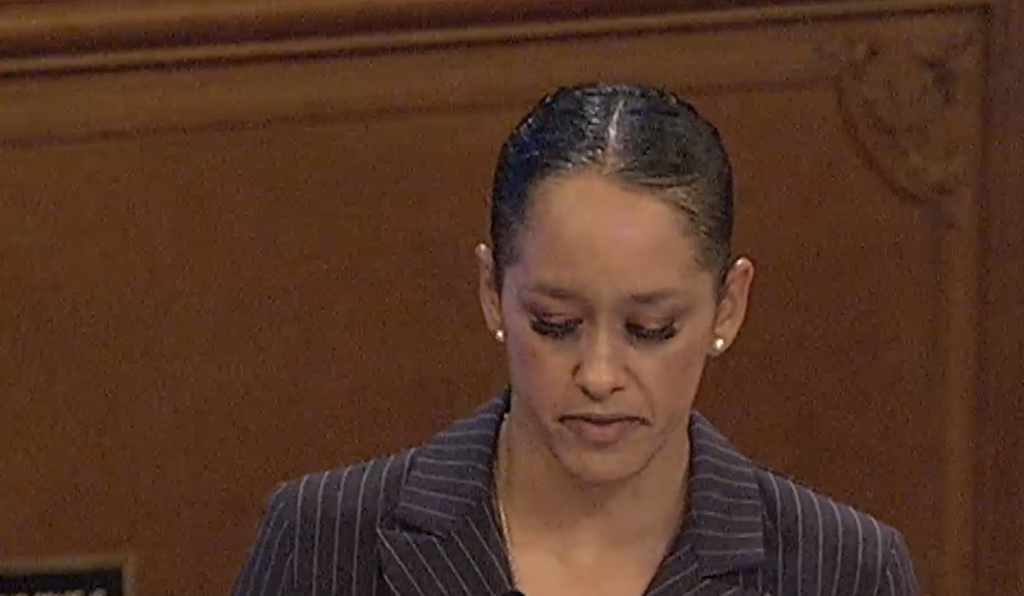
Jenkins said that the number of cases her office has to handle has grown dramatically in the past two years. That’s no surprise: The city has been arresting more people, for more minor crimes, and charging some of them as serious felonies—and far fewer people are getting diversion.
“We are at peak capacity,” she said, “and cuts can threaten the team.”
Among the reasons: More arrests for “quality of life crimes, encampment clearances, and retail theft.”
If her office had to take the same 15 percent cut as everyone else, she said, it could result in “the suspension of misdemeanor prosecutions and reverse the progress in making San Francisco safer.”
Jenkins presented data showing that it can take as long as 500 days to resolve cases, much longer than pre-pandemic days, and she blamed (as she does) the judges (who aren’t running the courts “efficiently”) and the Public Defender’s Office. She said public defenders weren’t accepting misdemeanor plea bargains at the rate she would like.

Sup. Shamann Walton asked Jenkins if she thought the supes should take money from the Police Department and shift if to the DA’s Office. “I did not say that, but their budget is much bigger and more interesting to poke around in,” Jenkins said.
Then she blamed nonprofits who get city contracts for social services.
Walton then asked Public Defender Mano Raju, who was in the hearing room, to answer some questions. Jenkins got a bit angry: “Why can’t he have his own hearing?” she asked, saying that Raju’s presence at a public hearing was “not happenstance.”
Again: Every department gets a hearing at the budget committee. This one, a special early hearing for one department, was unusual and extraordinary.
Walton said that there are many departments and agencies in the city that make up the public-safety infrastructure, and the Public Defender’s Office is one of them. If more people are arrested, the PD is going to have to take on more cases, too, and that’s going to cost more money.
Raju: “We don’t decide who gets arrested, how many cases are filed. We are mandated to provide effective assistance, and we have a responsibility under State Bar rules to do so zealously.” That includes all crimes, including misdemeanors.
“There’s a significant increase in arrests and charges,” Raju said, “40 percent in felonies and 27 percent in misdemeanors.” Many of those cases wind up in the Public Defender’s Office.
Raju said that his lawyers do, indeed, at times take their cases to trial instead of settling. “Our trials have excellent outcomes, not-guilty verdicts and hung juries,” he said. Which means, of course, that a lot of people are charged with crimes that don’t hold up in court.
With the added caseload, and no new staff, Raju said, “we can’t take any more cases.”
The reality that the Lurie Administration and the supes are going to have to deal with is that this focus on arrests is going to cost the city a lot of money, at a time when there’s a huge deficit. Nobody in the Mayor’s Office seems to want to admit that. Oh, and when you eliminate social programs that keep people out of the criminal justice system, you just drive up those costs even more.
But as the supes wrangle with the budget over the next few weeks, this is the reality everyone is going to have to face.