
Toward the end of the program with Bernie Sanders and Ro Khanna at Stanford last week, a student posed an interesting question from the audience. He wanted the two progressives to explain why so many of the world’s most important technology advances have come from the US, and not from Europe.
The implication in the question was clear: The United States has lower tax rates and lets company founders get very, very rich, and Europe has higher taxes, so that must discourage innovation.
Sanders and Khanna gave short and modest answers, but the question is far more important, and will loom large in the fall campaign for a billionaire tax—and in the much larger issue of how the US can survive under an AI tech oligarchy that controls all the money and resources.
The opponents of the billionaire tax have their campaign set: Taxing the huge profits of new companies and their founders will destroy Silicon Valley.
Let’s take a moment to look at the question the student raised—and the impacts a wealth tax might have in the long term.
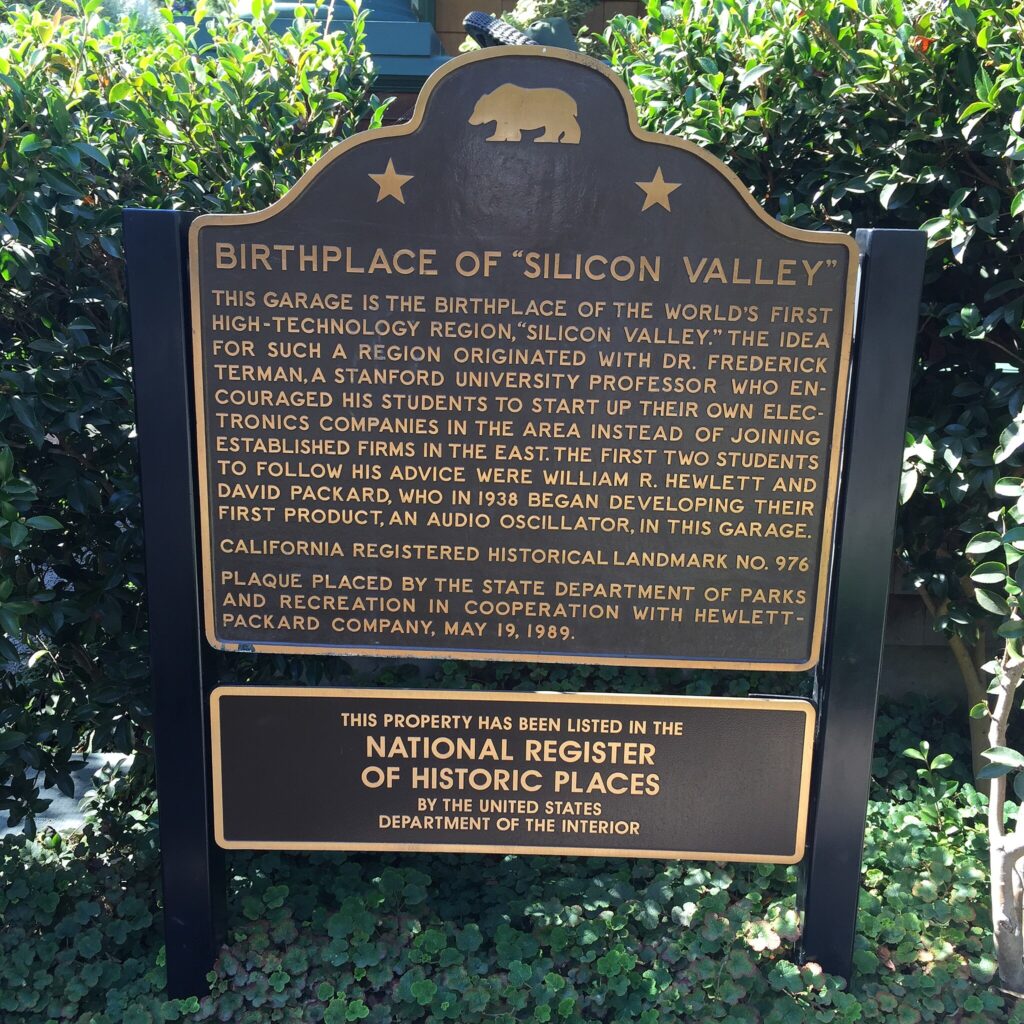
Tech innovation in the Bay Area didn’t start with the Internet. Bill Hewlett and David Packard launched one of the most innovative and successful companies in the world in a Palo Alto garage in 1939. Fairchild Semiconductor, which made digital technology possible, started in Mountainview in 1957.
There are many other examples of world-changing technology invented in the US before 1980. The cell phone was invented in 1973. Vast increases in agricultural productivity happened during the “green revolution.” Pharmaceutical companies developed vaccines that saved millions of lives.
All of this happened during a period when the marginal tax on high incomes was between 70 and 90 percent, and when there were very few billionaires.

David Packard died in 1996 with a net worth of $4 billion. Nice, and I think he was pretty happy with his life—but nothing compared to the likes of Jeff Bezos and Elon Musk today.
So let’s ask ourselves a question.
Would Hewlitt and Packard have sat in that garage and said: “Gee, I think we might be able to turn this oscilloscope into a bigger thing, maybe even a successful company … but then we would have to pay taxes. We might only be worth $4 billion, and not $200 billion. Never mind, let’s go work at a hardware store?”
If Microsoft were founded in 1950, Bill Gates would have been very rich, richer than the vast majority of people in the world. He would have been able to live a life most others could only dream of. Would he have given that up and gone to law school like his dad because, say, $4 billion wasn’t enough?
Be serious.
The idea that founders need tens of billions of untaxed dollars to drive innovation is silly–and dangerous.
With great wealth comes great political power these days. You want 20 very rich people to decide the future of AI? Then don’t tax billionaires.
But taxing them at a reasonable rate won’t stifle innovation. It won’t “destroy” Silicon Valley. It might start to undo a terrible culture of greed—and start the process of saving civilization.