We’re all over the 2026 Noise Pop Fest, February 19-March 1. See our full coverage here.
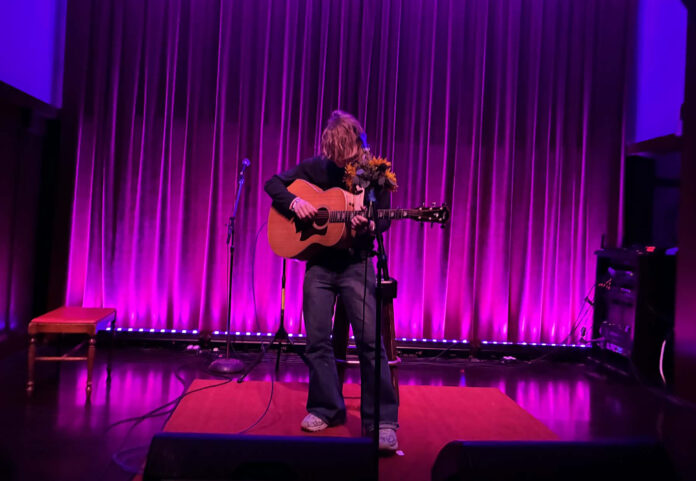
Christopher Owens seems to be getting into flamenco. Every really serious guitarist gets there eventually, but like Kabbalah or King Lear, Spanish guitar is not for the young. “If I keep playing it,” Owens suggested through half-pantomime, after a few hot runs at his Friday Noise Pop show at Swedish American Hall, “I’ll dislocate my arm.”
It’d hardly be the worst thing to happen to Owens in the last 10 years. The singer-guitarist was one half of Girls, one of the best San Francisco indie rock bands from 2007 to 2012, but when he split with musical partner JR White he never could muster up the same hype for his solo work. A series of personal disasters followed: a debilitating motorcycle crash; the loss of his job, cat, and fiancée; periods of homelessness; the death of White in 2020 on the heels of a potential Girls reunion.
It’s a miracle his latest album, 2024’s I Want to Run Barefoot Through Your Hair, was even made. I reviewed that album for Pitchfork, which was one of the more difficult assignments of my writing career. How to honor Owens’ perseverance and the deep well of pain from which the record was drawn, while still being honest about the fact that it wasn’t a great record? Owens’ mature voice is stripped of the rockabilly hiccups and impudent voice-drops of his Girls prime, and rather than honoring and building around that fact, Barefoot drenched it in pitch correction worthy of a latter-day Ringo Starr record. And the lugubrious gospel arrangements felt like a way to capture some leftover goodwill from Girls, who went out on a churchy high note with Father, Son, Holy Ghost.
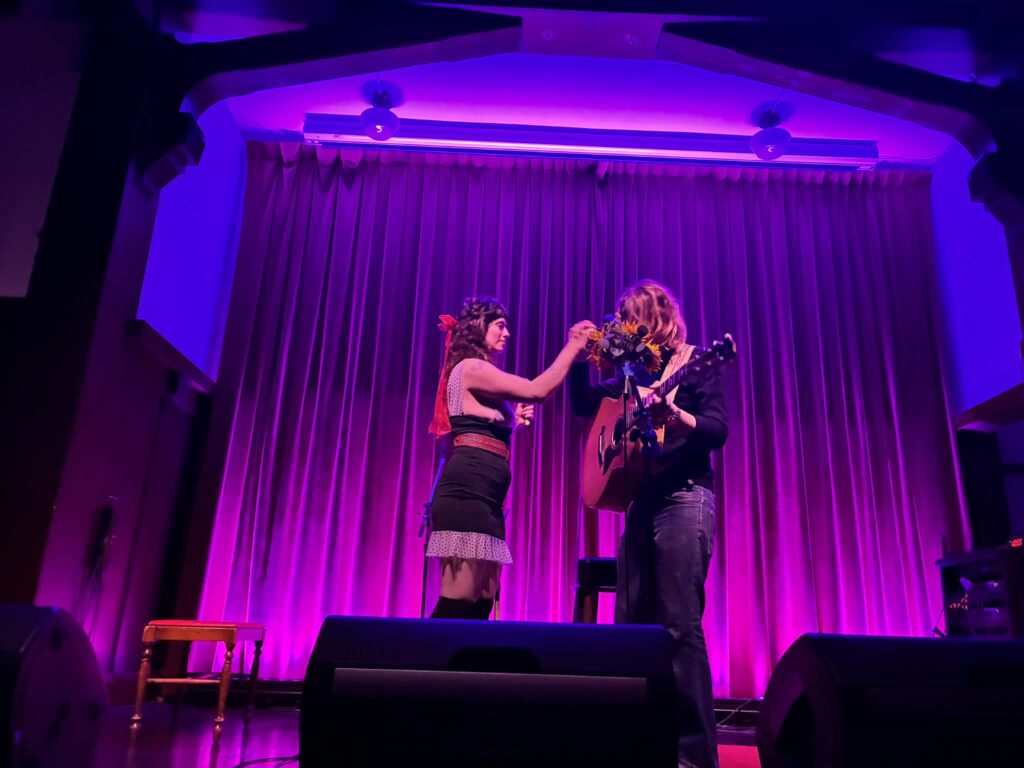
The songs from Barefoot sounded unequivocally better when played by Owens on solo guitar, with an occasional vocal lift from Sedona, a young pop singer who was the second of two opening acts after the Oakland psych-folkie Asha Wells. Hearing how good the songs sounded when they were strummed alone by Owens, I gained a new appreciation for the songs themselves, how his gift for lifting hooks from some sort of primordial Beach Boys/girl-group/‘60s-psychedelic consciousness never really dimmed across his four inconsistent solo records.
Owens’ set was taken mostly from his solo career, and he picked the encore to bust out four Girls songs—“Lust for Life,” “Honey Bunny,” “Magic” and “Big Bad Mean Motherfucker.” The crowd jumped up on their feet and sang along with almost every word; cordoning off the Girls material for the encore was smart, best not to spoil the audience and get them shouting for their own favorites. I was reminded of the Van Morrison set I saw earlier this month, which was mostly blues covers, and whose encore performance of the unsinkable “Gloria” felt like a reward to the audience for not shouting for it.
He played one cover: “Disney Girls (1957),” written by lesser-known Beach Boy and underrated talent Bruce Johnston, and released on their fatigued 1971 masterpiece Surf’s Up. It’s a watery ode to a ‘50s white-bread Americana paradise, real Rockwell stuff, and the year appended to the title was 14 years before the original version came out, which is about as long as it’s been between now and the last Girls gigs. “It’s OK to be a little nostalgic,” said Owens after reminiscing on Tim Lincecum, Pablo Sandoval, and the last time in SF when rent was cheap enough that you could eke out a living in an indie rock band.
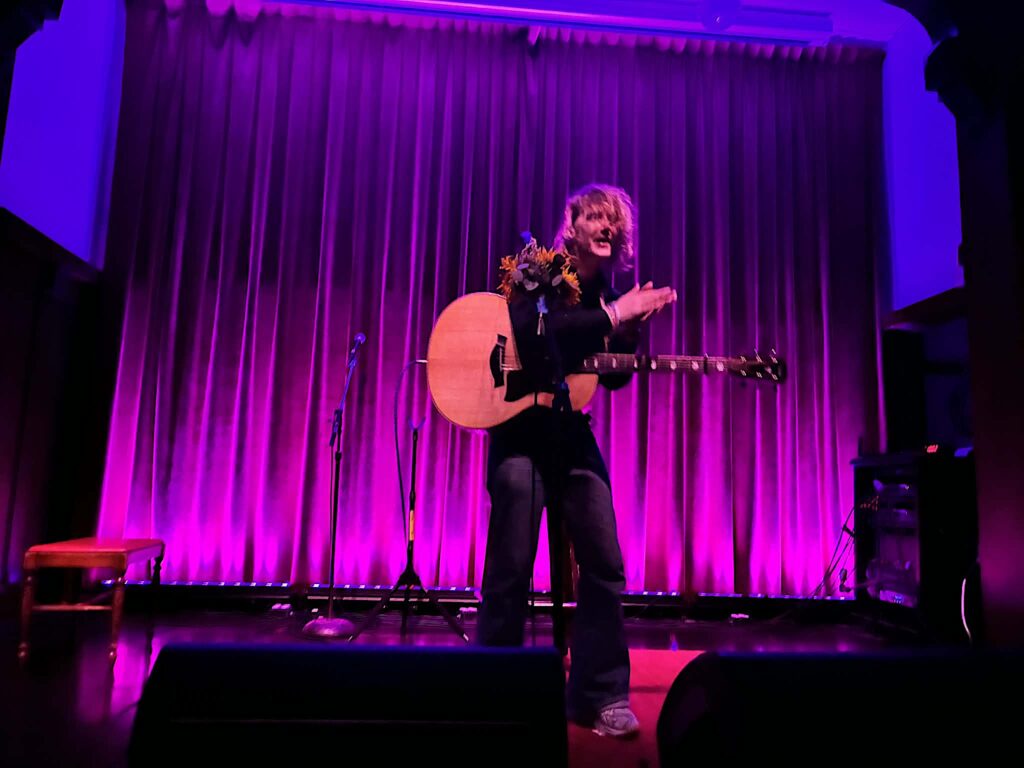
I ended my review of Barefoot with “he’s probably going to make another record soon.” Owens hinted as much at his show, but—as much as I would appreciate it if he made an album that embraced his pursuit of flamenco, the way older Bay Area indie legend Mark Kozelek did on Admiral Fell Promises during his own Andrés Segovia phase—let’s not put too much pressure on him.

Owens is not in great shape for 46, and his voice is a low rasp, shorn of its youthful twitchiness. His improvised guitar runs gave me a new appreciation of Owens as a guitarist—he must have spent a lot of time practicing since I last saw him live in 2011 at the Great American Music Hall, when he played strictly rhythm. But he flubbed chords on the songs themselves and forgot lyrics even on his new tunes. (Someone who knows more about guitars can tell me why the squeaks of his fingers on the fretboard often overpowered the actual sound made by the strings.)
He played a good, long set, well over an hour, but without Barefoot’s flattering production hiding the toll of his time in hell, it was nakedly evident how much the man has suffered. “I’ve never seen a crowd react to a performer that way,” my friend said after the set, and I was forced to agree—the audience’s enthusiasm came from a place of honor at being in the presence of a local legend, and gratitude that he’s still around and still has songs to sing. In Owens’ words: “I survived.”