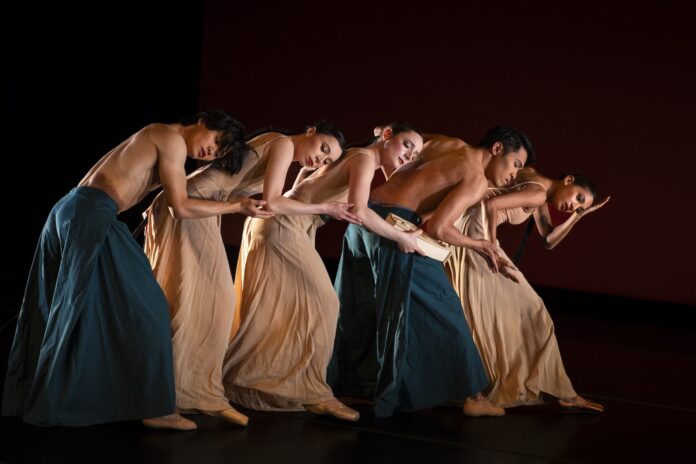
The crown jewel of Oakland Ballet Company’s annual Dancing Moons Festival, celebrating Asian American and Pacific Islander artists during AAPI Heritage Month, is Angel Island Project, an evening-length piece showing Fri/8 and Sat/9 at Herbst Theater. The production requires a notable number of artists working in their specific fields—seven choreographers created eight sections of dance, with the score by Huang Ruo brought to life by the Del Sol Quartet, featuring vocal ensemble Volti, under the baton of Robert Geary.
The vast ensemble comes together to illuminate the darker story of Angel Island, which now welcomes hikers, kayakers, and campers—but was once a prime site of anti-Asian racism and violence.
In 1910, the Angel Island Immigration Station was completed, and subsequently processed over half a million immigrants over the next 30 years. Of those, roughly 175,000 Chinese and 60,000 Japanese people were detained and subjected to horrific treatment, many for up to six months. Because of the Chinese Exclusion Act of 1882, the Chinese faced longer detention times and deplorable living conditions.
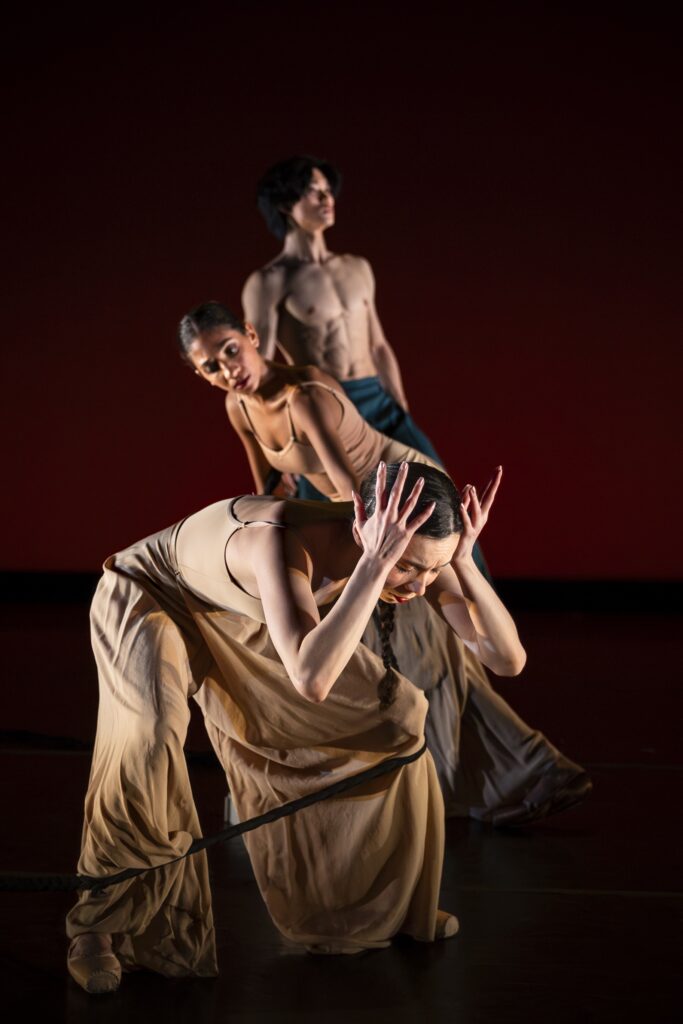
Many of these immigrants inscribed poetry onto the walls of the barracks as way to express their despair. Beginning in the 1970s, there have been many efforts to reclaim the historical period from 1910 until 1940, including restoring the poems. Below are two examples:
In the quiet of night, I heard, faintly, the whistling of wind.
The forms and shadows saddened me;
upon seeing the landscape, I composed a poem.
The floating clouds, the fog, darken the sky.
The moon shines faintly as the insects chirp.
Grief and bitterness entwined are heaven sent.
The sad person sits alone, leaning by a window.
******
America has power, but not justice.

In prison, we were victimized as if we were guilty.
Given no opportunity to explain, it was really brutal.
I bow my head in reflection but there is
nothing I can do.
In 2017, the Del Sol Quartet, with a grant from the Hewlett Foundation, commissioned Huang (of The Monkey King opera fame) to compose an oratorio based on the poems. The pandemic began while Huang was still writing the work, however, and with it an outbreak of anti-Asian prejudice and violence.
“I fear[ed] for my life,” he said. “I had been living in New York for so long and I never felt I need to hide my appearance and identity. During that period when I went outside, I would wear a baseball hat and mask up so people cannot really tell I’m Asian. I never thought our life and our city or our country would come to that point so fast and so dramatically, with all this anti-Asian sentiment and discrimination happening.”
Even the piece’s premiere on Angel Island itself was delayed for a year, and in 2021, when it finally debuted, unseasonal rain forced the event indoors into the very barracks where the Chinese had been interred, and everyone donned their requisite masks.
New York choreographer Phil Chan has been an artist-in-residence at Oakland Ballet for the Dancing Moons Festival for all five years of its existence. He had heard Huang’s Angel Island Oratorio and in 2023 introduced the work to Graham Lustig, artistic director of the 60-year-old company. Lustig jumped at the chance to add dance to the music. He wanted to invite AAPI choreographers to tell this profound story in movement.
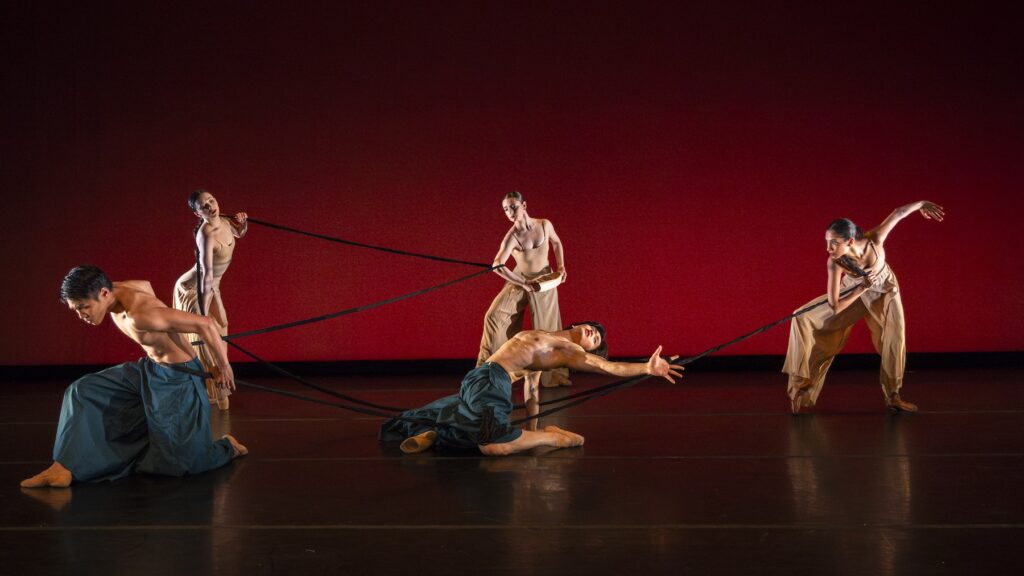
The oratorio is in eight sections—the odd-numbered sections are narratives from newspapers and other writings, while the even-numbered ones are the poems themselves. Seven choreographers were chosen; Chan, who created two sections; Wei Wang, principal dancer at San Francisco Ballet, also made two; Oakland Ballet dancers Lawrence Chen and Ashley Thopiah worked together on one section; and independent artists Feng Ye, Elaine Kudo, and Natasha Adorlee made one each. Former OBC member Alysia Chang together with Kaori Higashiyama created the costume design, and Courtney Carson the lighting design.
For his two sections of the narrative, Wang chose to focus on Quok Shee, a woman who was in detention for more than 600 days. He explained, “In the fifth song, you’re pulling down again to this dark place, before you reach another spiritual level. I’m glad to get to do the heavy lifting. A lot of choreographers don’t understand that you need to root things. The tree doesn’t just grow above ground. It has to come from deep down.”
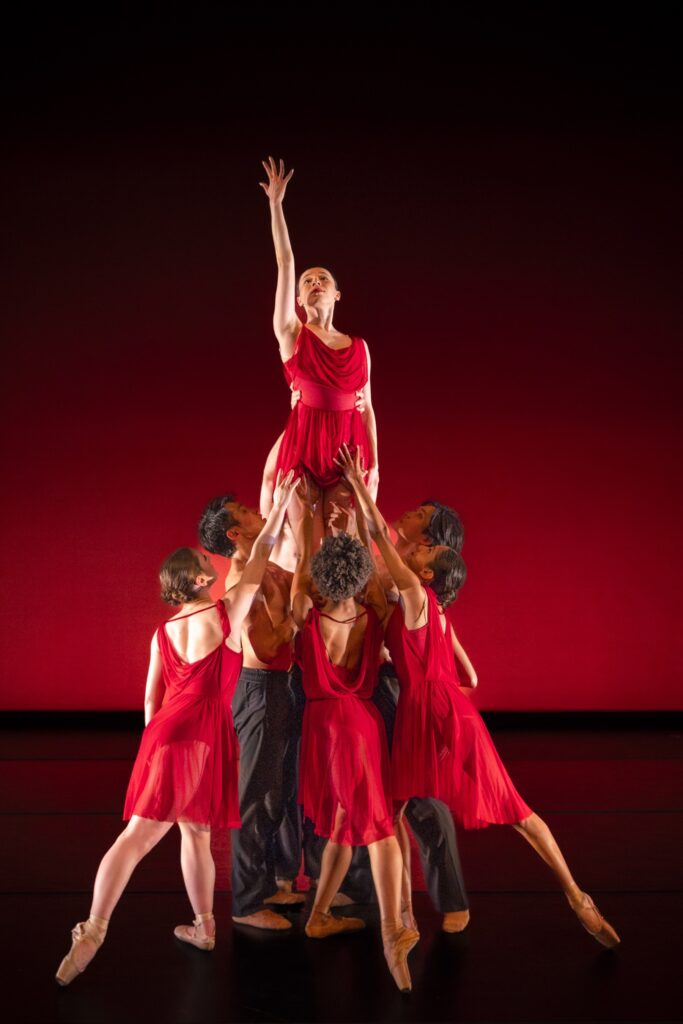
Angel Island Project made its debut last spring at the Paramount Theater in Oakland to well-deserved acclaim. Chan notes that though he had doubts about having seven choreographers, yet the work felt like it had been created by a single person because everyone understood the underlying meaning of the task. He had also worried that the piece would be too depressing, but instead found it uplifting.
Huang says, “The experience was so profoundly haunting and powerful. When you listen to the work in the barrack[s] itself, you feel there are ghosts surrounding you. With the new ballet, it brings new blood, new life, new air into Angel Island. As a composer, I cannot be happier, the piece has its own life now.”
ANGEL ISLAND PROJECT Fri/8 and Sat/9, Herbst Theater, SF. More info here.