CAAMFest—formerly known as the San Francisco Asian American Film Festival—is back for its 44th annual edition this week (Thu/7-Sun/10). The Center for Asian American Media (itself originally known as the National Asian American Telecommunications Association, or NAATA) that it sprang from has been furthering minority visibility in US media since 1980, with this year’s festival program featuring numerous titles that CAAM had a hand in funding, producing, or both. Few festival-staging organizations have been so deeply involved in the development of filmmaker projects, let alone going as far back as this one.
The 60 individual titles being shown as usual represent a diverse array of shorts, features, documentaries, narratives, and communities portrayed. Casting a wide net in under 90 minutes is the HBO Original The A List: 15 Stories from Asian and Pacific Diasporas. Director Eugene Yi (Free Chol Soo Lee) probes ethnic identity issues and experiences through the insights of a starry on-screen rollcall including Senator Tammy Duckworth, astronaut Amanda Nyugen, broadcast journalist Connie Chung, actors Bowen Yang and Sandra Oh, transgender competitive swimmer Schuyler Bailar, comedian Kumail Nanjiani, and surfer-scientist Cliff Kapono. It kicks off the festival Thu/7 at SF’s AMC Kabuki 8, a longtime home base that CAAM is returning to for the second year after a hiatus. An opening-night gala at the Asian Art Museum in Civic Center will follow.
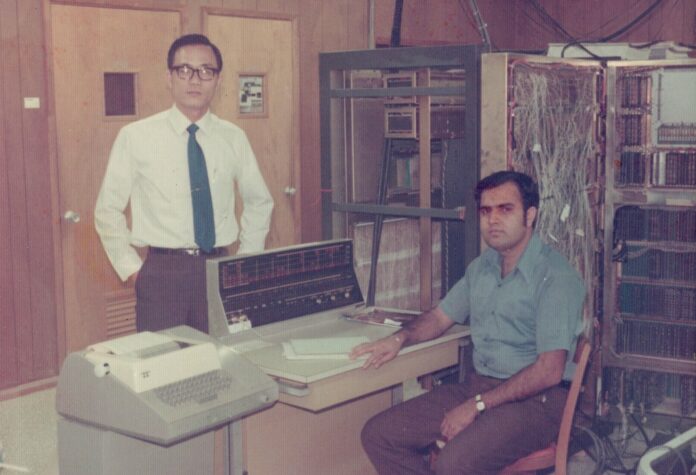
Documentaries are really the core of CAAM this time around, many of them existing in large part due to the assistance of the institution itself. Full-length nonfictions on tap include several Bay Area subjects, including Nisha Balaram’s Meals That Made Us, about the myriad roles played by Asian cuisine in our region. Jennifer Lin’s About Face: Disrupting Ballet has Oakland Ballet choreographer Phil Chan among the major dance talents agitating for examination of ethnic stereotypes in certain oft-performed classic works. Khai Thu Nguyen’s The Dao of Thao finds local stage regular Thao Nguyen as she develops a new solo show humorously dealing with coming out to Thai-emigre parents, being a first-time mother, and other travails. Ben Rekhi’s Breaking the Code (co-directed with Swetlana) examines the legacy of his own father, an immigrant tech pioneer dubbed the “Godfather of Silicon Valley’s Indian Mafia.”
Farther afield, Kimberlee Bassford’s Before the Moon Falls offers a knotty portrait of Sia Figiel, an acclaimed Samoan author and painter whose struggles with mental illness were just part of a long, hard life’s road. Valerie Soe’s The Auntie Sewing Squad Resistance Playbook finds performance artist Kristina Wong starting a mask-making movement at the onset of COVID-19 that grows into a nationwide activist network. Karla Murphy’s The Gas Station Attendant weighs the trajectory of her father, who had fled poverty in India for the U.S. Shubhangi Shekhar’s Hoop Like This follows twelve Indian-heritage basketball players as they form a high-profile team to “show the world that brown ballers exist.” Yuriko Gamo Romer’s Diamond Diplomacy ponders the ginormous popularity of baseball in both Japan and the US, as well as the stars whose heritage straddled both worlds.
Razi Jafri’s Uncommitted looks at the frustrated activism of Arab and Muslim voters in 2024, as Democratic candidates evaded Gaza issues while clinging to an uncomplicatedly pro-Israel stance. Seat at the Table from Sarita Khurana and Yoav Attias looks at some of the same events from another perspective—that of South Asian Americans, whose candidates that year eventually encompassed Kamala Harris. Baby Ruth Villarma’s Food Delivery chronicles a very different political battle, between Filipino fishermen caught in a territorial dispute over South China Sea waters, and the Chinese authorities trying to starve them out.
There are plenty of narrative features as well, encompassing crime thriller (Jing Ai Ng’s Centerpiece selection Forge, producer/writer/director/star Kenny Riches’ Mouse), coming-of-age drama (Jaskaran Singh’s Jersey Boy, Aronjonel Villaflor’s Mabuhay, Nani Sahra Walker’s Nepal-shot Shakti), and a bittersweet mother-daughter reunion during an Azores island vacation (Lilian T. Mehrel’s Honeyjoon, recommended).
These films are primarily U.S. productions. But there’s also a revival screening of Julia Kwan’s newly restored, award-winning 2005 Canadian family tale Eve and the Fire Horse. Not to mention a two-part “Hong Kong Cinema Showcase”—consisting of recent animated fantasy Another World from Tommy NG Kai Chung, plus another revival, Patrick Tam’s 1981 HK New Wave classic Love Massacre.
Closing night on Sun/10 reverts to nonfiction via Colette Ghunim’s very first-person Traces of Home. She journeys with her parents back to homes they were forced to flee in childhood—in Mexico and in Palestine—before landing in suburban Illinois. It’s a family-history dissection that was shot over five years’ course, utilizing footage new, archival and animated.

There are no less than six themed shorts programs scattered through CAAM’s schedule, as well as daily industry events encompassing workshops, panel discussions, networking opportunities and more atKOHO Creative Club in the Japan Center. Other festival venues this extended weekend are New People Cinema (across the street from the Kabuki) and Koret Auditorium (at SF Main Public Library). For full info on CAAMFest 2026, including ticket prices, free events, and more, go here.
Of course, non-festival moviegoing life goes on, and this week brings some alternatives in case you’re not really all that excited by the prospect of new mainstream releases Mortal Kombat 2 or The Sheep Detectives:
Forced Fresh Starts: ‘Blue Heron,’ ‘Mistura’
Two low-key imports pull more than their weight in dramatic insight, both centering on families dealing with major changes not entirely of their choosing.
In Sophy Romvari’s Canadian first feature Blue Heron (opening at SF’s Roxie and Marin’s Smith Rafael Film Center this Fri/8), little Sasha (Eylul Sasha) is the sole daughter and youngest member of a Hungarian emigre clan who’ve just landed in yet another new setting, this time a suburban neighborhood on Vancouver Island in the 1990s. The eldest offspring is her half-brother, teenaged Jeremy (Edik Beddoes). He’s had issues—the latest diagnosis is “oppositional defiance disorder”—since childhood, but now they are getting a tad scary. Certainly they’re more than his parents (Iringo Reti, Adam Tompa) can handle, or anyone can fully understand.
This autobiographical fiction lost me a bit in the later going, when it jumps forward 20 years or so, introducing some confusingly ambiguous, rather “meta” storytelling elements. Romvari takes risks that don’t always pay off, in terms of structure, perspective, and lack of nearly all explanatory backstory. Nonetheless, her film is always interesting. To an extent, its very lack of clarity does convey the uncertainty and challenges of growing up with a mentally ill person in the household.
In Ricardo de Montreuil’s Peruvian Mistura, expat Parisienne Norma (Barbara Mori) is a socialite wife in 1965 Lima, introduced in tears outside a New Year’s Day party. She’s just discovered her cheating husband, a senator, has run off to Argentina with a business partner’s much younger daughter—the reigning Miss Peru, no less. That scandal is embarrassing enough, but it’s worse when she realizes the cad has left her with a mortgage and no ready cash.
Norma has never worked, cooked, driven a car. Having been raised “always to be perfect” on the surface, she’s haughty yet helpless, void of basic survival skills. Nonetheless, she can learn. Embarking on a surprising partnership with with chauffeur Oscar (Pudy Ballumbrosio, better known as a jazz percussionist than an actor), she realizes they both have underappreciated skills that could be tapped to secure a shared future—perhaps in the form of a high-end restaurant.
This mix of foodie movie and post-marital feminist awakening a la An Unmarried Woman treads familiar ground. But it tills that ground with considerable panache, merging the pleasures of nostalgic period piece, engaging character drama and more in highly enjoyable fashion. Mistura opens Fri/8 at the Smith Rafael Film Center in San Rafael, and May 22 at the Lark in Larkspur.
Impresarios: Robert Wilson, Craig Baldwin
Two singular artistic alchemists are celebrated in two imminent local events. This Sun/10 Berkeley’s BAMPFA will show Howard Brookner’s Robert Wilson and the CIVIL warS, a newly restored 1987 documentary chronicling that controversial multimedia maestro’s attempt to mount a twelve-hour avant-garde operatic spectacle at the 1984 Los Angeles Summer Olympics Arts Festival. It ultimately didn’t happen, because Wilson couldn’t raise the necessary $1.5 million or so to bring in the separate sections he’d already rehearsed in Germany, France, Italy, Japan, the Netherlands and Minnesota. That sum now seems ridiculous—our POTUS spends as many taxpayer dollars every time he goes golfing—but its lack was enough to derail what looked like one of the most stupendous art events of its era.
Excerpts from the never-completed work (as well as prior Wilson joints like Einstein on the Beach) look incredible, even if they can’t fully convey the trance-like quality achieved over hours of maxi-minimalism. Collaborators including Lucinda Childs, Philip Glass, Heinrich Muller, Gavin Bryars, and David Byrne also weigh in. When I became a theater critic in the late 1980s, this sort of monumental live theatrical abstraction was going the way of the dinosaur—not so much due to changing audience tastes, but because arts funding was already slowly drying up. God, how I miss it, and how I regret having missed works like Wilson’s. The documentary plays BAMPFA at 4:30 pm, more info here.
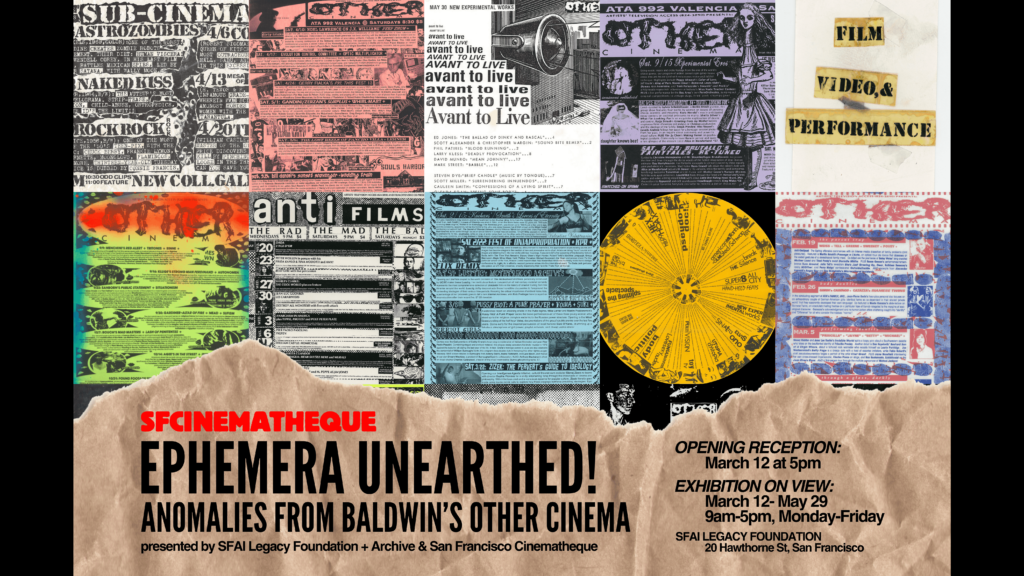
Equally busy, awesome and flummoxing gesamkunstwerks of an entirely different sort have been assembled by the in-person honoree this Mon/11 at SF’s Roxie Theater. “Availabilism & Artifactuality: A Craig Baldwin Cinematic Sampler” will feature the man himself, along with fellow filmmakers Bill Daniel and Lynne Sachs, in an evening drawn from his nearly half-century ouevre of radical pop-culture dissections and paranoid (which is not to say untrue) political speculations.
There will be clips from features Tribulation 99, Sonic Outlaws, Mock Up on Mu and more, plus discussion of his decades as teacher, mentor and muse to much of the Bay Area’s emerging filmic talent. Presented in association with SF Cinematheque, the show is a sort of live companion piece to “Ephemera Unearthed! Anomalies from Baldwin’s Other Cinema,” the exhibit of zine-style program calendars and whatnot on exhibition at SFAI Legacy Foundation through May 29 (info here).