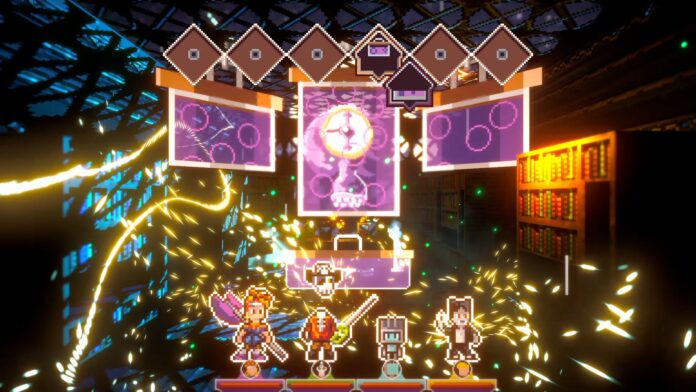
Some months ago, I was lurking online when I stumbled across a game called The Remake of the End of the Greatest RPG of All Time. With a name like that, how could I not be intrigued? The game itself is just as interesting as its title promises, too; it uses the surface-level style of an old-school Super Nintendo RPG—or, more accurately, a modern remake of such a game—to hide a knowledge-based puzzler in the vein of games like Tunic or Animal Well.
And, impressively, the game began as a student project at UC Davis. With its May 28 release date looming, I caught up with the game’s director, Lucas Immanuel, to learn about how the game came together, what remakes can tell us about the people that make them, and what puzzles and humor have in common.
48 HILLS Before we dive into the deeper topics, what is the elevator pitch of the game for you? What is the game about, and what are you trying to do with it?
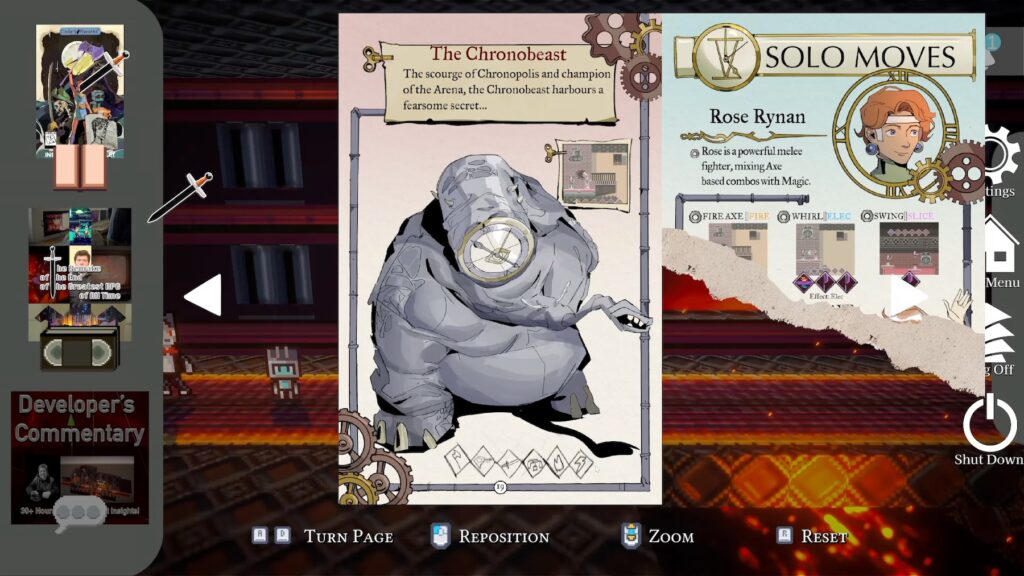
LUCAS IMMANUEL So The Remake of the End of the Greatest RPG of All Time is a deduction puzzle game set in the last hour of a lost, nonexistent ’90s Japanese role-playing game. Players need to use the original game’s manual, director’s commentary, and clips of an unreleased documentary to deduce the mystery at the core of it all: What is the greatest RPG of all time?
48 HILLS That’s such a specific, interesting combination. How did the idea for this game come about, to put these things together?
LUCAS IMMANUEL I’ve joked in other interviews that it’s out of spite, and that is partially true. This project started as part of a class at the University of California Davis. One of the first things that our professors say is, “Don’t make a hundred-hour RPG. It’s a bad idea. Make something small.” That was the initial spark. Like, what if I made a hundred-hour RPG anyway?
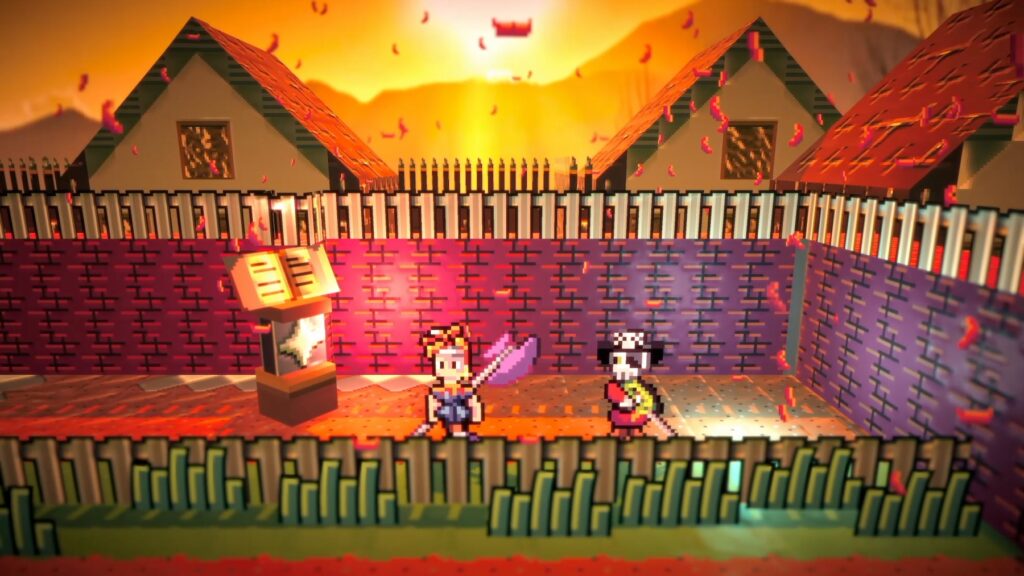
Also, I had made a game just prior to this, which was an RPG. I ended up totally overscoping it, to the point that I had to cut it down into about a fourth of what it originally was. As a result, I was thinking, “Man, I really wish I could make an RPG ending this time.” I was also doing an internship at the time for a game that never released, in the kind of Octopath Traveler HD-2D [visual] style. So I thought, “Well, it would be really funny if I just made the ending of an RPG, but I’d wanna use this style that I’ve been experimenting [with], so it would probably be a remake of that RPG—because it doesn’t make sense for that style to be the original version.”
The whole game worked backwards from that idea. Every single thing that came from that. The game using bonus features as a way to turn this RPG into a puzzle game, all of the specifics of how the game functioned – all of it really started with the idea and the title. Like, “OK, what would a game that’s called The Remake of the End of the Greatest RPG of All Time actually be?”
48 HILLS Are you still a student at UC Davis or is the program over?
LUCAS IMMANUEL Yes, I’m still a student. I’m graduating in like a month here, so I’m going to release this game and then graduate. [laughs]
48 HILLS Congratulations!
LUCAS IMMANUEL Thank you. We have a club on campus called Game Development and Arts Club, GDAC, and I’ve been part of the leadership for that. The people in it have been super supportive, and of course the professors—specifically Patrick LeMieux and Stephanie Boluk—have been wonderful people, and they are responsible for a lot of very good feedback. When it comes out on May 28, it will have been one day shy of two and a half years [in development].
48 HILLS Over that two and a half years, and with this feedback, how has the game evolved?
LUCAS IMMANUEL A couple of major shifts have happened. The big thing was that—this is not just to self-promote—earlier this year, I did a microtalk at GDC where I talked about this game, and my whole premise of the talk was that, by making an RPG and starting at the last hour, it turns into a puzzle game. It kind of makes it a crime scene that you’re investigating, except the culprit is the person who played the game last, and the crime scene is the save file of the game. By changing the framing of the game, you shift the genre of it. Once I realized that, [we] leaned way harder into it and tried to make it very secret-rich, have a lot of interesting puzzles, and did an overhaul of how we approached combat to make it more interesting as a puzzle.
48 HILLS Yeah, totally. I did not get to play the demo, but I did watch a playthrough of it, and that was something that I noticed. How do you approach combat in a puzzle-oriented way, instead of as straight combat?
LUCAS IMMANUEL I realized that, oftentimes, and this is not some sort of universal axiom, a puzzle is just a key and a lock: a piece of information you need to know, and a way to input that information that the game can verify. Traditional RPG combat is a test of resource management or strategy. The game is looking for a correct answer, it’s just that that answer is a little more flexible. If this enemy has weakness A, then you need to use weakness A moves, but you also need to make sure your health is above a certain threshold.
So it wasn’t about adding anything to combat, it was about stripping back the stuff that just got in the way of approaching combat in a puzzle-oriented way. For example, in the game, you’ll discover that each of your characters has cursed armor equipped. The [previous] player [on the save file] has been playing on this kind of high-risk, high-reward strategy, so all of your healing potions actually damage you. That’s a fun thing for the player to discover, but it’s also to prevent you from healing up and making battles take forever. Instead, we push you [to] figure out what the weaknesses of these enemies are. That allows us to make that weakness interesting to discover. Maybe you have to find it in a manual page, or they talk about it in a director’s commentary or something like that.
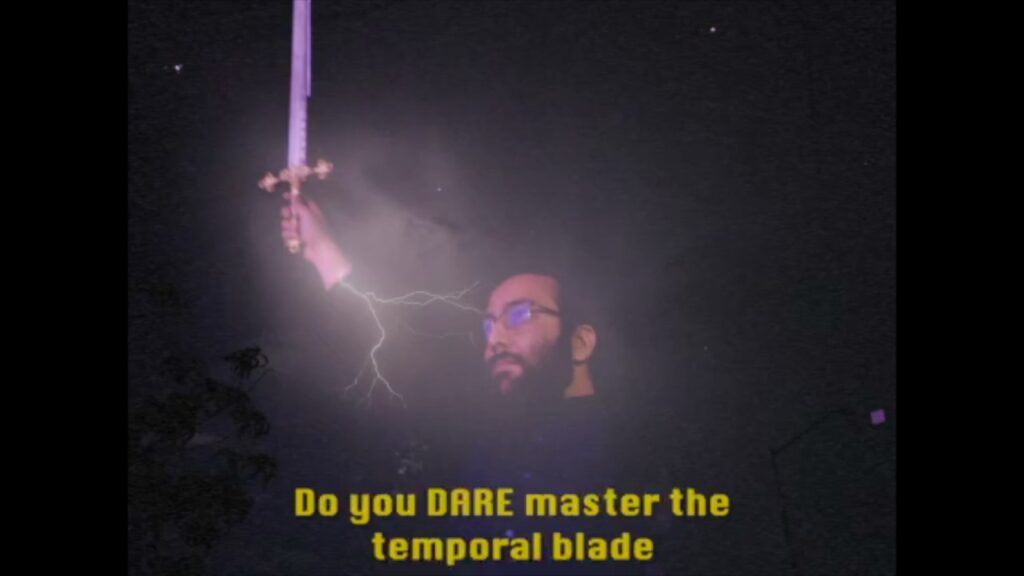
48 HILLS That’s a good segue into one of my other questions, and I noticed you’re wearing a t-shirt for the game Tunic as well, so this is a good way to get into this. I really like the use of the manual pages and the documentary clips to give players clues about what they’re supposed to do. I’m really curious about this use of context to inform how players approach the game and, with that in mind, how much of the job of game design is shaping the context a player brings to a game?
LUCAS IMMANUEL Tunic has this big axiom of “This was here all along,” and we did a slight variation. At every possible point, we either give you an alternate way to have done something earlier, or we make the way that you learn it like, “Oh, I had the ability to do that the entire time.” It leads to a lot of very tricky design decisions that are all about when you give a piece of information, or how you present a piece of information.
A good example of that, in the game, is treasure chests. In a traditional RPG, a chest is a reward for exploration, you know, once you have enough keys to unlock the chests then you can be rewarded with whatever’s inside. In this game, the question is more of a knowledge check. You have enough keys in your inventory for every chest in the game from the moment you boot up. The question is which key goes to which chest, and which items are even keys. A big question became, “Should we prompt you to open your item inventory and select a key?” If we didn’t put a button prompt on there, people would later find out there was an item menu, realize that they could’ve been opening chests the whole time, and it felt very disappointing. But if we did put a button prompt, then people would just go through every key in their inventory and brute-force it, which also wasn’t very fun.
Ultimately, we did keep the button prompt, but we had to remove information from the items menu. Players know there is an item they can use to open this chest, but they won’t know what that item is. And some of those items are silly puns. There’s an item called a “lime pie”—it’s a key lime pie. Very dumb joke [laughs]. A lot of the game was tweaks like that. When do we give players what information? How long before a lock do we give them the key? It’s not that the game itself has changed to a significant degree, it’s all the space between each of the parts of the game. I don’t know if that answers your question.
48 HILLS No, it does! I played a little bit of the last game that you made, Deitrus. It felt kind of similar to me because the storytelling is nonlinear. It’s up to me as the player to put the pieces together. Thinking about these two games, I’m curious about controlling the context, or giving players the pieces to put them together themselves. What about that is interesting to you as a person who makes games?
LUCAS IMMANUEL Something interesting about the process of making this game, in particular, has been realizing that that is a way my game design brain works. As this game has evolved, it has made me realize that understanding systems and story through these kinds of bits and pieces, and slowly piecing together how the game works, is the thing that I find really compelling—both about playing and about making video games.
There is a good quote: “Puzzles are isomorphic to humor.” The punchline of a joke is very similar to the a-ha moment of a puzzle. I make all my games to make my friends laugh or surprise them. I really love that moment of somebody realizing what the game is doing, putting two pieces together, and having that a-ha moment.
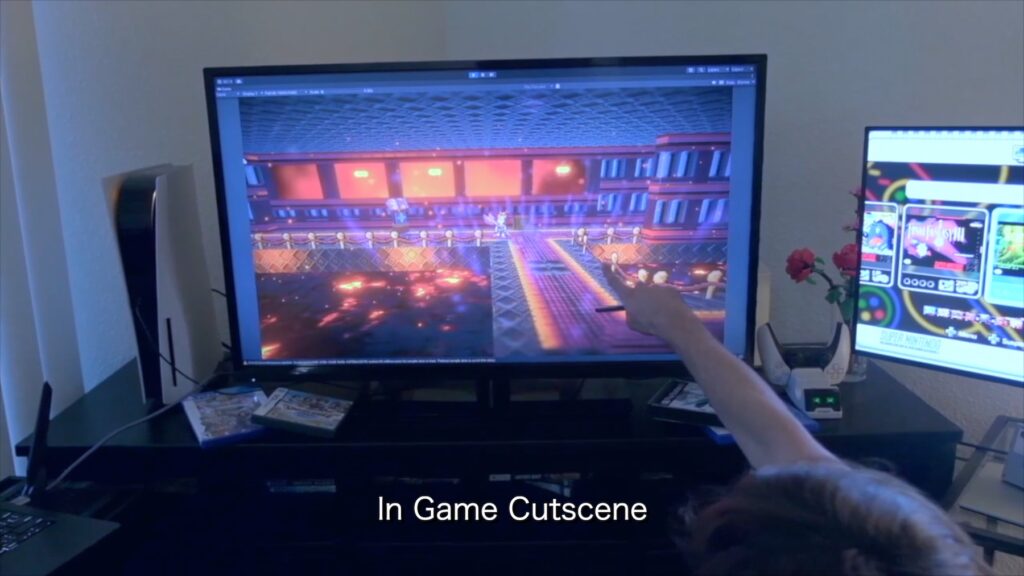
There’s another good example in the game that I think really captures my favorite types of moments in games. Every time you open the menu to look at the manual or the videos, there is a right-hand bar and it has the “Home” option, it has “Settings”, it has “Power Off” and it has “Log Off.” Why would you need “Power Off”’ and “Log Off” [for] an offline, single-player game? Eventually players will just become curious and they click on it, and then the camera pulls out and you realize you’re playing a game within the game. You’ve been playing the RPG on an in-game monitor, and now you’re in first-person and you can navigate in this FPS view. Moments like that are my favorite thing, both as a player and as a developer.
48 HILLS That’s really cool that there’s that whole other layer to it.
LUCAS IMMANUEL That is another one of those things where, like the title, I came up with that really cool moment and said, “How on Earth does that make any sense?” And a lot of the game’s narrative came from making that make sense.
48 HILLS I was looking through the Kickstarter page and going through the rewards. I really wanted to ask about the rewards tier that was, “I will design a one-shot D&D campaign for you and then whatever happens in the campaign will make it into the game.” Did that actually happen?
LUCAS IMMANUEL Yes, that did happen [laughs].
48 HILLS What was it like incorporating that material into the game, working with players to create something new?
LUCAS IMMANUEL It was a fantastic experience. We had one backer who donated a truly insanely generous amount of money to get that reward. So, last year, we all hopped on a Zoom call. I had designed a one-shot Dungeons & Dragons-esque campaign where each of them designed characters and gave them backstories. Each of their characters is an NPC in the game. The game doesn’t call it out, but there’s a lot of random characters that talk about having backstory with you, and those are referencing what happened in that campaign.
The thing that was really surprising was it was very easy to implement all the decisions they made. Their characters having specific or weird backstories felt totally in line with the rest of the game being specific and weird. It ended up adding a lot of life. We’ve been having playtesters play this game so much recently, and they’ll point to the various characters from that campaign like, “Those characters had really strong characterization!” And it’s like, I didn’t make those, guys [laughs]. But maybe I should run a tabletop one-shot and have my friends play the characters for my next game, so I can get a stronger sense of who each of these people are.
48 HILLS Yeah. It’s interesting because the game is played through the collaboration of the player with the stuff that you’re giving them. I feel like D&D kind of works the same way, where there’s the Dungeon Master who’s designed this whole campaign, but you still have to respond in real time to what the players are giving you. I thought it was really interesting that that draws the connection between the two. I think there’s traditionally a wall between a tabletop and a video game RPG, or the audiences aren’t necessarily always the same, but in doing that you cross over that boundary.
LUCAS IMMANUEL I had not thought of that that way, but that is absolutely true.
48 HILLS In the context of the kinds of games that are getting made right now, remakes are sort of a hot topic. I was thinking about, especially, the Dragon Quest VII remake that came out recently. There was a lot of discussion around how it preserved or didn’t preserve the original intent. This game is approaching the concept of a remake as a standalone experience. What made you want to explore the idea of a remake in this way? And I guess kind of more broadly—and this is a huge question–do you think it’s possible to truly remake a game?
LUCAS IMMANUEL I’m gonna give the lame answer, and then the more interesting answer. Like, in terms of historical reality, the reason it’s a remake is because I wanted to do the HD-2D art style. But that doesn’t mean I don’t have thoughts about remakes. I think remakes ultimately tell you a lot about the people who make them. The choices you make in recreating a piece of media—how you change it, how you don’t change it—inherently point toward the author. You get a vision into how this person sees this piece of media that I can then, objectively, go and see what it originally was.
I think there is probably an overabundance of games that draw from media like House of Leaves, but that is a story told by someone about someone about someone about someone telling a story. That is the same with this game. You are playing a remake of a game made by two people who you are interacting with and understanding as characters. The glimpses you get at that original game, the differences between the original game and the remake that they have made, illuminate who they are.
Is it possible to remake a game? I don’t want to spoil the thesis, but there is an argument that the game makes about what it would take to remake a game. And it is not what the Square Enixes of the world are doing right now. Not to say that I don’t think games like Final Fantasy VII Remake are interesting. But there is a way of approaching remakes that I think is more interesting. Which is the most vague thing to say in the world [laughs]. This game, in the end, does end up being a celebration of the idea of playing and cutting and collaging existing art into something new.
48 HILLS Yeah. There’s a documentary clip in there about the two characters [saying], “It has to be exactly the same.” And it’s interesting, the idea of trying to recapture this past that, especially in this context of this particular game, is a completely fictional past.
LUCAS IMMANUEL It’s not super-present in the demo, but people have pointed it out—and it is a present part of the game—that Jacob [Dominick, the game’s programmer and gameplay designer] and I, who both play ourselves in the game, are too young to be the traditional group of people who would’ve been playing SNES games as children.
Obviously you can play a game as a child whenever. But there is some element to the game about borrowed nostalgia, the idea that you’re supposed to find these games important. Not as a means to say, like, “Chrono Trigger doesn’t matter.” Chrono Trigger is amazing. But if we made a Chrono Trigger remake tomorrow, and I gave it to a kid now, would it mean the same thing it did to people who played it back when it originally came out? Is there a way to evoke that that wouldn’t just be like, “Oh, well, we’ll make it prettier, so people wanna play it now”?
48 HILLS Yeah, totally. That’s all the questions that I have, but I was wondering if you had anything else you’d like to add before I let you go?
LUCAS IMMANUEL I mean, the obvious. It comes out May 28–buy the game! [Laughs.]
The Remake of the End of the Greatest RPG of All Time is available on Steam and Itch.io.