Eight years ago, San Francisco proudly stood as the first major U.S. city to ban facial recognition software, championing a culture that protected its citizens from predatory surveillance technology. Today, that boundary has completely dissolved. Under the sweeping expansions of voter-approved Proposition E, municipal leadership has turned our city into an open-air testing ground for unaccountable technology—culminating in the upcoming deployment of the San Francisco Police Department’s “Drone-First-Responder” pilot program in the South of Market neighborhood.
While civil liberties groups and progressive advocates are rightly sounding the alarm over the creeping surveillance state and privacy violations, a glaring, pragmatic reality is being entirely ignored by City Hall: The technology simply does not work in San Francisco.
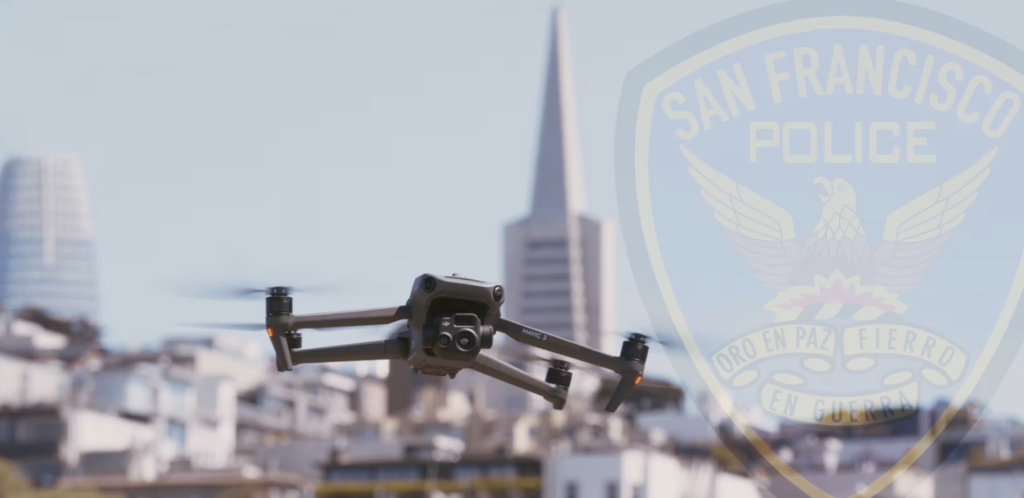
The tech syndicates selling these automated drone-dock platforms pitch a sleek, sci-fi fantasy of instant aerial visibility. But their marketing gloss entirely ignores the basic laws of meteorology and aerodynamics. San Francisco is a city defined by relentless, salt-heavy marine layers, unpredictable wind tunnels, and shifting microclimates. Lightweight commercial drone platforms—like the ones slated for the SoMa rollout—suffer severe performance degradation when exposed to damp, high-velocity coastal air. They are blinded by the fog and tossed by the drafts.
If SFPD wants to maintain the continuous, multi-district safety grid that proponents promise, the fiscal math will collapse. Because of sharp battery limitations, frequent weather-related groundings, and localized blind spots, the city would be forced to purchase, maintain, and rotate an astronomical number of redundant units just to keep eyes in the sky. What is pitched to the taxpayer as an automated, cost-saving efficiency measure is, in reality, a bottomless capital pit for maintenance contracts and hardware replacement.
This is the ultimate tech-hubris trap. At a time when San Francisco faces staggering structural deficits, our transit systems are staring down fiscal cliffs, and working-class neighborhoods are desperate for tangible, human-scale investments like neighborhood grocery stores and street-level safety, City Hall is playing with expensive aerial toys.
We do not need a blind panopticon floating in the fog. We need infrastructure that serves the physical reality of the people on the ground. It is time for our oversight committees and fiscal watchdogs to ground this program before the taxpayers are forced to fund an expensive gimmick that vanishes the moment the wind picks up.
Shaun Haines is an author, anti-racism consultant, and community organizer. He is the founder of St. Sovereign LLC and serves as a prominent advocate for environmental justice, institutional accountability, and systemic equity across San Francisco.