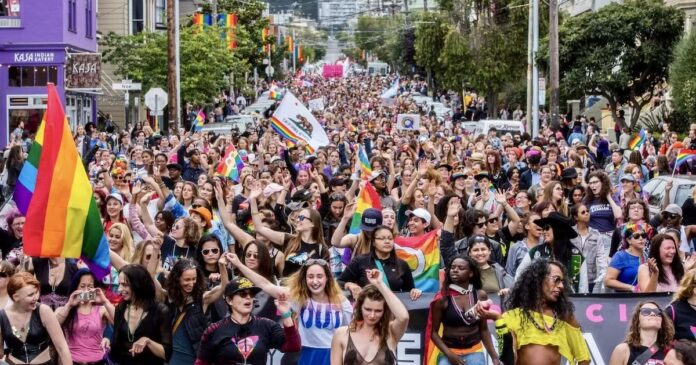
The annual San Francisco Dyke March and Rally on the Saturday of Pride Weekend, aka Dyke Day (this year June 27), has for the past 33 years been a beacon for those who still believe in the radical political power of the queer movement. Bay Area dykes wear their hearts on their sleeve, and to see Dolores Park fill with women of all kinds socializing, chanting, protesting, picnicking, and dancing is one of those Pride week rushes of community joy that never fails to bring a tear to my eye.
The Dyke March has been struggling a bit to regain its footing in the wake of COVID, however—last year saw a massive fundraising effort—and this year comes with some changes. Namely that the rally stage itself is moving out of its traditional spot in Dolores Park and onto the street: 18th Street and Dolores to be exact.
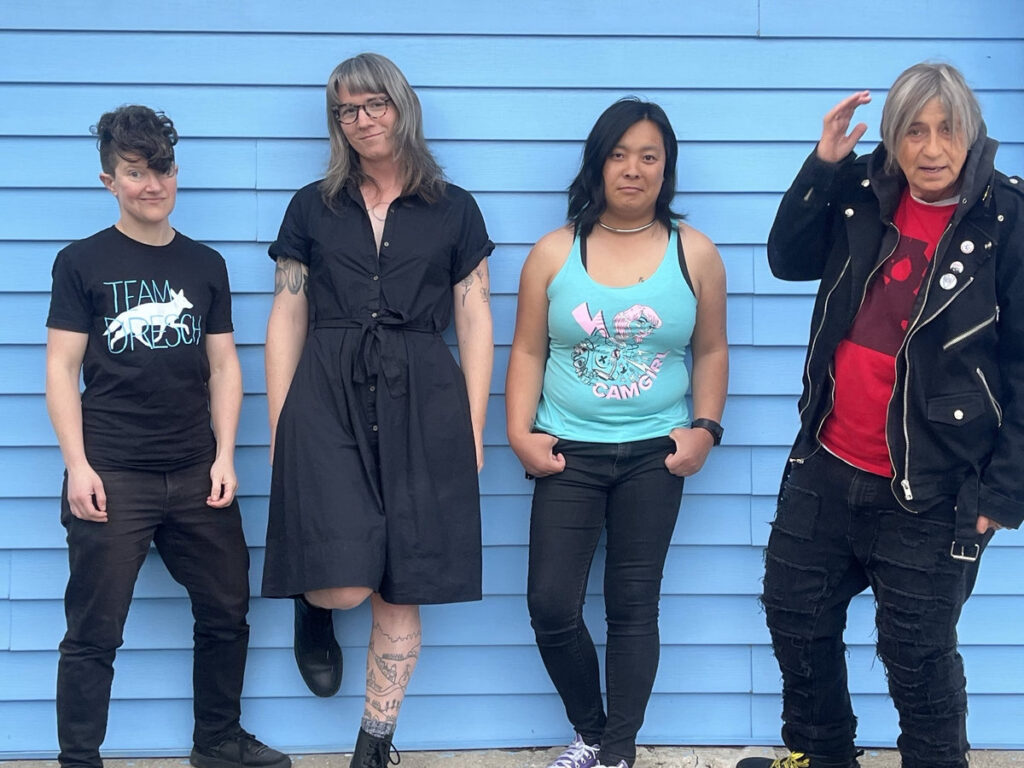
Its timeline has contracted, too. Now the rally is 3pm-4:30pm, with featured speakers disability rights advocate Nicole Adler, St. James Infirmary Outreach Director Celestina Pearl, and Lebanese-American activist Sophia Andary, plus a performance by powerhouse local punk band The Homobiles. Lining up for the March, which maintains its regular route through the Mission to The Castro and back, starts at 4:15, with step-off promptly at 5pm. Rest assured, however, that Dolores Park will be filled with reveling, rebelling dykes all day long.
In 2015, city officials tried to restrict the Dyke March’s route, but participants broke through barriers to continue the honored tradition.
“We made these changes to cut costs for the event, and save on park fees,” SF Dyke March Project Director M Rocket told me over the phone. “We had to downsize the program to a handful of speakers and less entertainment, and shrink the footprint, which wasn’t worth paying for park services. It wasn’t something we took lightly, but it had to happen as we continue to grow back to our original size, hopefully.
“One of the advantages of moving the stage to the street is that it will really help us count our number of attendees accurately, which in turn helps us plan for the future. With a better set of crowd numbers we can see if what the Parks Department wants us to pay is fair,” Rocket said. “We’re really grateful to those that stepped up to donate and our community partners who are making it happen, but we still haven’t made our crowdfunding goal yet, which is $60,000. We hoped that this would be a rebuilding year, which is why we reduced.”
(As of this writing, the SF Rec & Park still plans on charging the Dyke March $2000 for the porta-potties during the event, although Recology waived trash disposal fees.)
Despite another comparatively banner year for lesbian culture in San Francisco—Castro women’s sport bar Rikki’s opened to great acclaim, just in time to cheer on the new Valkyries women’s basketball team—Rocket says the Dyke March organization felt more invisible than ever in planning this year’s really and march. Merchants in the Castro planned a huge street party on Saturday afternoon, completely forgetting that thousands of dykes would be tromping through. (The party has since adjusted its location and time to accommodate.)

“It’s still quite apparent that dykes are overlooked and ignored as part of the larger queer movement,” Rocket said. “The people from the party found out about our route when they pulled their permit—and we’ve been marching for more than three decades! I mean, come on.”
Still, Rocket takes heart that even through the rally may be smaller, the Dyke March is still giving plenty of support to the community on Pride. The organization is participating in the Saturday morning Trans Ally March starting at 10am at the Embarcadero and marching up to Civic Center. “It’s critical to support trans lives right now, including trans dykes. We’re showing up for that and then heading right up to Dolores Park to set up our own event. So Saturday will still be a full day of solidarity, protest, and Pride.”
You can find out more about the 2026 Dyke March here and help them reach their fundraising goal here.