When Teenage Sex and Death at Camp Miasma filmmaker Jane Schoenbrun was nine, their mother took them and their little brother to see James and the Giant Peach. Only the family walked into the wrong theater—the one playing Scream. Schoenbrun remembers their terror, so scared that they shot out of their seat to run from the auditorium. It did not take long for that fear to turn into delight.
“I thought if I saw even 30 seconds of it, I was gonna be ruined forever,” Schoenbrun laughs in a Pride weekend conversation, the day before Camp Miasma screened as Frameline’s closing night film.
“But six months later, it was my favorite movie. By the time Scream 2 came out, I insisted we go and see it in theaters. Even though I was only 10 years old or something, I think it was that fear-desire combo that was so potent for me. It’s such a big part of the movie, that exact thing you’re really afraid of that you’re secretly looking at out of the corner of your eye.”
Schoenbrun has employed pop culture to comment on trans experience for three narrative features now. In 2021’s We’re All Going to the World’s Fair, a teenage girl’s immersion into an online video game provides a portal to change. (Schoenbrun is fond of portals.) Three years later, in the Indie Spirit-nominated I Saw the TV Glow, a Buffy the Vampire Slayer-like cult TV series is the portal to a different world for a young boy alienated and out of place in the suburban world he inhabits.
Schoenbrun describes Teenage Sex and Death at Camp Miasma as an examination of the trauma of pre-transition life, relating it to their own gender dysphoria before they transitioned. This time they turn for inspiration to horror, the genre they relate to their own childhood and that early experience with Scream. The world they construct of a horror franchise that started strong and eventually fell into disrepute is reflected not just within the film but in its title sequence that enumerates the world the franchise exists within and its ephemera.
“I love making foundations. I am not so interested in film as realism but I’m interest in film as a dream and a magical place you want to return to,” Schoenbrun says. “The films I love the most and watch over and over, I don’t rewatch so I can enjoy the plot. I rewatch them because I start to miss the feeling of watching the movie, of living in that other world or dream that’s been constructed. One of the primary goals when I’m setting out to make a movie is making something that can linger in that way.”
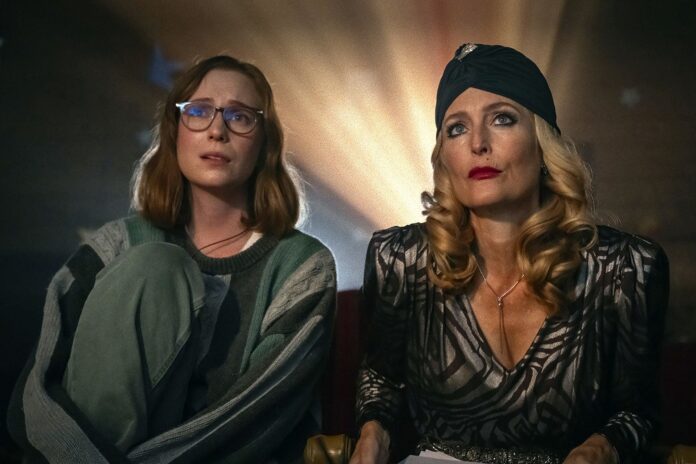
In the world they construct in the new film, “Camp Miasma” was a horror franchise with an otherworldly villain, Little Death, that invades the world of teens, leaving a trail of bodies. Emmy-winning Hacks star Hannah Einbinder is Kris, an up-and-coming filmmaker uncomfortable in her own skin who is mounting a reboot of the franchise that she grew up with and loves. To that end, she travels to the remote home of Billy—Camp Miasma’s original final girl who long ago dropped out of sight—to talk her into joining the new movie.
Billy, played by Gillian Anderson, seemingly channeling a narcotized Dolly Parton, turns out to be an eccentric and seductive charmer who casts her spell on Kris. Her home, deep in isolated woods, is the original camp, thrusting Kris into a surreal world poised between real life and cinema. The actor playing her could relate.

“We shot the movie on Vancouver Island, and it was just so remote,” says Einbinder. “Some of those long roads with forest on either side, it felt like you never left the set, like it was all one thing. Jane describes the movie as going into a portal, and that is how it felt. In my experience of making the film, we were just steeped in it all the time. It felt like this fluid thing that was always happening, Making it did feel like you were in it all the time.”
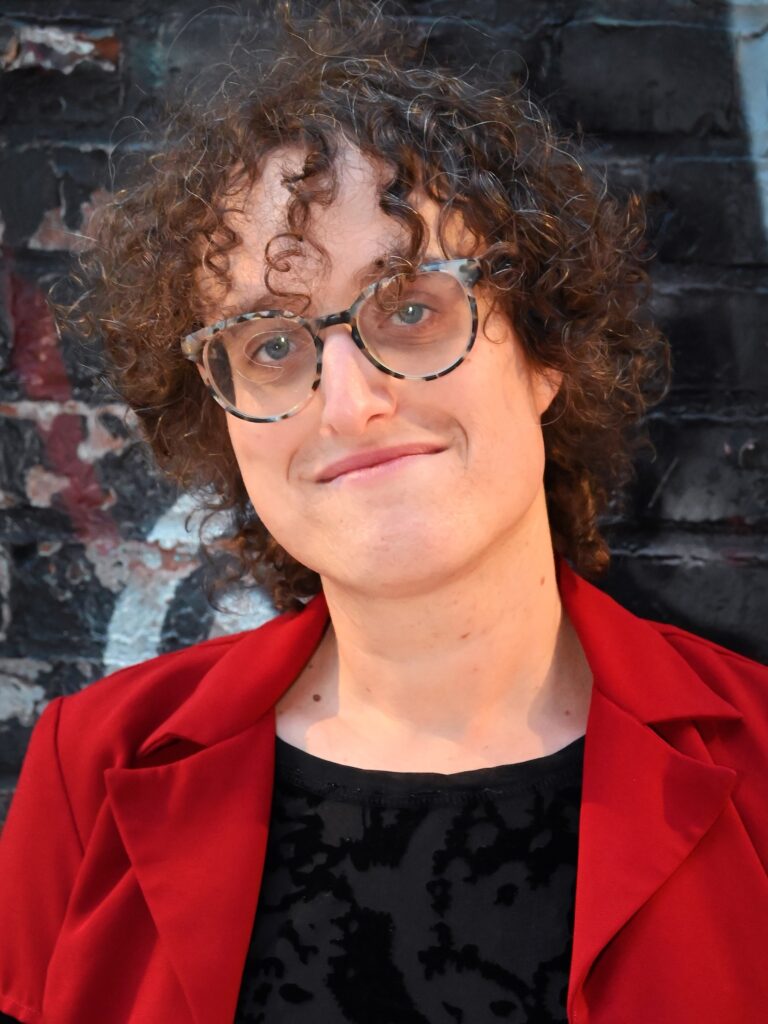
To Schoenbrun, horror is the perfect vehicle for exploring trans issues, because the genre is already rife with trans currents, much of it anti-trans. In Teenage Sex and Death at Camp Miasma, Kris gets her big break that allows her to work on her new project when she makes an acclaimed film that investigates Psycho’s infamous shower scene—from the point of view of the shower curtain. And Psycho and the movies that followed its leads were much on Schoenbrun’s mind as they were working on Camp Miasma.
“Hitchcock utilized the gender deviant trans killer trope, not using it, inventing it,” Schoenbrun says. “He understood how to imbue his films with this psychosexual undercurrent. He was able to tap into the Western psyche of the ‘50s and ‘60s in a way that changed culture forever, and never more so than in the shower scene. That scene, to me, is fascinating. It so clearly and intentionally confuses desire and horror. There’s violence and there’s sexuality that are these two discrete genders, the killer with the phallic device and the naked woman object. And you have the gender deviance, the fact that the man is in woman’s clothing.
“I think the merging of the parts of that horrific and sensual are what gives that scene its lasting impact,” they continue. “It both scared and tantalized people so deeply, so much so that it became a blueprint for an entire subgenre, and I think gender deviance is an essential part of that soup. It’s not a coincidence that it carries through from that to Peeping Tom to Dressed to Kill to Michael Myers and Leatherface, who dresses as a woman in the fourth Texas Chainsaw, even the even the slasher killers who like aren’t overtly gender deviants, like there’s still something pretty fucking gay about a lot of them, or repressed, or sexually, or gender ambiguous.
“Gender is such a deep part of how we make sense of the world, and also the way that we make sense of the world through gender is very conservative. The idea of these two discrete, unchanging poles of male and female. And so the horror genre, I think, has always absorbed a lot of the spillage from that rigid binary gender code. What I’m trying to do in remaking those tropes as a trans girl—and as a trans girl who doesn’t love seeing themselves in the dark mirror of Buffalo Bill, or whatever—I’m trying to queer the language, queer these rules of killer, victim, man, woman, knife, body to penetrate without getting rid of the libidinal sort of power that the images have had over time.”
Teenage Sex and Death at Camp Miasma opens at Bay Area theaters on Friday, August 14.