
I just got a mailer from the San Francisco Democratic Party, which is now largely funded and controlled by Big Tech billionaires, that features “Democratic Leaders for San Francisco Public Education.” The seven folks on the slate are people that GrowSF is supporting.
GrowSF has shown no interest in increased funding for public education. Its candidates are all about “living within our means” and “fiscal responsibility.” (Those are at least better terms that “tightening our belts,” which has always horrified me: It suggests that people need to eat less food and suffer from hunger.)
The San Francisco Unified School District and City College are pillars of what California once called a master plan for education. The state developed that in the 1960s, when rich people paid high taxes and money for public services was never short.
The unions representing teachers are promoting candidates who argue that it’s impossible to provide adequate public education without paying professional educators a living wage. That’s absolutely true.
Not everything government does gets better with money. Military spending is a huge waste. California has spent $20 billion since 1980 building prisons, and we spend $14 billion a year running them. That has not made anyone safer.
But public education is different: By almost any metric, there’s a direct-line correlation between the outcomes of public education and the money we spend on it. More money for public schools means better outcomes for students.
We can, and should, argue about the student assignment process. But that’s just a synecdoche (look it up, I went to a well-funded public high school with great English teachers) for the larger issue: California, and San Francisco, don’t spend enough money on education.
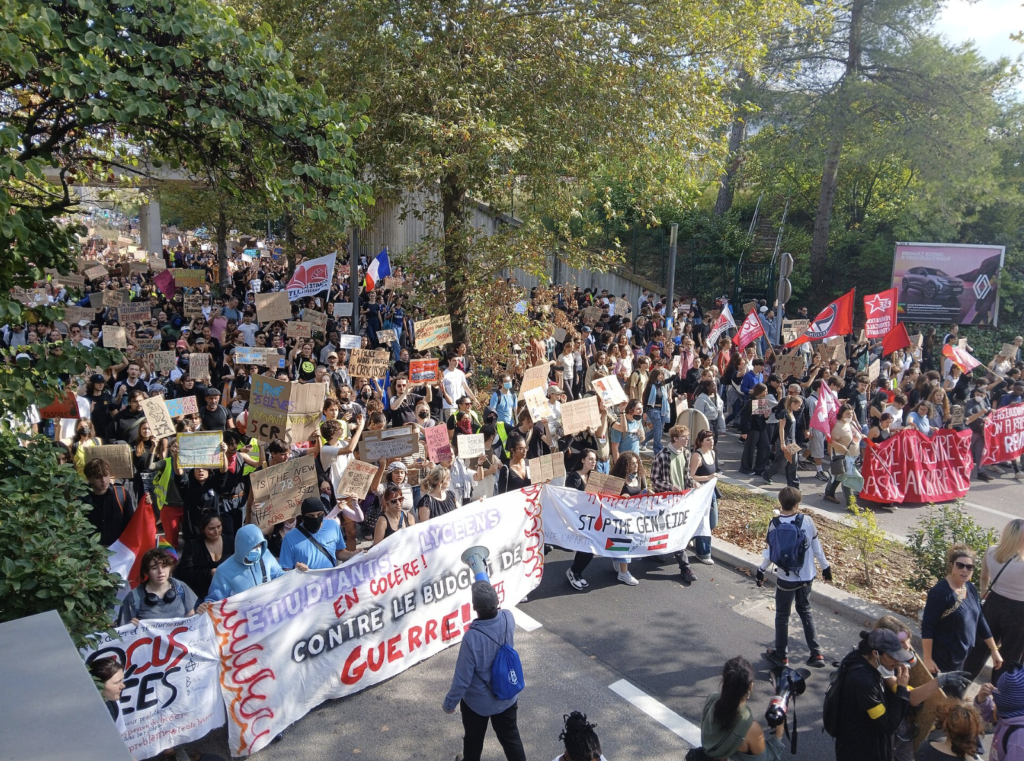
The GrowSF candidates need to understand that what’s really on the table is, in some ways, that same thing that’s driving protests across Europe, particularly in France: The notion that “austerity” means we can’t afford public education—at a time when the amount of wealth in this city is exponentially greater than at any time in history.

In a response to the protests in France, the French economist Thomas Piketty notes:
To justify the inadequacy of education funding, and in particular the decrease in spending per student, the government and its supporters argue that France cannot afford to invest more. They are making two reasoning errors. Public debt has indeed risen from 20% of GDP in 1970 to 120% today. But at the same time, private wealth has grown much more dramatically: It has gone from 300% to 600% of GDP, with extreme concentration among the wealthiest financial fortunes. In other words, France’s national wealth – the sum of private and public assets minus private and public debts – has never been so high, not only in absolute terms but also as a percentage of GDP (which itself has never been higher).
In other words, France has never been richer. The problem to solve is simply one of distribution. The situation was far more difficult in 1945, when public debt was even higher than today and private fortunes were depleted. Yet that did not prevent the introduction of a national solidarity tax with rates of several dozen percent on the largest fortunes, which could yield much more today. Those who endlessly repeat that nothing substantial can be expected from this side are clearly at odds with mathematics, as well as with history.
Yes: In other words, San Francisco has never been richer. The problem is one of distribution.
City College teachers say that district has a budget surplus that should go to more class, and they’re right.
But in a larger sense, we don’t need more “fiscal responsibility.” We need the people who fund GrowSF to pay more in taxes so the schools have the money they need. Instead, the same mailer talking about public education opposes Prop. 40.
That’s what the local news media should be talking about.