
I watched every minute of the debate between Sup. Connie Chan and state Sen. Scott Wiener, and I have a few impressions that I hope will influence the next debate.
Both candidates did what they needed to do. Wiener made no terrible mistakes, the way he did in an earlier debate, although he looked a little more nervous than one would expect from a presumed front-runner. Chan made clear, after a scathing sexist Chron editorial suggesting she is not qualified, that she’s a serious candidate of labor and the working class, and not the billionaires.
But the moderators, with all due respect, were terrible.
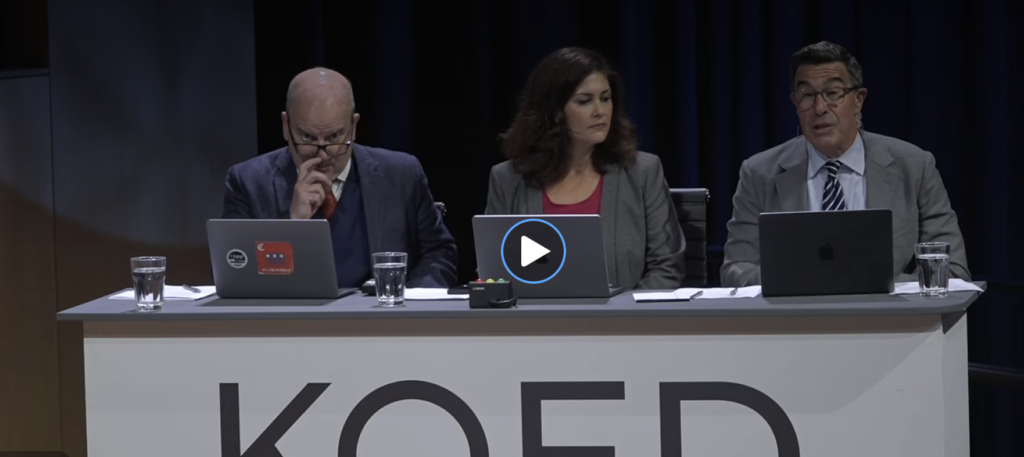
All three—Marissa Lagos, Scott Shafer, and Joe Garofoli—are experienced reporters with long careers. All were credible choices for this debate. I like and respect all of them.
None did what a good debate moderator should do: Demand that the candidates actually answer the questions, hold them accountable when they say something inaccurate or misleading, and seek to give the public an indication of where the two differ on policy issues.
Instead, they read prepared questions, let the candidates make speeches, and then moved on to the next question.
The debate format didn’t allow for opening statements, so I can’t blame Lagos for starting with a pretty pointless question: What qualities do you think the next member of Congress needs?
Wiener and Chan made speeches. Nothing told us anything about their policy differences.

Then onto issues.
Shafer started off well, saying that Wiener had opposed a tax measure on the rich in San Francisco, Prop. D in June, which would have taxed companies with more than $1 billion in revenue that paid their CEOs more than 100 times as much as the median employee. It would have brought $300 million into the city, taking money from people who got tax breaks from Trump to offset his service cuts. He also opposed the billionaire tax.
But Shafer let Wiener make a misleading statement, saying that the local tax would have hurt downtown recovery (there is zero evidence of that; none of the companies that would pay the tax were going to leave the city, and none of the companies that might move into the city would be discouraged by the tax). He said that Planned Parenthood opposed Prop. 40—but huge numbers of staff at Planned Parenthood are outraged at that position and support the measure.
Not once in what his supporters say is an incredibly effective legislative career has he sponsored a single bill to raise taxes on the rich. Not once. It’s clearly not a priority for Wiener.
Shafer just let him make his statements, challenged nothing, and moved on.
Both candidates talked about AI regulation. Wiener said that he had pushed a bill that Big Tech opposed. That’s not true: Anthropic supported the bill. It didn’t work.
Wiener was able to make a long speech about how he didn’t like the current government of Israel, and supported a ban on new weapons to that country. The panel didn’t ask why he opposed a cease-fire resolution at the Board of Supes in 2024, and why he has changed his position since January.
The best political interviewer I have ever seen in my life was Ted Koppel, who anchored a show called Nightline from 1980 to 2005. Ted was famous for challenging guests: “With all respect, Mr. Ambassador, you didn’t answer the question.”
Or, from this transcript:
KOPPEL: Let me say first of all, that was as elegant a job of bobbing and weaving as I’ve heard in a long, long time. … Ambassador, with all due respect, I don’t know of a single instance where a great power, let alone the United States, has gone to war, has sent 100,000 troops because of the mistreatment even of one entire gender.
If we were going to send troops, we would have to send hundreds of thousands of troops then to Africa to prevent genital mutilation. That isn’t the reason why we’re in Afghanistan.
In other words: Mr. Ambassador, you are lying.
That’s what a moderator does.
The next debate features Joe Eskenazi, who is a good reporter with experience doing these events, and Heather Knight, who is neo-liberal columnist who somehow runs the New York Times San Francisco bureau.
Maybe ask both the candidates this: Do you believe that adding more market-rate housing to San Francisco will bring down prices to the level the median SF worker can afford, and what similar city can you point to where that has happened? Sen. Wiener, your mandates for affordable housing in San Francisco will cost $19 billion; where is that money going to come from?
Or this: Big donors, the folks who give tens of thousands of dollars to candidates, are no fools; they give that money because they think a candidate will represent their interests. Independent expenditure committees with more than $1 million are on both sides. The IE supporting Wiener is funded almost entirely by Big Tech. The IE supporting Chan is supported almost entirely by Big Labor Unions. What does that say about who you would represent in Congress?
Or this: Sup. Chan, how would a moratorium on data centers actually slow the advance of AI, and what else needs to happen? Would the candidates support a Securities and Exchange Commission ruling banning any new AI IPOs until the federal government has formulated effective regulations?
Please, folks: Use your inner Ted Koppel. With all due respect, the last crew dropped the ball.
Full disclosure: My independent adult daughter works on the Connie Chan for Congress campaign.