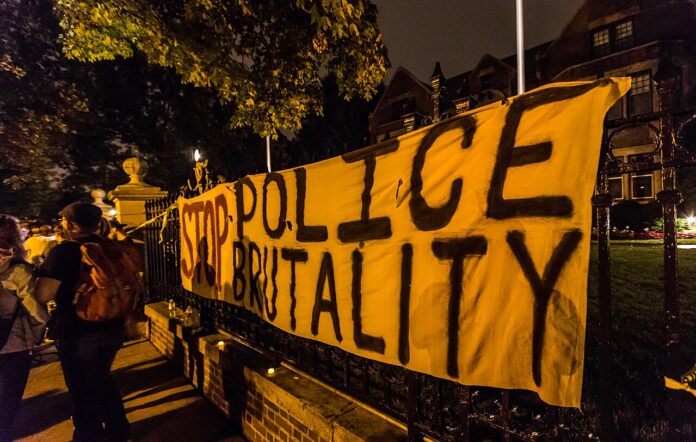
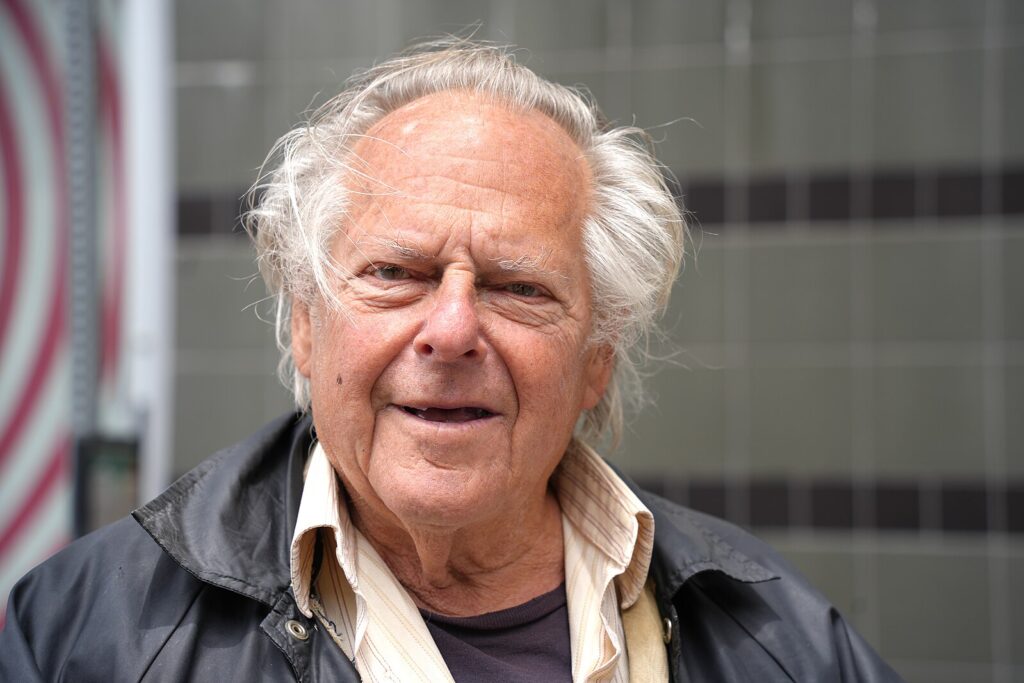
“The rise of police brutality signals a national process toward developing a militant and military corps of repressive force in this country,” says Steve Martinot, Instructor Emeritus at the Center for Interdisciplinary Programs at San Francisco State University. “It is important to understand what drives the police as well as what drives their political leadership and use.”
As part of this Sunday’s Howard Zinn Book Fair, Martinot will give a talk titled “Police Brutality and the Rise of US Fascism” (2pm-4pm, room 213, Mission Campus of CCSF). He has written extensively on the structures of racism and white supremacy in the United States, as well as on corporate culture and economics, and leads seminars on these subjects in the Bay Area.
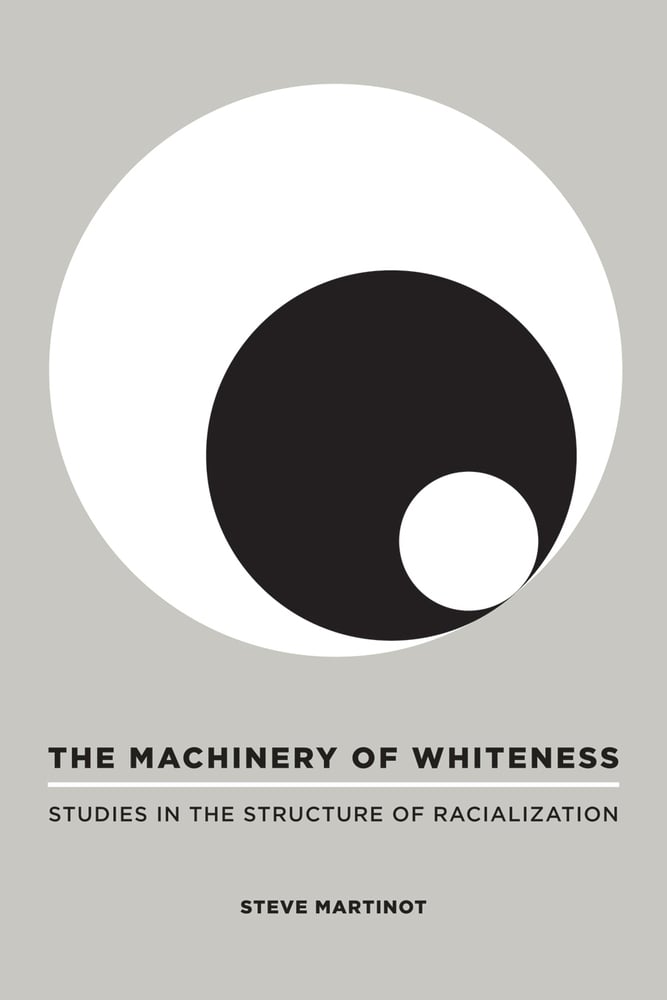
Martinot is the author of Police Brutality: A Study of Police Culture in the US; The Rule of Racialization: Class, Identity, Governance; Forms in the Abyss: a Philosophical Bridge between Sartre and Derrida, and The Machinery of Whiteness. He is also the editor of two previous books, and translator of Racism by Albert Memmi.
Zinn Fair co-organizer and longtime activist Andy Gillis asked him a few questions before the event. You can read more about the fair here.
ANDY GILLIS Can you sum up the fundamental way you define racism—or racialization?
STEVE MARTINOT Race and racism are defined and developed differently in different cultures. In the US, I define racism as white supremacy. It was invented by white people in the Jamestown colony, expanded to a global overview of people by European taxonomists, and keeps coming back after attempts to rid the world of the concept—either by reducing non-white people to lesser social status or standing with each change in US governance standards. It is a subjective idea.
ANDY GILLIS How does this differ from the way it is commonly perceived?
STEVE MARTINOT Common perception of race seems to be based on skin color, using that to determine who the person is, and what they are capable of. In other words, race is understood as a hierarchical scale from “purest” white down to “purest” black, with intermediary steps or stages being variously defined in between. In other words, it is entirely subjective.

ANDY GILLIS How has this artificial construct impacted US society?
STEVE MARTINOT US society is based on its modes of racializing people. It changes according to how people are forced to change how they see race according to changes in historical events—like emancipation, or lynch mob justice, or the Civil Rights Era, or Reagan’s decision to role the latter back. But it is the historical changes in US society that move the concept of race into new discursive levels, from property to evil to activist to enemy.
ANDY GILLIS How did your work shift towards policing?
STEVE MARTINOT For me, the primary social institutions fostering or preserving the hierarchy of race in the US are the police, the prisons, the judicial system, and the ideologies of prosecution. They preserve all others. The racialization of police activity, clear though unacknowledged, shifted my attention to the police as the governing body in this entire system. It provided the statistics, the ethics, the structures and the operations of racialization in accessible terms.
ANDY GILLIS How has our perception of race affected the current state of policing in the US?
STEVE MARTINOT “Our” perception? Excuse me! There is only the governance of US politics by white supremacy under different camouflaging terms. It finds itself opposed by a huge panoply of contingents from different communities and organizations. If you read Cornel West’s first critique of the Obama presidency, you will see a step toward understanding how politics in this country has succeeded in fragmenting any kind of unified perception of race, and of any kind of social solidarity against white supremacy.
HOWARD ZINN BOOK FAIR Sun/7, 10am-6pm, on the Mission Campus of CCSF. More info here.