
This is Drama Masks, a Bay Area performing arts column from a born San Franciscan and longtime theatre artist in an N95 mask. I talk venue safety and dramatic substance, or the lack thereof.
Like every symbiosis, the relationship between audience and performer can turn toxic. I’m sure many of you have heard about how—ongoing pandemic be damned—with major concerts revved up again, post-shelter crowds regularly throw things at the performers. (Not that the practice is anything new. Hell, just last week, I mentioned Rite of Spring, the ballet so incendiary in its day that opening-night audiences nearly destroyed the Théâtre des Champs-Élysées.) But recent events on a German stage were different.
Theatre is an art, and art is emotional. No form of art is truly apolitical, and neither is the patron observing it. Consciously or not, artist and patron approach one another in the hopes of seeing where they meet or diverge. But with the exception of some performance art, there’s the unspoken agreement between the two that, regardless of reaction to the work, an invisible line won’t be crossed.
Then there’s this. It happened during a performance of Portuguese playwright Tiago Rodrigues’ Catarina, or the Beauty of Killing Fascists in Bochum, which recently premiered in Germany and is riding a wave of critical acclaim. As its title suggests, it features fascist characters being killed. One such character was played by actor Ole Lagerpusch, who got a reaction he didn’t expect: while he was reciting his character’s bigoted rant, audience members began to hiss and jeer. Then, they tossed objects at Lagerpusch. Then, some of them hopped on stage, apparently inspired to drag him off. Fortunately, he wasn’t injured—and managed to deliver his final line; “The future belongs to us.”
A little cultural perspective: Much like the US, Japan, and several other countries, Germany hasn’t been immune to the recent wave right-wing elections. (Its new Chancellor comes from the country’s “Christian Union” party.) So emboldened are fascists that a Nazi-saluting South African oligarch told young Germans to “not feel guilty” about their great-grandparents’ Nazi crimes. But Germany also follows the trend of a strong grassroots resistance growing every day. It’s suspected, but currently unproven, that sympathizers with that resistance were the ones to cause the ruckus at the Catarina opening.
Readers, as much as I empathize with wanting to see all the world’s fascists get their comeuppance, like white supremacist Senator Keene on the sequel of “The Watchmen,” nothing justifies what almost happened to Lagerpusch. That isn’t catharsis, it’s chaos.
As an actor, I’ve had as many crowds jeer me as those who cheered me. As an audience member, I’ve shouted at movie screens, groaned at bad stand-ups, and joined in on the hooting at burlesque. I’ve never felt unsafe. No one should.
I hope Lagerpusch returns to the stage soon and continues his run. I hope real fascists feel afraid that the proletariat are so angry that can switch on a dime to French Revolution recreations. I certainly hope that this incident proves to be another mere blip in the history of unruly audiences, and that the most an actor has to worry about is the timing of their cue.

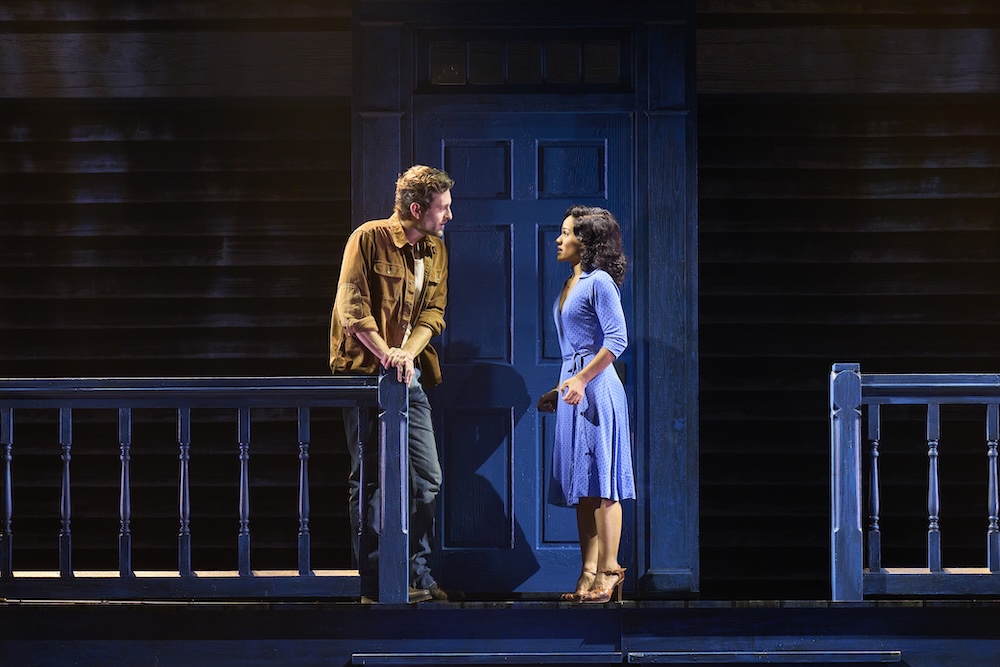
THE NOTEBOOK AT THE ORPHEUM
Speaking of audiences, I’m gonna guess that I—a Black bisexual progressive in his 40s—was not the audience in the minds of the creators of The Notebook (runs through March 1 at Orpheum Theatre). Indeed, the opening night crowd was overwhelmingly full of white women over 30, no doubt longtime fans of Nicholas Sparks’ novel and its 2004 film adaptation.
Eavesdropping on two such women seated behind me—who would share a full bottle of white wine over the course of the show—I heard one matter-of-factly declare “I’m ready to sob” in a tone akin to that of a soldier about to be shipped out. I, on the other hand, had walked into the theatre hoping to objectively review a story originating from an author whom I utterly despise (and who would probably hate knowing someone like me was in the audience). Still, this low-hanging fruit wasn’t gonna review itself.
The Notebook is one of those early-2000s pop culture confections I was happy to have missed. The Dubya years were notorious for a dearth of mainstream work challenging the status quo (notwithstanding American Idiot by Oakland’s own Green Day), and Sparks’ story almost reads like a checklist of post-Love Story beats designed to pull at the heartstrings. There are the contrasting young lovers; the objecting parents; the lip service about class struggles as a bunch of affluent white people remain untouched by the Civil Rights Movement; and, of course, the tragic illness. Ya gotta have a tragic illness.
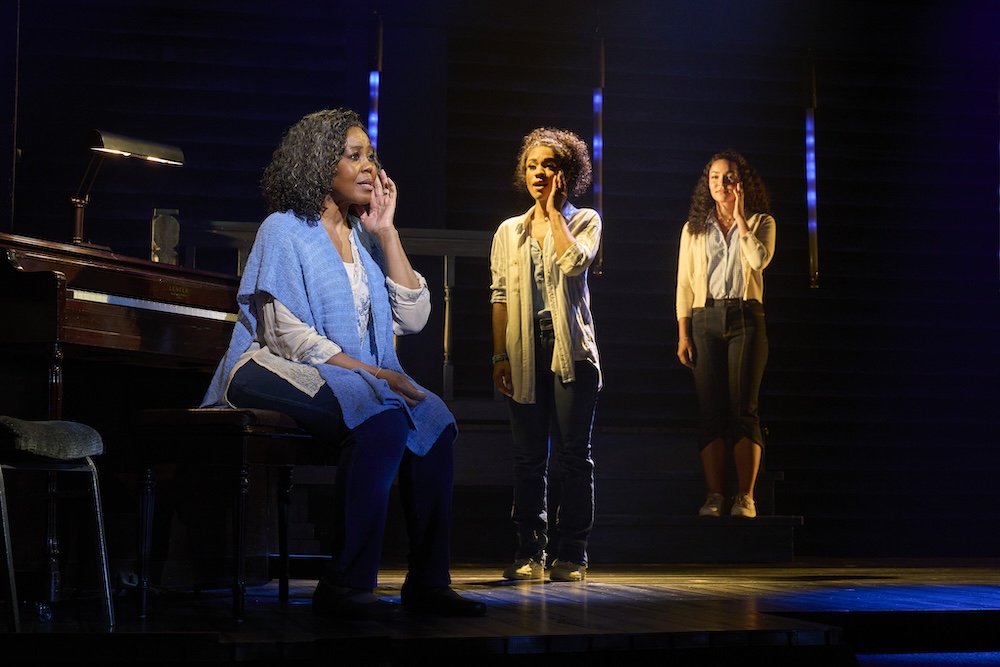
To this production’s credit, the songs aren’t bad, formulaic though they may be. More importantly, Beau Gravitte and Sharon Catherine Brown’s respective turns as Old Noah and Old Allie work, due to the sheer amount of sincerity the veteran actors bring. Allie sinks deeper into Alzheimer’s as Noah recites the story of their courtship from the titular notebook, and the duo’s performances conjure their profound history. This ’60s-set musical ignores the realities—nay, dangers—of interracial relationships at the time, but the two older actors successfully convey the heartbreak of watching a loved one slowly vanish.
If that and a strong HVAC system (few masks, but CO² levels on my Aranet4 peaked around 807ppm) are enough to pique your interest, by all means, have a weepy good time at The Notebook. Just don’t take your frustrations out on the actors. They were just hired to act out this tripe, they didn’t write it.
THE NOTEBOOK runs through March 1. Orpheum Theatre, SF. Tickets and more info here.