Throughout the fall, a spate of local news articles discussed the looming $307 million Muni budget deficit. Most of the reporting noted that this deficit is just the start; the expected gap is slated to grow over the coming years.
The public and political debate that has carried on around the shortfall focuses on how to stave off potential cuts: What fat can be trimmed to maintain the existing service?
Despite some idealistic intentions, that framework is in fact what put Muni in the financial hole in the first place. Working from a scarcity mindset, namely trying to preserve an already pilfered service, is a losing battle.
To guarantee the service that citizens and workers expect from a city like San Francisco requires a committed vision of the future, one that centers Muni as the public good that it is.
Instead, Mayor Daniel Lurie is pushing private alternatives that directly undermine public transportation.
Muni, the nickname for the San Francisco Municipal Railway, was the first publicly owned and operated transit agency in the country. Dubbed “The People’s Railway” on opening day December 28, 1912, it was a stark change from the city’s earlier iterations of mass transit, which were privately owned, for-profit horse-drawn carriages.
The 1906 earthquake left the city, and by extension the transit system, shattered. That, in conjunction with corporate consolidation (by 1902 United Railroads acquired ten transit companies) fostered unrest. And violent labor strikes in 1907 eventually resulted in San Francisco voters approving a bond for city-owned transit in December 1909.
By the early 1940s Muni was the dominant transportation service in the city, although there were still some competitors. After WWII, the city acquired the United Railroads Company and merged with Muni.

In March 1973, the Board of Supervisors adopted a “Transit First” resolution that gave Muni and other transit vehicles priority over private vehicles on the city’s streets. At the time, supporters saw the resolution as a compelling path forward for a city at the leading edge of transit development and service.
More than 50 years later, San Francisco has fallen far behind this lofty goal. To reclaim that post at the forefront of municipal development requires something conspicuously absent from the recent Muni funding discussions.
Throughout my conversations with advocates, riders, former public officials and professors a few themes became abundantly clear: 1) Muni’s funding debate is not new although the size of the deficit is distinct; 2) The pandemic dramatically reshaped the funding debate and offered officials looking to “optimize” (that is, undermine) the agency an opportunity to do so; 3) The agency lacks a clear and compelling vision of the future which results in the regressive, safeguarding approach to funding.
Making matters worse, many city leaders are happy to let private outfits like Uber and Waymo usurp and replace the essential functions of public transit.
Jason M. Henderson, a professor of geography and environment at San Francisco State University, authored Street Fight: The Politics of Mobility in San Francisco in 2013 but many of the book’s details about transit and Muni funding could be pulled from recent headlines. Henderson has been researching, writing and teaching about Muni for years and has been an advocate with local neighborhood associations and planning committees.
“Ever since the creation of Muni, going back to 1912 …it was paid for by a property tax. Then in the 1970s, these laws were passed at the state level [Prop. 13] that made it harder to get a simple majority to increase property taxes,” Henderson said.
He also noted that the regional or local tax approach that’s widely being discussed now, while viable, is “the same old debate.”
“There were a lot of progressive attempts to create a commercial property tax, maybe a downtown property tax, or maybe just a citywide commercial property tax,” he said.
Dylan Fabris, community and policy manager at San Francisco Transit Riders, outlined the current debate regarding the mayor’s proposal for a three-tiered parcel tax to fund Muni.
The tax would be based on square footage and building usage, with single family homes paying the least and large-scale commercial properties at the top. The tax proposal includes a cap of $400,000 a year for large commercial properties.
Fabris noted that the revenue cap “stymies the amount of revenue you can bring in,” but given some of the gains on the newest proposal, namely the reduction of proposed service cuts and lowering of the multi-family base rate, his coalition supports it.
In the Muni working group convened last summer, six proposals emerged. The vast majority of these strategies included one or both of the following: fare increases and service cuts.
One of the chapters in Henderson’s book details the nature of the debate in the early 2000s and has a striking resemblance to today’s discussion.
“In 2008 Mayor Newsom convened a blue ribbon panel of local officials and transit experts to address Muni financing. The panel discussed fare increases, parking pricing, and congestion pricing at length, but the idea of a TAD or a new TIDF was dismissed, as it had been by elites for decades.” Henderson writes in Street Fight.
Progressives in the 1980s advocated for both TAD and TIDFs. The former, a transit assessment district, would be an annual property assessment on downtown commercial land that would support Muni operations. The latter, a transit impact development fee, would apply to all new downtown developments and would pay for new buses and trains.
City leadership has, for decades now, shirked the responsibility to support public services like Muni in favor of private enterprise. The debate now about Muni funding mirrors earlier debates as the proposed solutions offer no lasting financial support and are, at best, a band aid on a broken bone.
“Over the past couple years, we’ve been really focused on this issue of transit funding because even before the pandemic, Muni was operating at a deficit, they were heading towards this budget deficit that we now essentially find ourselves in and the pandemic just exacerbated that,” Fabris said.
Henderson, Fabris and former District 5 Supervisor Dean Preston all pointed to the 2020 pandemic as a kind of inflection point for Muni. The crippling combination of declining ridership with some city officials’ desire for the business-like “optimization” of Muni resulted in worse service, higher fares, and left the agency struggling to stay afloat.
“Before the pandemic, the city was studying congestion pricing as a way to find a reliable annual source of revenue for operations,” Henderson said, noting the success some international cities have had with this kind of pricing adjustment.
Preston, who was supervisor during the pandemic, said the unprecedented federal support for social programs and transit during that period was threatening to billionaires and big businesses in San Francisco. He pointed to a free Muni pilot program that he put forward during the pandemic as an example. The city had the money for a two-month program, and while it passed the Board of Supervisors, then-Mayor London Breed vetoed it.
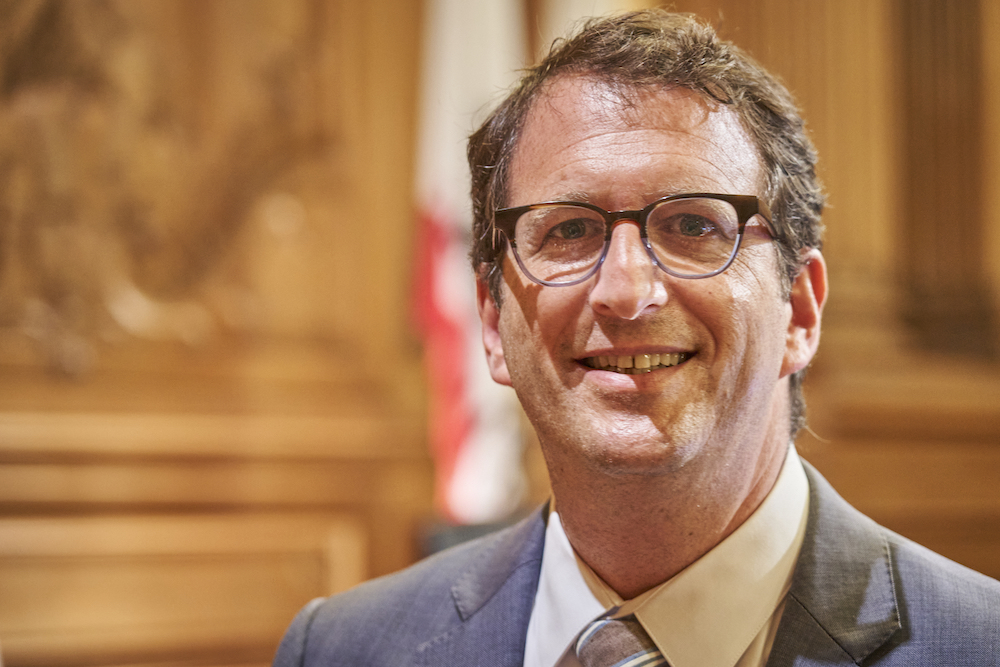
“There were some short term concerns about if it works too well and lots of people get on your buses are you ready to handle that, which seems to me to be a great problem but I think, as with a lot of pandemic programs, for the austerity crowd, the billionaires and politicians that they have influence over, they were concerned about creating new normal on certain things,” Preston said in an interview.
Preston conceded that people could get used to free Muni if the pilot program was adopted fully. That would require finding lasting financial support that doesn’t come from the feds or even the state, which would require city politicians to upset the delicate balance between the scores of San Francisco’s wealthy elites and City Hall.
The pandemic bolstered a kind of scarcity mindset among city officials. Jeff Tumlin, who was the director of transportation from December 2019 until December 2024, was instrumental in this scarcity mindset. During the pandemic Tumlin hired transit consultant Jarrett Walker, for $185,000, to help “define and build consensus toward a post-COVID network.”
Critics say what Tumlin and Walker orchestrated, using the pandemic as a pretext, were widespread cuts to critical Muni lines while delaying any potential timetable for their return.
The city’s charter requires Board of Supervisors approval for abandonment of any Muni line. However, it doesn’t require the same legislative approval for the “suspension” of lines, as was the case during the pandemic.
More glaringly, many of the lines that were suspended had already been targeted for abandonment by Tumlin’s office. Thus, Tumlin and Walker used the volatility and uncertainty of the pandemic as an opportunity to cut critical infrastructure in the city.
Preston shared a story where Tumlin’s office showed him a list of lines in December 2019 he viewed as duplicative or unnecessary and wanted to cut. Preston pushed back at the time and the cuts were staved off.
When the pandemic hit, those same lines were on the chopping block.
“During Covid in 2020, they got rid of all kinds of routes, it was temporary. Then they tried to phase some back but there were certain ones where there was no timeline, no plan to bring them back so after about a year or so of that, I realized that it was a plan defacto to kill these lines. When I looked back and the more I learned about it, most of these lines that weren’t back yet were lines that had been on the hitlist when they did other transit effectiveness surveys and projects in the past,” Preston said.
With Muni’s robust service on the cutting room floor, what do city officials want in its place? Mostly private enterprise.
In May, Uber announced its revelatory Route Share program as a supplemental, privatized bus. Uber CEO Dara Khosrowshahi admitted that the concept was “inspired by the bus” to some degree.
In June, Lurie announced $7 million in Muni budget cuts. Two months later, Lurie announced the formerly car-free market street would open to Waymo passenger service, once again framing privatization as innovation.
Private enterprise serves as a useful alternative for a mayor that views his city as a fortune 500 company. Funding Muni successfully, finding revenue sources that allow the agency to map out the next five or ten years, requires bold political leadership that will wretch the money from the city’s wealthiest business owners—many of whom rely heavily on public transportation to support their businesses. Workers at Salesforce, Slack, SoFi and countless others flock downtown on the 14, the 5 or the 38 every morning.
Preston noted that one of the biggest issues he saw among city leadership was a failure to “go big in funding public transit.” Simply put, going big just means using the political power of city hall to make the city’s billionaires pay their fair share.
“And so when you’re actually an advocate for let’s not cut Muni, let’s look at how we grow it, let’s have a vision for dramatically expanded public transportation, you run into a brick wall. It’s not the brick wall of voters … it’s the brick wall of austerity types who want to look at ways to cut costs and cut service, privatize service and not grow it. So that’s the biggest barrier.”