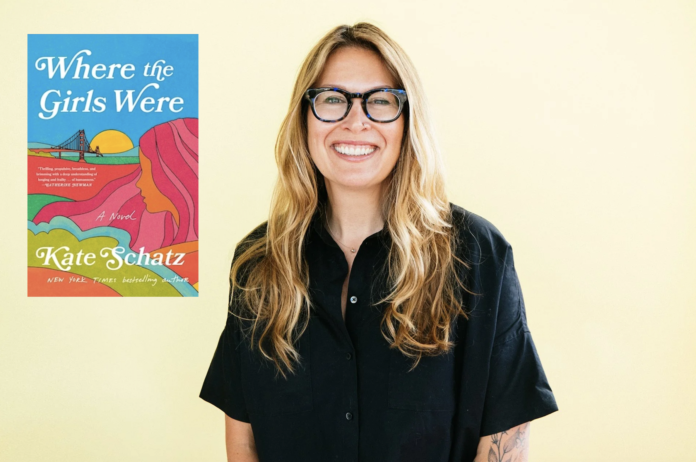
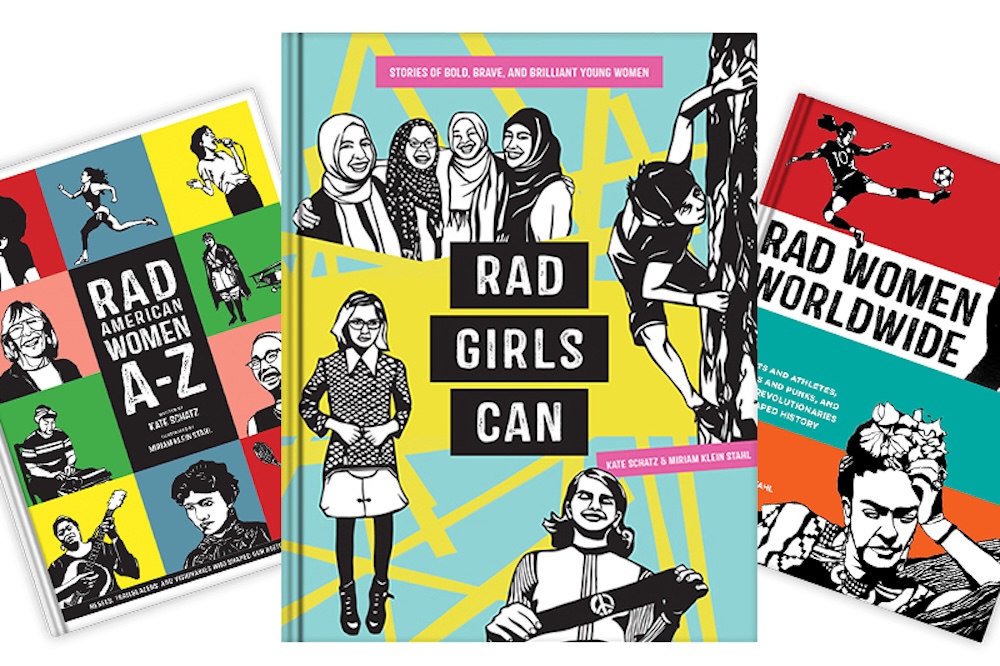
An idea percolating for decades in author Kate Schatz’s mind came to fruition in March with the release of her debut novel, Where the Girls Were (The Dial Press). The Bay Area-based, New York Times-bestselling writer of the Rad Women book series, who also co-authored Do the Work: An Anti-Racist Activity Book with W. Kamau Bell, had been working intermittently on the story for the last 10 years.
That decade of Schatz’s busy life was filled with teaching, sharing stories of underrepresented communities in pubic presentations and podcasts, and spending time with her wife and their three children. But in 2022 when the Supreme Court overturned Dobbs v. Jackson Women’s Health Organization, resulting in Roe v. Wade and Planned Parenthood v. Casey being determined unconstitutional, the historical fiction shifted to one of her front burners.
That subsequent book, Where the Girls Were, tells the story of Elizabeth Baker Phillips, a teenager in the late 1960s who gets pregnant. Known by her middle name, Baker finds her straight-A, people-pleasing, rule-conforming identity shattered and the relationship with her mother Rose Phillips completely altered. Suddenly, Baker is no longer the ideal daughter; she is an embarrassment and someone who must be hidden, whose baby will never become part of the family.
Issuing a false story that Baker is off to Paris with a prestigious scholarship to study for the fall, Rose “hides” her daughter in a San Francisco facility for unmarried women—where most residents are young enough to be classified as girls. There, Baker completes her pregnancy and finds agency with her peers, beginning to assert herself. By doing so, she takes the first steps into adulthood.
In an interview with 48hills addressing the similarities and differences surrounding women’s bodies and reproductive rights of 1968 and today, Schatz says, “We’re still trapped in social stigma about women and their bodies and the way they parent or choose not to parent. It’s the same old shame dressed up in a 21st century new look. But now, with this current regime, we’re actually criminalizing [women]. The anti-abortion laws passing and states where women are being charged with murder because they seek access to birth control mean we’re in an [new] era.”
Roe v. Wade, she acknowledges, was “tenuous” and “not as strong a decision as it should be,” and she was not surprised when it was struck down. All the same, Schatz was outraged by the recent Supreme Court decision—and it left her highly motivated to finish her novel. “It was a major turning point for finishing the book and getting it out in the world,” Schatz says.
The author has had a lifelong inclination to dig into untold stories in history. “I’m always trying to read behind the lines,” says Schatz. “In an old, historic photograph, when there’s a blurred woman in a corner, I want to know who she is.”
At the upcoming Bay Area Book Festival, Schatz will serve as moderator of a May 31 panel entitled “Unsung Heroines: Visionary Women of the Bay Area” with writers Rae Alexandra and Jewelle Gomez. “I’m excited to find out how they find untold stories,” she says. “When you’re fascinated by that, you have a different way of looking at the world.”
Schatz’s own family history relates directly to narrative of her novel. Her mother revealed to her that when she was in her 20s, she had two babies who were placed for adoption—and that she had also been “disappeared” during her pregnancies.
Caught off guard, Schatz says that hearing for the first time of her mother’s experiences, “definitely had an impact. That’s a particular kind of coming-of-age moment in your life. You’re starting to see your parents in a new light, as actual humans. You’re developing an adult relationship with your parent. I was starting to think about whether I’d want a family, to have a baby. To talk through it with her strengthened that. It also helped me learn how to hone my research skills, because I was interested in this history my mom had experienced.”
She’s come to learn that this was more common than she could have imagined. “Since this book came out, I’ve had powerful conversations with readers I’ve met at my events,” Schatz says. “They’re people who’ve had the same experience as my mom, or had mothers and grandmothers who did.”
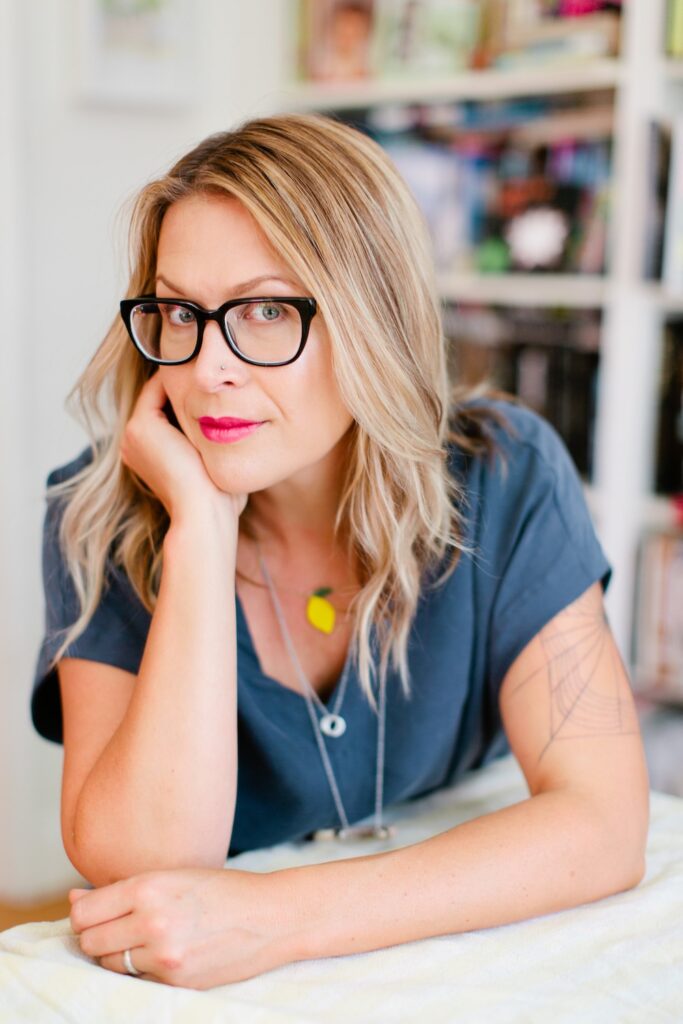
Upon completing her novel, she realized she had gained greater appreciation for the political power of fiction.
“I actually started out as a fiction writer, and I unexpectedly transitioned into nonfiction with the Rad Women books. I saw those as a form of activism, of retelling histories. For a while, my fiction I saw as a separate mission. It has been a good lesson to realize that the impact I want to have can absolutely happen through novels as well.”
Which is not to say the novel-writing process is less arduous. Schatz allows characters such as Baker’s animated cousin May, the doctors and social workers involved in Baker’s care, and even the man who is the father of the unborn child to develop organically—but while editing numerous subsequent drafts, she thinks carefully about balance.
“I didn’t want anyone to be too overtly evil,” she says. “I wanted complexity, the nuance that’s more realistic to life. I didn’t want anyone to be an absolute monster. There are characters who are saying and doing terrible things, but they can also be loving and charming.”
Through the book’s ambiguous ending, Schatz gives Baker the privacy she deserves. “Roe was decided on the basis of privacy and the 14th amendment, and I wanted Baker to have the private experience of making choices. I wanted readers to sit with their opinions and feelings about what Baker should or shouldn’t do. I hope it generates empathy for women trying to make the best decisions.”
Schatz says the riskiest things artists can do in a world of AI and less regard for people making art is “to just keep making it.” She thought she would never write another fiction book after finishing Where the Girls Were. “But the second I sent it off, a whole new novel just beamed into my head,” she remembers. “It’s not a sequel, but some of the characters will reappear in a similar orbit, set about 20 years later. It’s a story of other hidden histories.”
UNSUNG HEROINES: VISIONARY WOMEN OF THE BAY AREA May 31, 12:15pm. Bay Area Book Festival, Crystal Ballroom, Berkeley. More info here.